Tasting Palma logo

BOOK NOW

Category: Guides

Local food, drink and travel guides from the Tasting Palma team.

  • Where to Find the Best Ensaimada in Palma, Mallorca

    Where to Find the Best Ensaimada in Palma, Mallorca

    At A Glance

    An ensaimada is a spiral of thin laminated dough made with pork lard, and only two versions are legally protected: plain and cabello de ángel.

    • The name comes from saïm, the word for pork lard. Vegetable fat disqualifies it from the protected designation.
    • Protected as an IGP since 2004. Permitted ingredients are flour, water, sugar, eggs, starter and lard. Nothing else.
    • The plain llisa runs from 60 g to 2 kg. The cabello de ángel version goes up to 3 kg.
    • Palma’s oldest maker has been trading since 1700. Two others date from the 1710s and 1740s.
    • Crema, chocolate and sobrasada fillings are real and widely sold, but they sit outside the IGP.

    Almost every visitor to Mallorca leaves with one, carried flat in a tied box through the airport like a piece of luggage that cannot be turned on its side. The ensaimada is the island’s edible signature, and it is also one of the most misunderstood pastries in Spain: what most people buy at the airport is not what a Mallorcan means by the word, and the difference comes down to a single ingredient. If you want to taste one properly, warm and with something to drink alongside it, that is the pairing our Speciality Mallorcan Coffee Tasting is built around.

    Below is what an ensaimada actually is, what the protected designation permits and forbids, and the bakeries in Palma still making them properly. Several of these ovens predate the United States. One of them has been running since 1700. We have kept to places we can verify are still trading and still worth the walk, because Palma’s bakery landscape has shifted in the last few years and some famous names no longer mean what they used to. It sits alongside the rest of the island larder in our Palma food guide. If you want a cold glass of vermut and something to eat while you are still in the city, our guide to the best tapas bars in Palma Old Town lists the nine bodegas worth visiting.

    Ensaimada paired with single-origin coffee from a 75-year-old Mallorcan roastery, in our Old Town tasting room.

    See the coffee tasting

    What Is an Ensaimada?

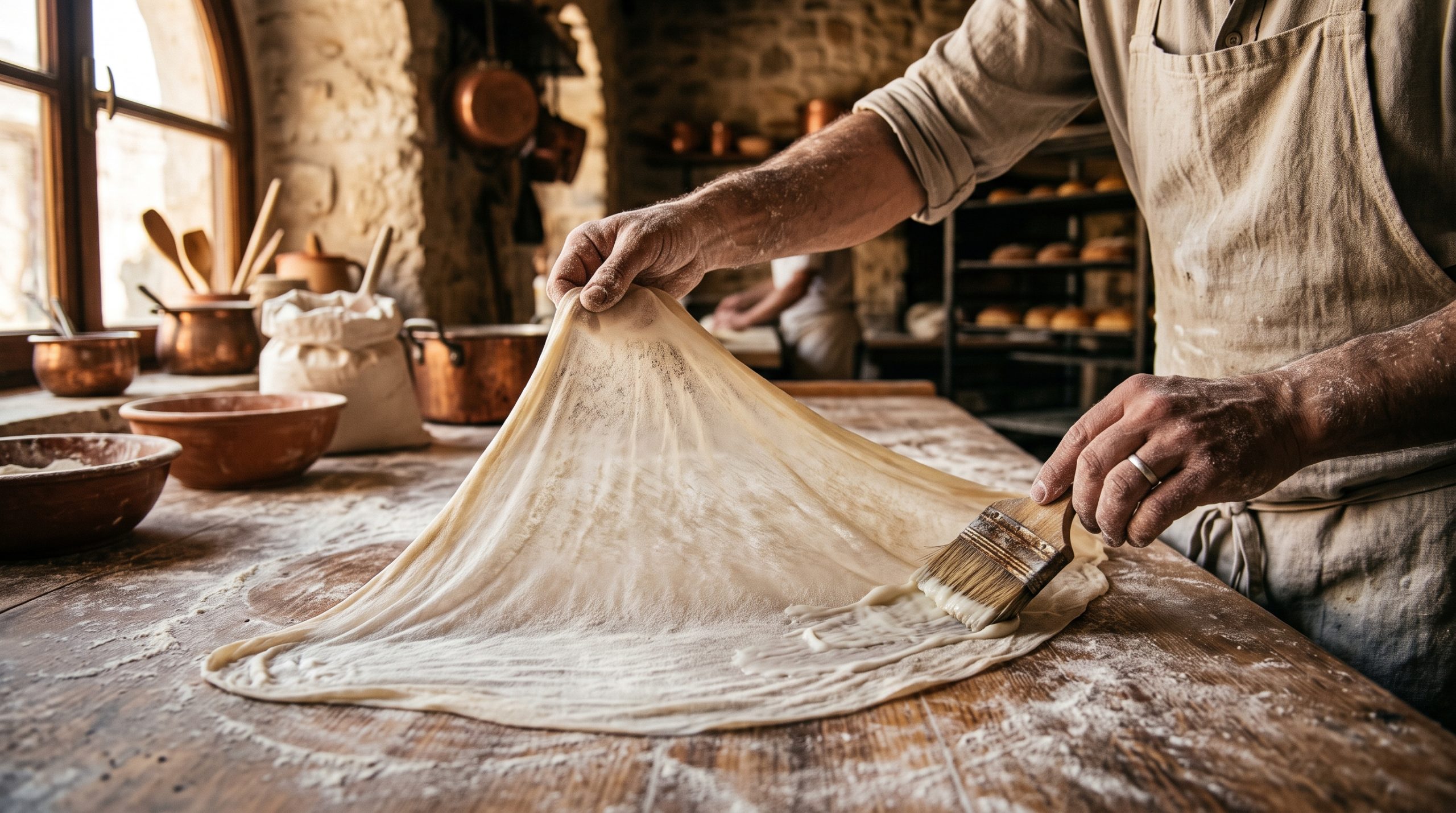
    A baker's flour-dusted hands stretching thin laminated ensaimada dough across a wooden table
    The dough is stretched until it is nearly transparent, then coated with lard and rolled.

    An ensaimada is a coil of enriched dough that has been laminated with pork lard, proved slowly, baked, and dusted with icing sugar. The dough is made from strong flour, water, sugar, eggs and a portion of sourdough starter. It is stretched by hand across a large table until it is thin enough to read through, brushed with soft lard, then rolled into a rope and wound into a spiral with a gap left between the turns so it can expand as it proves.

    The result is not a croissant and not a brioche. It is drier and lighter than both, with a texture closer to a very fine bread than to a pastry, and it pulls apart in threads rather than flaking. Eaten fresh it is barely sweet. The icing sugar on top does most of the sweetening, which is why a day-old ensaimada tastes noticeably plainer than one bought in the morning.

    The word itself explains the recipe. Saïm is the Mallorcan word for pork lard, and ensaïmada means, more or less, the thing made with lard. That is not a historical curiosity. It is the working definition, and it is the reason a great many products sold as ensaimadas are not really ensaimadas at all.

    As for where it came from, the honest answer is that nobody can prove it. Written references date to the seventeenth century, when wheat flour was scarce enough that using it for a sweet was worth recording, and the pastry appears in connection with feast days rather than everyday eating. From the eighteenth century onward it spread as an afternoon pastry taken with drinking chocolate. Various theories connect it to earlier Hebrew or Arab baking traditions, and you will see them stated confidently on menus and in guidebooks. They remain theories, and we say so on our Gourmet Palma Food Tour rather than repeating the tidier version.

    What Makes an Ensaimada Real
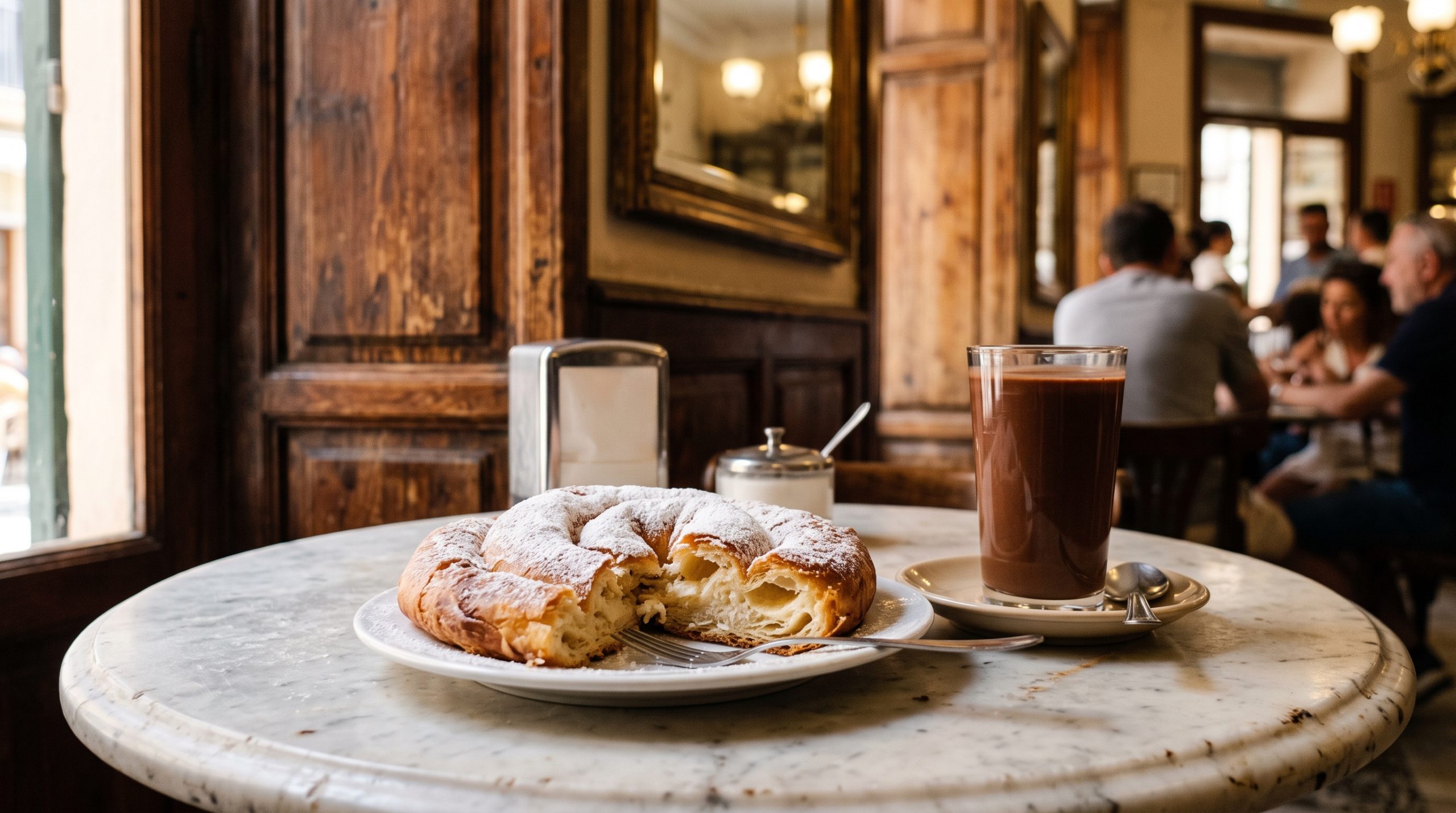
    An ensaimada torn open to show its laminated layers beside a glass of thick drinking chocolate
    Torn rather than cut, a good one comes apart in fine threads. Chocolate to dip is the traditional pairing.

    Since 2004 the ensaimada has held a Protected Geographical Indication under the name Ensaimada de Mallorca, following an earlier Spanish designation granted in 1996 and a Balearic regulation in 2003. The rules are unusually strict, and reading them is the fastest way to understand what you are buying.

    RuleWhat the IGP specifies
    Where it can be madeOnly in the municipalities of the island of Mallorca
    Permitted ingredientsStrong flour, water, sugar, eggs, sourdough starter, pork lard. That is the complete list
    The fatPork lard is mandatory. Vegetable fat is not permitted
    Protected typesTwo only: plain (llisa) and cabello de ángel
    Weight, plain60 g to 2,000 g
    Weight, cabello de ángel100 g to 3,000 g, with at least 40 g of filling per 100 g of dough
    ShapeA clockwise spiral of two or more turns, undulating surface, golden colour
    Proof of authenticityA numbered seal issued by the regulatory council

    Two consequences follow, and both surprise people. The first is that an ensaimada filled with crema, chocolate, nata, turrón or sobrasada is not covered by the IGP. Those versions are entirely real, they are sold by the best bakeries on the island, and several are excellent. They simply are not the protected product, so a bakery cannot put the numbered seal on them. If a shop tells you its chocolate ensaimada is IGP-certified, it is mistaken.

    The second is the lard. Industrial producers substitute vegetable fat because it is cheaper and keeps longer, and the resulting pastry looks nearly identical in a box. In 2015 the island’s bakers and confectioners association went public with a complaint that hotels were serving mass-produced versions at breakfast, which cost around thirty per cent less than artisan ones, and argued it was damaging the reputation of the product with visitors who assumed they had tried the real thing. If your only ensaimada was on a hotel buffet, there is a fair chance you have not actually eaten one yet.

    The Best Bakeries for Ensaimada in Palma

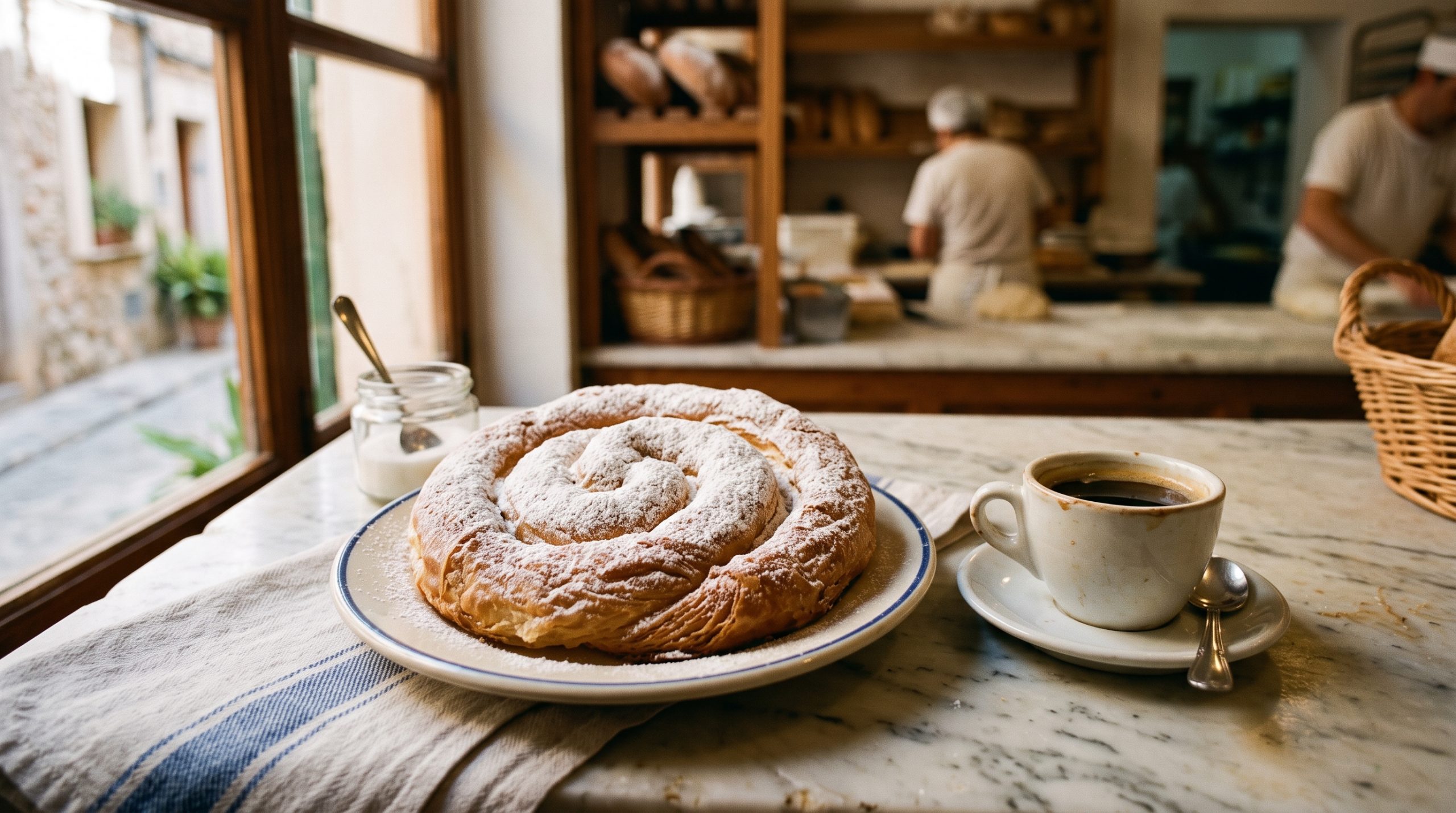
    Interior of a traditional Mallorcan bakery at dawn with pastry cabinets and stacked boxes
    The old forns open early. By mid-morning the day’s plain ensaimadas are often gone.

    Ordered by how long they have been at it. Only one bakery on this list publishes its prices, so we have given figures only where they are genuinely published rather than estimating.

    1. Ca’n Joan de s’Aigo

    Carrer Can Sanç 10, with further branches on Baró de Santa Maria del Sepulcre and Carrer del Sindicat. Founded in 1700 by Joan Thomàs of Valldemossa, which makes it comfortably the oldest business on this list and one of the oldest in Palma. It passed to Antoni Martorell Guasp in the early twentieth century and is now run by the third generation of the Martorell and Vich families.

    The Can Sanç room is the one to visit: marble tables, old mirrors and a queue of Mallorcans that moves faster than it looks. Order the plain llisa with a cup of thick drinking chocolate, which is the pairing the place is built on, and if you have room the almond ice cream is the other thing it is known for. Worth knowing that the baking happens at an obrador in Son Ferriol rather than behind the counter, so this is not the place to come for something straight out of the oven. It sits in the same lanes as most of the Old Town tapas bars, so it is an easy morning stop before an evening spent eating savoury.

    2. Forn de la Glòria

    Carrer del Forn de la Glòria 7. Documented from 1717, in a building that dates to 1870, and bought in 1977 by Sebastià Camps and Francisca Sastre, whose children Sebastià and Francisca run it now. It was declared an Emblematic Business of Palma in July 2024.

    This is the one for anyone who cares how the thing is made. The bakery still uses its original Moorish wood-fired oven, which is a genuine rarity in the city rather than a marketing line, and the ensaimada carries the IGP seal. They also bake spelt, rye and wholemeal breads, and they are part of the island’s bread heritage association. Go early. Wood-fired capacity is limited and it is not a large shop.

    3. Forn Fondo

    Carrer Unió 15. Founded in 1742 and named for the oven at the back, or fondo, of what was then a Capuchin alleyway. The current building went up in 1911 when the Llull family took it over, and it is now run by the fourth generation, the siblings Pau and Neus Llull Riera. It holds Emblematic Business status.

    Forn Fondo is the place to go if you want range rather than purity. It makes more than twenty types of ensaimada, including apricot, fig, cherry, burnt cream, dark chocolate with orange, white chocolate, dulce de leche and sobrasada, alongside the IGP-sealed plain and cabello de ángel. Everything is baked on the premises daily. If you are buying one to take home and one to eat now, this is the efficient stop.

    4. Horno Santo Cristo

    Several locations including Carrer Sant Miquel 47, Carrer Paraires 2, Plaça Marqués del Palmer 1, and outlets at the maritime station and Porto Pi. Founded in 1910 and now the most visible ensaimada operation in the city, selling in the classic tied boxes and shipping to mainland Spain and Portugal.

    It is also the only bakery here that publishes what it charges, which makes it a useful benchmark. At medium size, a plain llisa is €13.30, cabello de ángel is €14.95, and crema, chocolate or sobrasada are €14.95 each. Burnt cream and white chocolate are €17.70. A pack of ten individual ensaimadas is €18.00. Being a multi-site operation, it is less of a pilgrimage than the old forns, but the product is consistent and the boxes travel.
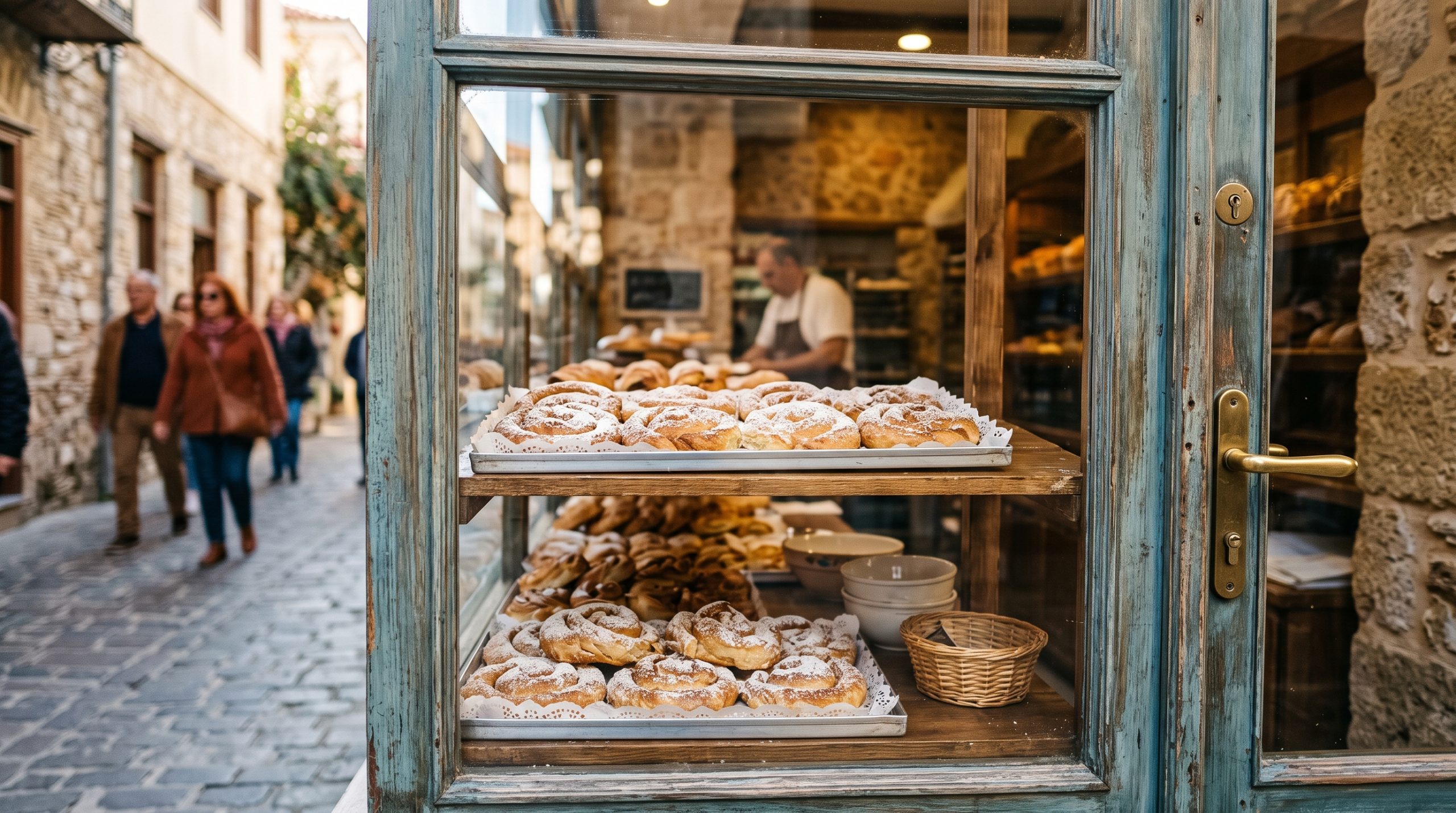
    Trays of icing-sugar dusted ensaimadas displayed behind an old bakery shop window
    A window like this in the morning is the whole test. By four in the afternoon the trays are usually bare.

    5. Pastelería Cirer

    Villa Juana building on Les Avingudes, with further shops on Calle Caro and Joan Crespí. This entry needs a note, because the name on the front changed recently. The bakery here opened in 1918 as Forn La Mallorquina, founded by Antònia Vila and run by her descendants for four generations. At the end of March 2026 the signage changed and it became Pastelería Cirer, under Marcela and Diego Iglesias.

    The new owners have said the same obrador, the same staff and the same recipe book continue, with some Argentinian additions to the counter. The practical point for visitors is simply that guides and older articles still send people to La Mallorquina, and that name no longer exists in Palma. If a list tells you to go there, this is the address it means.

    6. Pastelería Ángel

    Carrer Pasqual Ribot 45A, out in the Ponent district rather than the old town, which is why most visitors never find it. Producing daily since 1981 under Ángel, whose family have run the obrador for more than thirty years.

    Everything is made on site with their own oven, and the filled range is where they put their effort: crema, crema catalana, chocolate, pistachio. They ship across Spain. This is a working neighbourhood pastry shop rather than a heritage destination, and it is a useful corrective to the idea that the only good ensaimadas come from three-hundred-year-old premises in the centre, much as the best savoury eating is rarely on the streets most visitors walk down.

    7. Fornet de la Soca

    Plaça Weyler 9, in the Art Nouveau building most people know as the Forn des Teatre, with a second shop in the neo-Mudejar Can Corbella. Tomeu Arbona and María José Orero started the business in 2010 elsewhere in the city and moved into these premises in 2018, keeping the historic name on the facade.

    Arbona works from recovered historical Mallorcan recipes, using sourdough and long natural fermentation of around twenty-four hours, and the results taste distinctly older and less sweet than the modern standard. One clarification worth having: the Forn des Teatre is the building and the heritage name, not a separate bakery you can visit. Some listings still show it as its own business with its own opening hours. It is this shop.

    8. Forn Sant Francesc, Inca

    Carrer de Sant Francesc 126 in Inca, about thirty minutes from Palma and the one entry here that requires leaving the city. Trading for more than 110 years and run by Joan Seguí, the fifth generation, with his wife Maria Sancho.

    They bake in one of the few surviving wood-fired Moorish ovens on the island, use free-range eggs, and add no additives, colourings or preservatives. The bakery won a world ensaimada competition in 2017. If you are driving to the Tramuntana or heading inland anyway, it is a straightforward detour and a noticeably different product from the city versions.

    Llisa or Cabello de Ángel

    A baker coiling a rope of ensaimada dough into a spiral on a baking tray
    The spiral is wound with a gap between the turns so it has room to expand as it proves.

    These are the only two protected versions, and choosing between them is the one decision that matters at the counter. The plain llisa is the benchmark: nothing to hide behind, so the lamination, the proving and the quality of the lard are all exposed. Most Mallorcans consider it the serious order, and most bakers would rather be judged on it.

    Cabello de ángel is filled with candied pumpkin, pulled into fine sweet strands. It is heavier, sweeter and more obviously a dessert. Under the IGP it must contain at least 40 g of filling for every 100 g of dough, which is why the filled ones feel so much denser in the box. Either version takes well to a small glass of the island’s dry herbal liqueur afterwards, which we cover in the Mallorca gin guide.

    How To Buy One Properly

    • Go in the morning. Plain llisas are baked for the breakfast trade and the good ones sell out.
    • Ask for the seal if you want the certified article. The numbered IGP seal only appears on plain and cabello de ángel.
    • Eat it the day you buy it. There are no preservatives in a proper one, and by day two it is a different pastry.
    • Do not refrigerate it. Cold sets the lard and ruins the texture. Room temperature, in its box.
    • Buy the small size to eat and the large size to carry. A 60 g individual is a breakfast. The big ones are for sharing.
    • Warm it briefly if it is a day old. A few minutes in a low oven brings most of it back.

    Inside A Tasting Palma Experience

    Ensaimada is better with the right coffee

    Six single-origin coffees roasted in Palma by a family roastery working since 1952, each poured alongside a bite chosen to match it.
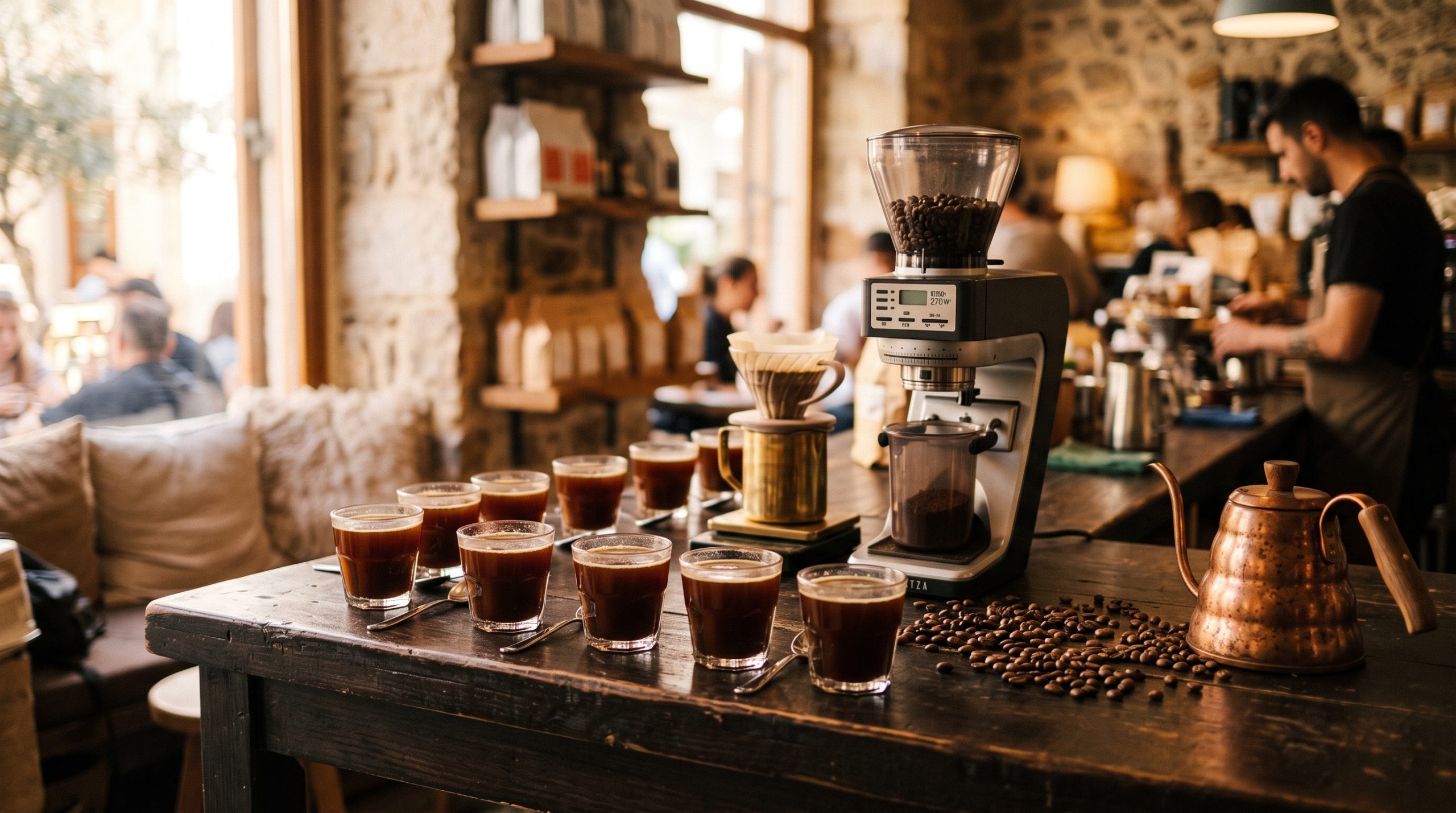
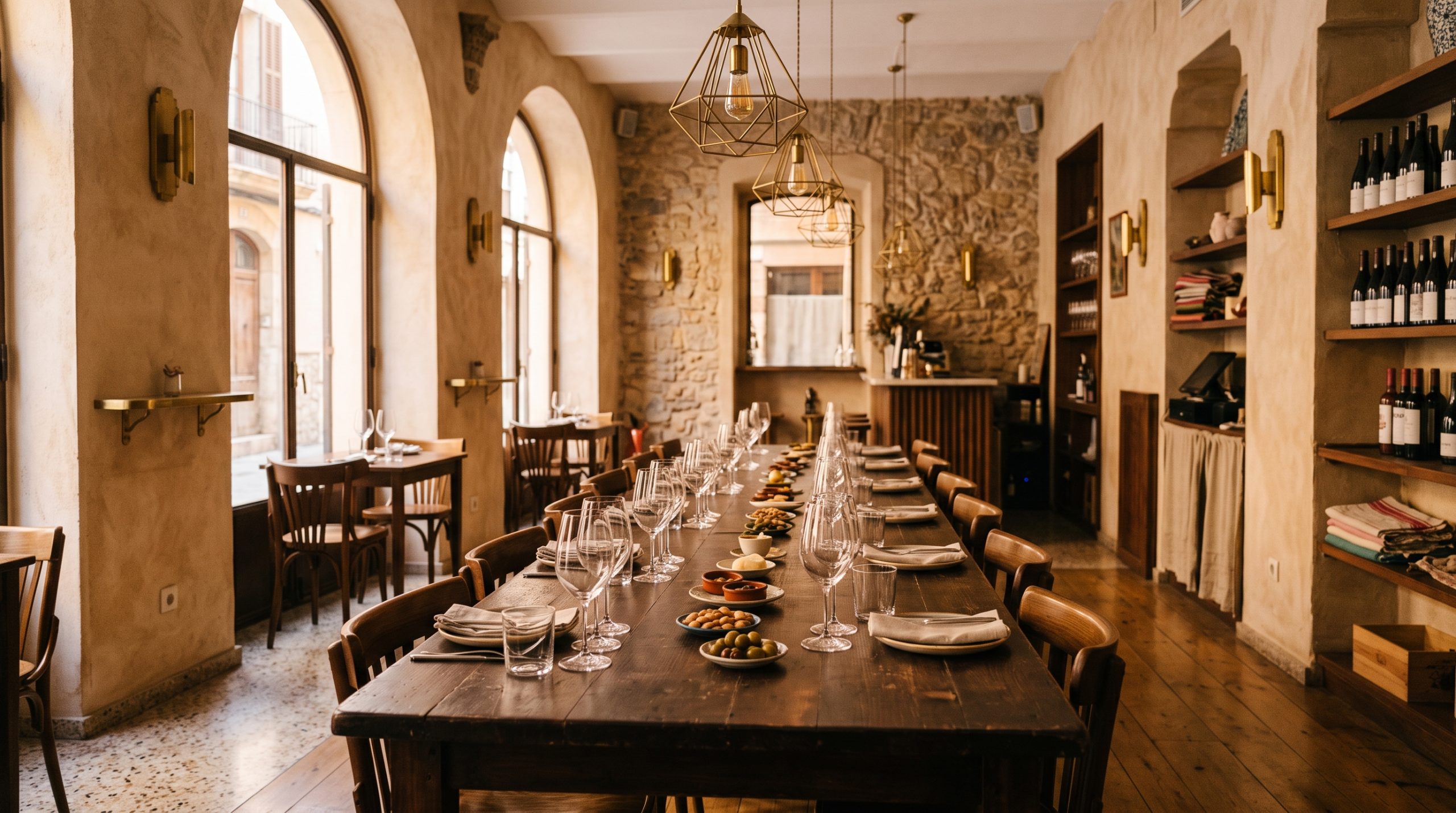
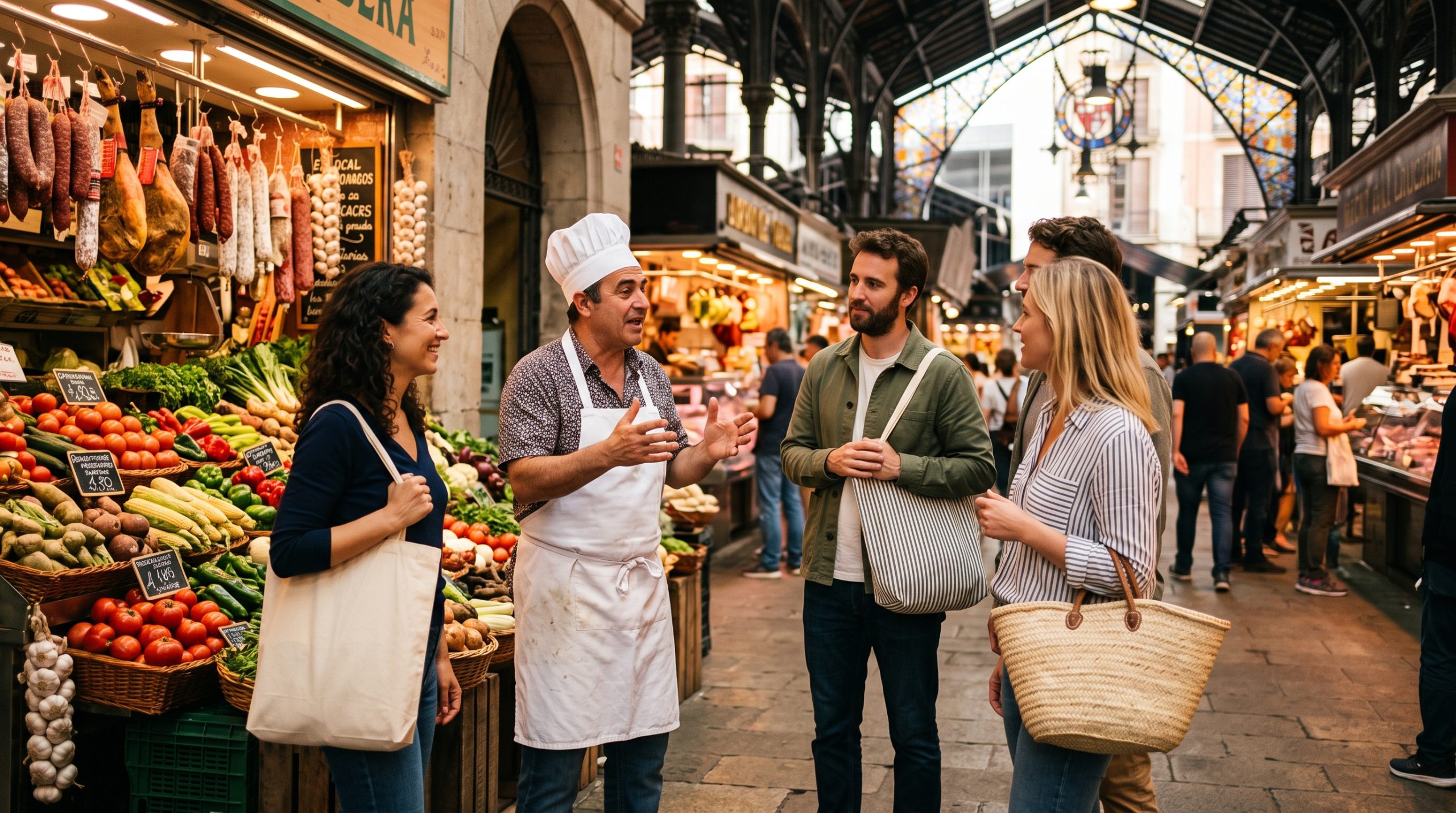
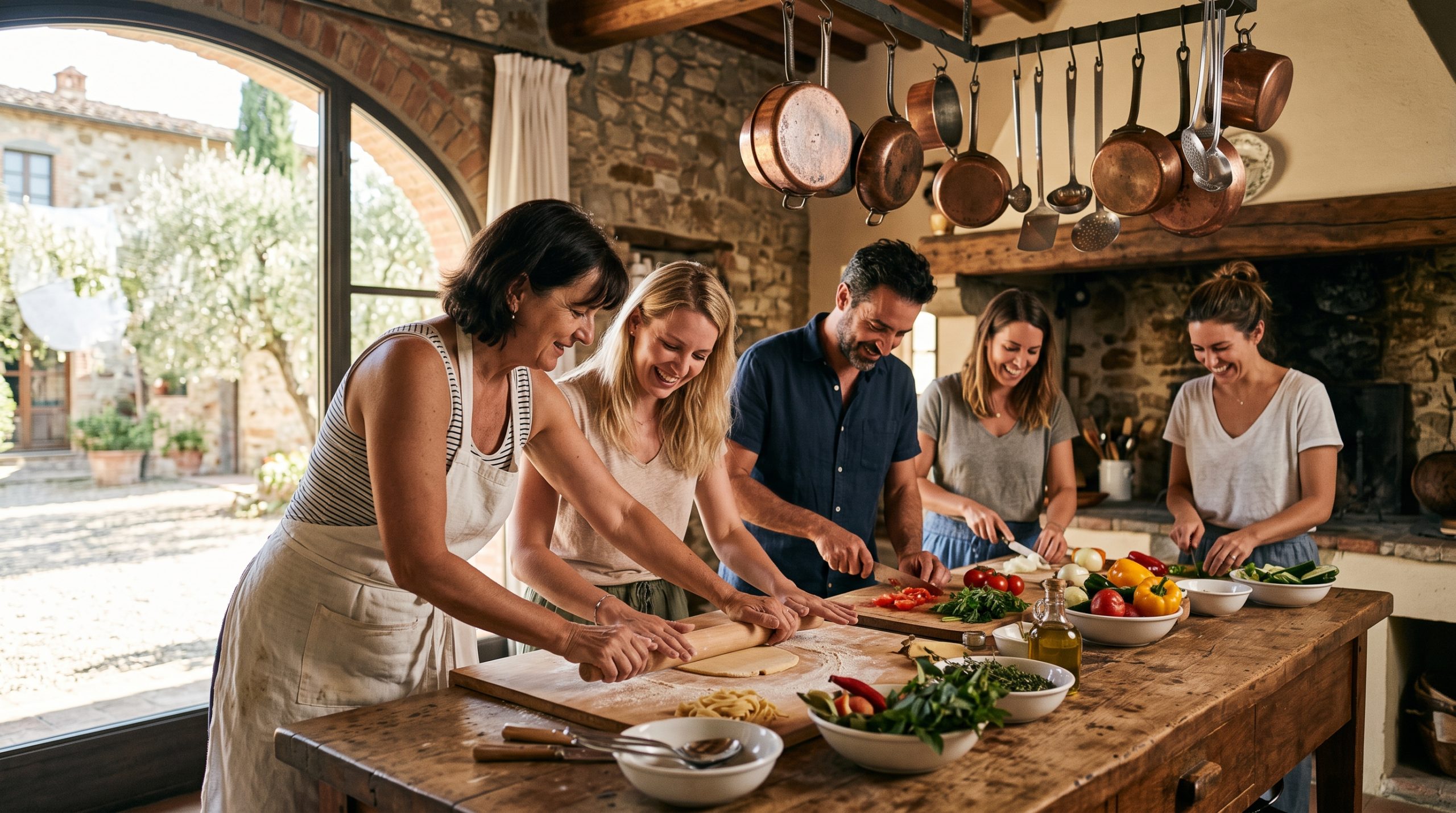
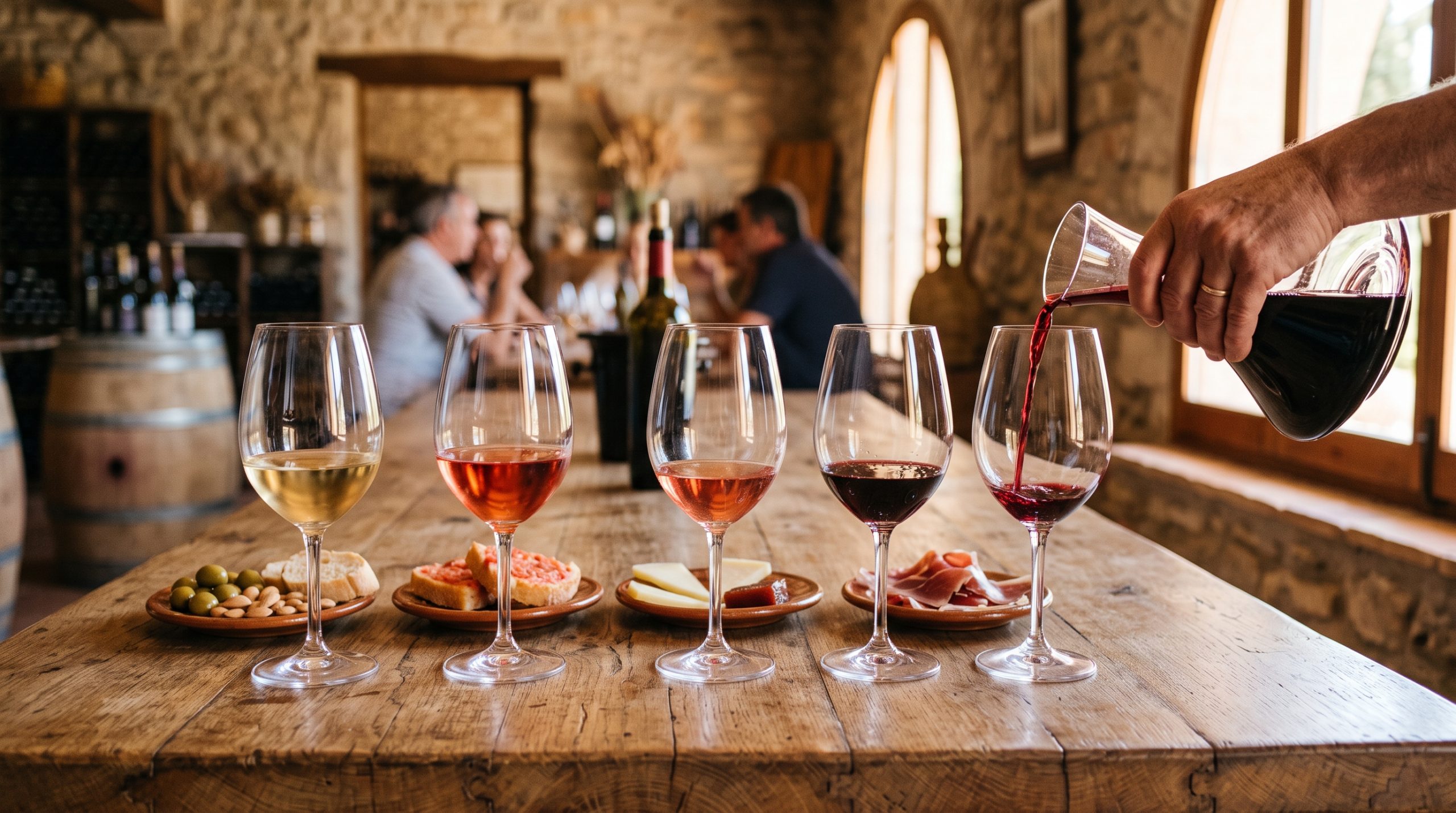
    A speciality coffee cupping set up with grinder, scales and tasting cups The Tasting Palma tasting room set with wine glasses and small plates A guide showing a small group around a stall at the Olivar Market Guests preparing Mallorcan tapas with a chef in a cooking class A flight of five Mallorcan wines paired with small tapas plates A small group raising glasses in a toast around a long shared table
    Book the Coffee Tasting

    From €35 · 75 minutes · Max 10 guests · Gift vouchers available

    Getting One Home
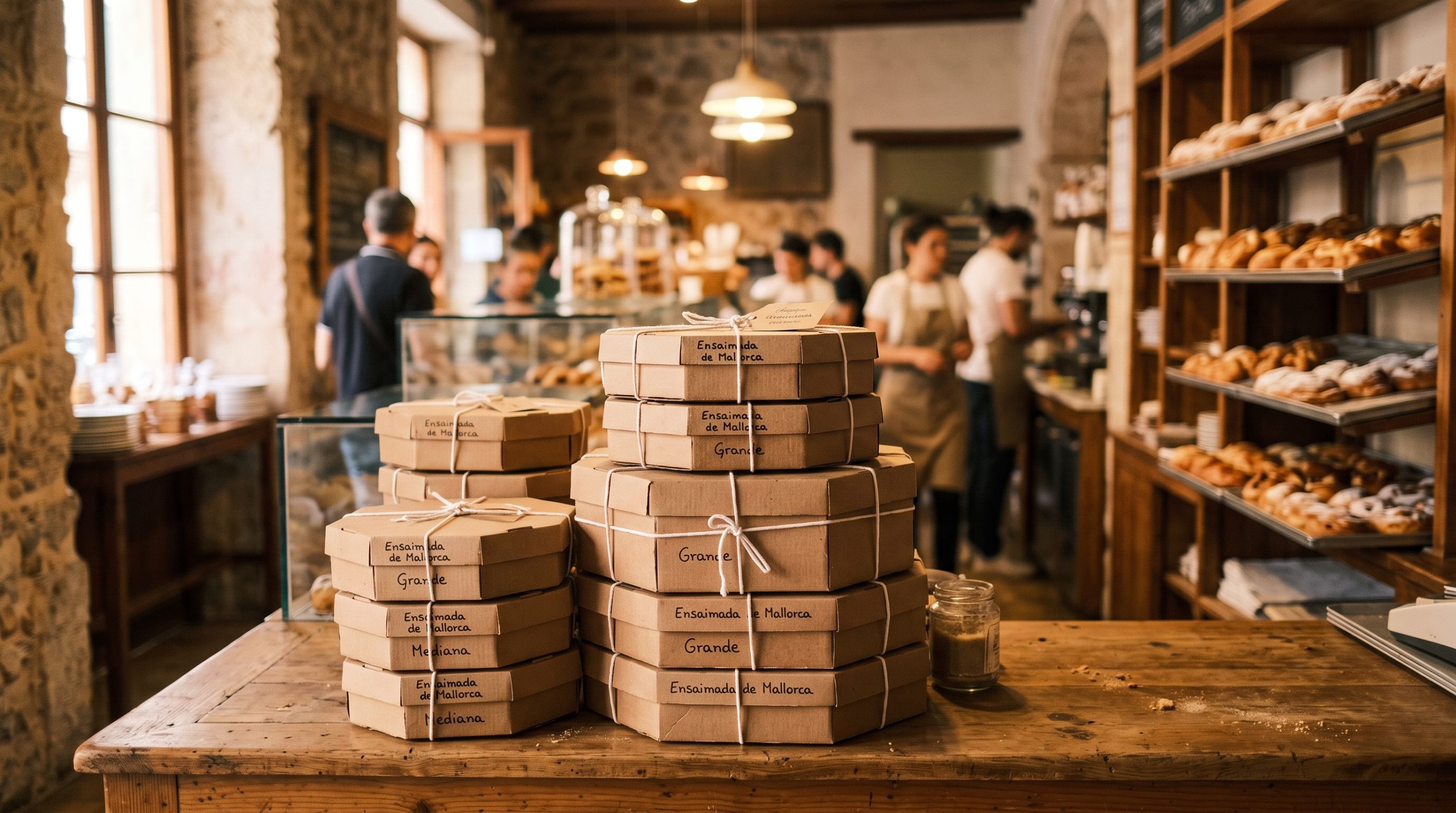
    Stacked octagonal ensaimada boxes tied with string on a bakery counter in Mallorca
    The flat faceted box exists because the pastry is too fragile to stack or bag.

    The box is not decoration. An ensaimada is wide, flat and structurally fragile, and it cannot be stacked, bagged or turned on its side without collapsing. Bakers historically wrapped them in cloth and paper, and the faceted cardboard box with a string tie became standard during the twentieth century because it was the only thing that got the pastry home intact. It has since become an icon in its own right, to the point where a stack of tied boxes in an airport queue is one of the more reliable signs that a flight is leaving Palma.

    One practical warning. You may have been told that airlines do not count the box as hand luggage. That is not dependable. In May 2023 Ryanair was charging passengers up to €50 for ensaimada boxes as extra baggage, which prompted a formal complaint from the Balearic politician Jaume Alzamora to both the airline and the airport operator. Check your specific carrier’s cabin baggage policy before you commit to carrying a two-kilo pastry through security.

    It is also worth resisting the airport as a purchase point in general. The bakers’ association has argued for years that airport rents make genuinely artisan ensaimadas commercially unviable there, which tells you something about what is on those shelves. Buy from one of the forns above on your way out instead, and if you want to understand what you are tasting before you commit to a box, our Olivar Market Tour and Tapas Class covers the island’s baking traditions alongside the savoury side.

    Frequently Asked Questions

    What Is an Ensaimada?

    A Mallorcan pastry made from a spiral of thin dough laminated with pork lard, proved slowly, baked and dusted with icing sugar. The dough contains only strong flour, water, sugar, eggs, sourdough starter and lard. It is lighter and much less sweet than a croissant, and pulls apart in threads.

    What Does Ensaimada Mean in English?

    There is no English equivalent, so the word is used untranslated. It derives from saïm, the Mallorcan word for pork lard, so it means roughly the thing made with lard. That is a description of the recipe rather than a poetic name.

    Where Can You Buy the Best Ensaimada in Palma?

    For the plain llisa, Forn de la Glòria bakes in an original wood-fired Moorish oven and Ca’n Joan de s’Aigo has been trading since 1700. For range and filled versions, Forn Fondo makes more than twenty types on the premises. Horno Santo Cristo is the most widely available and the only one publishing prices.

    How Much Does an Ensaimada Cost in Palma?

    Most bakeries do not publish prices. Horno Santo Cristo, which does, charges €13.30 for a medium plain ensaimada, €14.95 for cabello de ángel, crema, chocolate or sobrasada, and €17.70 for burnt cream or white chocolate. A pack of ten individual ones is €18.00. Small individual pastries at a counter cost a few euros.

    Is Ensaimada Made With Lard?

    Yes, and it has to be. Pork lard is a mandatory ingredient under the protected designation, and it is what the name refers to. Versions made with vegetable fat cannot legally be sold as Ensaimada de Mallorca. This also means a traditional ensaimada is not suitable for vegetarians.

    What Is the Difference Between Llisa and Cabello de Ángel?

    Llisa means plain and has no filling at all. Cabello de ángel is filled with candied pumpkin in fine sweet strands. These are the only two versions protected by the IGP. The plain one may weigh from 60 g to 2 kg; the filled one from 100 g to 3 kg and must contain at least 40 g of filling per 100 g of dough.

    How Long Does an Ensaimada Keep?

    A genuine artisan one contains no preservatives and is at its best on the day it is baked. It remains pleasant for two or three days if kept in its box at room temperature. Do not refrigerate it, because chilling sets the lard and spoils the texture. A few minutes in a low oven revives a day-old one.

    Can You Take an Ensaimada on a Plane?

    Usually yes, but do not assume the box travels free. In 2023 Ryanair charged passengers up to €50 for ensaimada boxes treated as additional cabin baggage, which drew a formal complaint from Balearic politicians. Check your airline’s hand baggage rules first, and buy from a city bakery rather than at the airport.

    Taste It With Us

    Ensaimada, paired with coffee from a 75-year-old island roastery

    Our Speciality Mallorcan Coffee Tasting runs 75 minutes for a maximum of ten guests, working through six single-origin coffees roasted by Arabay in Palma, each with a bite to match. From €35 per person.

    Check availability

    Private and corporate groups up to 32 guests · Get in touch
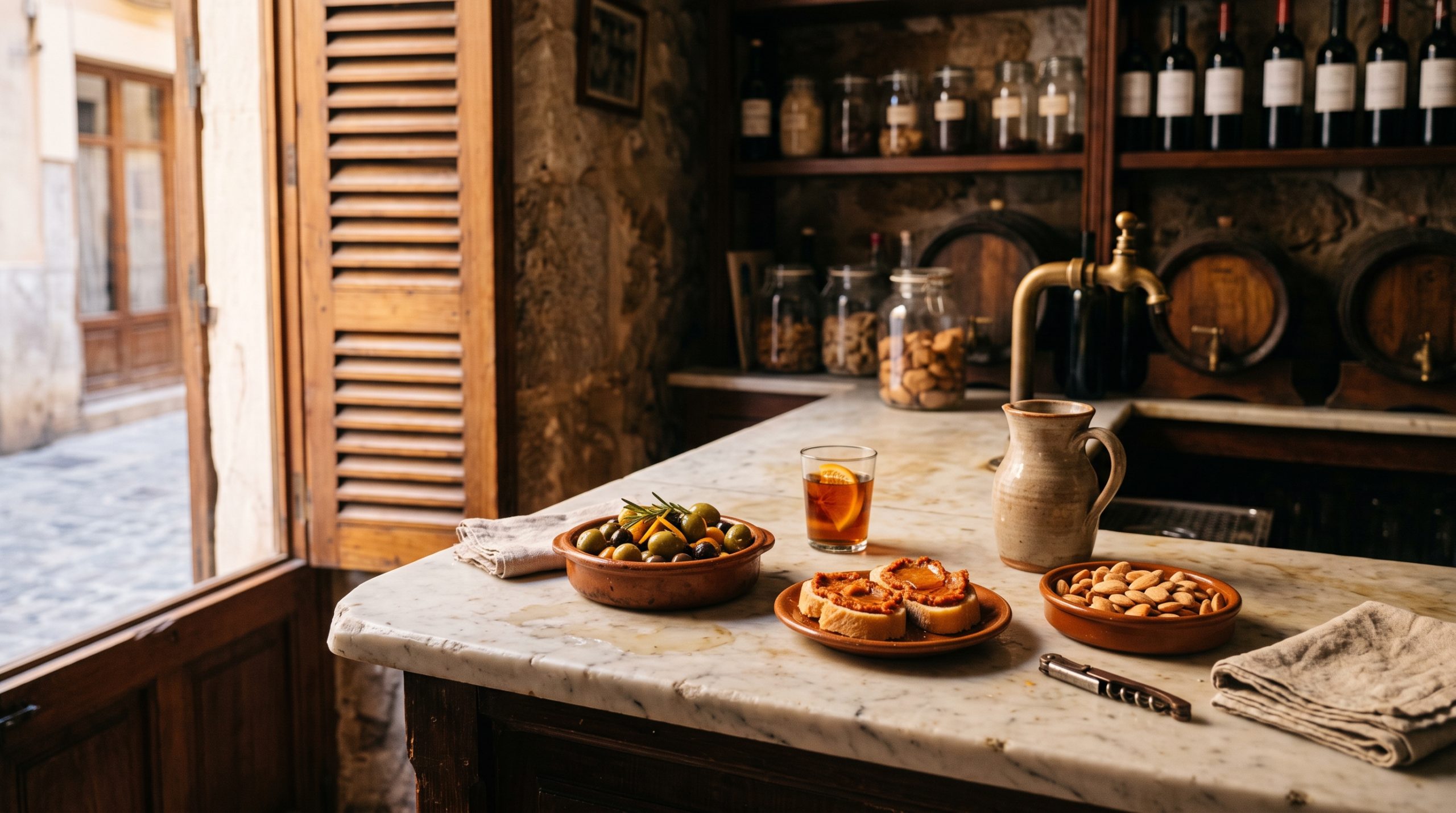
  • Best Tapas in Palma Old Town: A Local’s Guide to 9 Bars

    Best Tapas in Palma Old Town: A Local’s Guide to 9 Bars

    At A Glance

    The best tapas in Palma Old Town are found in the old barrel bodegas around Santa Eulàlia and Sa Gerreria, not on the Passeig del Born.

    • Nine bars worth your time, from a 1955 barrel shop to a bar run by the co-founder of London’s Barrafina.
    • A tapa at a traditional bodega runs roughly €2.50 to €7. A creative seafood plate can pass €25.
    • Mallorcan bar food is its own thing: sobrasada, pa amb oli, trampó and variats, not the Andalusian standards.
    • Locals eat late. Bars fill from about 21:00, and counter pinchos often sell out before then.
    • Every bar here is within a 15-minute walk of our tasting room on Carrer dels Hostals.

    Palma has a tapas problem, and it is one of geography. The bars clustered along the Passeig del Born and the cathedral approach are the ones most visitors find, and they are largely the ones locals avoid. Walk five minutes east into the lanes behind the town hall and the picture changes completely: barrel bodegas that have been pouring since the 1950s, counters stacked with pinchos that sell out by ten, and kitchens turning sobrasada into things you will not find on the mainland. Those are the places our guides eat at on their own nights off, and the ones we build our Gourmet Palma Food Tour around.

    This is our working shortlist, kept to nine bars we are happy to send guests to. Some are cheap and scruffy, one is genuinely expensive, and two of them will make you queue. What they share is that Mallorcans still drink in them. Where a dish is worth ordering by name we have said so, and where a bar is better for a glass of vermut than a full meal we have said that too. If you want the wider picture first, our Palma food guide covers the island dishes and the other neighbourhoods worth eating in.

    Eating your way through the Old Town with someone who knows the counters? Our small-group food tour makes twelve stops.

    See the food tour

    What Makes Tapas in Palma Different

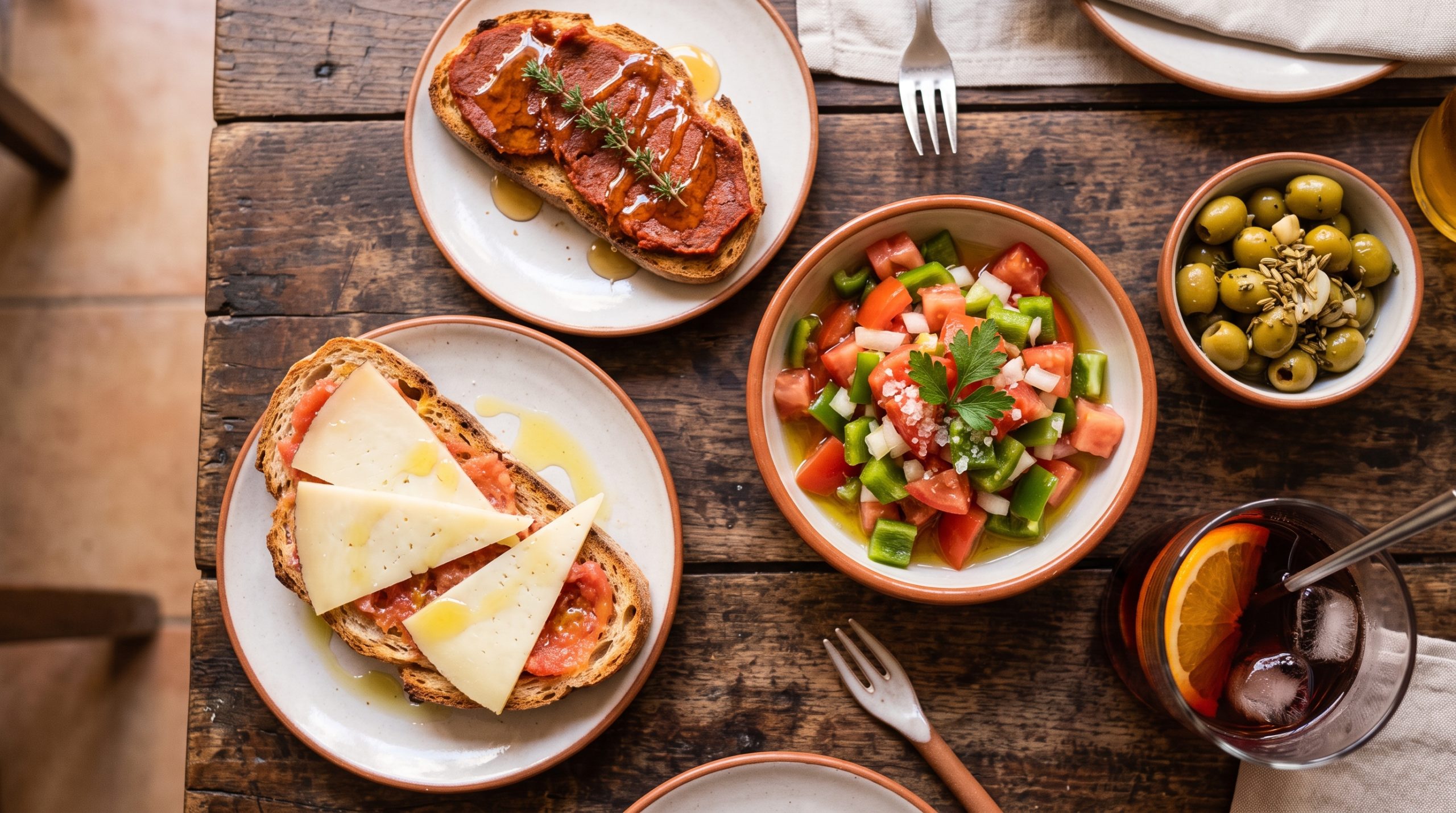
    Overhead view of Mallorcan tapas including pa amb oli, sobrasada on toast, trampo salad and vermouth
    Mallorcan bar food leans on sobrasada, cured sheep cheese and trampó rather than the Andalusian standards.

    If your reference point for tapas is Seville or Madrid, Palma will read slightly differently. The island spent centuries as a place that had to feed itself, and the bar food reflects that. Pork is preserved rather than grilled fresh. Bread is dense and unsalted. Vegetables arrive raw and chopped, dressed with oil, in the summer months. The result is a repertoire that overlaps with the mainland but is not the same repertoire.

    The single most Mallorcan thing on any bar counter is sobrasada, a soft cured sausage of pork, paprika and salt that is spreadable rather than sliceable. It goes onto toast, usually with honey, and the good version tastes of pimenton and fat in roughly equal measure. Alongside it you will find pa amb oli, which is bread rubbed with the pulp of a ramíret tomato and covered in oil, then topped with whatever the bar does well: cured mahon cheese, jamón, anchovy, or nothing at all. It is the island’s default snack and a fair test of a kitchen, because there is nowhere to hide when a dish has four ingredients. The sweet counterpart to all this is the ensaimada, which several of these bars will serve you at breakfast the next morning.

    Two other words are worth learning before you order. Trampó is a cold salad of tomato, green pepper and onion, diced small and dressed simply, which appears both as a tapa and as a topping on the flatbreads called cocas. Variats is the more useful one: a plate assembled from several of whatever the bar has cooked that day, usually including croquettes, meatballs, a piece of fried fish and some form of potato. Ordering variats is how a local eats lunch at a bodega, and it is a considerably better strategy than reading a menu you cannot fully parse.

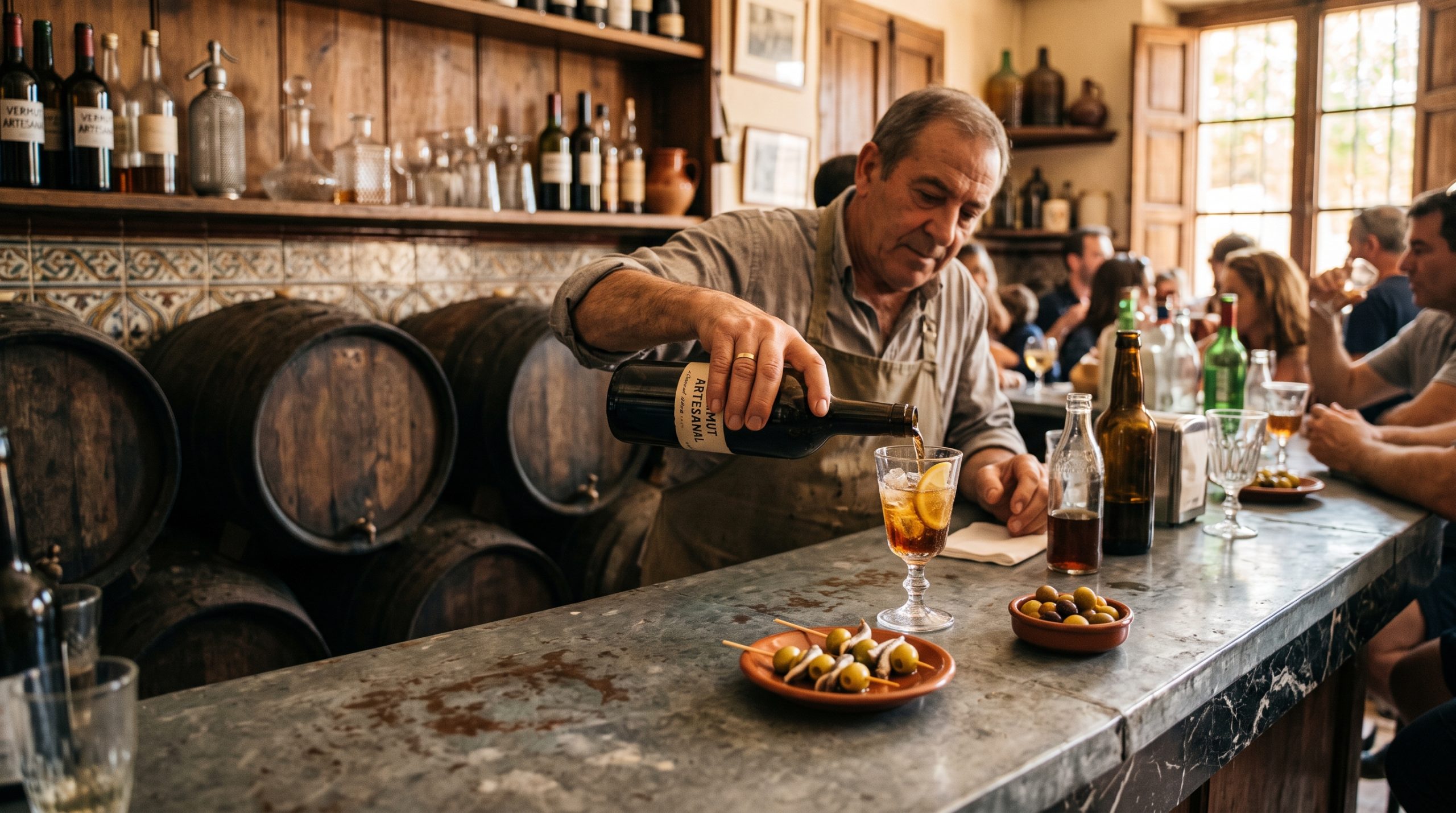
    Drink alongside it is generally beer in a small glass, a caña, or vermut on ice with an orange slice and a green olive. Vermouth in Palma is not a fashion revival in the way it is in London. It is what people have drunk before Sunday lunch for a long time, and the better bodegas pour it from the barrel or from house-labelled bottles rather than the commercial brands. Later in the evening the island’s own spirits take over.

    The Nine Best Tapas Bars in Palma Old Town

    Vermouth being poured at a traditional Palma bodega counter lined with oak wine barrels
    The old bodegas still work the way they always did, with the barrels behind the counter doing the storage.

    Listed roughly from the most traditional to the most modern. Opening hours in Palma move around with the season and with staff holidays, so check before you set out on any particular evening.

    1. Bar Bodega Morey

    Carrer d’en Morei 4, behind the town hall near Plaça Santa Eulàlia. Morey opened in 1955 as a shop selling wine from the barrel, which was an ordinary way to buy wine in Palma at the time and is now almost extinct. It became a bar later, and it is still tiny: six tables, two stools at the counter, and a room that fills and empties several times over an evening.

    Order the ensaladilla rusa, the escalivada with salt cod, or the hake pastel, and drink the house vermut. This is the cheapest bar on the list by a distance: a 2022 review in the Majorca Daily Bulletin put the ensaladilla at €4.50 and a caña at €2, and while those figures have almost certainly drifted upwards since, the bar has not repositioned itself. There is no reservation system. Arrive early, stand if you have to, and do not plan a long sit-down meal here. If you would rather learn to cook this kind of food than queue for it, that is what the Olivar Market Tour and Tapas Class exists for.

    2. Bodega La Rambla

    Via Roma 6, on the edge of the Old Town where it meets La Rambla. Trading since 1940 and bought in 1969 by Roberto Pérez, who turned what had been a wine shop into one of the bars that established the tapas format in Palma. The room is functional rather than pretty, with the food laid out where you can see it and a crowd that skews local and middle-aged.

    The thing to order is the variats mallorquins, the house version of that assembled plate, which is what most of the room is eating. Be aware that the bar states plainly on its own website that it does not take table reservations, in those words, so treat any advice telling you to book as wrong. Go at an off hour if you want a table, or accept that you will be standing at the bar with a caña for a while first.

    3. Celler Sa Premsa

    Plaça Bisbe Berenguer de Palou 8, at the northern edge of the Old Town near Plaça d’Espanya. Strictly this is a celler rather than a tapas bar, which is a distinction worth understanding: a celler is a Mallorcan wine-cellar restaurant, historically a place that stored wine in enormous barrels and fed people alongside it. Sa Premsa was opened in 1958 by Antonio Mayol, a banker who converted an old warehouse, and it is now run by the third generation of the same family.

    The room is the reason to come: a cavernous hall lined with barrels the height of a person, with bullfighting posters and marble-topped tables. Eat the sopes mallorquines, a dish of bread and vegetables that is closer to a moist stew than a soup, or the arròs brut, the island’s dark rice with rabbit and snails. Finish with gáto, the almond cake, with almond ice cream. It takes bookings online, and for a group of more than four you should use them.

    4. La Bóveda

    Carrer de la Boteria 3, in La Llotja, the old merchants’ quarter down towards the seafront. A family-run tapas house with a tiled interior, a stone floor, and wine barrels standing in as high tables for people who did not get a seat. It is busier and louder than the bodegas above, and it is one of the few places in this part of town that has held its ground while the surrounding streets turned towards tourism.

    The dishes to order are the setas al Roquefort, mushrooms in a blue cheese sauce, and the dates wrapped in bacon, both of which sound like they belong to a different decade and both of which are very good. The scrambled eggs with Serrano ham and the croquettes are the other reliable choices. Expect somewhere in the region of €20 to €30 a head with drinks. It takes bookings through its own site, and in high season you will want one.

    5. Bar Espanya

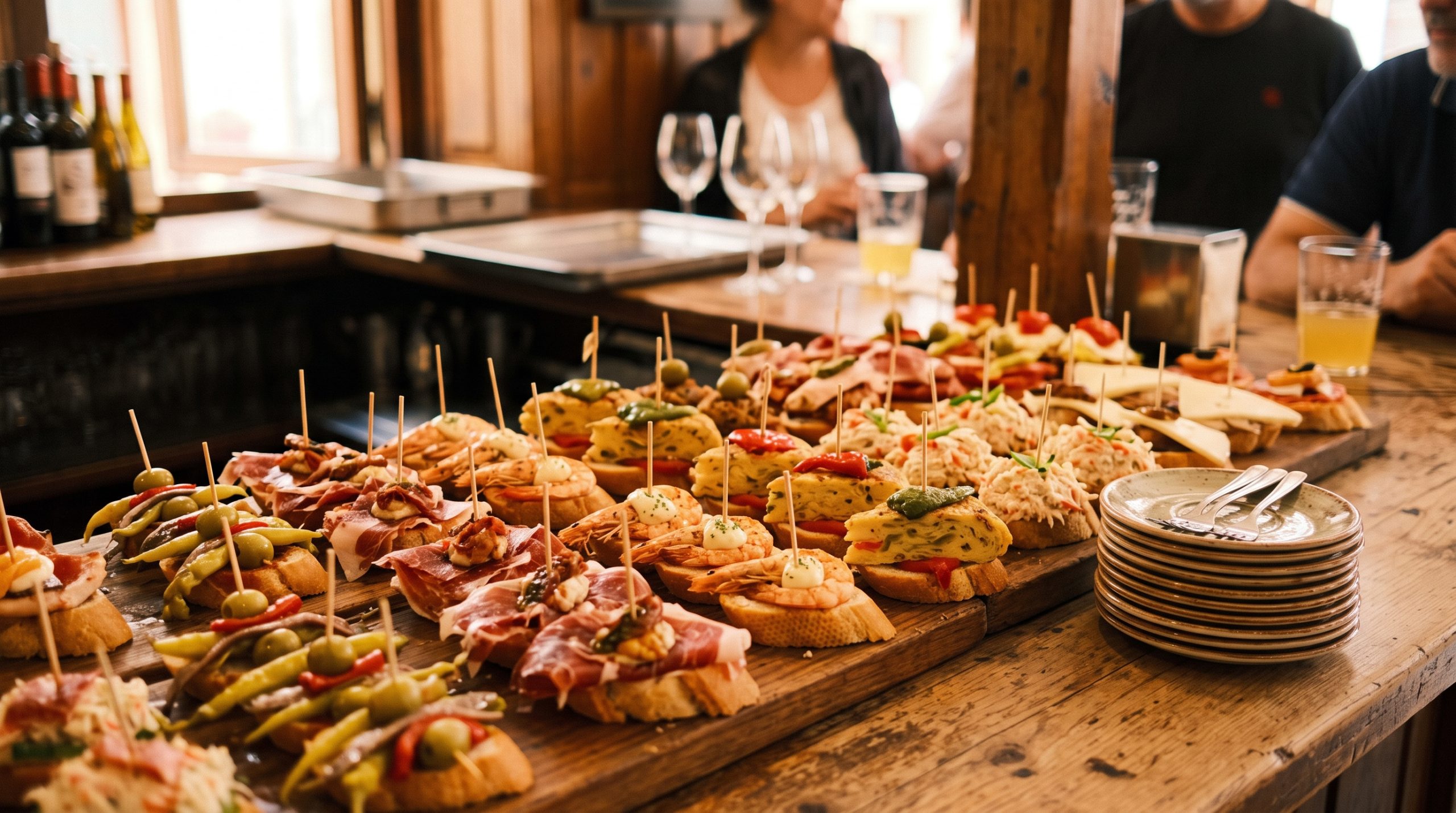
    Carrer Can Escursac 12, a few steps off Plaça Major. There are two branches and this is the one to use. Bar Espanya is one of the last places in central Palma that still lays fresh pinchos along the bar in the Basque manner, which means small constructions on bread, held together with a stick, that you take from the counter rather than order from a menu.

    It is also the best-value stop on this list, and unusually for Palma the prices are published: a skewer from the bar is €2.45, the cojonudo with sobrasada is €4, the sirloin with foie and caramelised onion is €5.75, and larger plates run from €8.25 for the bravas with sobrasada up to €17.50 for a board of Iberian ham. The counter is the whole point and it empties as the evening goes on, so this is a bar to hit at the start of a crawl rather than the end.

    Rows of pinchos on bread held with cocktail sticks along a Palma bar counter
    Counter pinchos are taken, not ordered. Go early, because the good ones disappear first.

    6. Moltabarra

    Carrer del Pes de la Farina 12, in Sa Gerreria. This was the old craftsmen’s quarter, and it spent a long stretch as the part of the Old Town nobody walked through after dark. It has changed, though not completely, and Moltabarra is one of the genuine neighbourhood bars that survived the transition rather than arriving after it.

    The premises were a nineteenth-century drugstore and the original bar and fittings are still in place. Food is pinchos along the counter plus small fried, seafood and meat plates to share, and the bar brews its own beer under the name Moltabirra, which is the sort of pun that tells you what the room is like. It opens evenings only and closes on Sundays, it takes bookings online, and it is one of the few bars here where bringing a dog is uncontroversial. Its own beer aside, it pours a decent range of the island spirits covered in our Mallorca gin guide.

    7. La Rosa Vermuteria & Colmado

    Carrer de la Rosa 5, beside Plaça Weyler. La Rosa opened in June 2015 in premises that had stood empty for years, and it is generally credited as the first bar in the Balearics built specifically around vermouth. It passed its tenth anniversary in 2025, which in Palma’s current restaurant climate counts for something.

    The house vermut is the order, with ham carved by hand and a plate of good tinned conservas alongside it, which is a more serious proposition in Spain than the words suggest. The kitchen also does grilled octopus, tuna tartare, croquettes and prawns in garlic. It sits slightly above the average for the area on price and it is open through the day rather than in split shifts, which makes it useful when everything else is shut between four and eight. Book ahead. There is a sister bar of the same name out in Santa Catalina, so check which address you are heading to.

    8. La Bodeguilla

    Carrer de Sant Jaume 3. Run by two brothers across two floors with a wine shop attached, and listed in the MICHELIN Guide. It is worth being precise about that, because a number of listing sites describe La Bodeguilla as Michelin-starred and it is not. A Guide listing means the inspectors rated it worth including, which is a real distinction and a different one.

    The wine list runs past 350 references and is the main argument for coming, though the food holds up: salt cod taco with grilled calçots, Mallorcan suckling pig, Black Angus lomo alto, and a long tapas section that includes grilled oysters and the standard bravas and Padrón peppers. Michelin puts it in the three-euro-sign bracket, so it is a sit-down dinner rather than a stop on a crawl. It handles its own bookings directly.

    9. El Camino

    Carrer de Can Brondo 4, between La Llotja and the Born. El Camino opened in 2019 and its provenance is unusual for Palma: it was set up by Eddie Hart, co-founder of Fino and Barrafina in London, and both the head chef and the manager came over from Barrafina. What that means in practice is a 34-seat bar with no dining room, where you sit facing an open kitchen and watch your food being cooked in front of you.

    The cooking is very good and the bill reflects it. Anchovies run to €27 for five, scallops €23 for four, and carabineros €33 for two, so this is the one bar on this list where you should look at prices before you order rather than after. The salt cod pil-pil, the grilled octopus and the courgette flowers are the dishes to build a meal around. Seatings are timed at roughly ninety minutes and booking is effectively required. Published hours differ between its own site and the listing sites, so ring rather than turn up on spec.

    What to Order If You Only Have One Night

    Cured hams hanging above a charcuterie stall inside a historic Palma food market
    Most of what ends up on a Palma bar counter passes through the Mercat de l’Olivar first.

    Visitors often order the same four things across four different bars without meaning to, because patatas bravas and croquettes are on every menu and are the easiest words to recognise. The list below is what to ask for instead if you want the version of the meal a Mallorcan would eat, and it is roughly the running order we use on our tastings.

    Order These Instead

    • Pa amb oli amb formatge — the bread, tomato and oil base with cured sheep cheese. The house benchmark.
    • Sobrasada amb mel — the soft cured sausage on toast with honey. Order it warmed if the bar offers it.
    • Variats — the mixed plate of the day. Cheapest way to eat well and the most local order you can place.
    • Trampó — the chopped raw salad. Best from June to September when the tomatoes justify it.
    • Croquetas de sobrasada — the island’s answer to the standard ham croquette, and better than it.
    • A glass of Mantonegro or Prensal Blanc — native Mallorcan grapes. Ask, because the house pour is often peninsular.

    That last point is the one most people miss. Mallorca grows grape varieties that exist essentially nowhere else, several of which were recovered from near-extinction within living memory, and most bars will pour you something from Rioja unless you ask. Mantonegro is the light aromatic red of Binissalem and Prensal Blanc is the saline white that goes with everything on this list. If the idea of tasting through the island’s recovered varieties properly appeals, that is exactly what our Mallorcan Wine Tasting with Tapas sets out to do, with each wine paired against a small plate.

    Inside A Tasting Palma Experience

    Let someone else find the counters

    Twelve tastings across the Old Town and the Olivar Market, capped at ten guests, with the people who actually cook and pour in these streets.

    A guide showing a small group around a stall at the Olivar Market A flight of five Mallorcan wines paired with small tapas plates The Tasting Palma tasting room set with wine glasses and small plates Guests preparing Mallorcan tapas with a chef in a cooking class A small group raising glasses in a toast around a long shared table A speciality coffee cupping set up with grinder, scales and tasting cups
    Book the Gourmet Palma Food Tour

    From €85 · 4 hours · Max 10 guests · Gift vouchers available

    How to Walk a Tapas Crawl Through the Old Town

    Narrow Palma Old Town lane with bar tables and warm lamplight at dusk
    The Old Town is compact enough that four bars in an evening is a short walk rather than a march.

    The Old Town is small. From Plaça Major to La Llotja is about twelve minutes at a normal pace, and every bar above sits inside that rectangle. The constraint is not distance, it is timing, because Palma runs on a schedule that catches out anyone arriving from northern Europe.

    Most kitchens close between roughly 16:00 and 20:00. Bars reopen for the evening at eight, fill from nine, and are at their best from about half past nine onwards. If you eat at seven you will be alone in a room with the lights up. A workable sequence is to start at Bar Espanya around eight while the pinchos are still stacked, walk ten minutes to Morey or Moltabarra for a second round, and finish somewhere with chairs. Do not attempt more than four bars. The portions are larger than they look and the fourth stop is usually where a good evening becomes an average one.

    Two practical notes. Sunday is unreliable across the board and Monday closures are common, so if your trip is short, plan the crawl for a Thursday, Friday or Saturday. And the counter is not the same as the table: in several of these bars the price differs depending on where you eat, and in all of them the counter is where the conversation is. Standing up is not a downgrade. If you would rather not manage the timings and the queue at all, our full range of tastings and tours is built around exactly these streets, at the hours they actually work.

    What Tapas Cost in Palma

    A glass of red vermouth with orange and olive beside a dish of anchovies on a marble bar
    A vermut and a dish of anchovies is the cheapest way to sit down anywhere on this list.

    Prices below are the most recent published or reported figures at the time of writing, and Palma has been moving quickly, so read them as a guide to the relative bracket of each bar rather than as a quote.

    BarDistrictBracketReference price
    Bar EspanyaPlaça MajorCheapBar skewer €2.45; pincho €4.00
    Bar Bodega MoreySanta EulàliaCheapEnsaladilla €4.50; caña €2.00 (2022)
    Bodega La RamblaLa RamblaCheap to midNot published
    MoltabarraSa GerreriaCheap to midNot published
    Celler Sa PremsaPlaça d’EspanyaMidNot published
    La BóvedaLa LlotjaMidAround €20–30 per person
    La Rosa VermuteriaSant JaumeMidSlightly above area average
    La BodeguillaSant JaumeHigherMICHELIN €€€
    El CaminoCan BrondoHighScallops €23 (4); carabineros €33 (2)

    As a rule of thumb, two people eating properly at a traditional bodega with a drink each will spend somewhere around €30 to €45 in total. The same two people at El Camino will spend three times that, and will have eaten differently rather than more.

    Frequently Asked Questions

    Where Do Locals Eat Tapas in Palma?

    Mostly in the lanes east and north of the town hall, around Plaça Santa Eulàlia and into Sa Gerreria, plus the older bodegas near La Rambla. The rule of thumb is that the further you get from the Passeig del Born and the cathedral approach, the higher the proportion of Mallorcans in the room. Bar Bodega Morey, Bodega La Rambla and Moltabarra are all firmly local crowds.

    Which Part of Palma Old Town Has the Best Tapas?

    Sa Gerreria and the streets behind Plaça Santa Eulàlia have the highest concentration of genuine bars in the smallest area. La Llotja, down towards the old merchants’ exchange, has the better sit-down tapas restaurants. Both are inside a fifteen-minute walk of each other, so you do not have to choose.

    What Time Do People Eat Tapas in Palma?

    Later than most visitors expect. Kitchens generally close in the afternoon from about 16:00 and reopen around 20:00. Bars start filling at 21:00 and are busiest between 21:30 and 23:00. Arriving at 19:00 means an empty room, and at several bars it means the counter pinchos have not been laid out yet.

    How Much Do Tapas Cost in Palma?

    At a traditional bodega, roughly €2.50 to €7 per plate, with a small beer at around €2 to €3. Two people can eat and drink well for €30 to €45. Creative and seafood-led kitchens sit far above that, with individual plates of scallops or carabineros passing €20 to €30.

    What Is the Difference Between a Tapas Bar, a Bodega and a Celler?

    A bodega began as a shop selling wine from the barrel and added food later, which is why the good ones still have barrels behind the counter. A celler is a Mallorcan wine-cellar restaurant, larger, with full plated dishes rather than small plates. A tapas bar is the general modern term and covers both plus everything newer.

    Can You Do a Guided Tapas Tour in Palma Old Town?

    Yes. Walking food tours of the Old Town are the common format, typically visiting several bars and markets across three to four hours. Our own small-group Gourmet Palma Food Tour caps at ten guests and includes twelve separate tastings, and in July and August it runs as an evening walk to avoid the afternoon heat.

    Do You Need to Book Tapas Bars in Palma?

    It depends on the bar, and getting this wrong is the most common mistake. El Camino, La Bodeguilla and La Bóveda should be booked. Celler Sa Premsa, La Rosa and Moltabarra take bookings and it is worth using them for groups. Bodega La Rambla states explicitly that it does not accept table reservations, and Bar Bodega Morey has no system at all.

    Eat With Us

    Twelve tastings, ten guests, one evening in the Old Town

    Our Gourmet Palma Food Tour walks the streets on this list with the people who cook on them, stopping at the Olivar Market, the old bodegas and the bakeries. From €85 per person.

    Check availability

    Private and corporate groups up to 32 guests · Get in touch
  • Palma Food Guide: What to Eat, Where to Eat It, and How to Book a Tour

    Palma Food Guide: What to Eat, Where to Eat It, and How to Book a Tour

    At A Glance

    Palma eats like an island rather than like mainland Spain: preserved pork, unsalted bread, native grapes and a pastry protected by law.

    • Eight dishes carry the island’s cooking. Sobrasada and pa amb oli are the two you will meet first.
    • The Old Town, Sa Gerreria and Santa Catalina are the three areas worth eating in. Most visitors only find the first.
    • Lunch runs 13:30 to 15:30 and dinner rarely starts before 21:00. Kitchens close in between.
    • Mallorca grows grape varieties found almost nowhere else, several recovered from near extinction.
    • The Mercat de l’Olivar is the working market. Go before 13:00 or the good stalls have packed up.

    Mallorca spent most of its history feeding itself from a limited larder, and the cooking still shows it. Pork gets preserved rather than eaten fresh, bread is baked without salt and used as a vehicle for everything else, vegetables turn up raw and chopped through the summer, and the sweet things lean on almonds and lard. It overlaps with mainland Spanish food without being it, and the moment that becomes obvious is usually the first time you order what you assume is a tapa and get something you have never seen. Our Gourmet Palma Food Tour exists to shorten that learning curve.

    This is the overview: the dishes worth knowing, the parts of the city worth eating in, the markets, what to drink, and how to book something if you would rather be shown than left to work it out. Where a subject deserves more room than a section, we have written it up separately and linked through, starting with the Old Town tapas bars that most of this food actually turns up in.

    Twelve tastings, ten guests, four hours through the Old Town and the Olivar Market with a local guide.

    See the food tour

    What to Eat in Palma

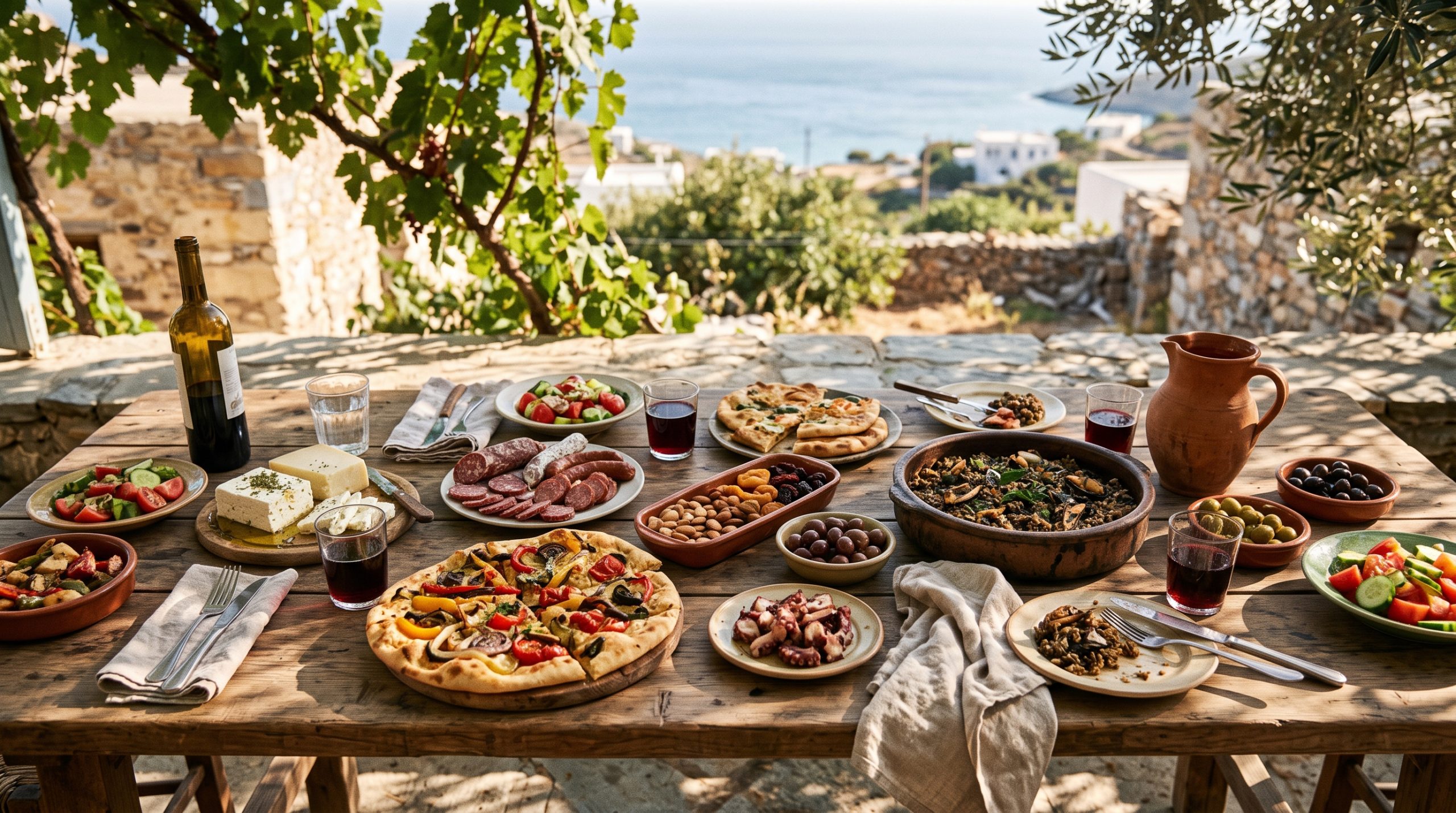
    A table spread of Mallorcan food including cured sausage, sheep cheese, coca flatbread and dark rice
    The island larder: preserved pork, sheep cheese, flatbread, dark rice and almonds.

    1. Sobrassada

    The island in a single ingredient. Minced pork, paprika, salt and pepper, cured slowly in a casing until the fat and meat break down into something soft enough to spread with a knife. It is not sliceable like chorizo and it is not supposed to be. The paprika does the colouring and much of the flavour, and the quality varies enormously with the pig.

    You will meet it spread on toast, usually with a drizzle of honey, and warmed under a grill so the fat loosens. It also goes into croquettes, gets folded into rice, and turns up as an ensaimada filling. The premium version comes from the black Mallorcan pig, the porc negre, and is worth the difference if a menu offers the choice.

    2. Pa amb oli

    Bread with oil, which undersells it considerably. Dense Mallorcan bread, traditionally unsalted, rubbed with the cut face of a soft ramíret tomato until the pulp works into the crumb, then covered in olive oil and salt. That is the base, and on its own it is a snack. Add cured sheep cheese, jamón, sobrassada or anchovy and it becomes a meal.

    It is also the fairest test of a kitchen anywhere on the island, because there is nothing to hide behind. Bad bread, tired tomatoes or cheap oil all show up immediately. Order it early in a meal at a bar you have not tried before and you will know within a mouthful whether to stay.

    3. Ensaïmada

    The spiral pastry every visitor carries home in a flat tied box. Thin dough laminated with pork lard, proved slowly, baked and dusted with icing sugar. The name comes from saïm, the word for lard, and that is not decorative etymology: the protected designation makes lard mandatory, and vegetable fat disqualifies the product entirely.

    Only two versions are legally protected, the plain llisa and the one filled with candied pumpkin. Crema, chocolate and sobrassada versions are real and widely sold but sit outside the designation. Which bakeries still do it properly, what the rules actually say and how to get one home intact are covered in our guide to the best ensaimada in Palma.

    4. Arròs brut

    Literally dirty rice, named for its colour rather than anything else. A soupy rice cooked with rabbit, chicken, pork, snails, wild mushrooms and a heavy hand of spice, including cinnamon and clove, which is what marks it out from mainland rice dishes and gives it a faintly medieval quality.

    It is winter food and inland food, traditionally cooked after a hunt, and it is served much wetter than a paella. The best versions are in the old cellers rather than in the seafront restaurants. If you see it on a menu in August, it is there for tourists.

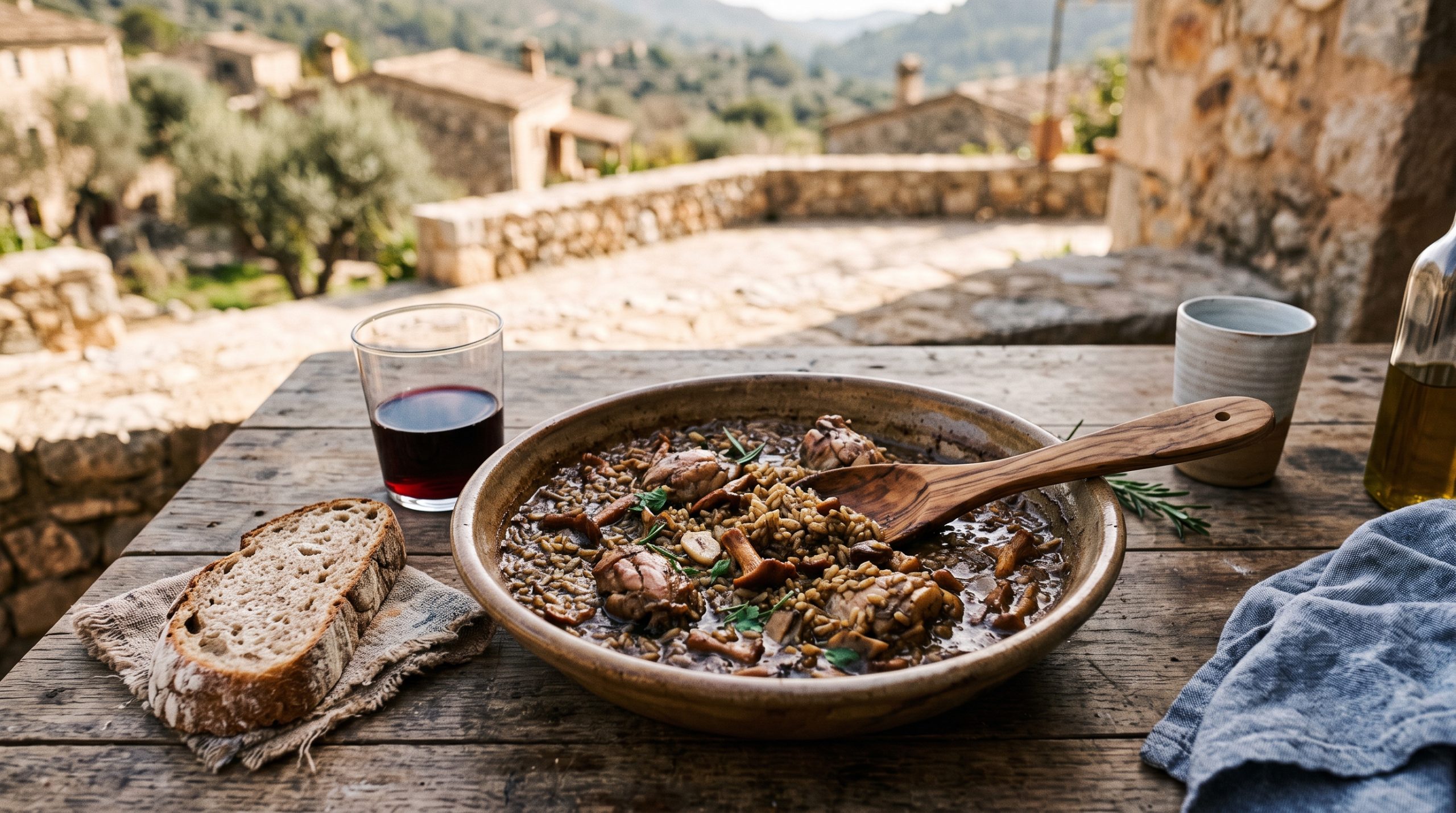
    A shallow earthenware dish of arros brut, the Mallorcan dark soupy rice, with bread and red wine
    Arròs brut arrives much wetter than a paella. The cinnamon and clove are what mark it as Mallorcan.

    5. Tumbet

    The island’s vegetable dish and the one thing on this list a vegetarian can rely on. Layers of potato, aubergine and red pepper, each fried separately in olive oil, then stacked and baked under a plain tomato sauce. It is closer to a ratatouille in intent than in texture, since everything keeps its shape.

    It appears as a side, as a main course, and topped with a fried egg or a piece of fish, and it is one of the few island staples that suits a table with a vegetarian at it. For the drinking side of the same larder, including the newer gin producers and how Palo and Herbes are made, see the Mallorca gin guide. Made properly it takes a long time, because frying each vegetable separately is the entire point and skipping it produces something muddy. A good tumbet is a reliable sign of a kitchen that is not cutting corners elsewhere.

    6. Frit mallorquí

    A fry-up of potato, red pepper, fennel and offal, usually lamb or pork liver and heart, cooked hard in oil with garlic. There is a seafood version, frit de peix, and a version made with the blood and organs of the pig after the annual slaughter. It is the most old-fashioned thing on this list and the one most likely to divide a table.

    If offal is not your territory, the fish version is the way in and is genuinely excellent. If it is, order the lamb one in an inland restaurant rather than a tourist-facing kitchen, because this is a dish that suffers badly from being made cautiously.

    7. Coques

    Mallorcan flatbreads, closer to a pizza base without cheese, topped and baked in a hot oven. The classic is coca de trampó, spread with the raw chopped salad of tomato, green pepper and onion that gives it its name, dressed in oil and baked until the edges char. There are also versions with onion and goat cheese, with chard, and sweet ones with apricot.

    They are bakery food and street food rather than restaurant food, sold by the slice from the forns, and they are the cheapest good lunch in Palma by a wide margin. Making them is one of the things guests learn on our Olivar Market Tour and Tapas Class, because the dough is forgiving and the topping changes with whatever the market has.

    8. Gáto d’ametla

    Almond cake, made with ground almonds instead of flour, lemon zest and a lot of eggs, which makes it naturally gluten free. Mallorca has grown almonds for centuries and the February blossom across the interior is one of the island’s set pieces, so this is a dessert with a landscape behind it.

    It is dry on its own and it is meant to be. The standard service is a scoop of almond ice cream on top, which is how the old cellers send it out, and the combination is much better than either half. Order it after arròs brut and you have eaten a complete traditional Mallorcan meal.

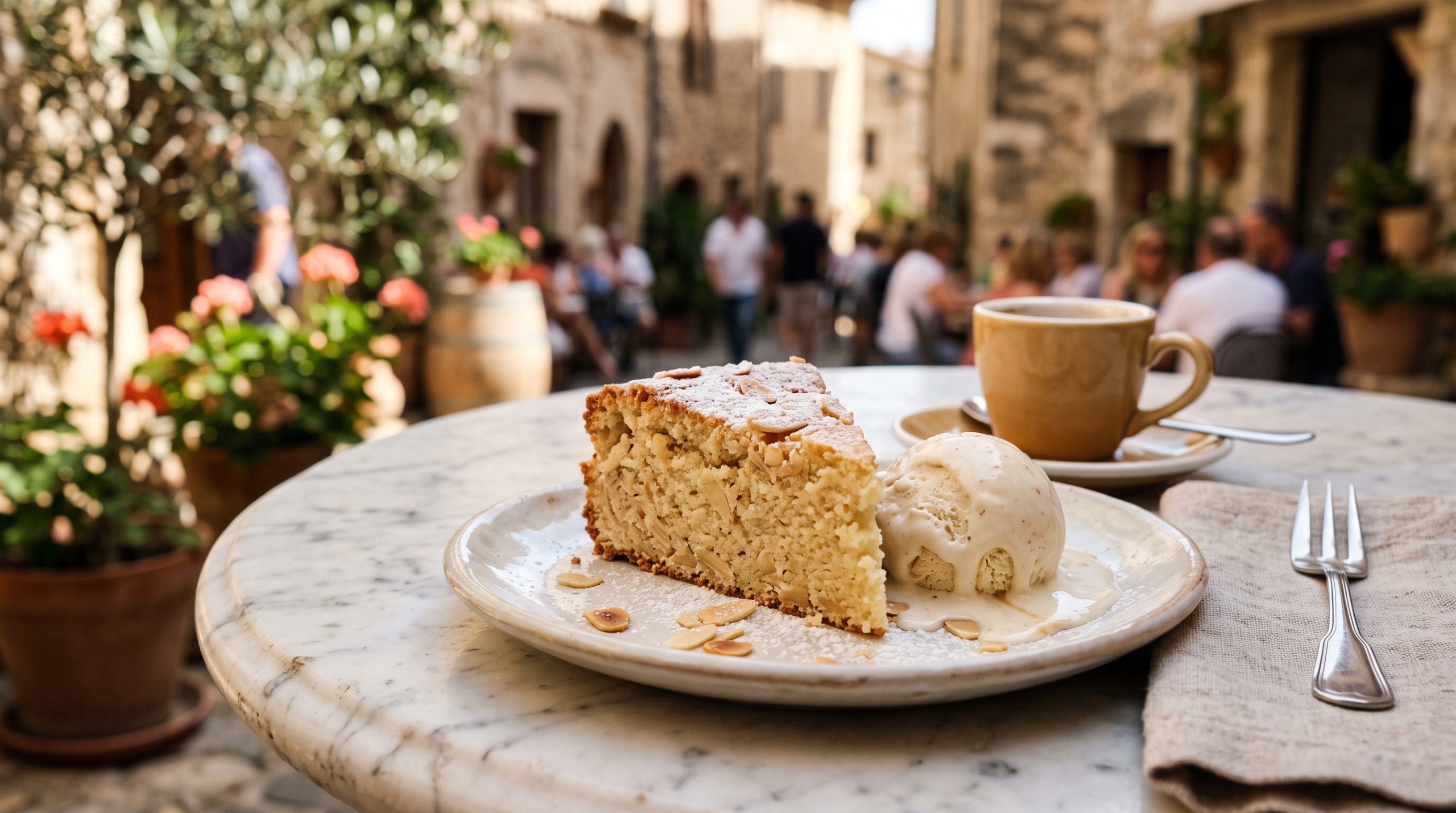
    A slice of Mallorcan almond cake with a scoop of almond ice cream melting beside it
    Gáto is dry by design. The almond ice cream is not optional as far as the old cellers are concerned.

    Where to Eat in Palma

    Hands sharing small plates and white wine at a sunny terrace table in Palma
    Most of Palma’s good eating happens within a twenty-minute walk of the cathedral.

    Palma is compact, and the difference between eating well and eating badly is mostly a matter of a few hundred metres. The tourist concentration runs along the Passeig del Born and the cathedral approach. Step out of that corridor in any direction and the quality rises while the price falls.

    AreaWhat it is good forWorth knowing
    Old Town, around Santa EulàliaTraditional bodegas, barrel wine, cheap platesThe highest concentration of genuinely old bars in the city
    Sa GerreriaNeighbourhood bars, pinchos, craft beerThe old craftsmen’s quarter. Evenings only for most places
    La LlotjaSit-down tapas, seafoodBusier and pricier. Book at weekends
    Santa CatalinaModern kitchens, its own market, international foodFifteen minutes west of the centre. Least traditional
    Passeig del BornPeople watchingWhere the prices are highest and the cooking most cautious
    Portixol and MolinarSeafront fish, long lunchesA twenty-minute walk or short bus east along the bay

    The timing matters as much as the location. Lunch is served from about 13:30 to 15:30 and most kitchens then close until 20:00 or later. Dinner service fills from 21:00. Arriving at 19:00 expecting a full menu is the single most common mistake visitors make, and Sunday and Monday closures are widespread. Our full rundown of individual bars, with what to order in each and what it costs, is in the Old Town tapas guide.

    The Markets

    Crates of tomatoes, peppers, lemons and artichokes at a covered market stall in Palma
    The Olivar is a working market first and a visitor attraction second. Mornings are when it functions.

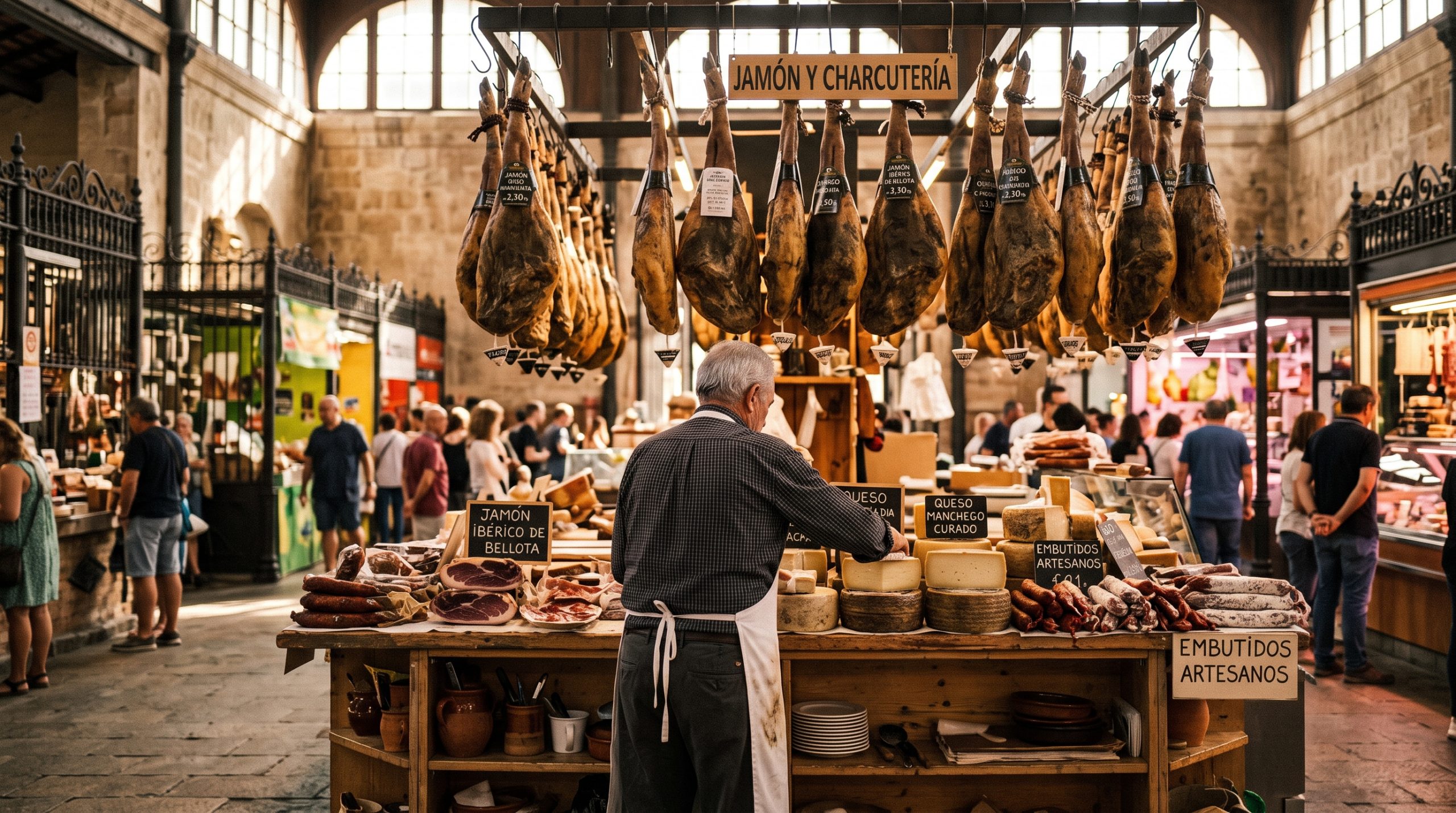
    The Mercat de l’Olivar is the one that matters. It is where the city actually shops, and where most of what ends up on a Palma bar counter passes through first: fish and shellfish landed that morning, whole cured hams, sobrassada from a dozen producers, sheep cheeses, and vegetables from the huertos of the interior. Several stallholders are the third or fourth generation of the same family in the same spot.

    Go in the morning. Stalls start winding down from around 13:00 and by mid-afternoon the good ones have gone, leaving the bar counters that stay open later. Those counters are worth a stop in their own right, since eating oysters and a glass of wine at a market bar at eleven in the morning is a normal thing to do here.

    Santa Catalina’s market is smaller, more gentrified and better for a relaxed lunch than for shopping. The Mercat de Pere Garau, east of the centre, is the least visited and the most local of the three. If you want to be shown how the Olivar works rather than wandering it, that is where our market tour starts, before moving to the kitchen to cook what has been bought.

    Inside A Tasting Palma Experience

    Built on stories, ready for yours

    Market tours, hands-on cooking and seated tastings of Mallorcan wine, gin and coffee, run in small groups from a 1920s Art Deco building in the Old Town.

    A guide showing a small group around a stall at the Olivar Market Guests preparing Mallorcan tapas with a chef in a cooking class A flight of five Mallorcan wines paired with small tapas plates The Tasting Palma tasting room set with wine glasses and small plates A speciality coffee cupping set up with grinder, scales and tasting cups A small group raising glasses in a toast around a long shared table
    See all experiences and book

    From €35 · 60 minutes to 4 hours · Max 8 to 16 guests · Gift vouchers available

    What to Drink

    Mallorca grows grape varieties that exist almost nowhere else, and several were recovered from the edge of extinction within the last few decades. Most bars will pour you something from Rioja unless you ask, so asking is the whole trick.

    Ask For These By Name

    • Mantonegro — the light aromatic red of Binissalem, and the island’s signature grape.
    • Prensal Blanc — also called Moll. Fresh, slightly saline white that suits everything on this page.
    • Callet — rustic and earthy red, lower in alcohol than it tastes.
    • Vermut — poured over ice with orange and an olive, before lunch. Not a fashion here.
    • Palo de Mallorca — dark, bitter, quinine-based aperitif with protected status. Taken with soda.
    • Herbes de Mallorca — anise and mountain herbs, drunk cold after eating. Sweet, mixed or dry.

    The wines are covered properly on our Mallorcan Wine Tasting, which works through five of these varieties with a winemaker’s account of how the recovered grapes were brought back. Coffee is its own tradition here too, with roasteries in Palma going back three quarters of a century.

    How to Book a Food Tour in Palma

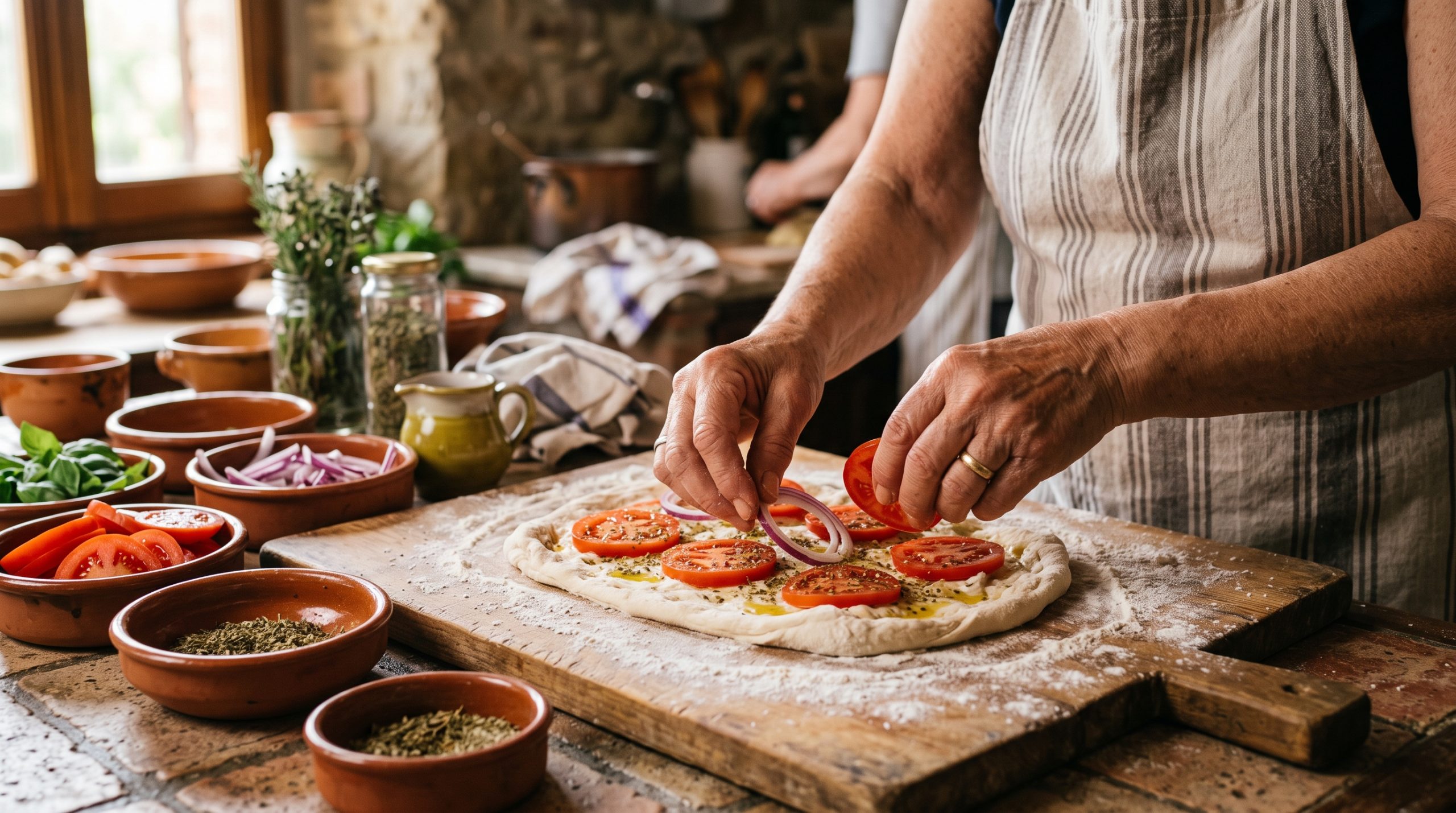
    Hands assembling a Mallorcan coca flatbread with sliced tomato and onion on a floured board
    Cooking classes work best after the market, when the ingredients are the ones you chose.

    There are three broad formats in Palma and they suit different people. A walking food tour covers ground and gives you a shortlist you can return to alone. A market tour with a cooking class goes deeper on fewer things and sends you home able to make them. A seated tasting is the shortest commitment and the best option in the afternoon heat or between other plans.

    ExperienceLengthGroupFrom
    Speciality Coffee Tasting75 minMax 10€35
    Mallorcan Gin Tasting60 minMax 10€39
    Wine Tasting with Tapas90 minMax 16€49
    Gourmet Palma Food Tour4 hoursMax 10€85
    Market Tour & Tapas Class4 hoursMax 8€129

    A few practical points whoever you book with. Group size is the variable that matters most, because a tasting for thirty is a lecture and a tasting for eight is a conversation. Ask where the tour actually goes, since some operators visit places that pay for the footfall rather than places worth eating in. Tell them about allergies and dietary requirements when you book rather than on the day, because tasting menus are prepared in advance and cannot always be changed on arrival. And in July and August, check whether the tour runs in the evening, as the middle of a Palma afternoon is no time to be walking between bars.

    Our own experiences run from our room at Almacenes Casa Roca on Carrer dels Hostals, in the 1920s Art Deco building in the Old Town, apart from the market tour and food tour which start outside the Olivar. Private and corporate bookings can seat up to thirty-two guests, and the gift vouchers are valid for twelve months if you are buying for someone else.

    Frequently Asked Questions

    What Food Is Palma de Mallorca Known For?

    Sobrassada, the soft spreadable cured pork sausage, and the ensaimada pastry are the two the island is best known for. Beyond those, the core dishes are pa amb oli, arròs brut, tumbet, frit mallorquí, the coca flatbreads and almond cake. Almost all of it reflects an island that had to preserve what it grew.

    Where Are the Best Places to Eat in Palma?

    The Old Town around Plaça Santa Eulàlia has the traditional bodegas, Sa Gerreria the neighbourhood bars, La Llotja the sit-down tapas restaurants, and Santa Catalina the modern kitchens. The Passeig del Born is where prices are highest and cooking most cautious, so walking five minutes off it improves both.

    What Time Do People Eat in Palma?

    Lunch runs from about 13:30 to 15:30, and it is the main meal. Most kitchens then close until 20:00 or later, with dinner service filling from 21:00. Arriving for dinner at 19:00 usually means an empty room and a limited menu. Sunday and Monday closures are common.

    Is Palma Expensive for Food?

    It varies more by street than by city. Two people can eat and drink well at a traditional Old Town bodega for around €30 to €45 in total, while a creative seafood-led kitchen will cost three times that. A slice of coca from a bakery is the cheapest good lunch available.

    What Is the Best Market in Palma for Food?

    The Mercat de l’Olivar, which is where the city genuinely shops for fish, cured meat, cheese and vegetables. Go in the morning, since stalls wind down from around 13:00. Santa Catalina’s market is smaller and better for lunch than shopping, and Pere Garau is the most local of the three.

    Is a Food Tour in Palma Worth It?

    It is most useful early in a trip, because it gives you a shortlist of places and dishes to return to on your own. The things worth checking before booking are group size, whether the itinerary visits places that pay for footfall, and whether summer tours run in the evening rather than the afternoon heat.

    Can You Eat Vegetarian in Palma?

    Yes, though traditional Mallorcan cooking leans heavily on pork. Tumbet, coca de trampó, pa amb oli with cheese and the vegetable-based salads are all naturally vegetarian. Note that a traditional ensaimada is made with pork lard and is not. Tell any tour or class about dietary requirements at the time of booking.

    Eat With Us

    Built on stories, ready for yours

    Market tours, hands-on cooking classes and seated tastings of Mallorcan wine, gin and coffee, run in small groups from our room in the Old Town. From €35 per person.

    See all experiences

    Private and corporate groups up to 32 guests · Get in touch