

At A Glance
Mercat de l’Olivar is Palma’s largest covered food market, trading since 1951, and it is a working market first and a visitor attraction second.
- Open Monday to Friday 07:00 to 14:30, Saturday 07:00 to 15:00. Closed all day Sunday.
- Around 45 stalls across two floors, plus tapas counters, an oyster bar and sushi.
- Plaça de l’Olivar 4, between Plaça d’Espanya and Carrer de Sant Miquel.
- Go before 11:00. The fish counters are at their best early and thin out by lunch.
- You can buy at a stall and have the bar next to it cook or plate it for you.
Mercat de l’Olivar is where Palma does its food shopping, and it has been doing it in the same building since 1951. It is the largest of the city’s covered markets, it sits five minutes from Plaça d’Espanya, and it is the single best hour a visitor can spend understanding how Mallorcans actually eat.
What it is not is a food court. Plenty of European markets have been quietly converted into places that sell craft beer to tourists while three surviving greengrocers hold on at the back. The Olivar has added bars and counters without losing the trade underneath, which is why you will find a chef buying turbot at nine in the morning next to a couple ordering oysters and cava.
This guide covers the hours, the layout, what to buy, what to eat while you are there, and the one piece of local etiquette that changes the whole visit. If you want the wider picture of eating in the city, our Palma food guide covers the dishes and neighbourhoods beyond the market.
Want to shop the Olivar with a chef and then cook what you buy? Our market tour and tapas class runs for four hours, from €129.
See the market tour & classMercat de l’Olivar Opening Hours and Location
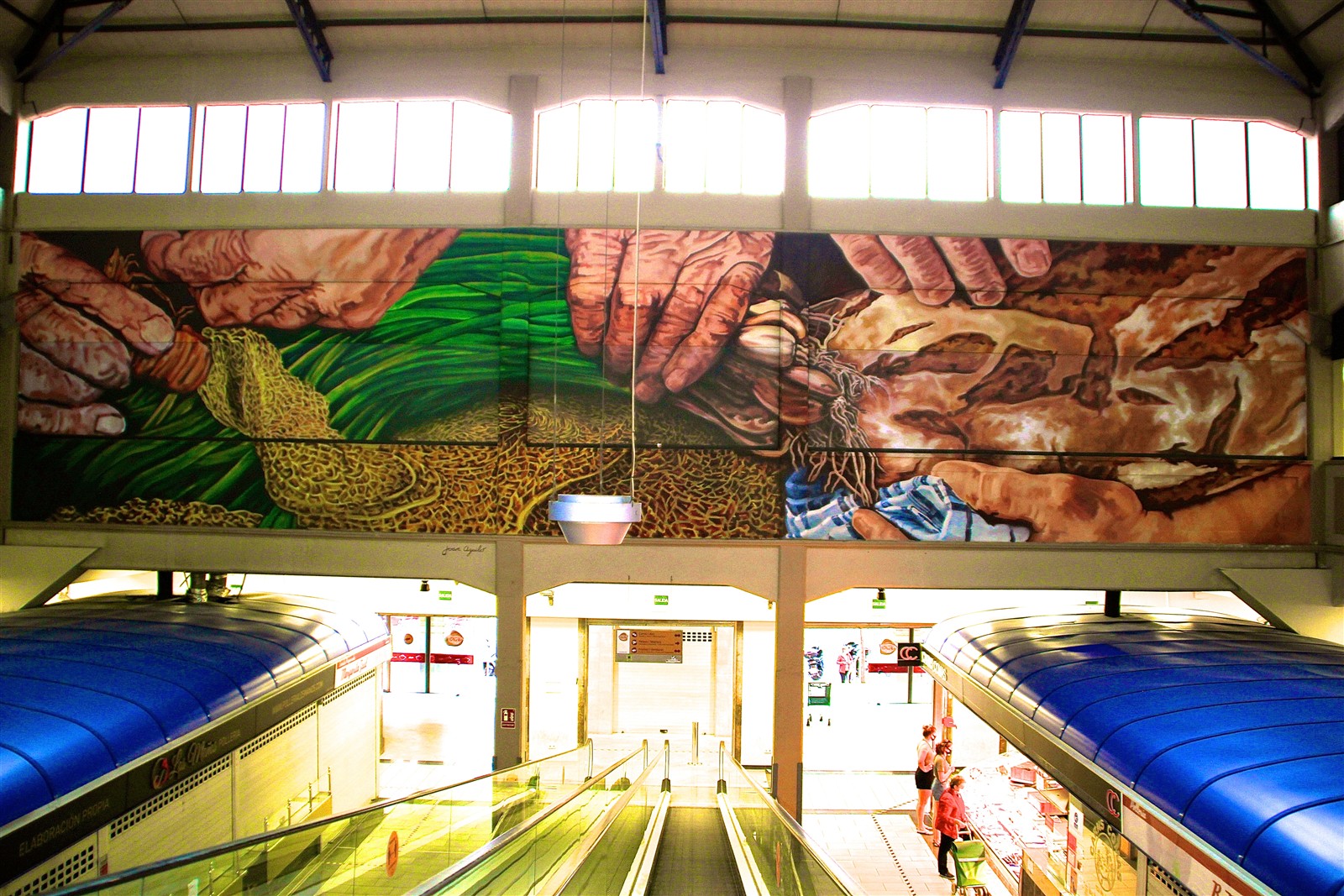
The market sits at Plaça de l’Olivar 4, tucked between Plaça d’Espanya and Carrer de Sant Miquel. From the Old Town it is a flat five to ten minute walk up Carrer de Sant Miquel, and from the Estáció Intermodal it is about four minutes. There is an underground car park directly beneath it, which is genuinely useful in a city where parking is otherwise difficult.
Hours are the thing to get right, because the market keeps working hours rather than tourist hours. It opens at seven in the morning Monday to Saturday, closes at half past two Monday to Friday, and at three on Saturday. It is closed all day Sunday. The gastronomy area, meaning the bars and counters, runs slightly later than the produce stalls.
| Day | Market hours | What it is like |
|---|---|---|
| Monday | 07:00–14:30 | Quietest weekday; some fish stalls limited |
| Tuesday to Thursday | 07:00–14:30 | Full trade, best balance of stock and space |
| Friday | 07:00–14:30 | Busiest weekday, extended evening trade in parts |
| Saturday | 07:00–15:00 | Busiest day overall, strong atmosphere, crowded |
| Sunday | Closed | Catches out a great many visitors |
The single most common mistake is arriving on a Sunday, or turning up at three in the afternoon on any day expecting lunch. By two o’clock the produce stalls are packing down and the atmosphere has gone. The useful window is eight until eleven if you want the market working, or midday until two if you have come mainly to eat.
A Short History of Mercat de l’Olivar
The market has served Mallorcans and visitors from the same site since 1951, which makes it younger than the city’s trading history but old enough to have shaped how central Palma shops. Before the building existed, the trade happened outdoors in the square, exposed to the weather and to whatever the summer did to fresh fish. Putting a roof over it was as much a public-health decision as a commercial one.
The name comes from the olive grove that once occupied the ground, which is why you will see it written as both Mercat de l’Olivar in Catalan and Mercado del Olivar in Spanish. Both are correct and locals use both. Signage across the building tends to favour the Catalan.
A substantial remodelling brought the interior up to modern standards without gutting the trade, which is the part worth appreciating. The lighting, refrigeration and layout are contemporary; the stallholders and the way business is done are not. Several stalls are in their third or fourth generation of the same family, and that continuity is the reason the market still functions as a market rather than as a food hall wearing one as a costume.
What to Buy at Mercat de l’Olivar
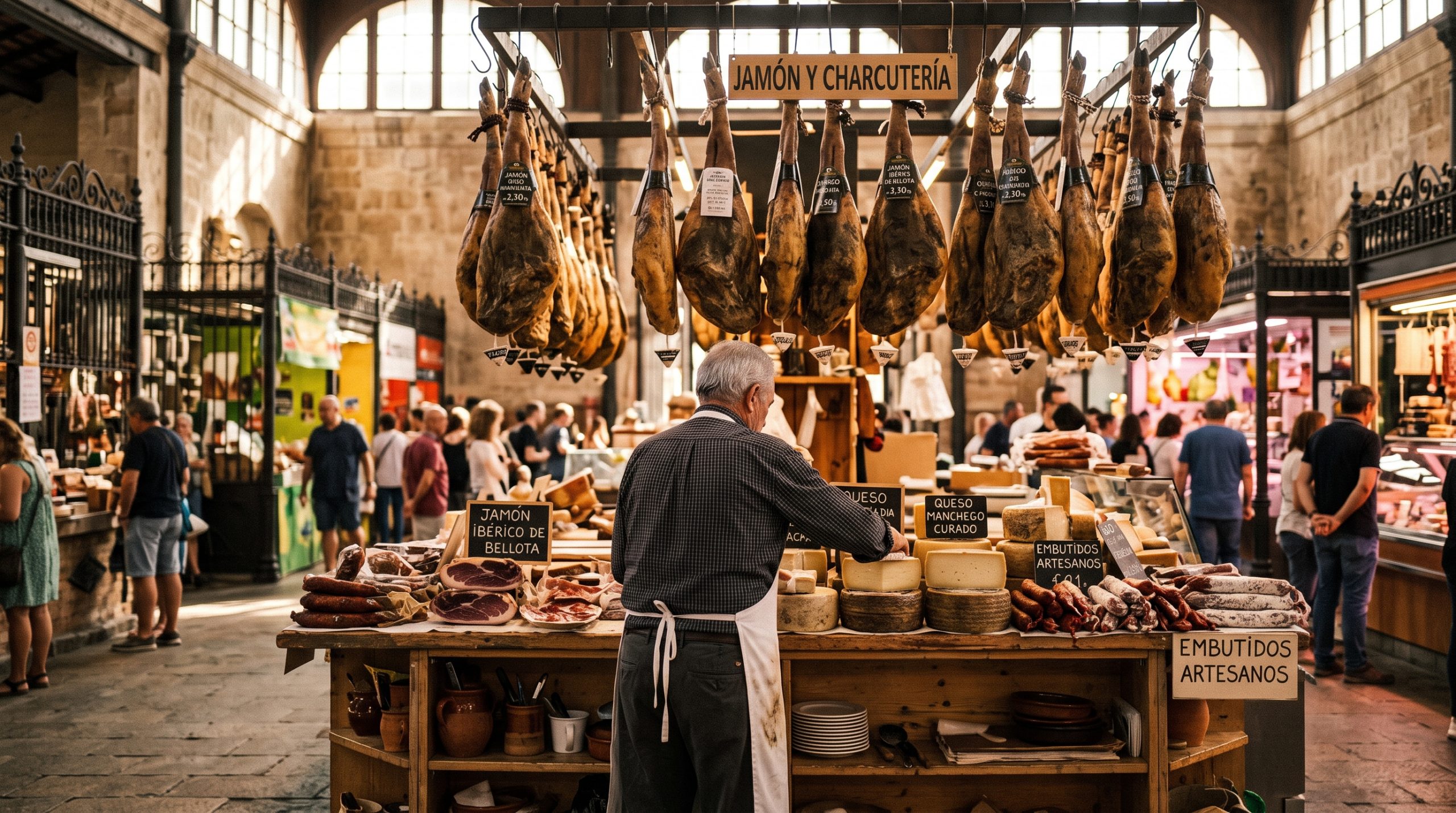
Around forty-five stalls trade across the building, covering fruit and vegetables, meat and poultry, fish and seafood, cheese, charcuterie, bread and pastries. The layout is straightforward: fish and seafood dominate one section, produce another, and the prepared-food counters sit among them rather than in a separate zone.
The buys that genuinely travel home are the cured and preserved ones. Sobrassada is the obvious one, and the market is a far better place to buy it than an airport shop, because you can ask which pig it came from and whether it is the protected Sobrassada de Mallorca. Our guide to what sobrassada actually is explains what to look for on the label.
Beyond that: Mahon cheese from Menorca, island olive oil, almonds, sea salt from the Es Trenc flats, and the flat-cap paprika that gives sobrassada its colour. Traders will vacuum-pack for a flight if you tell them you are travelling, which is worth asking for rather than assuming.
The produce is worth studying even if you are not cooking. Mallorcan tomatoes are a genuine local speciality, particularly the tomàtiga de ramellet that gets rubbed onto bread for pa amb oli and is sold on the vine in strings. In winter the citrus comes down from the Sóller valley and the oranges are unrecognisable next to supermarket fruit. In late summer the figs and the almonds arrive together.
The fish counters are the most impressive part of the building and the least useful to most visitors, because almost nobody on a short trip has a kitchen. They are still worth ten minutes. Ask what came from Mallorcan waters rather than the mainland, and you will learn more about the island’s food in that conversation than from any menu.
What To Buy At Mercat De l’Olivar
- Sobrassada de Mallorca – ask for the protected designation, and for it to be vacuum-packed.
- Mahon cheese – the semi-cured is the versatile one; the aged travels better.
- Island olive oil – Oli de Mallorca carries its own protected designation.
- Sea salt from Es Trenc – light, cheap and genuinely local.
- Almonds – Mallorcan almonds are smaller and sweeter than Californian ones.
- Fresh fish – only if you are self-catering, and only before 11:00.
Where to Eat Inside Mercat de l’Olivar
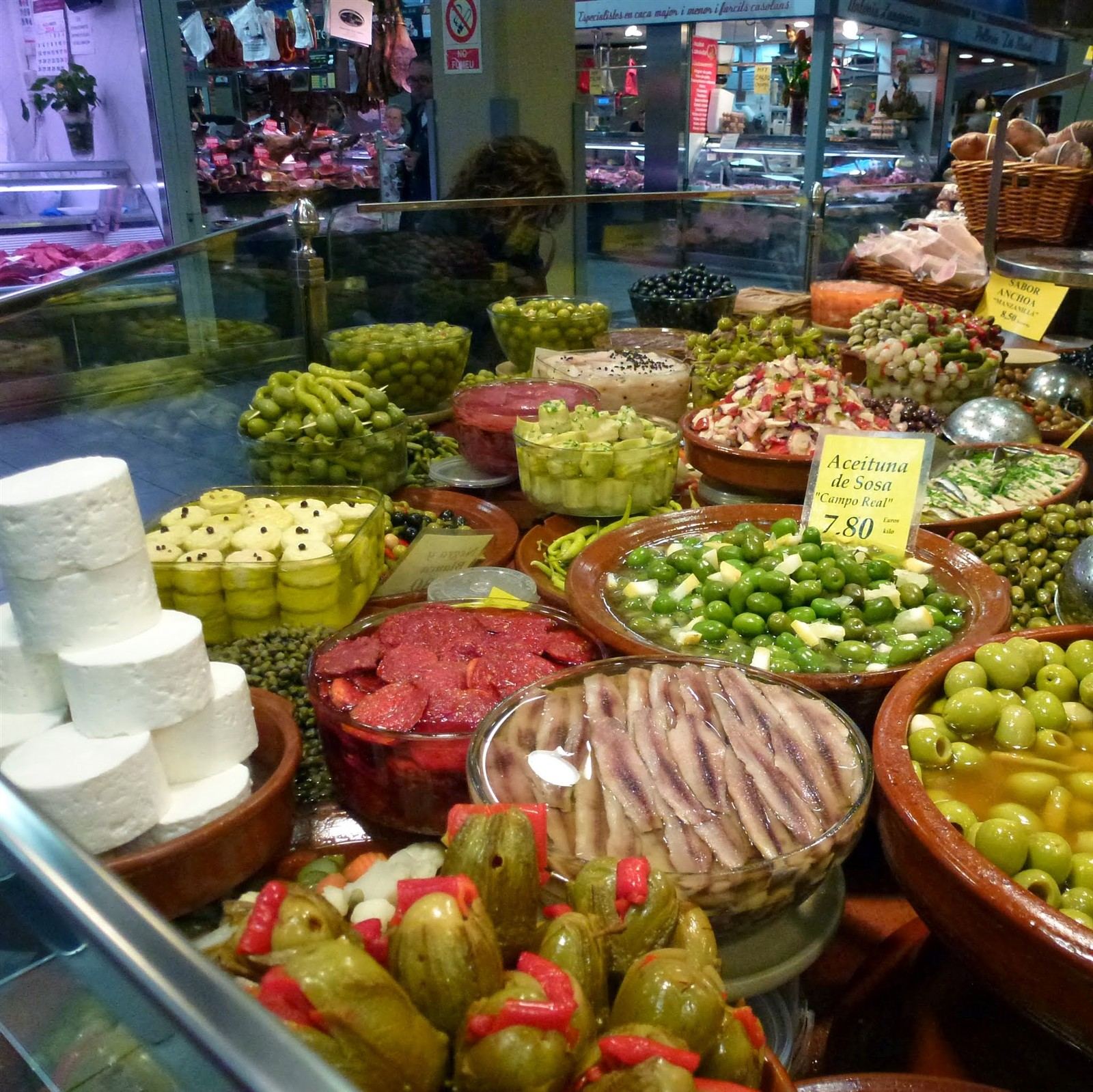
Eating at the Olivar works on a system that is not obvious from the door. There are proper bars and counters inside, including an oyster bar and a sushi counter, and you can sit at any of them and order from a menu like a normal restaurant. That is the easy version and it is perfectly good.
The better version is the local one: buy something raw at a stall, carry it to one of the bars, and have them cook or plate it for you for a small charge. Prawns, clams, a piece of fish, a slice of cheese. This is normal here and nobody will find the request strange. It is also considerably cheaper than ordering the same thing off a menu.
Timing again matters. The counters are busy with market traders and local office workers between one and two, which is exactly when the atmosphere is best and a seat is hardest. Arriving at half past twelve is the compromise. For bar-hopping beyond the market walls, our guide to the best tapas bars in Palma picks up where the market leaves off.
What to order depends on the counter. At the oyster bar, a half dozen with a glass of cava is the standard and costs less than the equivalent in most northern European cities. At the tapas counters, ask for a variat, the Mallorcan plate of several small things at once, which is the fastest way to taste six island dishes without ordering six of anything.
Visiting Mercat de l’Olivar Without a Kitchen
Most visitors are staying in a hotel room with no more than a kettle, which raises a fair question: why go to a food market at all if you cannot cook anything? The honest answer is that the shopping is only half of it, and the half you can do without a kitchen is the more interesting one.
Eat there rather than buy there. The bars inside are the point for anyone without a stove, and a market lunch of oysters, a variat and a glass of local white is one of the better value meals in central Palma. Then buy only what survives a suitcase: cured, packed, sealed. Sobrassada, cheese, oil, salt, almonds. The market is also a stop on our Palma food tour, which carries on through the Old Town’s bodegas and bakeries.
The other option is to let someone else deal with the kitchen. A guided market walk followed by a cooking class turns the produce you have just been looking at into lunch, which solves the problem entirely and is the reason that format exists. Either way, do not skip the market because you cannot cook. It is the most concentrated hour of Mallorcan food culture available anywhere in the city.
How Mercat de l’Olivar Compares with Palma’s Other Markets
Palma has three covered markets worth knowing and they are not interchangeable. The Olivar is the largest and the most complete, with the widest range of stalls and the strongest fish section. It is the one to choose if you want to shop rather than simply look.
Mercat de Santa Catalina, fifteen minutes west, is smaller and more neighbourhood-scaled. It has become the more fashionable of the two, with a stronger bar scene around it and a younger crowd, but it carries fewer stalls and a narrower range. Our Santa Catalina food guide covers that quarter properly.
Mercat de Pere Garau, east of the centre, is the least visited and the most purely functional. It is where a large part of the city genuinely shops, it has the best value, and it has almost no concessions to visitors at all. Go there third, once the other two have made sense.
| Market | Size | Best for | Walk from Old Town |
|---|---|---|---|
| Mercat de l’Olivar | Largest, ~45 stalls | Full shop, fish, eating in | 5–10 min |
| Mercat de Santa Catalina | Medium, ~50 stalls | Neighbourhood feel, bars around it | 15–20 min |
| Mercat de Pere Garau | Large, local | Value, no tourism at all | 20–25 min |
Walk the Olivar With Someone Who Shops There
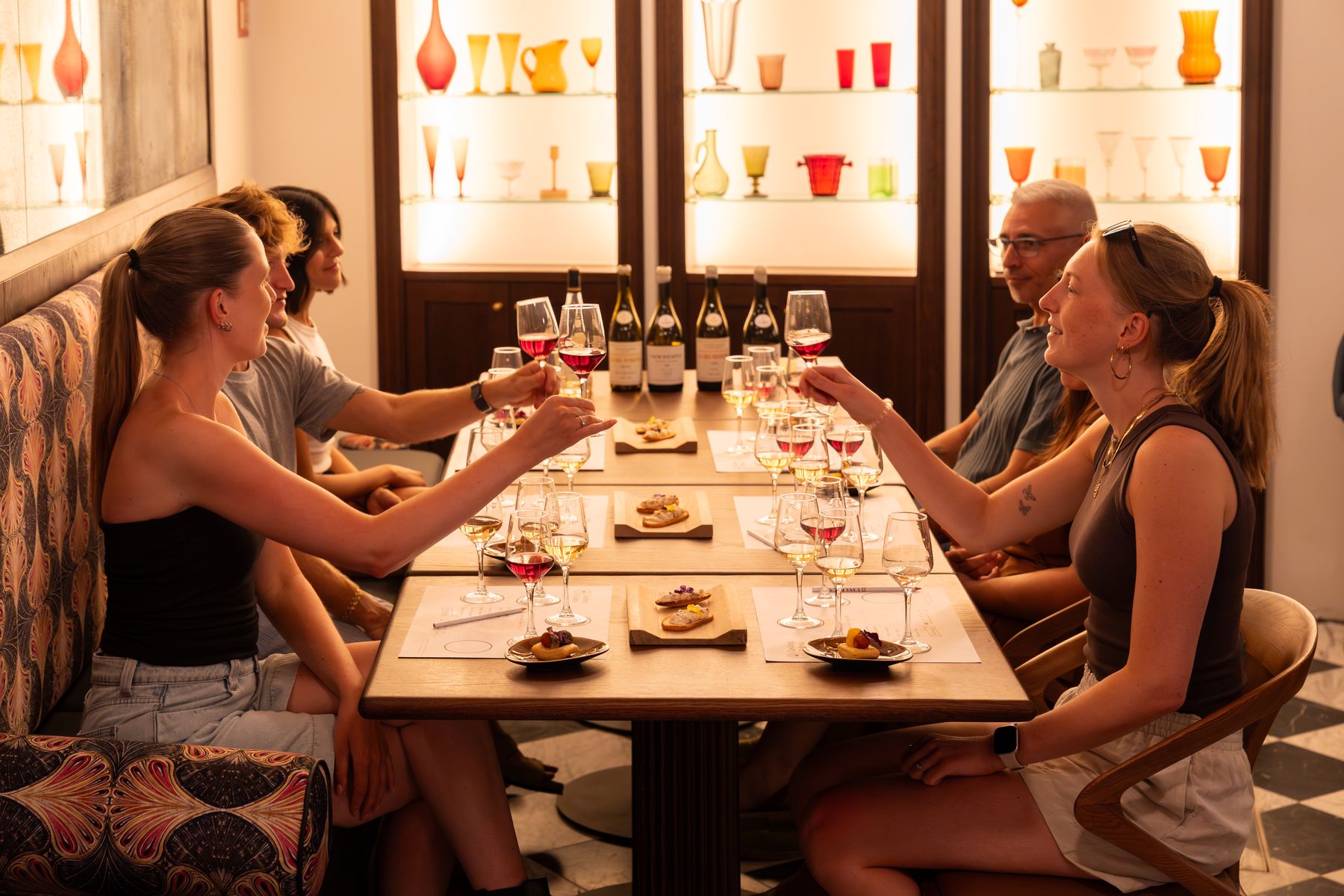
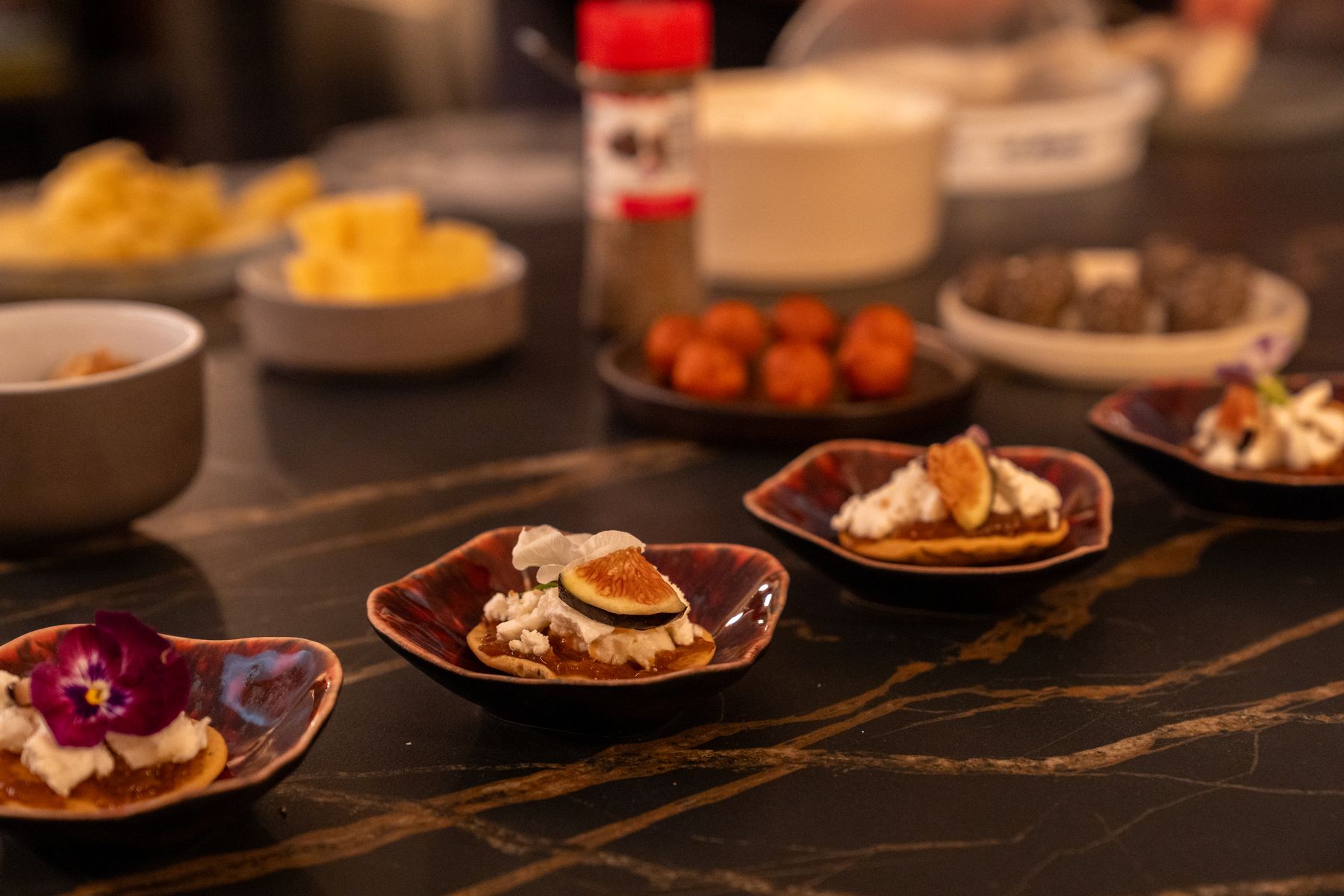
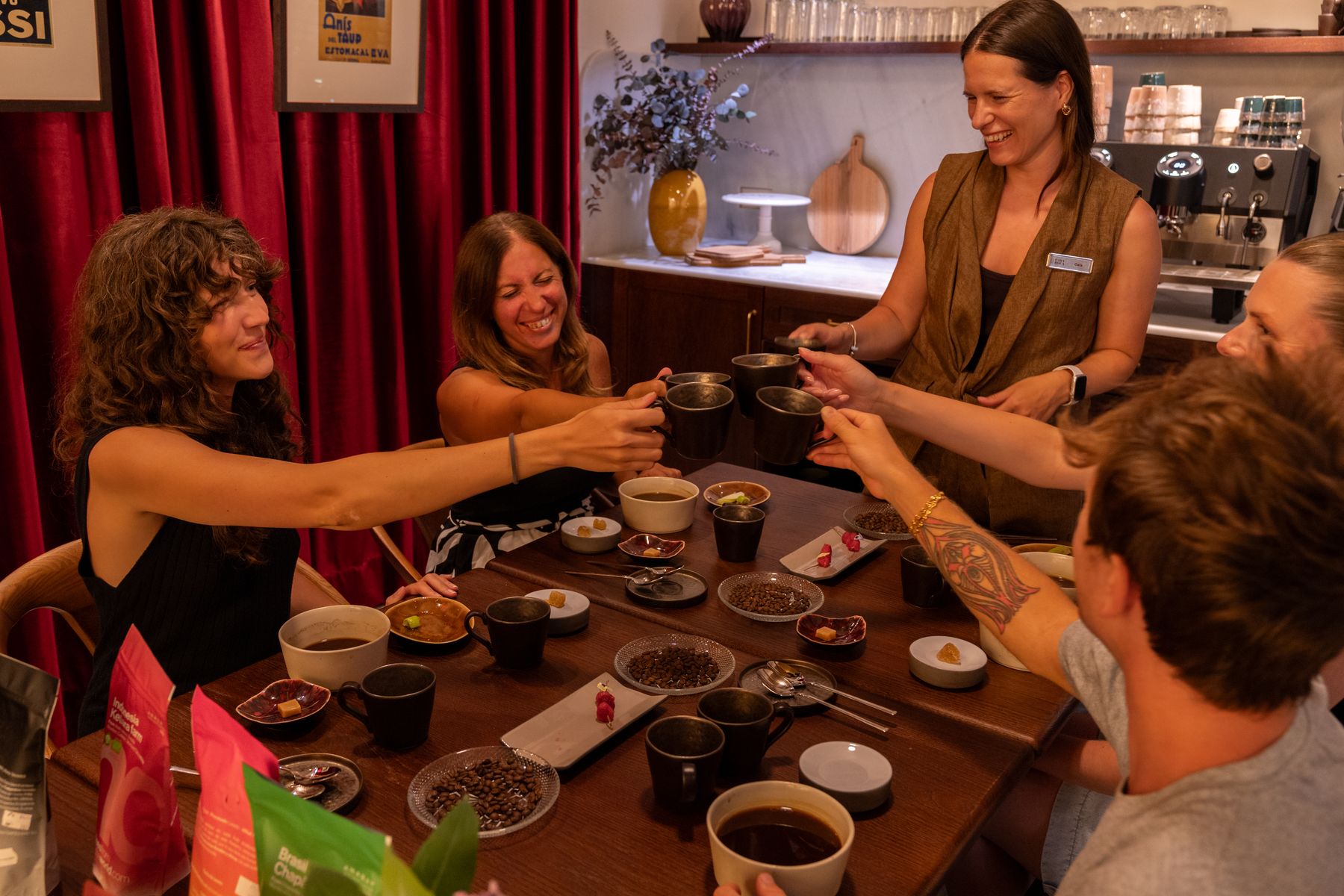
Our market tour starts at Mercat de l’Olivar, works the stalls with a guide who knows the traders, and finishes with a hands-on tapas class using what you bought. Small groups of six.


How to Visit Mercat de l’Olivar Like a Local
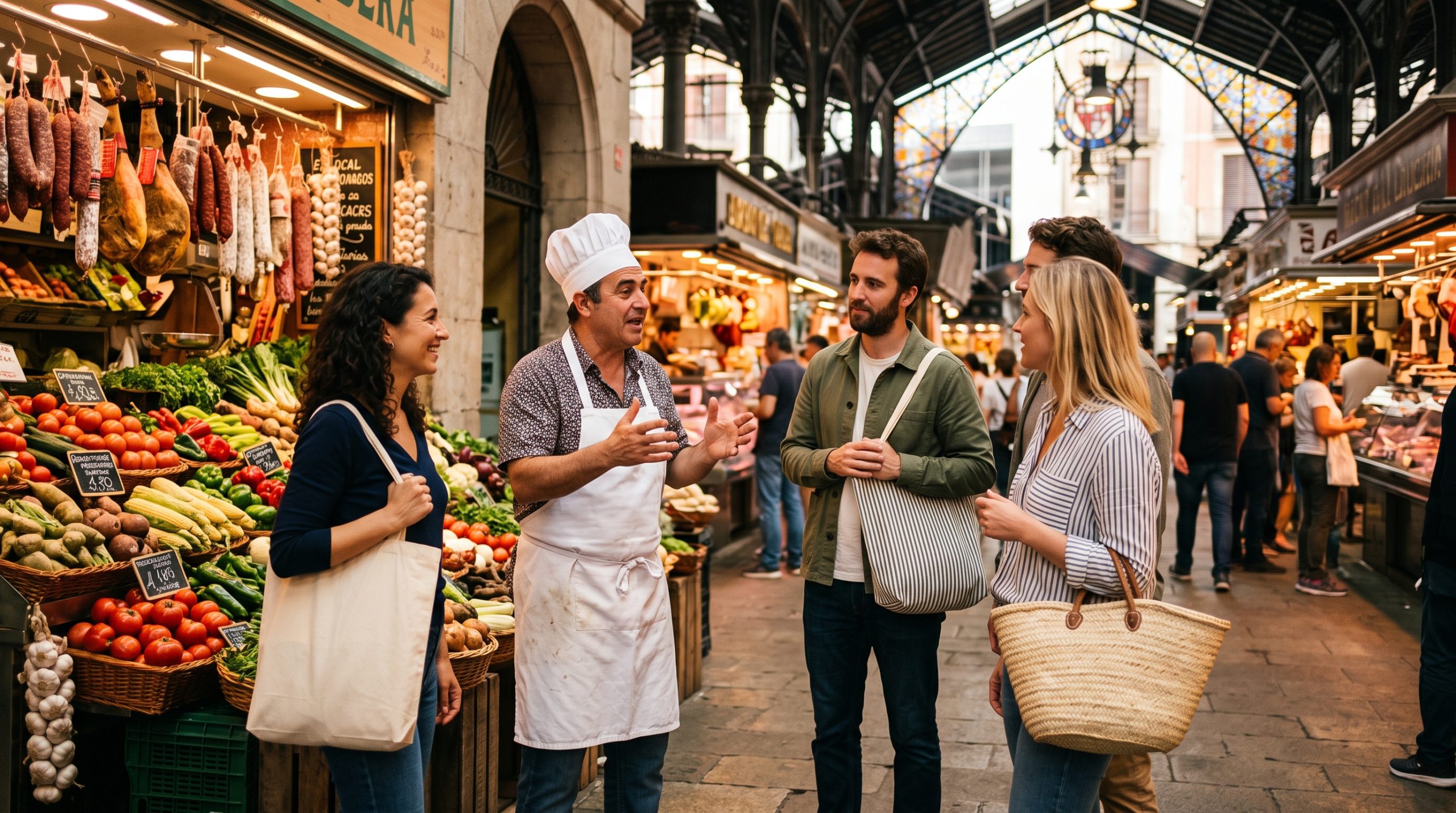
Take a number. Most stalls run a ticket system, and standing patiently at the front of a counter without one will get you nowhere for a long time. The dispenser is usually at the corner of the stall and nobody will point it out to you.
Ask what is good today rather than asking for something specific. The traders know what came in that morning and will tell you honestly, including when the answer is that today’s prawns are not worth the money. This is the single behaviour that changes a market visit from shopping into something more interesting.
Bring cash and a bag. Cards are widely accepted now but small purchases are still smoother in cash, and nobody will give you a carrier bag with any enthusiasm. Buy from more than one stall rather than trying to do everything at one counter, which is how the market is designed to work.
Say what the food is for. Telling a fishmonger you are cooking it tonight in a rented apartment with one pan gets you a completely different recommendation from asking for the most expensive thing on the ice. The same applies at the charcuterie counter: mention that you are flying home on Thursday and the answer changes, usually to something cured rather than something fresh.
Do not photograph stalls without asking. It is not that anyone will be rude about it, but the traders are working, and a phone in front of a counter during the busy hour is genuinely in the way. Buy something first and almost everybody will be happy to be photographed afterwards.
Finally, go twice if you can. The first visit is spent working out the layout and the ticket system; the second is when you actually shop well. The market is small enough that a second visit costs you twenty minutes, and it is the visit where the place starts making sense.
Best Time to Visit Mercat de l’Olivar
Between eight and eleven on a Tuesday, Wednesday or Thursday. That is when the stock is complete, the traders have time to talk, and the aisles are busy without being impassable. Fish is at its best in this window and noticeably picked over by one o’clock.
Saturday is the most atmospheric and the most crowded. If you have come for the spectacle rather than to buy, Saturday morning is the right call, but expect to queue and expect the popular counters to be three deep. Friday runs a close second and has extended trade in parts of the building.
Avoid Monday if you care about fish, since Sunday landings are limited and some counters run short. And do not plan anything around Sunday itself: the market is closed, and a surprising number of visitors arrive to a locked building having read a guide that did not say so.
Mercat de l’Olivar: Frequently Asked Questions
What Are Mercat de l’Olivar Opening Hours?
Monday to Friday from 07:00 to 14:30, and Saturday from 07:00 to 15:00. The market is closed all day Sunday. The bars and prepared-food counters run slightly later than the produce stalls, but the building empties from about 14:00.
Where Is Mercat de l’Olivar in Palma?
At Plaça de l’Olivar 4, between Plaça d’Espanya and Carrer de Sant Miquel. It is a flat five to ten minute walk from Palma Old Town up Carrer de Sant Miquel, and about four minutes from the Estáció Intermodal. There is an underground car park directly beneath the building.
Is Mercat de l’Olivar Open on Sundays?
No. Mercat de l’Olivar is closed every Sunday, which is the most common mistake visitors make. If Sunday is your only free morning, plan something else and come to the market on a weekday instead, ideally Tuesday to Thursday.
Can You Eat at Mercat de l’Olivar?
Yes. There are tapas bars, an oyster counter and a sushi counter inside, and you can order from them like a restaurant. The local method is better value: buy something raw at a stall and take it to one of the bars, which will cook or plate it for you for a small charge.
What Is the Best Time to Visit Mercat de l’Olivar?
Between 08:00 and 11:00 on a Tuesday, Wednesday or Thursday. Stock is complete, the fish counters are at their best, and the traders have time to talk. Saturday is the most atmospheric but also the most crowded, and Monday can be short on fish after limited Sunday landings.
How Many Stalls Does Mercat de l’Olivar Have?
Around 45 stalls across the building, covering fruit and vegetables, meat and poultry, fish and seafood, cheese, charcuterie, bread and pastries, plus the bars and prepared-food counters. It has traded on the same site since 1951 and is the largest covered market in Palma.
What Should You Buy at Mercat de l’Olivar to Take Home?
Sobrassada de Mallorca, Mahon cheese, island olive oil, Es Trenc sea salt and Mallorcan almonds all travel well. Ask the trader to vacuum-pack anything cured or fresh if you are flying, which they will do without fuss if you say so before they wrap it.
Is Mercat de l’Olivar or Santa Catalina Market Better?
The Olivar is larger and more complete, with the widest range of stalls and the stronger fish section, so it is the better choice for actually shopping. Santa Catalina is smaller and more neighbourhood-scaled, with a livelier bar scene around it. They are 15 to 20 minutes apart and worth seeing on separate mornings.
Shop the Market, Then Cook It
A guided walk through Mercat de l’Olivar with someone who buys there weekly, followed by a hands-on Mallorcan tapas class. Six guests maximum.
Book the Market Tour Ask Us a QuestionPhotographs of Mercat de l’Olivar by Enric (CC BY-SA 4.0), chixoy (CC BY-SA 3.0) and Nikolay Maksimovich (CC BY 3.0), via Wikimedia Commons.
Leave a Reply