


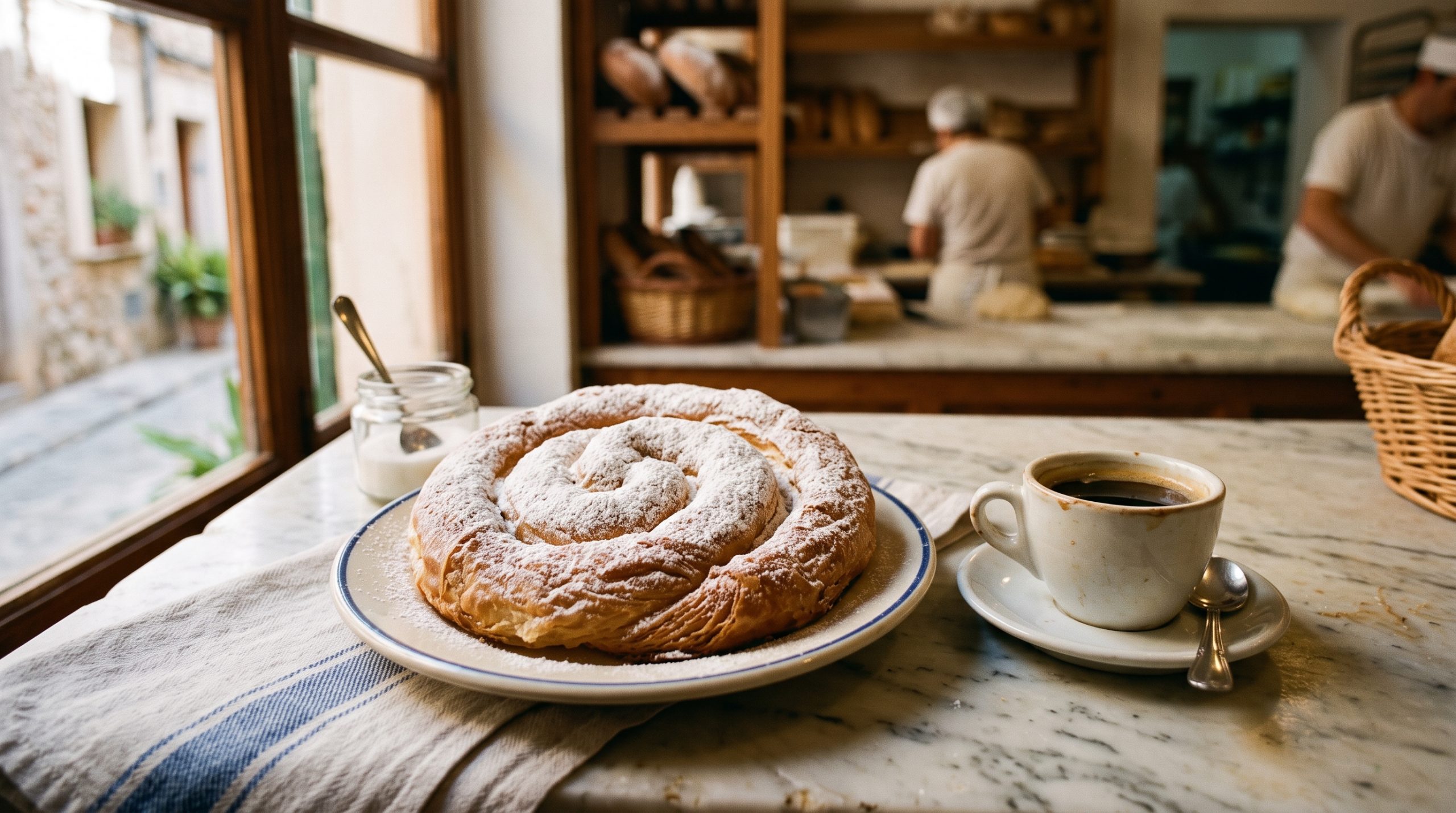
At A Glance
An ensaimada is a spiral of thin laminated dough made with pork lard, and only two versions are legally protected: plain and cabello de ángel.
- The name comes from saïm, the word for pork lard. Vegetable fat disqualifies it from the protected designation.
- Protected as an IGP since 2004. Permitted ingredients are flour, water, sugar, eggs, starter and lard. Nothing else.
- The plain llisa runs from 60 g to 2 kg. The cabello de ángel version goes up to 3 kg.
- Palma’s oldest maker has been trading since 1700. Two others date from the 1710s and 1740s.
- Crema, chocolate and sobrasada fillings are real and widely sold, but they sit outside the IGP.
Almost every visitor to Mallorca leaves with one, carried flat in a tied box through the airport like a piece of luggage that cannot be turned on its side. The ensaimada is the island’s edible signature, and it is also one of the most misunderstood pastries in Spain: what most people buy at the airport is not what a Mallorcan means by the word, and the difference comes down to a single ingredient. If you want to taste one properly, warm and with something to drink alongside it, that is the pairing our Speciality Mallorcan Coffee Tasting is built around.
Below is what an ensaimada actually is, what the protected designation permits and forbids, and the bakeries in Palma still making them properly. Several of these ovens predate the United States. One of them has been running since 1700. We have kept to places we can verify are still trading and still worth the walk, because Palma’s bakery landscape has shifted in the last few years and some famous names no longer mean what they used to. It sits alongside the rest of the island larder in our Palma food guide. If you want a cold glass of vermut and something to eat while you are still in the city, our guide to the best tapas bars in Palma Old Town lists the nine bodegas worth visiting.
Ensaimada paired with single-origin coffee from a 75-year-old Mallorcan roastery, in our Old Town tasting room.
See the coffee tastingWhat Is an Ensaimada?
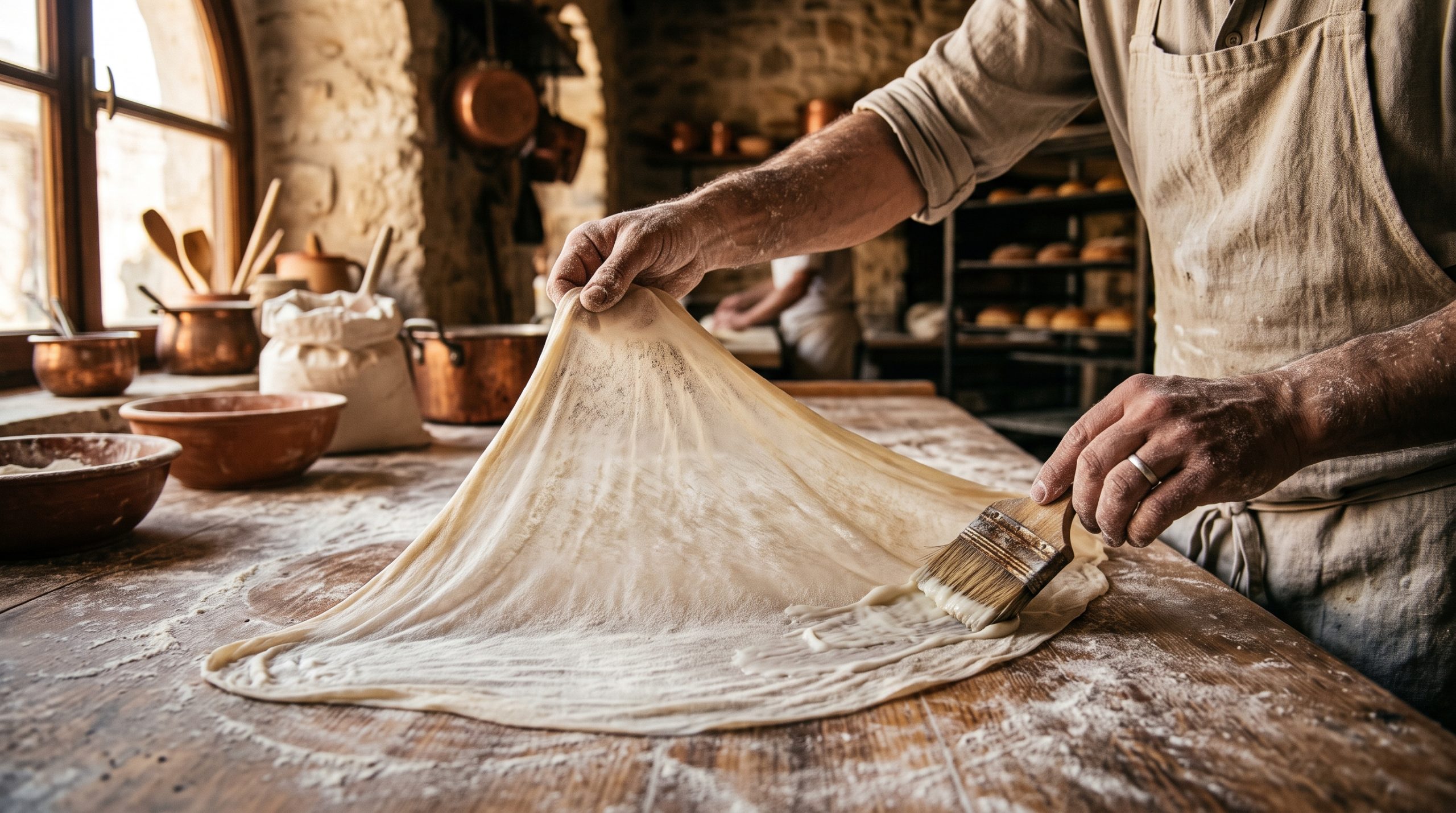
An ensaimada is a coil of enriched dough that has been laminated with pork lard, proved slowly, baked, and dusted with icing sugar. The dough is made from strong flour, water, sugar, eggs and a portion of sourdough starter. It is stretched by hand across a large table until it is thin enough to read through, brushed with soft lard, then rolled into a rope and wound into a spiral with a gap left between the turns so it can expand as it proves.
The result is not a croissant and not a brioche. It is drier and lighter than both, with a texture closer to a very fine bread than to a pastry, and it pulls apart in threads rather than flaking. Eaten fresh it is barely sweet. The icing sugar on top does most of the sweetening, which is why a day-old ensaimada tastes noticeably plainer than one bought in the morning.
The word itself explains the recipe. Saïm is the Mallorcan word for pork lard, and ensaïmada means, more or less, the thing made with lard. That is not a historical curiosity. It is the working definition, and it is the reason a great many products sold as ensaimadas are not really ensaimadas at all.
As for where it came from, the honest answer is that nobody can prove it. Written references date to the seventeenth century, when wheat flour was scarce enough that using it for a sweet was worth recording, and the pastry appears in connection with feast days rather than everyday eating. From the eighteenth century onward it spread as an afternoon pastry taken with drinking chocolate. Various theories connect it to earlier Hebrew or Arab baking traditions, and you will see them stated confidently on menus and in guidebooks. They remain theories, and we say so on our Gourmet Palma Food Tour rather than repeating the tidier version.
What Makes an Ensaimada Real
Since 2004 the ensaimada has held a Protected Geographical Indication under the name Ensaimada de Mallorca, following an earlier Spanish designation granted in 1996 and a Balearic regulation in 2003. The rules are unusually strict, and reading them is the fastest way to understand what you are buying.
| Rule | What the IGP specifies |
|---|---|
| Where it can be made | Only in the municipalities of the island of Mallorca |
| Permitted ingredients | Strong flour, water, sugar, eggs, sourdough starter, pork lard. That is the complete list |
| The fat | Pork lard is mandatory. Vegetable fat is not permitted |
| Protected types | Two only: plain (llisa) and cabello de ángel |
| Weight, plain | 60 g to 2,000 g |
| Weight, cabello de ángel | 100 g to 3,000 g, with at least 40 g of filling per 100 g of dough |
| Shape | A clockwise spiral of two or more turns, undulating surface, golden colour |
| Proof of authenticity | A numbered seal issued by the regulatory council |
Two consequences follow, and both surprise people. The first is that an ensaimada filled with crema, chocolate, nata, turrón or sobrasada is not covered by the IGP. Those versions are entirely real, they are sold by the best bakeries on the island, and several are excellent. They simply are not the protected product, so a bakery cannot put the numbered seal on them. If a shop tells you its chocolate ensaimada is IGP-certified, it is mistaken.
The second is the lard. Industrial producers substitute vegetable fat because it is cheaper and keeps longer, and the resulting pastry looks nearly identical in a box. In 2015 the island’s bakers and confectioners association went public with a complaint that hotels were serving mass-produced versions at breakfast, which cost around thirty per cent less than artisan ones, and argued it was damaging the reputation of the product with visitors who assumed they had tried the real thing. If your only ensaimada was on a hotel buffet, there is a fair chance you have not actually eaten one yet.
The Best Bakeries for Ensaimada in Palma

Ordered by how long they have been at it. Only one bakery on this list publishes its prices, so we have given figures only where they are genuinely published rather than estimating.
1. Ca’n Joan de s’Aigo
Carrer Can Sanç 10, with further branches on Baró de Santa Maria del Sepulcre and Carrer del Sindicat. Founded in 1700 by Joan Thomàs of Valldemossa, which makes it comfortably the oldest business on this list and one of the oldest in Palma. It passed to Antoni Martorell Guasp in the early twentieth century and is now run by the third generation of the Martorell and Vich families.
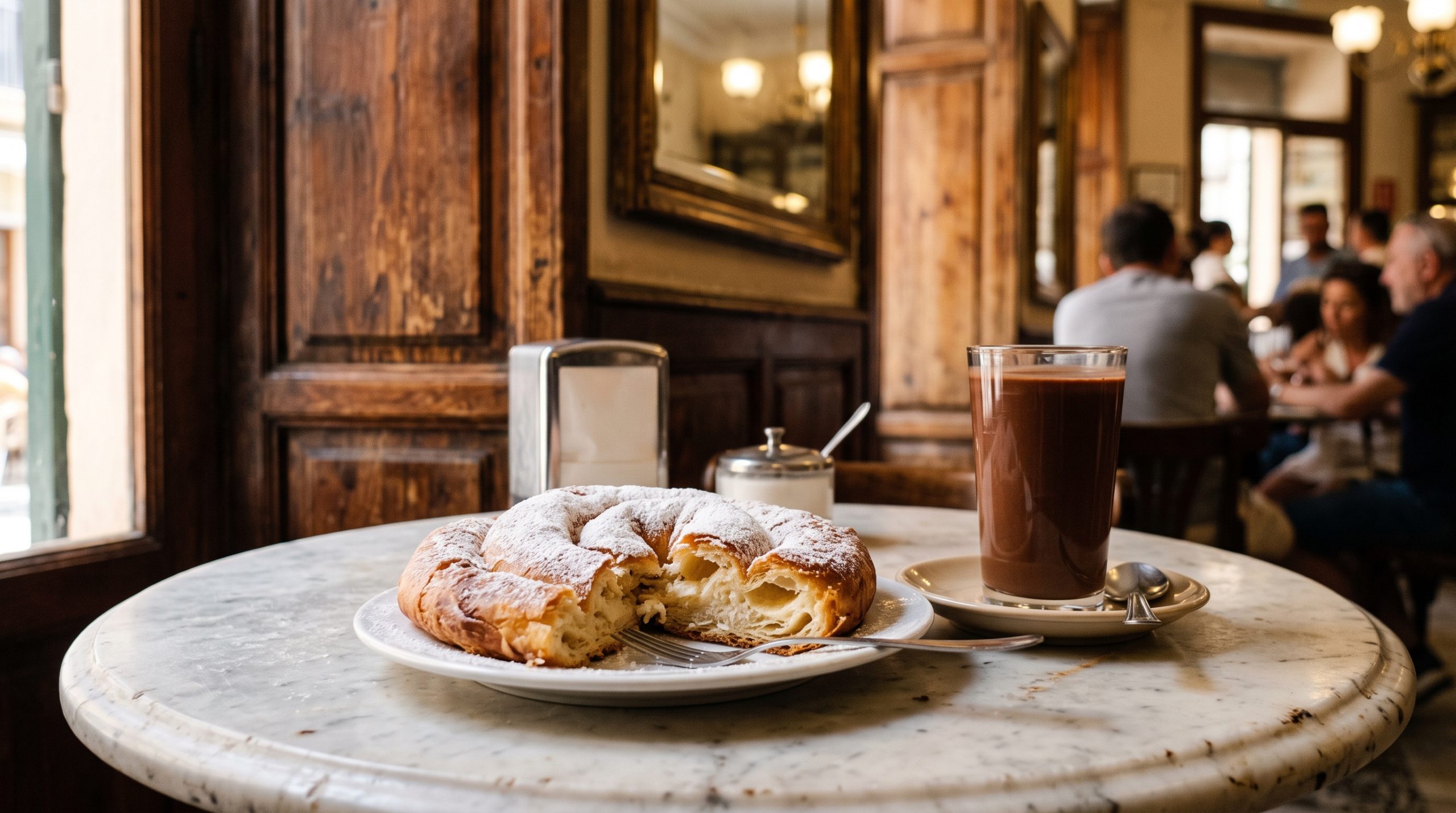
The Can Sanç room is the one to visit: marble tables, old mirrors and a queue of Mallorcans that moves faster than it looks. Order the plain llisa with a cup of thick drinking chocolate, which is the pairing the place is built on, and if you have room the almond ice cream is the other thing it is known for. Worth knowing that the baking happens at an obrador in Son Ferriol rather than behind the counter, so this is not the place to come for something straight out of the oven. It sits in the same lanes as most of the Old Town tapas bars, so it is an easy morning stop before an evening spent eating savoury.
2. Forn de la Glòria
Carrer del Forn de la Glòria 7. Documented from 1717, in a building that dates to 1870, and bought in 1977 by Sebastià Camps and Francisca Sastre, whose children Sebastià and Francisca run it now. It was declared an Emblematic Business of Palma in July 2024.
This is the one for anyone who cares how the thing is made. The bakery still uses its original Moorish wood-fired oven, which is a genuine rarity in the city rather than a marketing line, and the ensaimada carries the IGP seal. They also bake spelt, rye and wholemeal breads, and they are part of the island’s bread heritage association. Go early. Wood-fired capacity is limited and it is not a large shop.
3. Forn Fondo
Carrer Unió 15. Founded in 1742 and named for the oven at the back, or fondo, of what was then a Capuchin alleyway. The current building went up in 1911 when the Llull family took it over, and it is now run by the fourth generation, the siblings Pau and Neus Llull Riera. It holds Emblematic Business status.
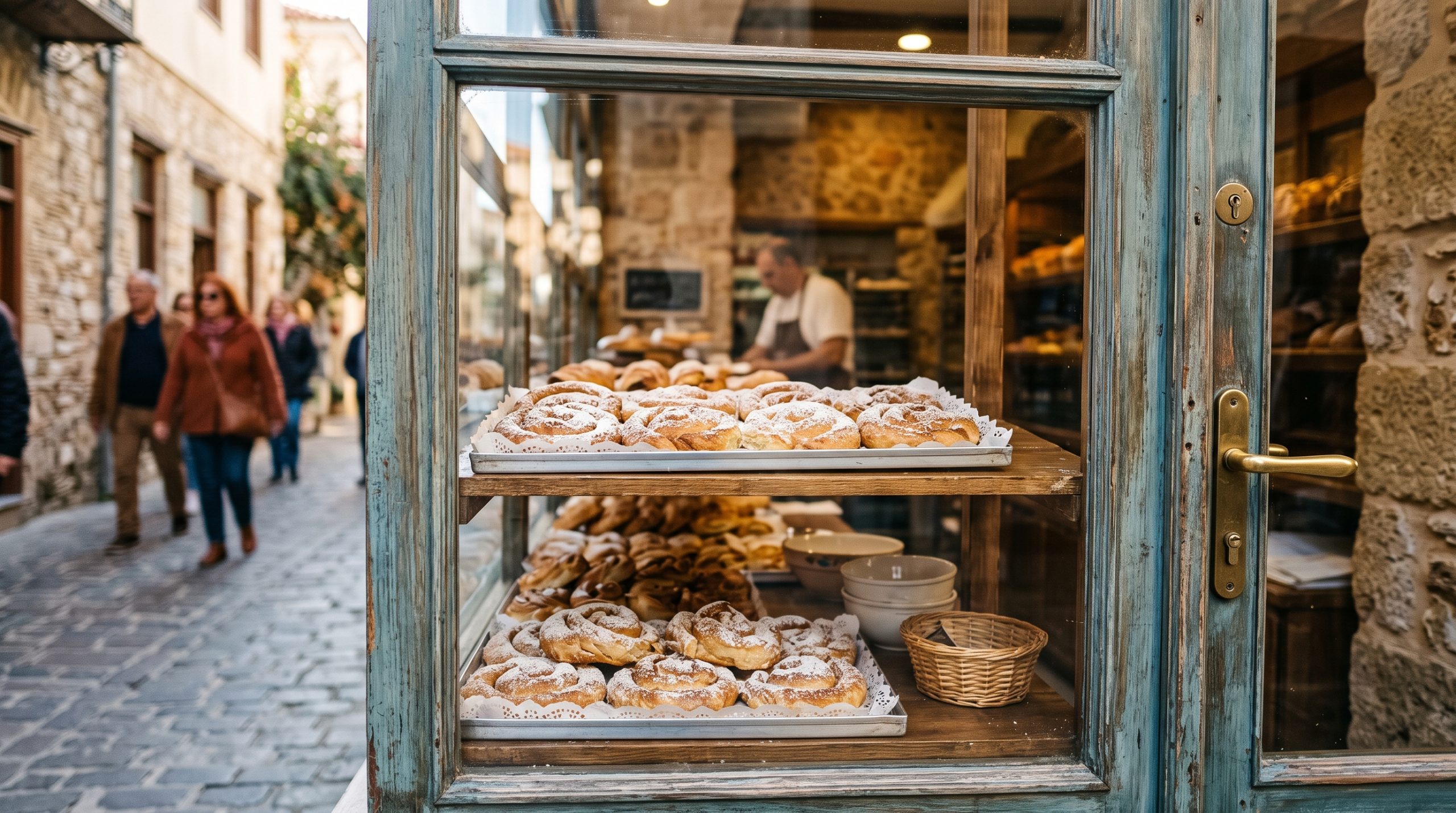
Forn Fondo is the place to go if you want range rather than purity. It makes more than twenty types of ensaimada, including apricot, fig, cherry, burnt cream, dark chocolate with orange, white chocolate, dulce de leche and sobrasada, alongside the IGP-sealed plain and cabello de ángel. Everything is baked on the premises daily. If you are buying one to take home and one to eat now, this is the efficient stop.
4. Horno Santo Cristo
Several locations including Carrer Sant Miquel 47, Carrer Paraires 2, Plaça Marqués del Palmer 1, and outlets at the maritime station and Porto Pi. Founded in 1910 and now the most visible ensaimada operation in the city, selling in the classic tied boxes and shipping to mainland Spain and Portugal.
It is also the only bakery here that publishes what it charges, which makes it a useful benchmark. At medium size, a plain llisa is €13.30, cabello de ángel is €14.95, and crema, chocolate or sobrasada are €14.95 each. Burnt cream and white chocolate are €17.70. A pack of ten individual ensaimadas is €18.00. Being a multi-site operation, it is less of a pilgrimage than the old forns, but the product is consistent and the boxes travel.
5. Pastelería Cirer
Villa Juana building on Les Avingudes, with further shops on Calle Caro and Joan Crespí. This entry needs a note, because the name on the front changed recently. The bakery here opened in 1918 as Forn La Mallorquina, founded by Antònia Vila and run by her descendants for four generations. At the end of March 2026 the signage changed and it became Pastelería Cirer, under Marcela and Diego Iglesias.
The new owners have said the same obrador, the same staff and the same recipe book continue, with some Argentinian additions to the counter. The practical point for visitors is simply that guides and older articles still send people to La Mallorquina, and that name no longer exists in Palma. If a list tells you to go there, this is the address it means.
6. Pastelería Ángel
Carrer Pasqual Ribot 45A, out in the Ponent district rather than the old town, which is why most visitors never find it. Producing daily since 1981 under Ángel, whose family have run the obrador for more than thirty years.
Everything is made on site with their own oven, and the filled range is where they put their effort: crema, crema catalana, chocolate, pistachio. They ship across Spain. This is a working neighbourhood pastry shop rather than a heritage destination, and it is a useful corrective to the idea that the only good ensaimadas come from three-hundred-year-old premises in the centre, much as the best savoury eating is rarely on the streets most visitors walk down.
7. Fornet de la Soca
Plaça Weyler 9, in the Art Nouveau building most people know as the Forn des Teatre, with a second shop in the neo-Mudejar Can Corbella. Tomeu Arbona and María José Orero started the business in 2010 elsewhere in the city and moved into these premises in 2018, keeping the historic name on the facade.
Arbona works from recovered historical Mallorcan recipes, using sourdough and long natural fermentation of around twenty-four hours, and the results taste distinctly older and less sweet than the modern standard. One clarification worth having: the Forn des Teatre is the building and the heritage name, not a separate bakery you can visit. Some listings still show it as its own business with its own opening hours. It is this shop.
8. Forn Sant Francesc, Inca
Carrer de Sant Francesc 126 in Inca, about thirty minutes from Palma and the one entry here that requires leaving the city. Trading for more than 110 years and run by Joan Seguí, the fifth generation, with his wife Maria Sancho.
They bake in one of the few surviving wood-fired Moorish ovens on the island, use free-range eggs, and add no additives, colourings or preservatives. The bakery won a world ensaimada competition in 2017. If you are driving to the Tramuntana or heading inland anyway, it is a straightforward detour and a noticeably different product from the city versions.
Llisa or Cabello de Ángel

These are the only two protected versions, and choosing between them is the one decision that matters at the counter. The plain llisa is the benchmark: nothing to hide behind, so the lamination, the proving and the quality of the lard are all exposed. Most Mallorcans consider it the serious order, and most bakers would rather be judged on it.
Cabello de ángel is filled with candied pumpkin, pulled into fine sweet strands. It is heavier, sweeter and more obviously a dessert. Under the IGP it must contain at least 40 g of filling for every 100 g of dough, which is why the filled ones feel so much denser in the box. Either version takes well to a small glass of the island’s dry herbal liqueur afterwards, which we cover in the Mallorca gin guide.
How To Buy One Properly
- Go in the morning. Plain llisas are baked for the breakfast trade and the good ones sell out.
- Ask for the seal if you want the certified article. The numbered IGP seal only appears on plain and cabello de ángel.
- Eat it the day you buy it. There are no preservatives in a proper one, and by day two it is a different pastry.
- Do not refrigerate it. Cold sets the lard and ruins the texture. Room temperature, in its box.
- Buy the small size to eat and the large size to carry. A 60 g individual is a breakfast. The big ones are for sharing.
- Warm it briefly if it is a day old. A few minutes in a low oven brings most of it back.
Inside A Tasting Palma Experience
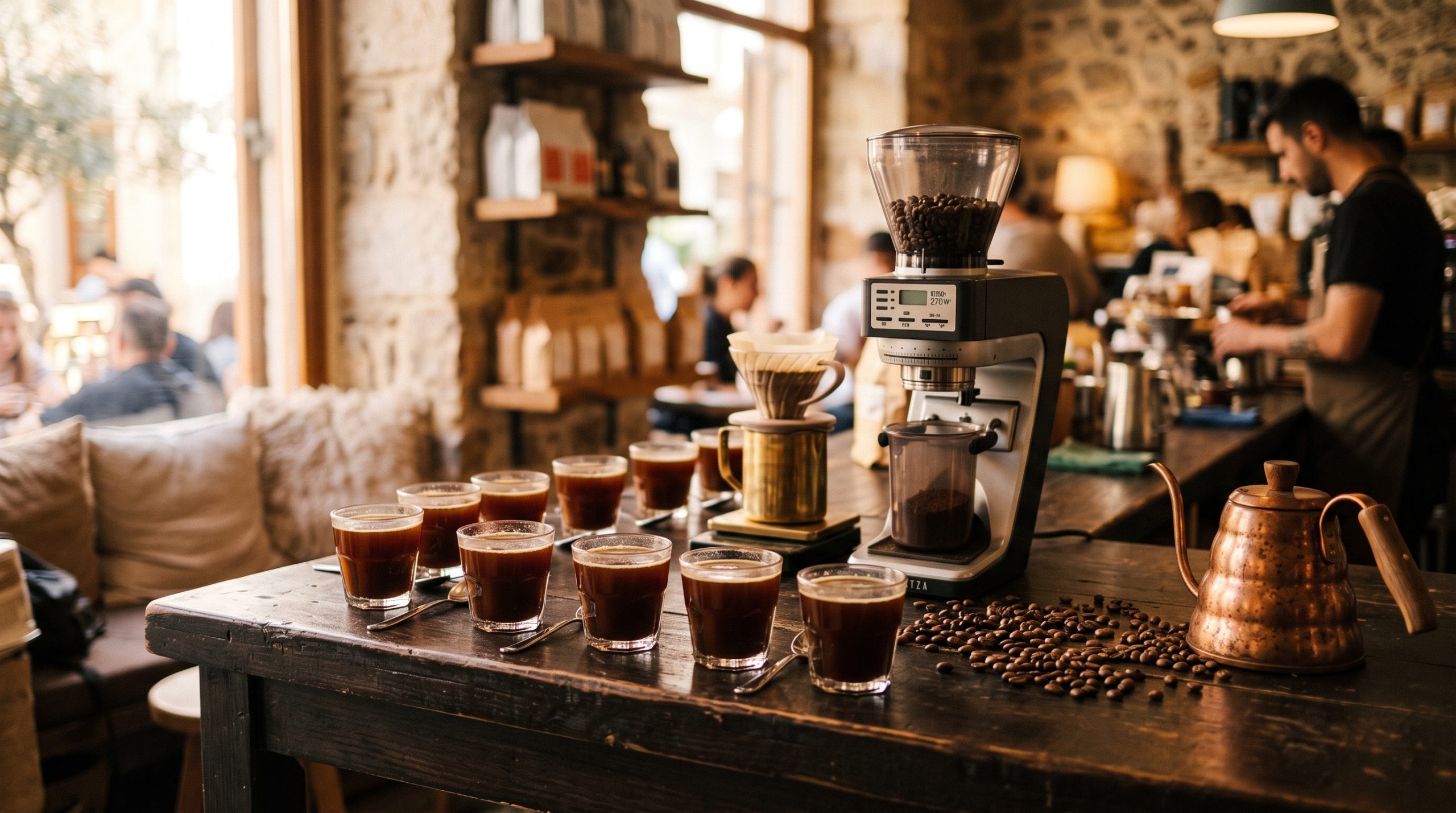
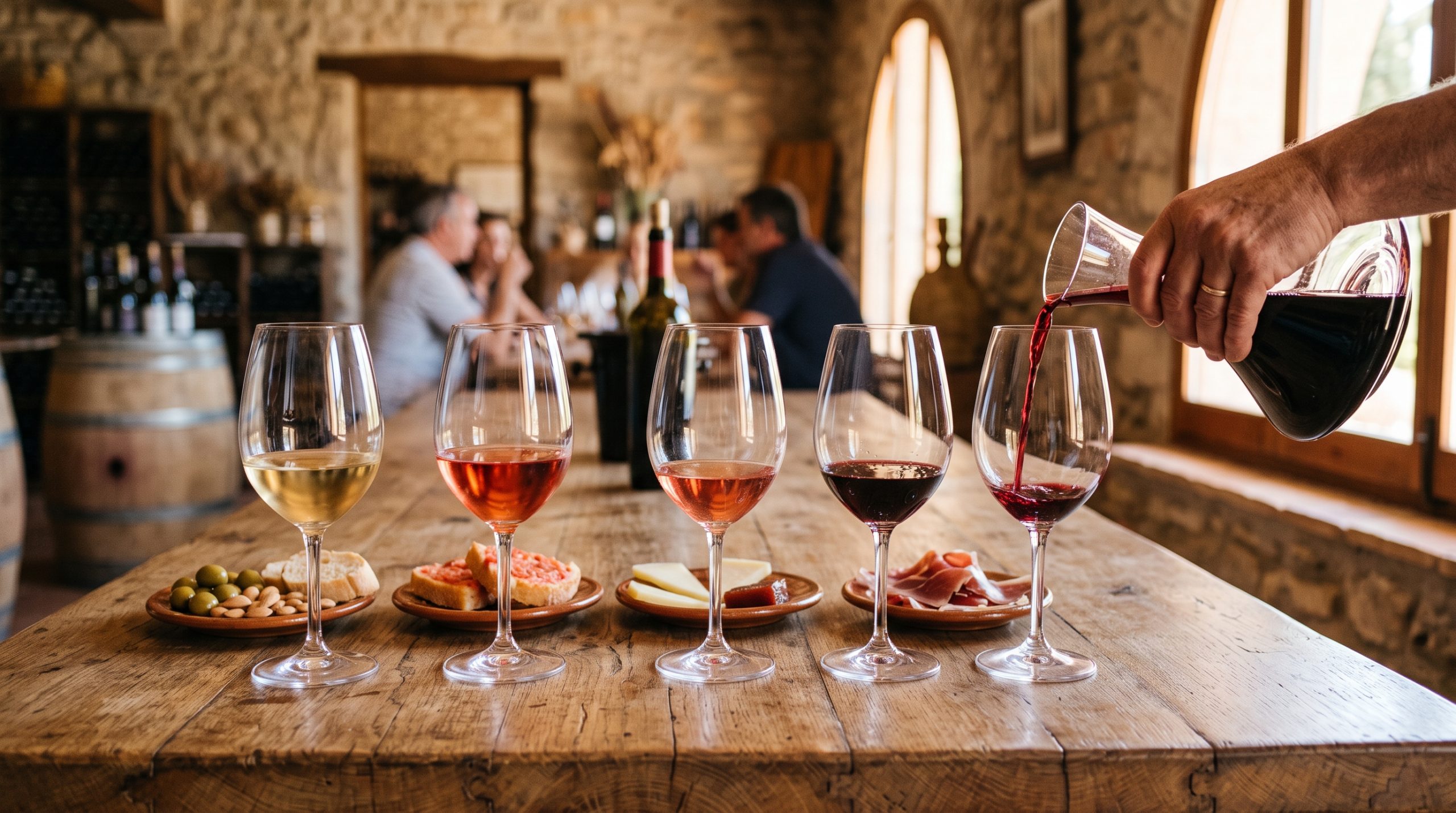
Ensaimada is better with the right coffee
Six single-origin coffees roasted in Palma by a family roastery working since 1952, each poured alongside a bite chosen to match it.
From €35 · 75 minutes · Max 10 guests · Gift vouchers available
Getting One Home
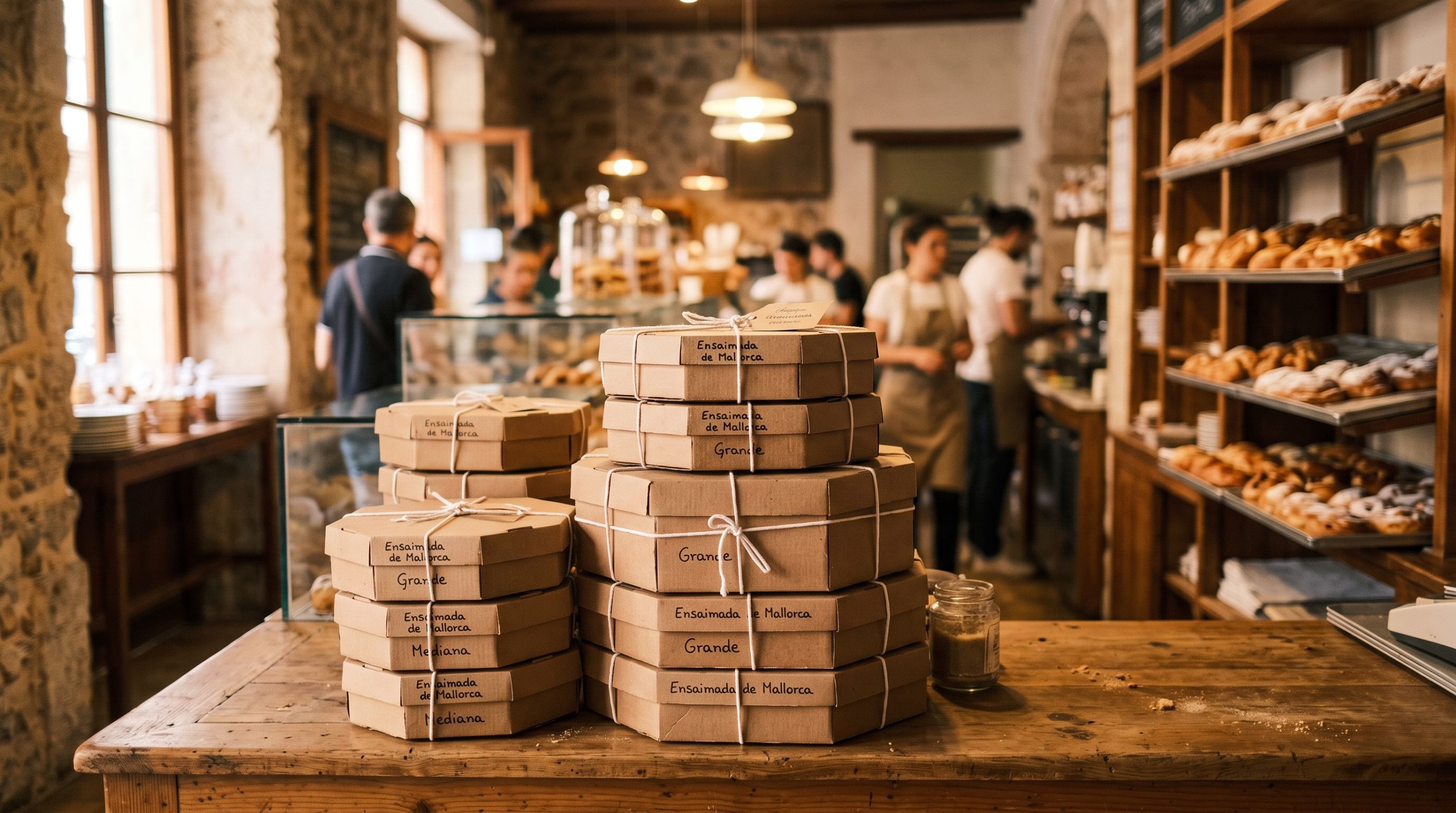
The box is not decoration. An ensaimada is wide, flat and structurally fragile, and it cannot be stacked, bagged or turned on its side without collapsing. Bakers historically wrapped them in cloth and paper, and the faceted cardboard box with a string tie became standard during the twentieth century because it was the only thing that got the pastry home intact. It has since become an icon in its own right, to the point where a stack of tied boxes in an airport queue is one of the more reliable signs that a flight is leaving Palma.
One practical warning. You may have been told that airlines do not count the box as hand luggage. That is not dependable. In May 2023 Ryanair was charging passengers up to €50 for ensaimada boxes as extra baggage, which prompted a formal complaint from the Balearic politician Jaume Alzamora to both the airline and the airport operator. Check your specific carrier’s cabin baggage policy before you commit to carrying a two-kilo pastry through security.
It is also worth resisting the airport as a purchase point in general. The bakers’ association has argued for years that airport rents make genuinely artisan ensaimadas commercially unviable there, which tells you something about what is on those shelves. Buy from one of the forns above on your way out instead, and if you want to understand what you are tasting before you commit to a box, our Olivar Market Tour and Tapas Class covers the island’s baking traditions alongside the savoury side.
Frequently Asked Questions
What Is an Ensaimada?
A Mallorcan pastry made from a spiral of thin dough laminated with pork lard, proved slowly, baked and dusted with icing sugar. The dough contains only strong flour, water, sugar, eggs, sourdough starter and lard. It is lighter and much less sweet than a croissant, and pulls apart in threads.
What Does Ensaimada Mean in English?
There is no English equivalent, so the word is used untranslated. It derives from saïm, the Mallorcan word for pork lard, so it means roughly the thing made with lard. That is a description of the recipe rather than a poetic name.
Where Can You Buy the Best Ensaimada in Palma?
For the plain llisa, Forn de la Glòria bakes in an original wood-fired Moorish oven and Ca’n Joan de s’Aigo has been trading since 1700. For range and filled versions, Forn Fondo makes more than twenty types on the premises. Horno Santo Cristo is the most widely available and the only one publishing prices.
How Much Does an Ensaimada Cost in Palma?
Most bakeries do not publish prices. Horno Santo Cristo, which does, charges €13.30 for a medium plain ensaimada, €14.95 for cabello de ángel, crema, chocolate or sobrasada, and €17.70 for burnt cream or white chocolate. A pack of ten individual ones is €18.00. Small individual pastries at a counter cost a few euros.
Is Ensaimada Made With Lard?
Yes, and it has to be. Pork lard is a mandatory ingredient under the protected designation, and it is what the name refers to. Versions made with vegetable fat cannot legally be sold as Ensaimada de Mallorca. This also means a traditional ensaimada is not suitable for vegetarians.
What Is the Difference Between Llisa and Cabello de Ángel?
Llisa means plain and has no filling at all. Cabello de ángel is filled with candied pumpkin in fine sweet strands. These are the only two versions protected by the IGP. The plain one may weigh from 60 g to 2 kg; the filled one from 100 g to 3 kg and must contain at least 40 g of filling per 100 g of dough.
How Long Does an Ensaimada Keep?
A genuine artisan one contains no preservatives and is at its best on the day it is baked. It remains pleasant for two or three days if kept in its box at room temperature. Do not refrigerate it, because chilling sets the lard and spoils the texture. A few minutes in a low oven revives a day-old one.
Can You Take an Ensaimada on a Plane?
Usually yes, but do not assume the box travels free. In 2023 Ryanair charged passengers up to €50 for ensaimada boxes treated as additional cabin baggage, which drew a formal complaint from Balearic politicians. Check your airline’s hand baggage rules first, and buy from a city bakery rather than at the airport.
Taste It With Us
Ensaimada, paired with coffee from a 75-year-old island roastery
Our Speciality Mallorcan Coffee Tasting runs 75 minutes for a maximum of ten guests, working through six single-origin coffees roasted by Arabay in Palma, each with a bite to match. From €35 per person.
Check availabilityPrivate and corporate groups up to 32 guests · Get in touch
Leave a Reply