


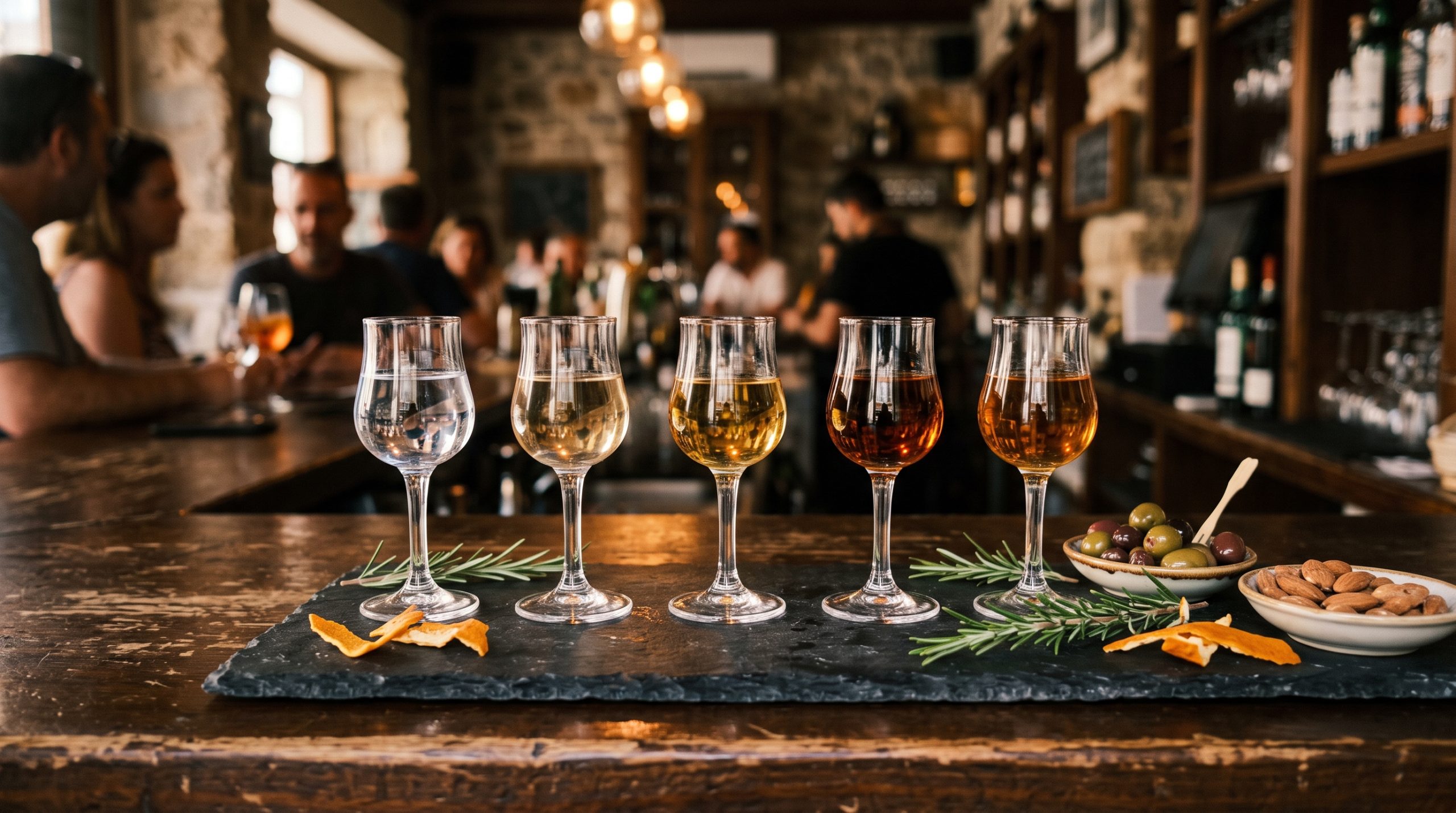
At A Glance
Mallorcan gin is a modern craft industry built on an old distilling tradition, with five producers worth seeking out and three you can visit.
- The island’s gin scene started around 2011 and 2012. Gin Eva and Cabraboc were first.
- Distilling on Mallorca is genuinely old. There were 177 stills on the island by the late 1700s, but they were making aguardiente, not gin.
- No Mallorcan gin holds a protected geographical indication. The protected Balearic gin is Gin de Mahón, which is from Menorca.
- Signature island botanicals: Sóller oranges and lemons, the local canoneta orange, Tramuntana thyme, wild fennel and rock samphire.
- Palo de Mallorca and Herbes de Mallorca both hold protected status in their own right.
Gin on Mallorca is a recent story told against a very old backdrop. The island has been distilling since the middle ages and has two protected spirits of its own, but the gins that now turn up on bar backs across Palma almost all date from the last fifteen years. That gap between the tradition and the product is worth understanding before you start buying bottles, and it is the first thing we explain on our Mallorcan Gin Tasting.
What follows is the current state of Mallorcan gin: who is actually making it, which of them you can visit, what goes into the bottles, and how the island’s two protected spirits fit alongside. We have also cleared up the two things searchers get wrong most often, because one of the most famous gins associated with these islands is not made on Mallorca at all. If spirits are only part of what you are here for, our Palma food guide covers the island dishes and the neighbourhoods worth eating in.
Three gins, two traditional island liqueurs and the perfect G&T, in 60 minutes with a family distillery from Sóller.
See the gin tastingIs There Really a Gin Tradition on Mallorca?
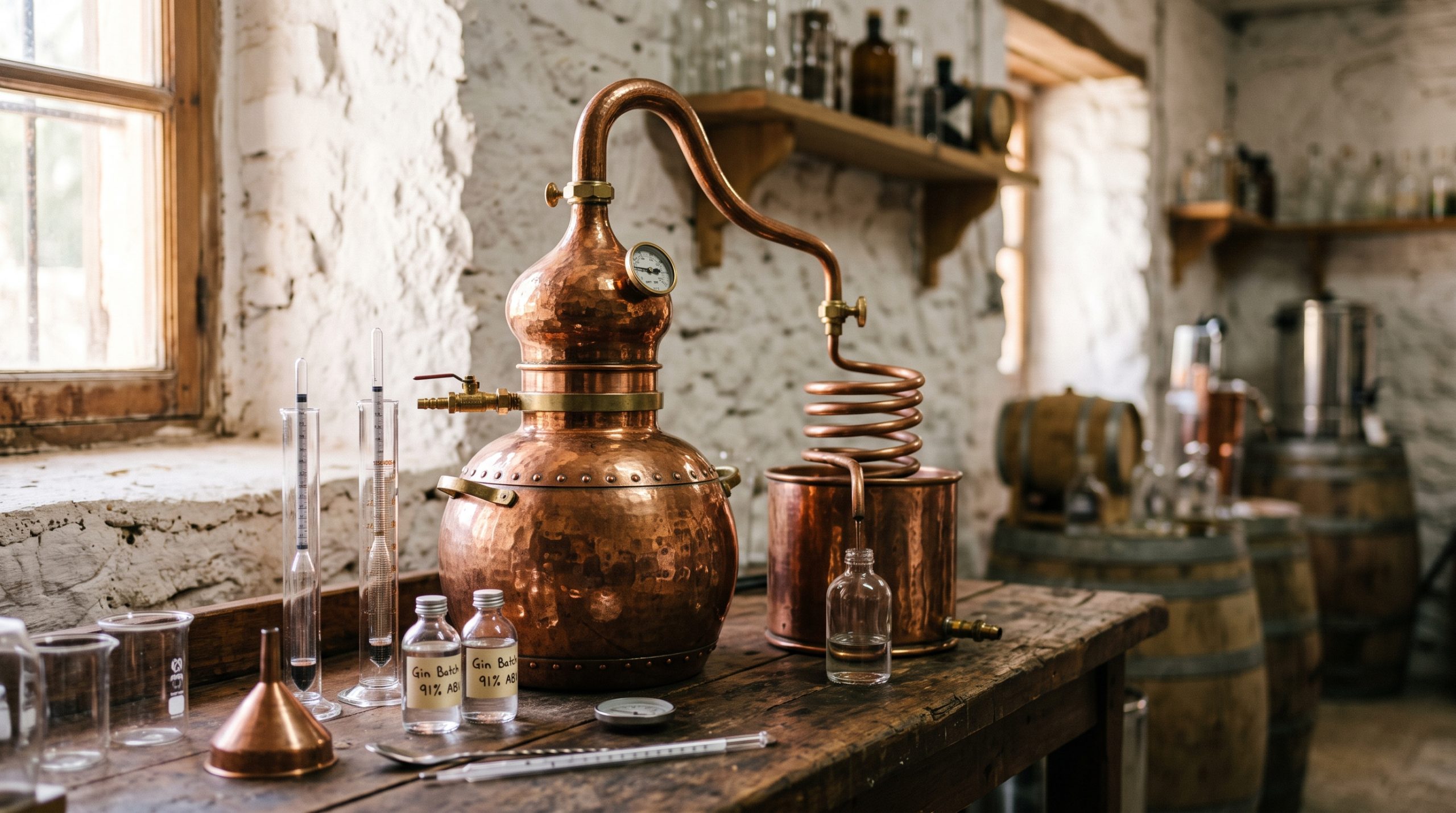
Yes and no, and the distinction matters if you want to avoid repeating marketing copy back at a distiller. Distillation on Mallorca is centuries old and genuinely significant. Ramon Llull, the Mallorcan philosopher writing in the late thirteenth century, made real contributions to distilling technique and is credited with popularising alembic stills on the island. By the late eighteenth century there were 177 stills working on Mallorca, and in the nineteenth century a large share of what they produced was exported.
None of that was gin. Those stills were making aguardiente, herbal liqueurs and Palo, and the families who ran them are still around: Suau moved its stills to the island in 1851, Licors Moyà in Artà traces its activity to 1854, and Dos Perellons dates to 1882. What Mallorca has is a deep tradition of distilling that gin arrived into, rather than a heritage of gin itself. The same is true of the island’s wine, where the interesting story is recovery rather than continuity, as our Mallorcan Wine Tasting sets out.
The gin part begins around 2011 and 2012, when Gin Eva and Cabraboc started producing within a year of each other. Everything else on the island followed. That makes Mallorcan gin a craft industry roughly fifteen years old, which is not a criticism. It means the producers are small, the people who founded them are usually the people still distilling, and the botanicals are chosen for what actually grows here rather than to fit an established house style.
One correction while we are here. If you have seen Gin Xoriguer described as the classic gin of the Balearics, that is accurate but it is not Mallorcan. Xoriguer is made in Maó on Menorca under the Gin de Mahón protected designation, which is the only protected gin in the Balearics. No Mallorcan gin holds a geographical indication. Some carry voluntary island marks instead, and Destilería Pareis holds an artisan certificate from the Consell de Mallorca, but these are quality marks rather than protected origin.
Five Mallorcan Gin Distilleries Worth Knowing

1. Cabraboc, Sóller
Carrer Nostra Senyora de Bonany 6, Sóller. Founded in 2012 by Janine Bucher, Miquel Capó and Jürgen Bucher, a German-Mallorcan family who came to it from a design background in the town, and now distilled by Max Capó. It sits in the valley behind the Tramuntana that supplies its citrus, which is the whole argument for the range.
The house gin is built on a wine distillate with fennel, Mediterranean herbs, orange peel, lemon leaf and lemon verbena, and the oranges and lemons come exclusively from the Sóller valley. Each botanical is distilled separately at its own point of ripeness and blended afterwards. The range runs to twelve products, including Gin Taronja and Gin Blau as limited editions, a Mandarina, the Dry Gin Mestral, plus their Palo de Mallorca and Herbes. The house gin is 70cl at 40% and around €35.50. The Sóller shop is open weekdays and Saturday mornings, tastings run to as many as thirty different distillates, and you can blend your own gin there. This is the distillery we work with on our own Mallorcan Gin Tasting in Palma.
2. Gin Eva, Llucmajor
Casa Eva, Carrer Marroig 6A, Llucmajor. Stefan Winterling and Eva Maier Gómez met studying oenology in Germany, moved to Mallorca in 2008, and started distilling in a garage around 2011. They moved into the current site in 2022. Along with Cabraboc they are the island’s pioneer producer, and they are the one with international awards.
Six gins, all at 45%. La Mallorquina is the one that made their name, an olive gin using a single olive variety from the Son Moragues estate at Valldemossa, distilled once a year to about three thousand bottles, which took World’s Best Signature Botanical Gin at the World Gin Awards in London in 2019. The others are La Vermella, La Bergamota, an oak-aged Old Tom, La Canoneta using the Sóller valley’s canoneta orange, and the thyme-led S’Horabaixa. The tasting at Casa Eva runs about an hour for a maximum of twelve people, five gins plus a cocktail, in a room overlooking the still, and is bookable online from around €40.
3. Destilería Pareis, Llubí
Based in Llubí in the island’s interior, founded in August 2017 by David Fajardo and Susana Cáceres and named after the Torrent de Pareis, the gorge that comes out at Sa Calobra. It holds an artisan certificate from the Consell de Mallorca and has taken gold at the World Gin Awards.
Two gins, Mercant and Mascori. Mercant is the spiced one, leaning on cinnamon and orange alongside juniper, liquorice, coriander and Mallorcan lemons. The distillery is open on Monday, Tuesday, Thursday and Friday mornings, where you can buy bottles and see the process, though whether they run a formal booked tour is worth checking before you drive out. They also hold a stall at the Sineu market every Wednesday morning, which is the easier way to try them if you are not already heading inland.
4. Mallorca Distillery, Palma
The Palma option, producing under the Palma Gin name and describing itself as the city’s first organic distillery. Founded in June 2018 by Byron and Amber Holland.
The range is Palma Gin at 46.6%, plus Citrus, Rosé and Spiced expressions, a limited-edition Monastrell, and a vodka. They work from fifteen locally foraged and organic botanicals, including wild flowers and citrus from rural island orchards, though they do not publish the full list. Bottles are €45 for the standard 70cl expressions and €55 for the Monastrell. Third-party sites advertise tours and a make-your-own-gin class, but the distillery does not currently publish tour information itself, so ring ahead rather than turning up. Do not confuse this business with the separately named Mallorca Gin Distillery in Santa Catalina, whose website is now offline.
5. Bodegas Suau, Es Pont d’Inca
Carrer Cabana 12, Es Pont d’Inca in Marratxí, about ten minutes from Palma, in a converted flour mill. The company was founded in Cuba in 1851, and Juan Suau Bennáser moved the stills to Mallorca the same year to make rum, anís, aguardientes and the brandy the name is still known for. It now belongs to the Barceló and Mora families.
Suau is the entry that connects the modern gin scene to the old one: they made a fully craft gin in 1919 and revived it a century later. The current bottling is Maior Gin, built on local fig, rosemary and Sóller oranges. The older Suau Gin recipe used four distillations in copper with island oranges, lemons and almonds alongside juniper, coriander, angelica, orris and liquorice. The site has visitor and event spaces, but tour details are not published, so contact them directly.
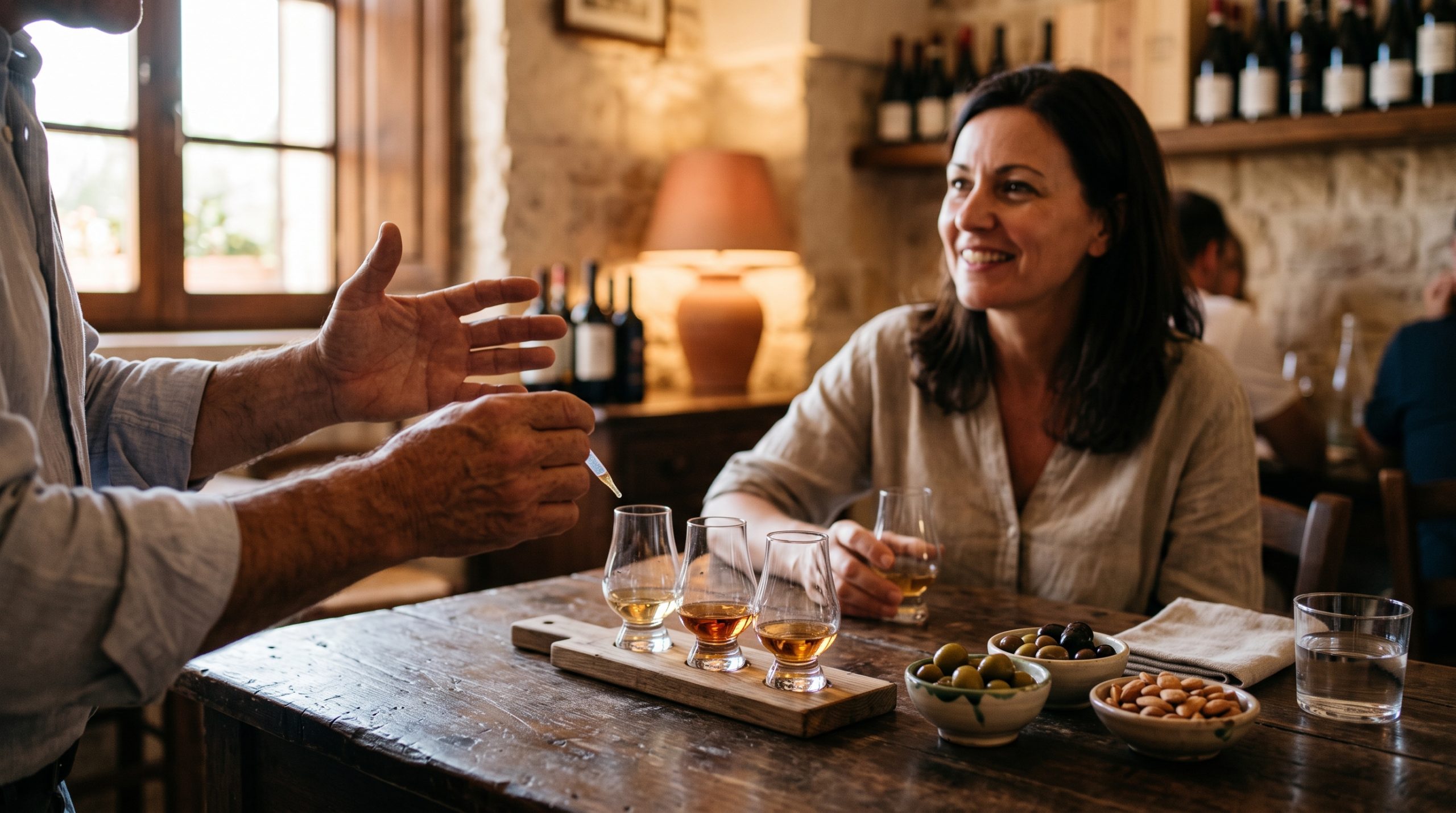
Two more are worth looking for on a shelf rather than visiting. Licors Moyà in Artà, in business since the nineteenth century, launched Baleàric Moyà Nº5 in February 2025, billed as the first gin made with fonoll marí, the rock samphire that grows on the island’s coastal rocks, giving it a saline, mineral finish. Dos Perellons, a family firm dating to 1882 and now in Son Castelló, makes several gins including a blend developed with the chef Koldo Royo. Most of these turn up behind the counter at the Old Town tapas bars if you want to try before buying a bottle.
What Goes Into a Mallorcan Gin

What distinguishes the island’s gins is less the juniper than everything around it. Mallorca grows citrus in a mountain valley with its own microclimate, herbs on dry limestone slopes, and edible plants on the coastal rocks, and the producers have leaned hard into all three. The method most of them share is worth knowing too: rather than macerating a basket of botanicals together, they distil each one separately at its seasonal peak and blend the distillates afterwards, in the way a winemaker assembles a coupage.
Island Botanicals To Look For
- Sóller oranges and lemons — the valley behind the Tramuntana, and the single most common island signature.
- Canoneta orange — a local variety specific to that valley, used by Gin Eva in a gin named after it.
- La Mallorquina olive — a single olive variety from Valldemossa, distilled once a year.
- Fonoll marí — rock samphire from the coast, which brings salinity rather than sweetness.
- Tramuntana thyme and rosemary — the dry-slope herbs, giving the resinous edge.
- Wild fennel, myrtle and lemon verbena — the softer aromatics that fill the middle of the palate.
Inside A Tasting Palma Experience
Taste the island without hiring a car
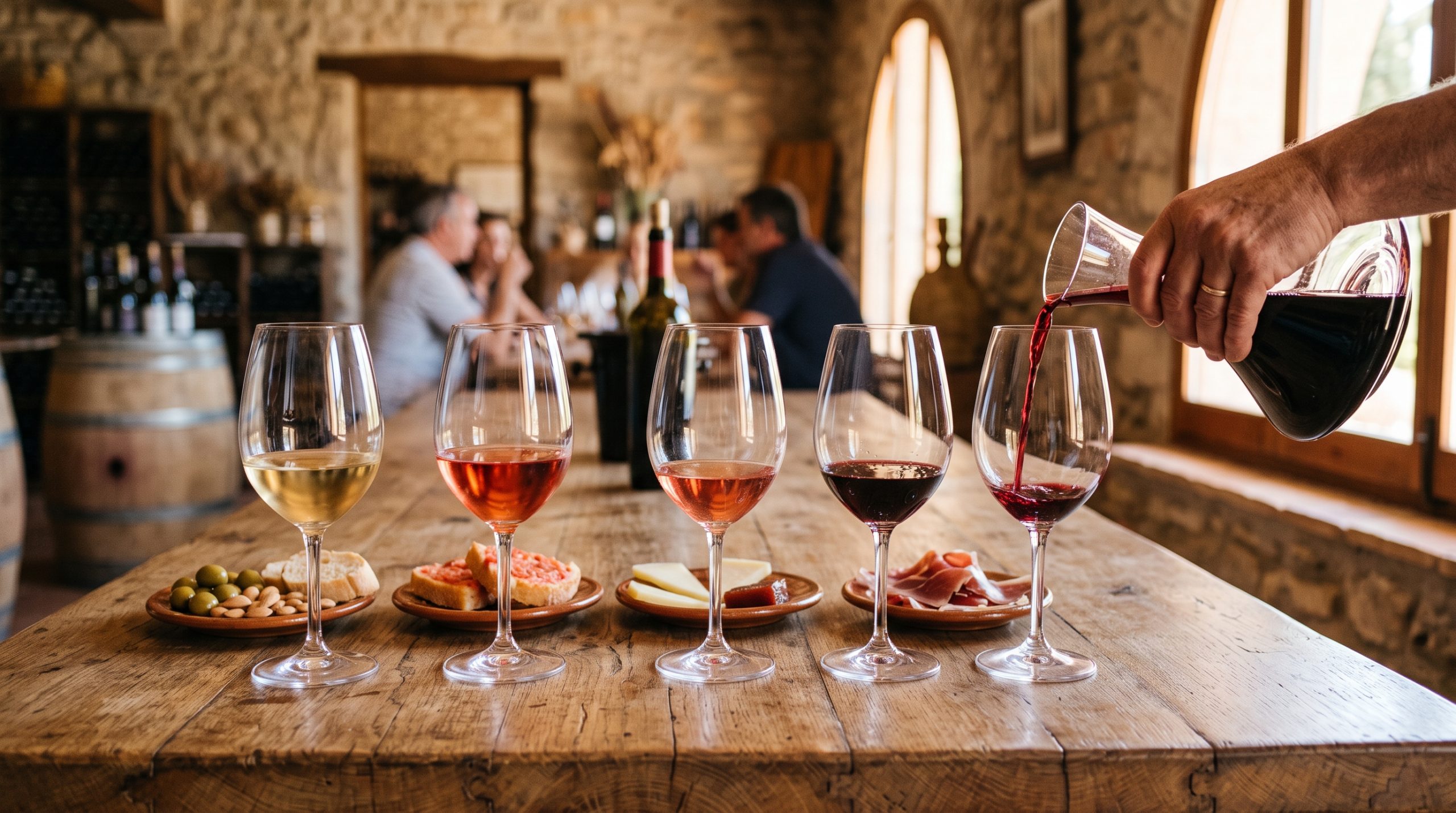
Three Cabraboc gins from Sóller tasted neat and mixed, then a Palo and a Hierbes to finish, in our Old Town tasting room rather than an hour up the coast.
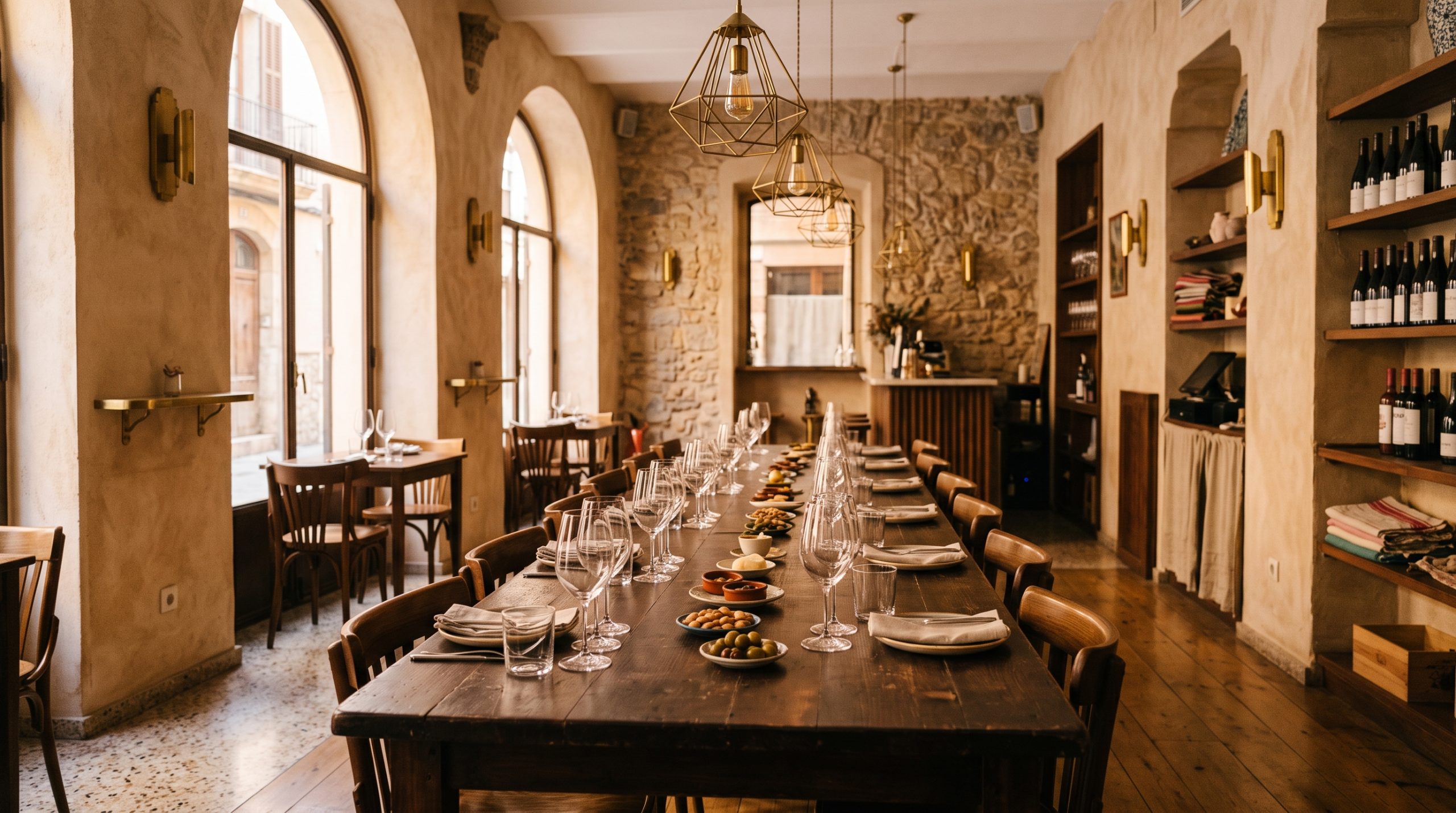
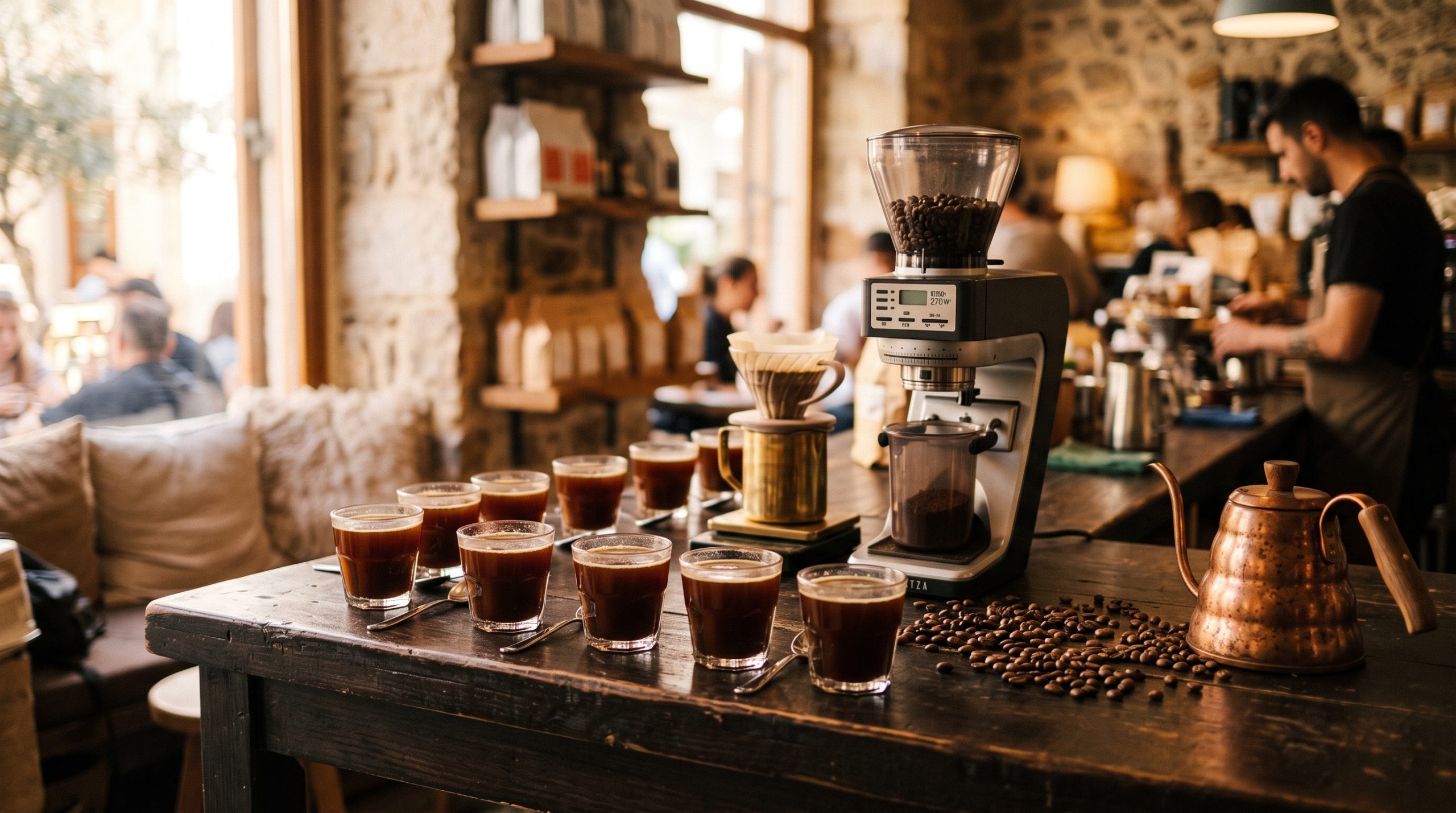
From €39 · 60 minutes · Max 10 guests · Gift vouchers available
Palo and Herbes: The Island’s Protected Spirits
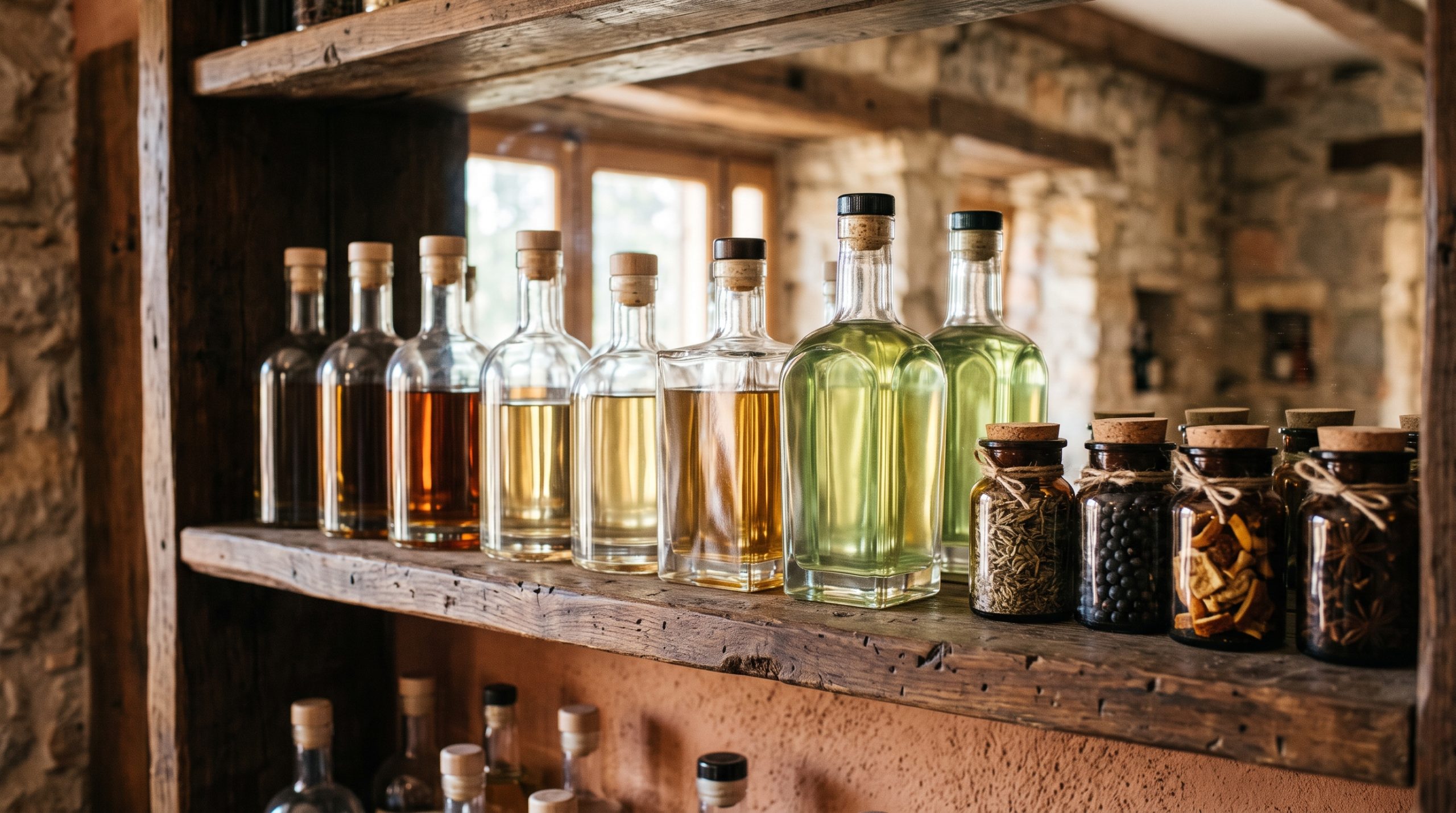
Gin may be new here, but two Mallorcan spirits carry protected geographical indications, and any serious tasting on the island will include both. They are also what people actually drink, which gin still mostly is not.
| Palo de Mallorca | Herbes de Mallorca | |
|---|---|---|
| Status | Protected Geographical Indication | Protected Geographical Indication |
| Made from | Maceration or infusion of calisaya quinine bark and gentian root, with sugar, caramelised sucrose and alcohol | An anise-based spirit blended with a solution flavoured by aromatic plants |
| Tastes like | Dark, bitter, faintly medicinal. Closer to an amaro than a liqueur | Sweet to dry depending on style, led by anise and mountain herbs |
| Styles | One | Three: dulçes, mescladas, seques |
| Strength | Around 30% | Dulçes from 20%, mescladas from 25%, seques from 35% |
| How it is drunk | With soda and a slice of lemon, as an aperitif | Neat and cold, usually after a meal |
The name Palo comes from palo de quina, the quinine bark it is made with, and it is genuinely an acquired taste. Production was around 34,000 litres in 2025, up roughly a quarter on the year before, so the acquired taste is being acquired by more people. Herbes divides by sugar content: the sweet style must carry at least 300 grams of sugar per litre, the dry style no more than 100, and the mixed style sits between them. Typical plants include lemon verbena, chamomile, rosemary, fennel and lemon balm, plus orange and lemon tree leaves. A small glass of the dry style after an ensaimada and a coffee is a very Mallorcan way to end a morning.
Where to Taste Mallorcan Gin in Palma

The distilleries themselves are spread across the island, which is the practical problem. Sóller is an hour from Palma by road or a scenic ride on the old wooden train, Llucmajor and Llubí need a car, and the Palma-based producer does not publish visiting hours. If you are here for a few days without transport, that rules most of it out.
The alternative is to taste in the city. Palma’s better bars carry island gins as a matter of course, and a well-made Spanish gin and tonic is its own discipline: a balloon glass, plenty of clear ice, a tonic chosen to sit under the botanicals rather than over them, and a garnish that matches what is actually in the bottle. Orange peel for a Sóller citrus gin, rosemary or thyme for a herbal one, and nothing at all for the olive gin, which does not need help.
Our own tasting exists for exactly this reason. It runs sixty minutes for a maximum of ten people at our Old Town room, works through three Cabraboc gins tasted neat and mixed, then a Palo with soda and a Hierbes de Mallorca to finish, with a tapita alongside each. It covers the distillation process, botanical selection and how to build the G and T properly, without needing a car. The full range of tastings and food experiences runs from the same room.
Frequently Asked Questions
What Gin Is Made in Mallorca?
The main island producers are Cabraboc in Sóller, Gin Eva in Llucmajor, Destilería Pareis in Llubí, Mallorca Distillery in Palma under the Palma Gin name, and Bodegas Suau at Es Pont d’Inca with Maior Gin. Licors Moyà in Artà and Dos Perellons also produce gin.
Is Gin Xoriguer From Mallorca?
No. Gin Xoriguer is made in Maó on Menorca under the Gin de Mahón protected designation. It is the most famous gin of the Balearics and the one most often assumed to be Mallorcan, but it comes from a different island. No Mallorcan gin holds a protected geographical indication.
Can You Visit a Gin Distillery in Mallorca?
Yes. Cabraboc has a shop and tasting room in Sóller open weekdays and Saturday mornings, where you can taste widely and blend your own. Gin Eva runs a bookable hour-long tasting at Casa Eva in Llucmajor for up to twelve people. Destilería Pareis opens to visitors on weekday mornings and holds a stall at Sineu market on Wednesdays.
Where Can You Do a Gin Tasting in Palma?
Most distilleries sit outside the city and need a car. In Palma itself, our Mallorcan Gin Tasting runs 60 minutes for up to ten guests at our Old Town tasting room, covering three Cabraboc gins neat and mixed plus Palo and Hierbes de Mallorca, each with a small bite.
What Botanicals Are Used in Mallorcan Gin?
Alongside juniper, the recurring island botanicals are Sóller valley oranges and lemons, the local canoneta orange, the Mallorquina olive from Valldemossa, rock samphire, Tramuntana thyme and rosemary, wild fennel, myrtle, lemon verbena and almond. Most producers distil each botanical separately and blend afterwards.
What Is Palo de Mallorca?
A dark bitter aperitif holding a Protected Geographical Indication, made by macerating calisaya quinine bark and gentian root with sugar, caramelised sucrose and alcohol. It sits around 30% and is drunk with soda and lemon. The name comes from palo de quina, the quinine bark itself.
What Are Hierbes de Mallorca?
A protected herbal liqueur built on an anise spirit flavoured with island plants such as lemon verbena, chamomile, rosemary, fennel and lemon balm. It comes in three styles: sweet from 20% with at least 300g of sugar per litre, mixed from 25%, and dry from 35% with no more than 100g. It is drunk cold after eating.
Taste With Us
The Spirit of the Tramuntana, without leaving the Old Town
Sixty minutes, ten guests maximum. Three Cabraboc gins tasted neat and with mixers, a Palo de Mallorca and a Hierbes to finish, each with a tapita chosen to match. From €39 per person.
Check availabilityPrivate and corporate groups up to 32 guests · Get in touch
Leave a Reply