
At A Glance
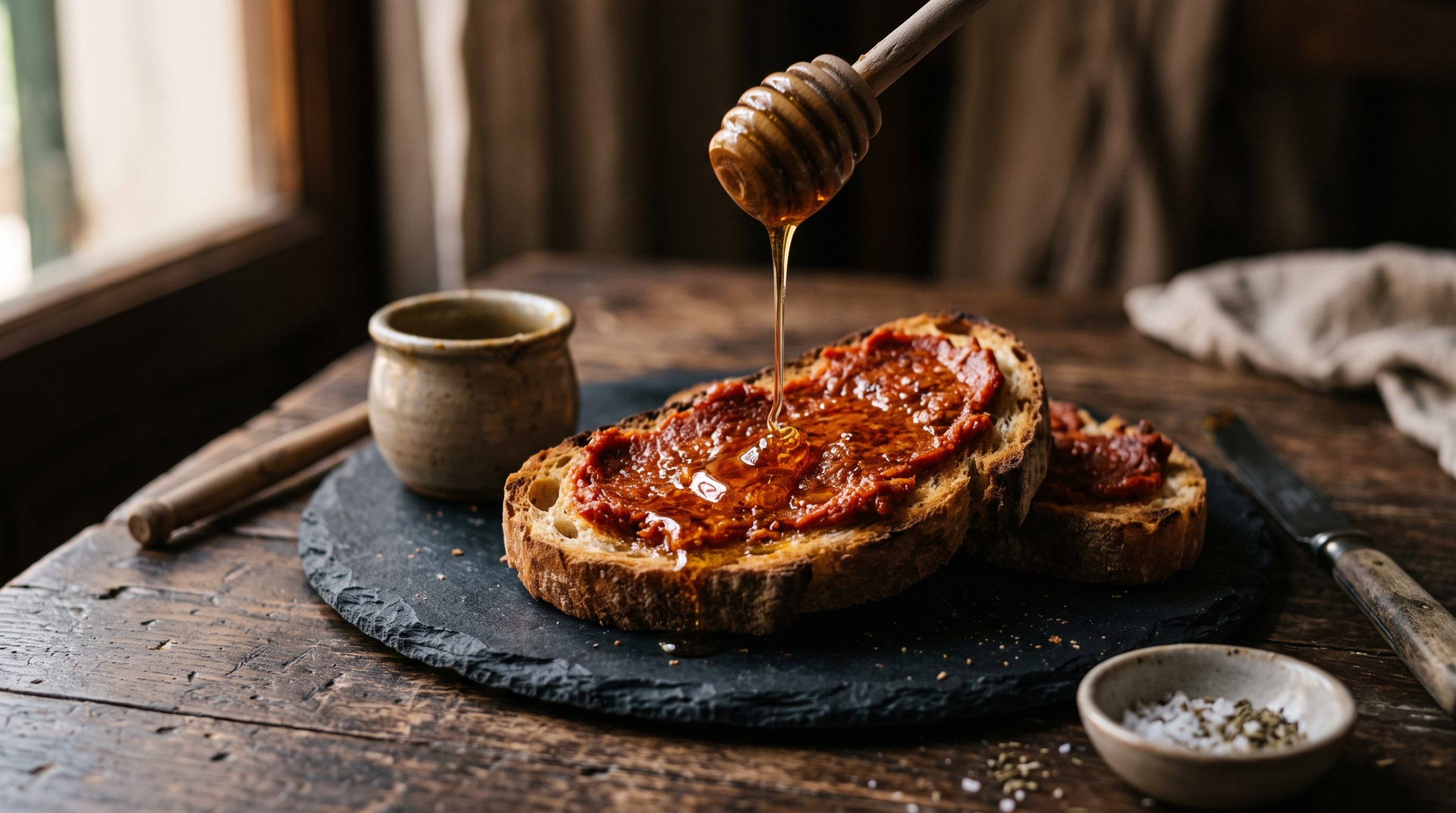
Sobrasada is a raw cured pork sausage from Mallorca, seasoned with paprika and kneaded so fine that it spreads like a paste rather than slicing.
- Protected as an IGP. The recipe is fixed by law: lean pork, back fat, paprika, salt and four permitted herbs. Colourings are banned outright.
- Paprika makes up 4 to 7 per cent of it. That is what gives the colour, and why it is not hot.
- It is spreadable because it is closer to an emulsion than to a dry sausage, at roughly 58 per cent fat.
- The black pig version must come from the native Mallorcan breed, reared on the island on figs and carob.
- A 400g standard sobrasada runs about €9 on Mallorca. The black pig version is closer to €15.
Sobrasada is the ingredient that explains Mallorcan cooking. It turns up on breakfast toast, folded into rice, stirred through a sofrito, baked into pastries and, disconcertingly for anyone raised on Spanish charcuterie, spread with a knife rather than sliced. If you have eaten anything on the island that tasted of paprika and pork fat in roughly equal measure, this was it. It is one of the first things we hand people on our Gourmet Palma Food Tour, usually with an explanation attached.
Below is what it actually is, what the law says can go into it, why it behaves like a paste when other cured sausages do not, how Mallorcans eat it, and where to buy the real thing. There is also a straight answer to the nduja question, and to the one about pregnancy, both of which get asked constantly and answered badly. For the wider island larder, our Palma food guide covers the rest.
Taste sobrasada the way it is meant to be eaten, alongside eleven other things, on a four-hour walk through the Old Town.
See the food tourWhat Is Sobrasada?

In legal terms, sobrasada is a raw cured sausage made exclusively from pork, with paprika, salt and spices added. In practical terms it is a soft red paste in a natural casing, mild rather than hot, and rich enough that a little goes a long way.
The making of it is simple and strictly controlled. Lean pork and back fat are minced to particles smaller than six millimetres, kneaded with paprika, salt and a short list of permitted herbs until the mixture is completely homogeneous, stuffed into natural casings and hung to cure in drying rooms. All of it, from mincing to curing, has to happen on Mallorca.
It comes in a range of sizes with their own names, from the slim llonganissa at 34 millimetres or less up to the bisbe, which runs from four to thirty kilos. The everyday format is the rizada, around 800 grams, which cures for somewhere between six and twelve weeks.
As for the name, it appears to have come into Catalan from Italian, from soppressare, meaning to press or compress, and it is related to the southern Italian soppressata. The earliest known citation is a letter from 1403 in which King Martí asked the Sicilian court to send him some. The word only becomes common in Mallorca from the second half of the sixteenth century, which makes sense: paprika comes from the Americas, and without it there is no sobrasada as we know it. That late arrival is a recurring pattern in the island larder, and one we come back to on our Olivar Market Tour and Tapas Class.
What Is Sobrasada Made Of?
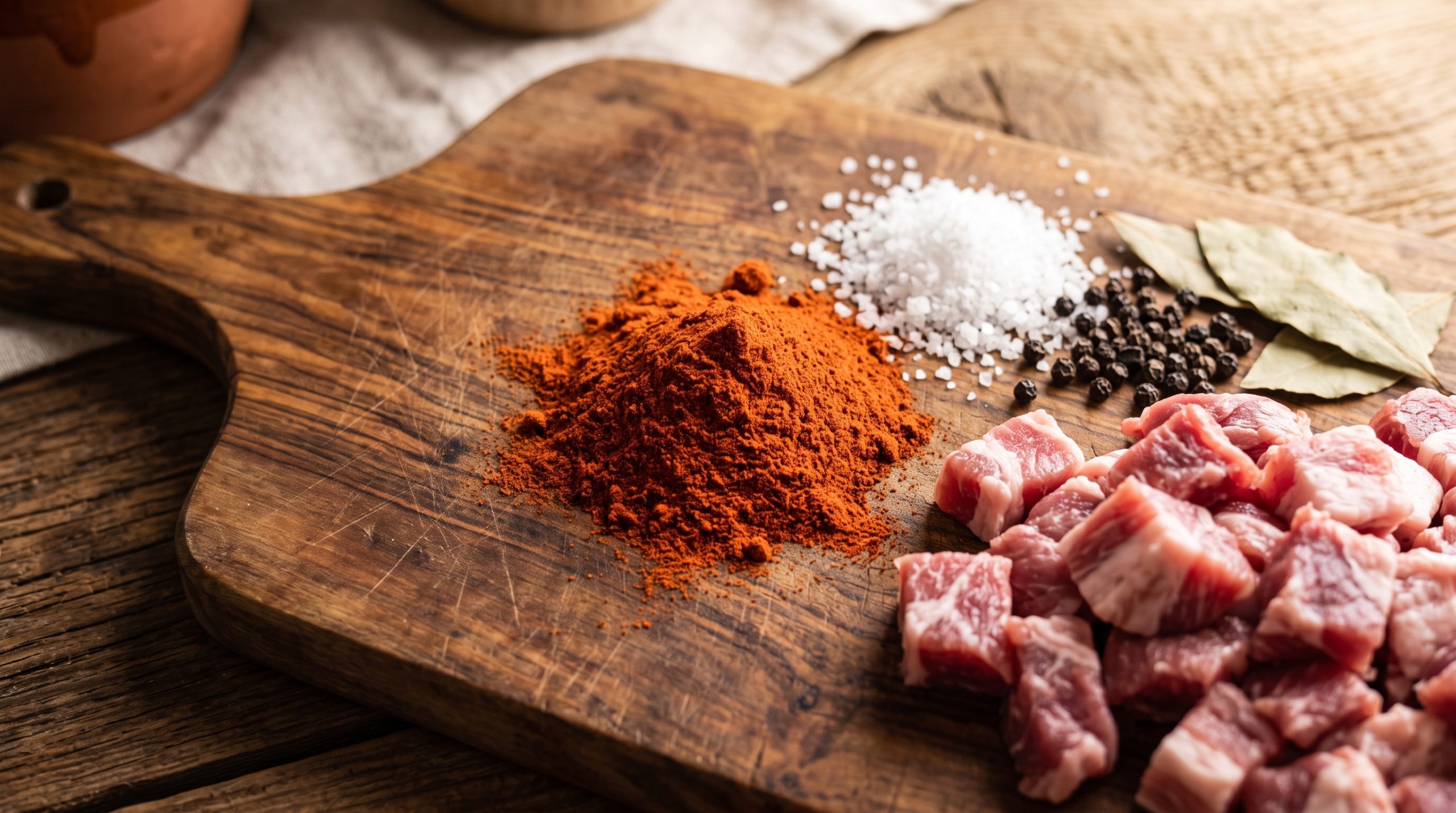
This is where the protected designation earns its keep. The IGP specification does not describe sobrasada loosely, it fixes the proportions.
| Component | What the specification requires |
|---|---|
| Lean pork (magro) | 30 to 60 per cent |
| Back fat (tocino) | 40 to 70 per cent |
| Paprika (pimentón) | 4 to 7 per cent |
| Salt | 1.8 to 2.8 per cent |
| Permitted spices | Pepper, rosemary, thyme, oregano. Nothing else |
| Colourings | Banned entirely |
| Particle size | Under 6 mm before kneading |
| Where | Made and cured on the island of Mallorca only |
Two things follow from that table. The first is that the colour is entirely paprika. There are no colourings, which is unusual enough in cured meat to be worth stating plainly, and the deep brick red you see is the honest result of paprika making up as much as a fifteenth of the whole.
The second is that sobrasada is a fatty product by design, not by cost-cutting. Back fat can legitimately make up seventy per cent of it. That is the point rather than a compromise, and it is what carries the paprika. The protection dates to a Spanish designation created by decree in December 1993 and ratified in February 1994, with the current specification in force since June 1996.
The regulatory council applies a numbered counter-label on the island, and the rules also block the obvious workarounds: you cannot sell something as sobrasada “style”, “type” or “pâté of”, and portion packs are capped at 500 grams.
Why Is Sobrasada Spreadable?
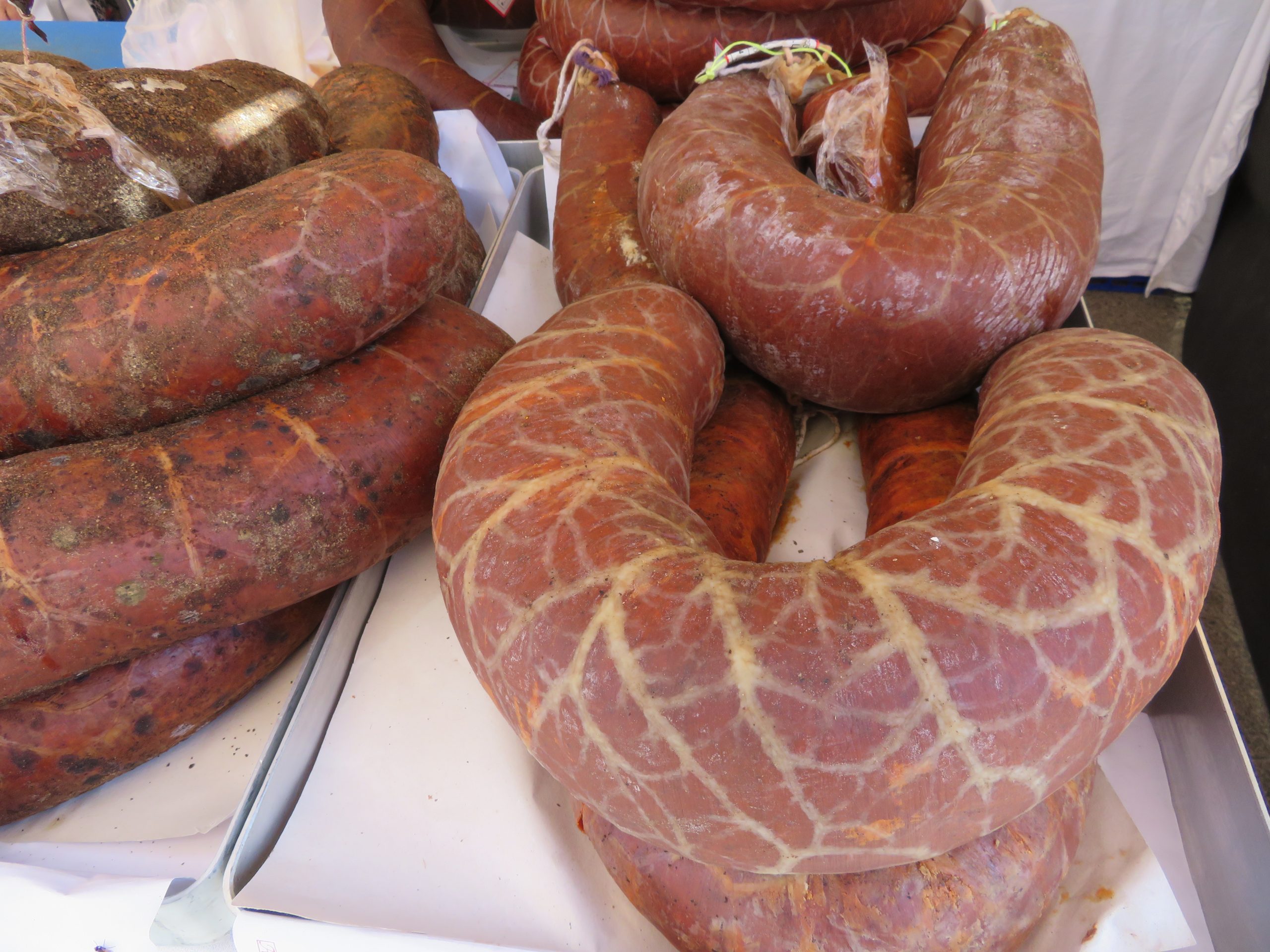
This is the question people actually want answered, because a cured sausage that never sets is counter-intuitive. Several things combine.
It is very fat and very dry at the same time. Analyses put sobrasada at roughly 58 grams of fat per 100 grams with only around 21 grams of moisture, which means the continuous phase of the product is fat rather than protein. Food scientists classify it as an emulsion-type product rather than a conventional dry-cured sausage, and that distinction is the heart of it.
The fermentation is also deliberately mild. In a salami, rapid acidification drops the pH sharply and sets the proteins into a firm, springy gel. In sobrasada the pH falls only from about 6.0 to around 5.3 across the first week. There is no hard acid set, so no rigid structure ever forms. Preservation comes instead from drying the water activity down below 0.91.
Add the mandated fineness, under six millimetres and then kneaded to a homogeneous paste, and you have a product that was never going to slice. The specification is explicit about the target: the texture should be soft, inelástica, adherent and unctuous. Inelastic is the operative word. A sobrasada that springs back has gone wrong. It is the same logic that governs the island’s other protected product, the ensaimada, where the fat is similarly non-negotiable.
Sobrasada de Mallorca de Porc Negre
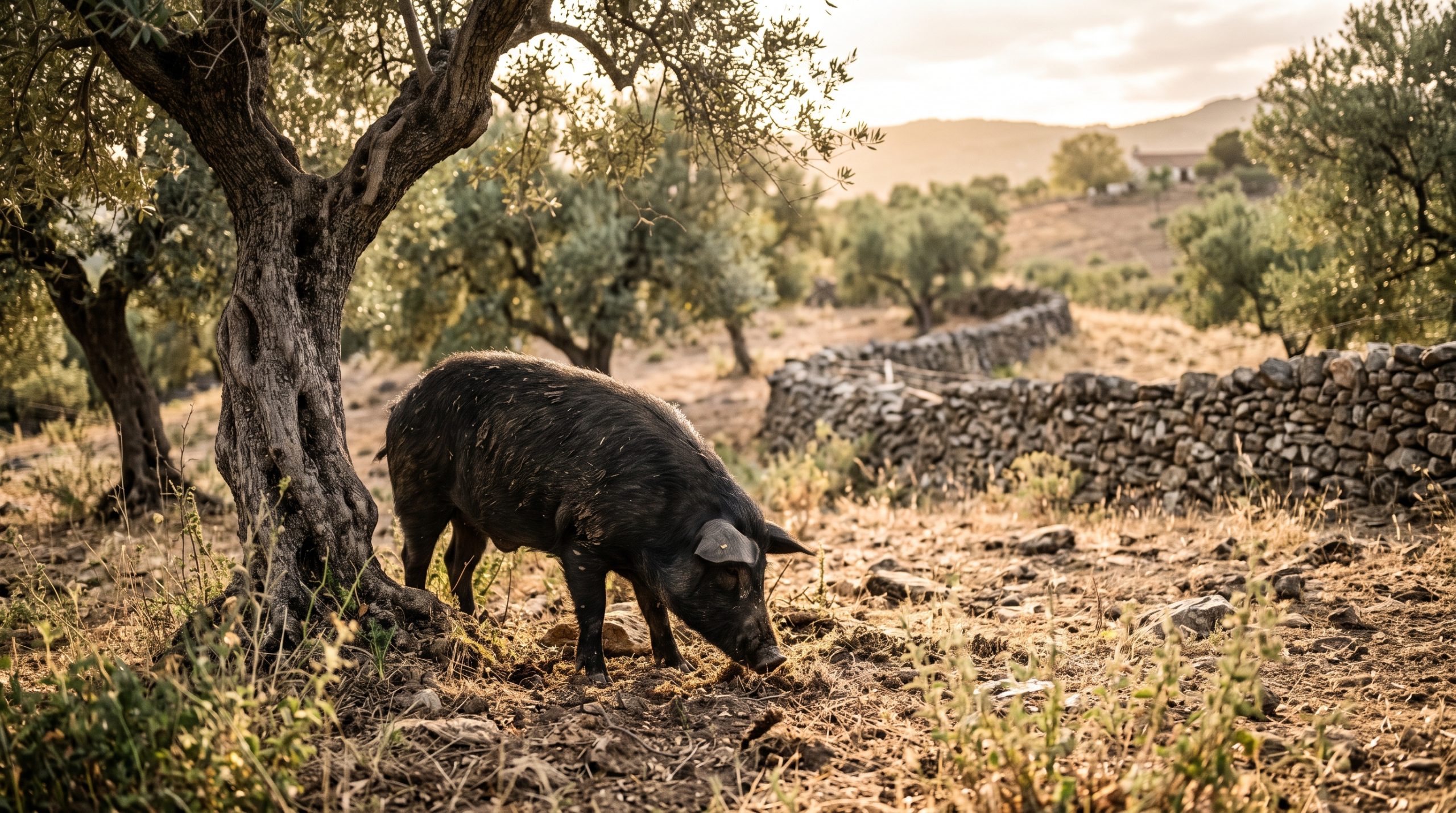
There are two protected names, not one. Alongside standard Sobrasada de Mallorca sits Sobrasada de Mallorca de Cerdo Negro, the black pig version, and the difference is not marketing.
The meat must come exclusively from the native Mallorcan black pig, an animal bred and fattened on the island under an extensive or semi-extensive system, and it must go into natural casing. The animals are identified from birth. Their diet is agricultural and forest produce, notably figs and carob, and during the fattening phase known as the esquer the permitted feed narrows to barley, legumes and figs only. Vegetables, maize, acorns and tubers are prohibited outright. The black pig version also uses noble cuts, the loins, sirloins, shoulders and hams.
The result is measurably different rather than just more expensive. Published analysis puts oleic acid at 45.7 per cent in black pig sobrasada against 39.7 per cent in the standard product, with a correspondingly different fat profile. In the mouth it reads as rounder and less sharp. Whether it is worth the roughly sixty per cent price premium is a matter of taste, but the premium is buying something real. Good charcuterie stalls in the Palma food markets will carry both and let you compare them side by side.
Be aware that claims about minimum curing times, minimum fat percentages or a required proportion of noble cuts circulate widely on retail sites. Those are sellers’ descriptions rather than requirements of the designation.
Sobrasada vs Nduja
Both are spreadable cured pork sausages, both are red, and they get confused constantly. They are not the same thing and they do not behave the same way in a pan.
| Sobrasada | Nduja | |
|---|---|---|
| Where from | Mallorca. Must be made and cured there | Calabria, particularly Spilinga |
| What makes it red | Sweet paprika, 4 to 7 per cent | Hot Calabrian chilli, in quantity |
| Heat | Mild by default. Hot versions exist but are the exception | Properly hot. That is the point of it |
| Cuts used | Lean pork and back fat; noble cuts for black pig | Fatty cuts: pancetta, guanciale, lardo |
| Smoked | No | Traditionally yes |
| Curing | Six to twelve weeks for a standard 800g | Around thirty to sixty days |
The practical upshot: substituting one for the other changes the dish. Nduja brings chilli heat and smoke, sobrasada brings sweet paprika and a cleaner pork flavour. If a recipe calls for sobrasada and you use nduja, you will taste chilli where the recipe wanted paprika. Sobrasada de Mallorca carries a registered protected geographical indication; nduja’s protected status has been the subject of a long-running application, so check the current position if it matters to you.
Inside A Tasting Palma Experience
Cook with it, don’t just read about it
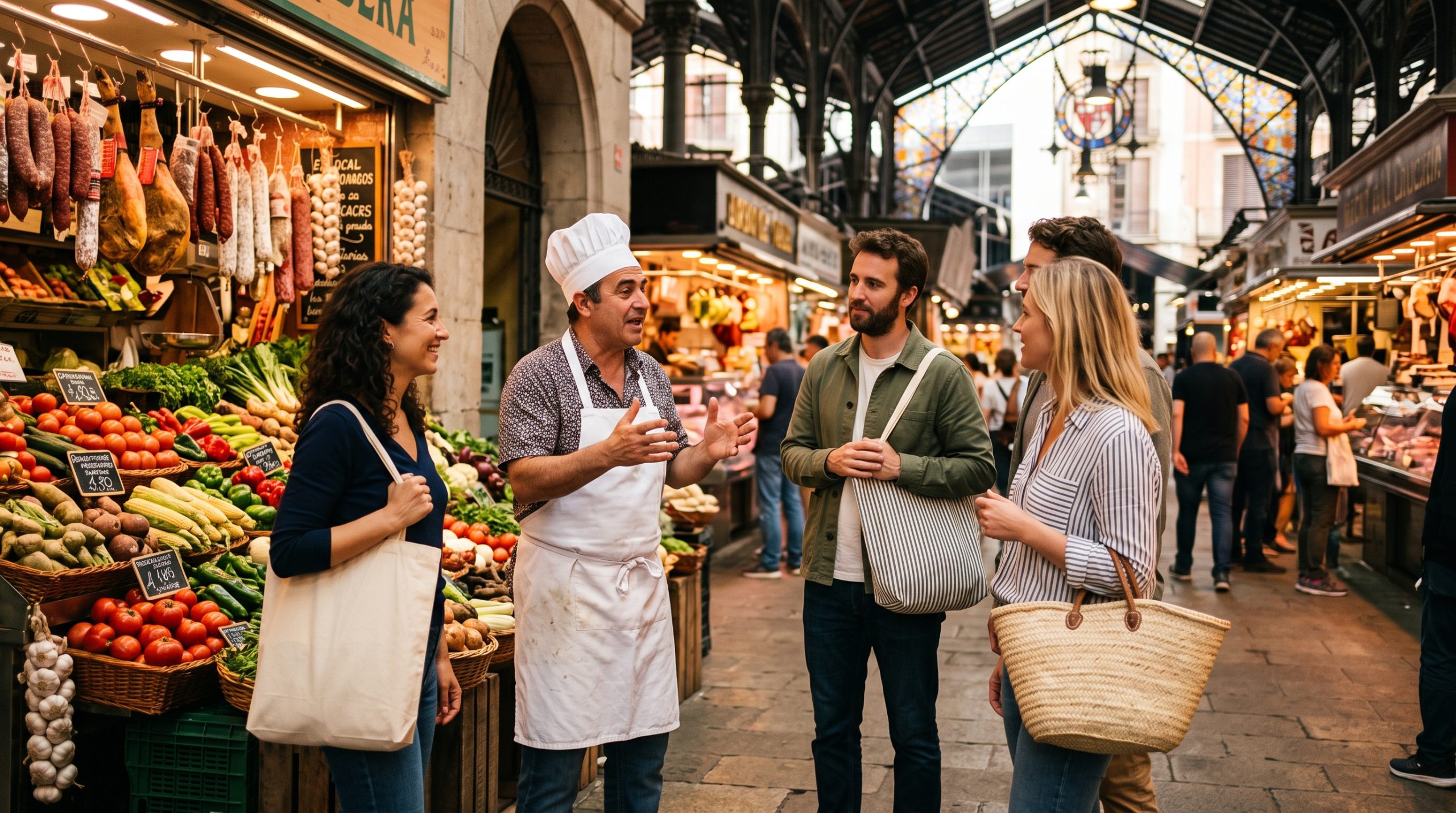
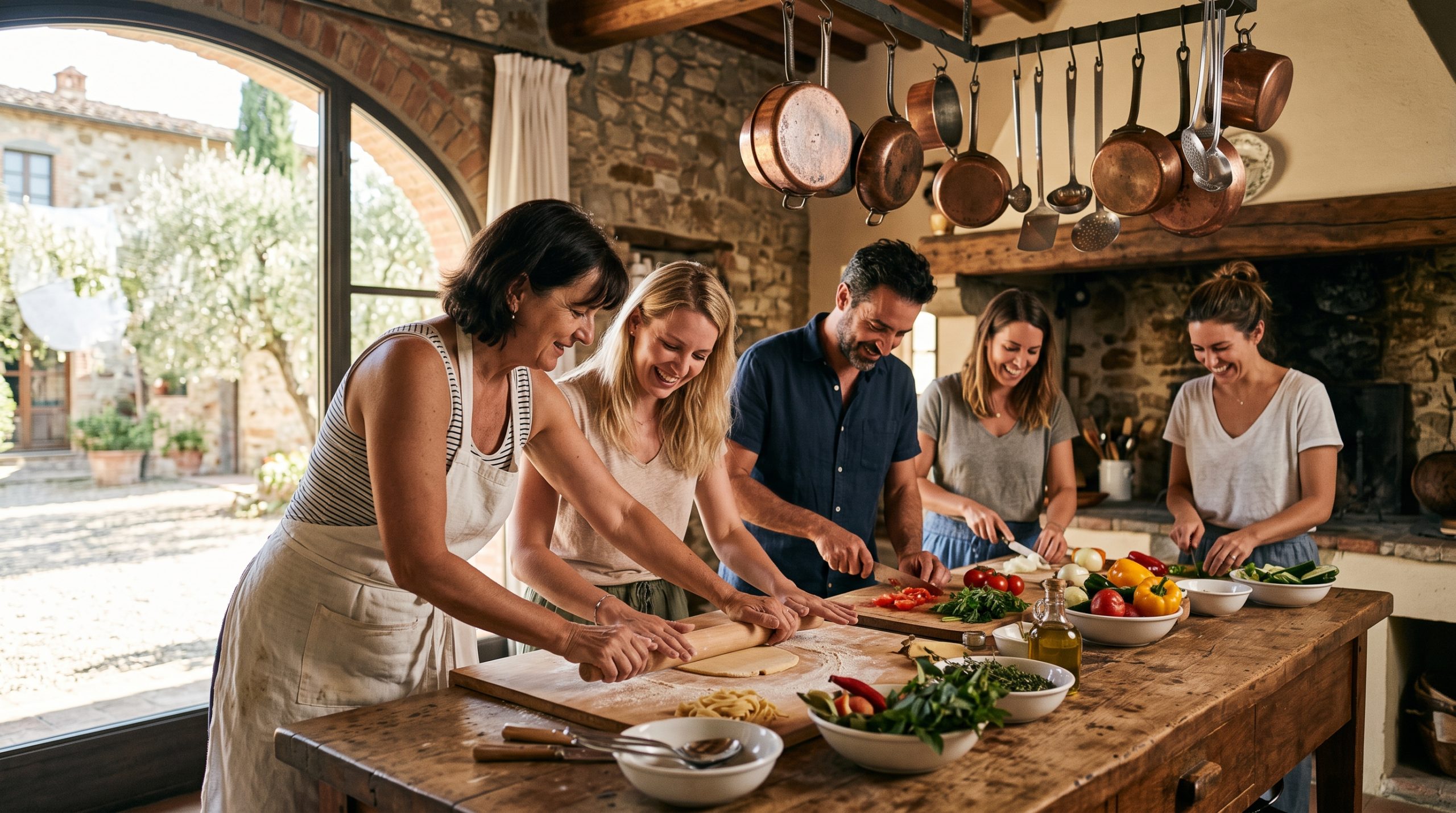
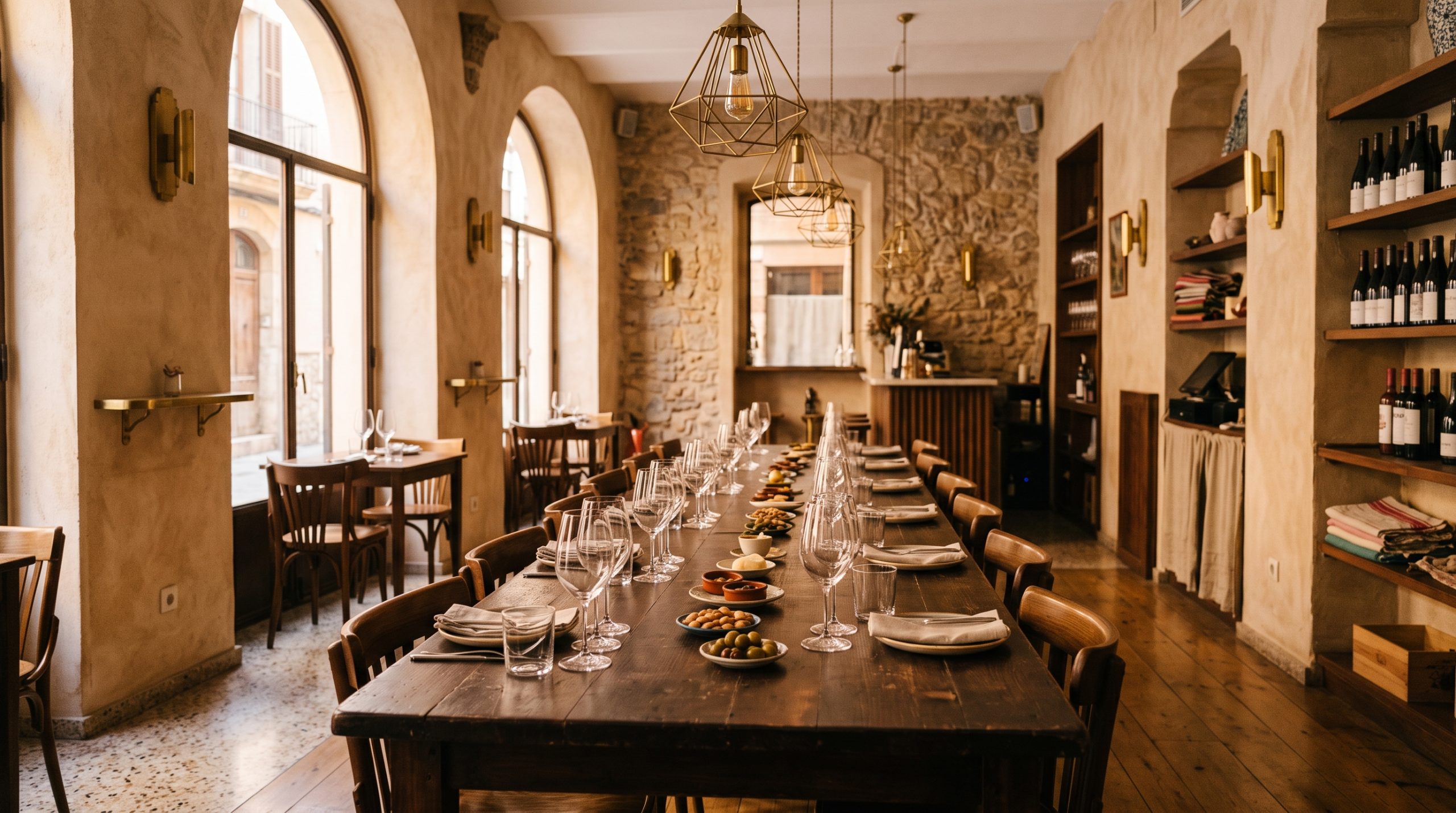
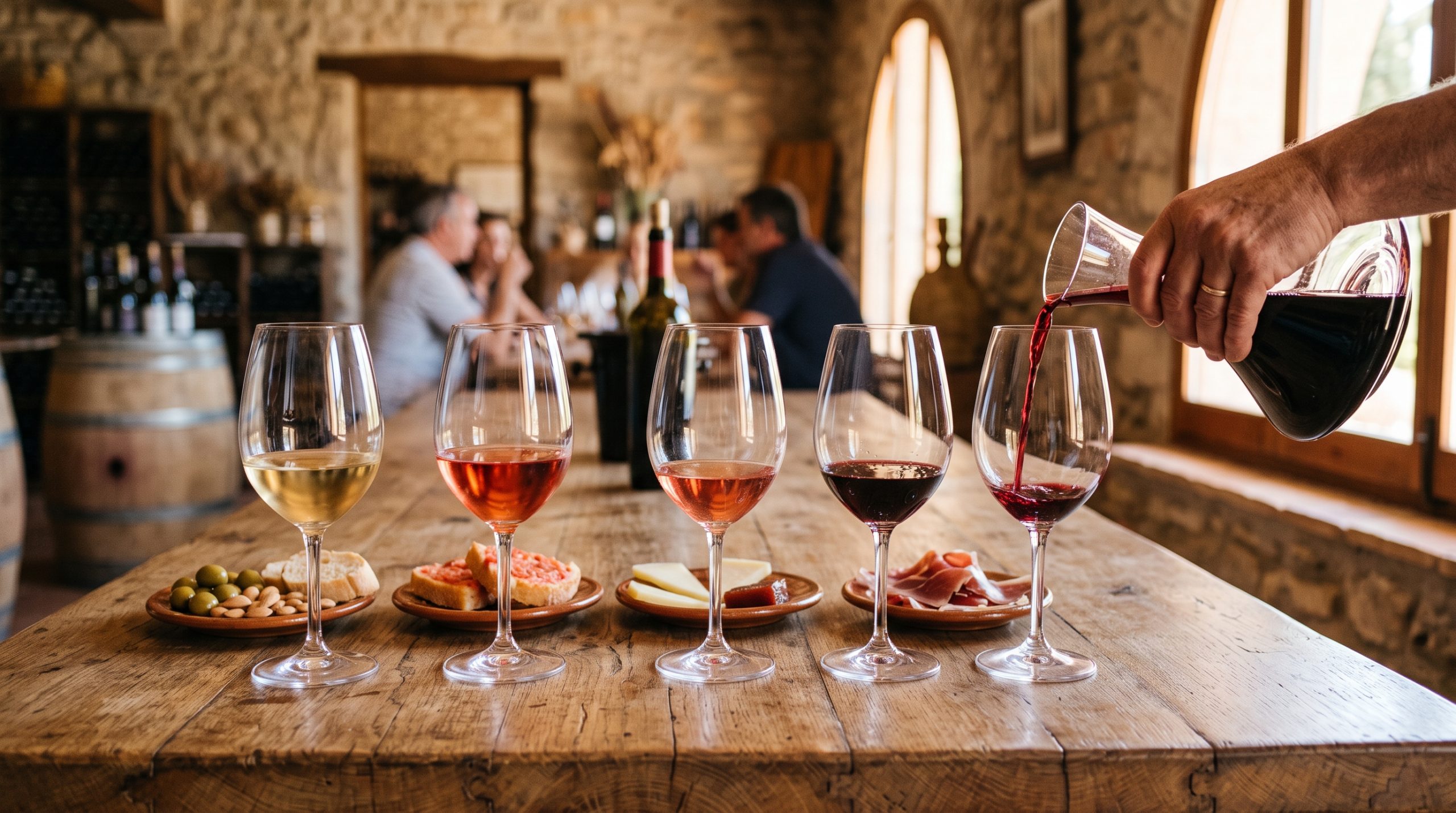
Our chef-led market tour buys sobrasada at the Olivar and takes it back to the kitchen, where it goes on the grill, into the coca and onto your plate with honey.
From €129 · 4 hours · Max 8 guests · Gift vouchers available
How to Eat Sobrasada
Start with how to keep it, because most people get this wrong. The regulatory council’s own advice is to take it out of the fridge about half an hour before eating and serve it at room temperature, and to store it wrapped in greaseproof paper rather than clingfilm. Their phrase for it is that this is a living product that needs to breathe. Cold sobrasada straight from the fridge is stiff and tastes of very little.
Six Ways Mallorcans Actually Eat It
- On bread, with honey. The classic pairing, and the one the regulatory council itself names.
- Warmed under a grill so the fat loosens and soaks into the toast underneath.
- As the base of a sofrito for meat and fish dishes, where it melts and does the work of both fat and seasoning.
- In croquetas, which is where you meet it most often in a bar.
- In baking, including sweet pastries. Sobrasada and quince in a tortada is a real thing.
- Simply on a slice of bread, which Mallorcan writers will tell you is a complete meal and they are not entirely joking.
The honey pairing deserves a note, because it sounds like a modern restaurant flourish and is not. Sweetness against salt and paprika is the traditional combination, and it works with figs or quince paste just as well. You will find it on bar counters across the island, and it is one of the pairings we hand people alongside the ensaimada, which itself sometimes turns up with a sobrasada filling.
Cooking With Sobrasada
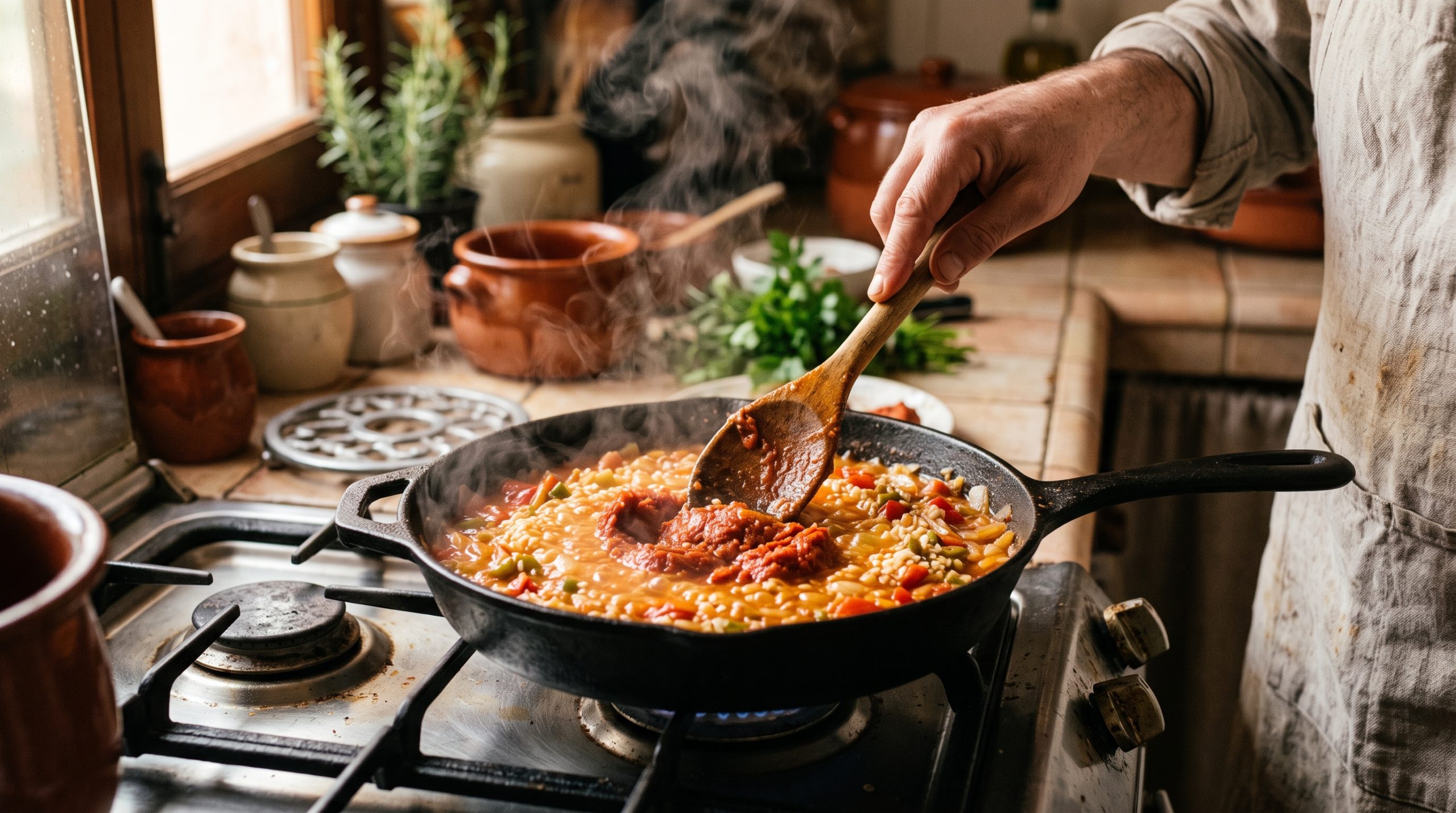
Sobrasada behaves in a pan the way butter does, only with flavour attached. Because the fat is the continuous phase, gentle heat renders it almost immediately and it disperses through whatever it is in. That makes it an unusually efficient seasoning: a spoonful will carry a whole dish.
The official recipe repertoire includes croquetas, sweet panades, a tortada with sobrasada and quince, a cod stew, and lamb loin. In practice the easiest routes in are stirring it into rice partway through cooking, melting it into a tomato sofrito as the base of almost anything, or spreading it on bread and grilling it. It also does well on pizza and through pasta, though neither of those is remotely Mallorcan. The one classic island dish it does not belong in is tumbet, which is vegetables and olive oil only.
One practical warning: it is salty and it is fatty, so season the dish afterwards rather than before. Recipes that treat sobrasada as an equivalent to chorizo tend to end up over-salted, because chorizo holds its shape and sobrasada dissolves. If you want to see the difference between the two in the same meal, the Old Town tapas bars will usually serve you both.
Where to Buy Sobrasada
On Mallorca, buy it from a market stall or a producer rather than a supermarket, and look for the numbered counter-label of the regulatory council. That label is the only reliable signal that what you are holding was made and cured on the island to the specification above. Palma’s markets all carry it, and a good charcuterie stall will let you taste before you commit. The counters at the Mercat de Santa Catalina are a reliable place to start.
For prices, a Mallorcan producer was selling a 400 gram standard sobrasada at €9.00 and a 400 gram spicy black pig version at €15.00 in July 2026, which works out at €22.50 and €37.50 a kilo respectively. Organic farmhouse versions run higher again. In the UK, expect a substantial markup: a specialist importer was listing a 380 gram black pig sobrasada at £21.50.
If you are carrying it home, it travels well, which is rather the point of a cured product. Keep it wrapped in paper, keep it out of the fridge until you are close to eating it, and do not seal it in plastic for a week. For what else to bring back, the same logic applies to most of the island larder covered in our guide to Mallorcan spirits.
Frequently Asked Questions
What Is Sobrasada in English?
There is no English equivalent, so the word stays untranslated. The closest description is a soft, spreadable cured pork sausage seasoned with paprika, from Mallorca. Calling it a spreadable chorizo gets you into the right area but is not accurate, since chorizo slices and sobrasada does not.
What Is Sobrasada Made Of?
Lean pork at 30 to 60 per cent, back fat at 40 to 70 per cent, paprika at 4 to 7 per cent and salt at 1.8 to 2.8 per cent. The only permitted additional spices are pepper, rosemary, thyme and oregano. Colourings are banned, so the red colour comes entirely from paprika.
Is Sobrasada Spicy?
Not usually. The paprika used is predominantly sweet, so standard sobrasada is rich and mildly smoky rather than hot. Spicy versions made with hot paprika do exist and are labelled as such, but if you buy an unmarked sobrasada you should expect mild.
How Do You Eat Sobrasada?
Spread it on bread, ideally at room temperature and often with honey. Warming it under a grill loosens the fat and improves it further. It also works stirred into rice, melted into a sofrito as a base for meat or fish, and in croquetas. Take it out of the fridge half an hour before serving.
What Is the Difference Between Sobrasada and Nduja?
Sobrasada is Mallorcan and gets its colour and flavour from sweet paprika, so it is mild. Nduja is Calabrian, gets its heat from hot chilli, is made from fattier cuts and is traditionally smoked. Swapping one for the other changes a dish considerably.
Can You Eat Sobrasada When Pregnant?
Not raw. Sobrasada is legally a raw cured sausage, and both the NHS and Spain’s food safety agency AESAN advise against cold cured meats in pregnancy because of toxoplasmosis and listeria risk. Both say the way to make them safe is to cook them through: the NHS says until steaming hot, AESAN specifies above 70 °C for two minutes at the centre. Cooked uses such as sobrasada melted into rice or a sofrito therefore fit that advice. If you are unsure, ask your midwife or doctor.
How Long Does Sobrasada Keep?
It is a cured product, so it keeps for weeks rather than days. Store it wrapped in greaseproof paper in a cool place rather than sealed in plastic, since the regulatory council describes it as a living product that needs to breathe. Once cut, press the surface flat and keep it covered with paper.
Taste With Us
Sobrasada, straight from the market counter
Our Gourmet Palma Food Tour makes twelve stops through the Old Town and the Olivar Market, and sobrasada turns up at more than one of them. Ten guests maximum, four hours. From €85 per person.
Check availabilityPrivate and corporate groups up to 32 guests · Get in touch
Image credits: photographs of sobrasada by Juan Emilio Prades Bel, licensed CC BY 4.0. Composition figures are taken from the IGP specification; prices were observed in July 2026 and change. Pregnancy guidance summarises NHS and AESAN advice and is not a substitute for medical advice.
Leave a Reply