


At A Glance
Santa Catalina is Palma’s old fishermen’s quarter, ten minutes west of the old town, built around a market that has been feeding the city since about 1920.
- The Mercat de Santa Catalina holds just over forty traders and opens Monday to Saturday from 7am.
- The thing to order at a market bar is the variat, a plate of small hot portions you do not get to choose.
- Carrer de la Fàbrica and Carrer de Sant Magí carry most of the restaurants. Between them they went from 40 bars to 62 in fourteen years.
- Five of the seven Es Jonquet windmills survive. Only two still have their sails.
- Until 1811 the quarter was not part of Palma at all. It belonged to Andratx.
Ten minutes west of the cathedral, on the far side of the old city walls, Palma stops being a historic centre and becomes a neighbourhood. Santa Catalina has a market, a grid of low painted houses, five surviving windmills on a ridge above the harbour, and more restaurants per street than anywhere else in the city. It is where a lot of Palma goes to eat, and where our guides end up on the nights they are not working. If you want the wider context first, our Palma food guide covers the island dishes you will meet here.
What follows is the market, the restaurants worth booking, the bars, and the history that explains why a former fishermen’s quarter ended up with a Michelin-listed Peruvian kitchen on one corner and a hundred-year-old bakery on the other. We have kept to places we could verify are trading as of July 2026, because Santa Catalina turns over faster than most of Palma. For the old bodegas on the other side of the walls, see our guide to the Old Town tapas bars.
We start our market tour at the Olivar, then cook what we buy. Four hours, eight guests, one kitchen.
See the market tourWhere Is Santa Catalina and How Do You Get There

Santa Catalina sits immediately outside the old walls, west of Es Baluard. Its eastern boundary is the Avinguda d’Argentina, it runs down to Es Jonquet and the harbour on one side, and it backs onto Son Espanyolet and Son Armadans. The whole quarter is roughly a grid, which makes it unusually easy to navigate after the tangle of the centre.
Walking times quoted online vary wildly, so here is the honest version: about ten minutes on foot from the edge of the old town, and fifteen to twenty from the cathedral itself. All of it is flat, which is not true of much else in Palma. You do not need a bus and you certainly do not need a taxi. If you are staying in the centre, the walk out along the seafront past Es Baluard is the pleasant way to arrive.
Parking is the one genuine difficulty. The streets are residential, narrow and permit-heavy, and the neighbourhood has spent years arguing about traffic. Come on foot.
The Mercat de Santa Catalina

The market stands on Plaça de la Navegació and is the reason the neighbourhood works. The current building dates to around 1920, which makes it the oldest surviving purpose-built covered market building in Palma. That is a more careful claim than the one you will often see. The Mercat de l’Olivar is an older institution, but it traded in Plaça Major before moving into its present hall in 1951, and Pere Garau opened in 1943. Santa Catalina’s building came first.
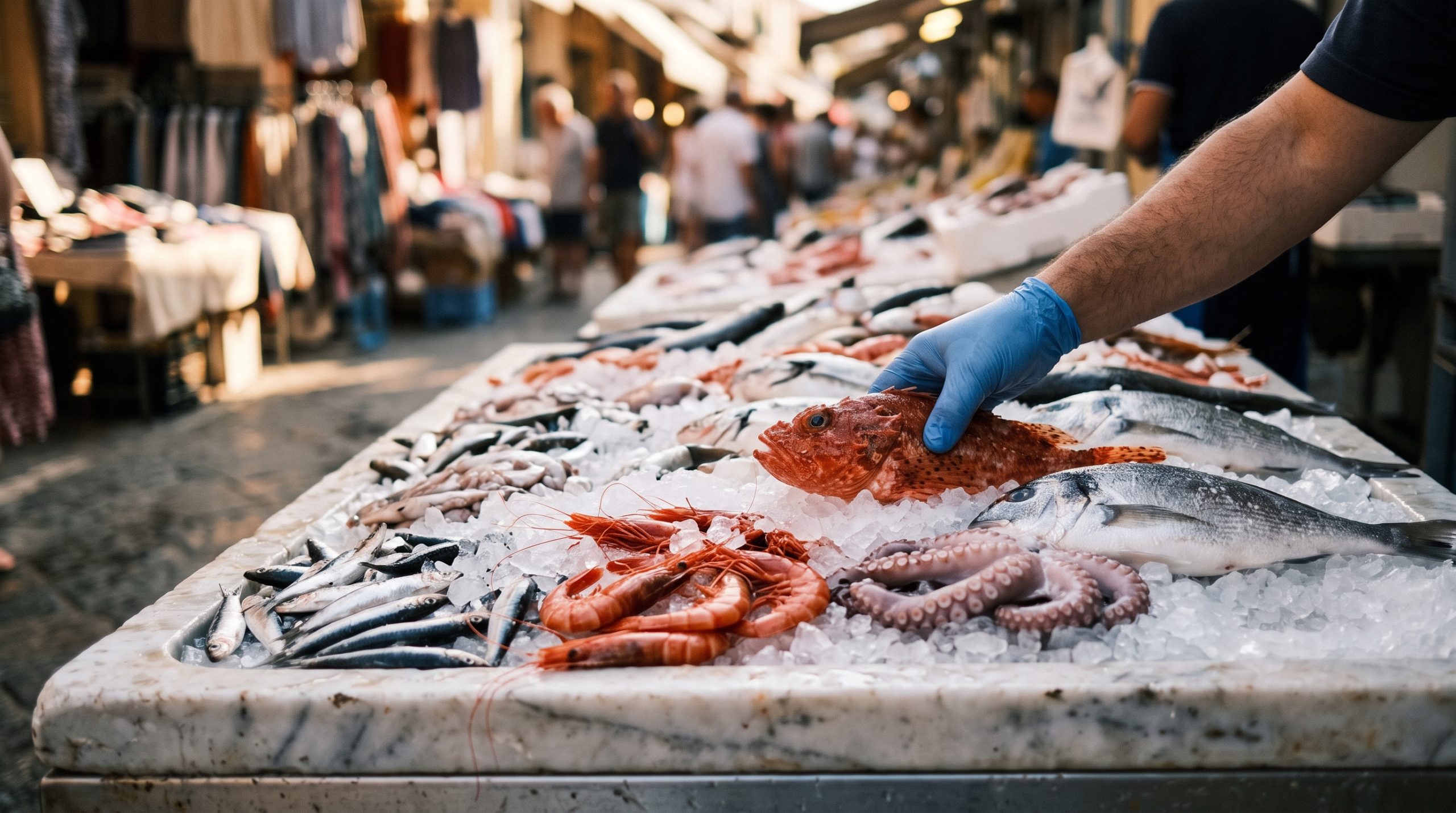
It holds just over forty traders, and it is a working market rather than a food court, though the balance has shifted over the years. Fishmongers, butchers, poultry, charcuterie and cheese, fruit and vegetables, a bakery, spices, pulses and nuts, salt cod, wine, and a row of bars around the edge. The charcuterie counters are the place to buy sobrasada with the regulatory council’s numbered label on it. Stall divisions were put in during 1978, the roof was renewed in 1999 and a cold room went in at the end of 2010.
Visiting The Market
- Monday to Saturday, from 7am. Closed Sundays. Stalls wind down from around 3pm; the bars run later.
- Fishmongers are closed on Mondays. If fish is the point of your visit, come Tuesday to Saturday.
- Go before noon for produce. Go at midday for the bars, which is when the neighbourhood eats.
- Just over forty traders, on numbered pitches running up to 142. Some numbers are long since merged.
- Bring cash. Card acceptance at the smaller stalls is inconsistent.
What to Order at a Market Bar: The Variat
If you order one thing in Santa Catalina, order a variat. It is a single plate assembling several small hot portions: croquetas, frit mallorquí, meatballs, cuttlefish, tripe, tongue, squid, whatever the kitchen has cooked that morning. It was the midday meal of day labourers, eaten fast and often standing, and it has survived in market and village bars while almost everything around it changed.
The part that catches visitors out is that you do not choose. You do not build it, you do not substitute, and you do not ask what is on it first. It arrives as it arrives. Spanish food writers describe this as a pact of trust between the customer and the kitchen, which sounds grand until you have eaten a good one and realise it is simply how the thing works. If you have dietary requirements, this is not the dish for you, and no bar will be offended if you order something else. It is one of the plates we build our Gourmet Palma Food Tour around, precisely because it is the order a visitor would never place unprompted.
1. Bar Joan Frau, known as Ca’n Frau
Stalls 8 to 9 and 59 to 60 inside the market. Founded on 1 August 1966 by Juan Frau and María Bauzá and now run by the second generation, this is the market bar the others are measured against. It took Millor Variat at the Premis Gastronòmics Mallorca in 2024, and Pere Frau’s description of the dish, the definitive Mallorcan plate of market and village bars, is the fairest summary anyone has given it.
The signature variat is built on cuttlefish chopped with finely cubed potato and seasoned with paprika. Beyond that the counter runs to vegetable coca, panades, frit made with cuttlefish or lamb, stuffed aubergines, callos, sopes mallorquines and paella, plus an apricot coca if you have room. It opens at six in the morning and closes at four, and it shuts on Sundays and Mondays. No reservations. Stand at the counter.
2. Vermoutique
Stall 19. A vermouth counter inside the market, open Monday to Saturday from nine until four, which makes it the natural mid-morning stop rather than an evening one. Vermut before lunch is an ordinary Mallorcan habit rather than a revival, and the market is the right place to understand that.
Alongside the vermouth, expect tortilla, zamburiñas and torreznos. They pour small-production vermouths you will not find in a supermarket, alongside the island spirits we cover in the Mallorca gin guide. It is a counter, not a restaurant, and it works best as one stop in a circuit of three.
3. Bar La Tapita
Stall 21. A straightforward tapas counter doing tortilla, pica pica, tumbet, fried octopus, paella, empanada and salt cod. Nothing here is trying to be clever, which is the point.
It is a good place to try tumbet if you have not had it, since the layered aubergine, potato and pepper dish is one of the few things on a Mallorcan menu a vegetarian can order without negotiation. Prices are not published and the bar does not take bookings.
The Best Restaurants in Santa Catalina

Most of these need booking, particularly between June and September. Opening hours in this neighbourhood shift with the season and several kitchens publish different times on their own site than the listing sites carry, so confirm when you book rather than turning up.
4. Stagier Bar
Carrer d’Espartero 11. Opened in 2018 by the Chilean chef Joel Baeza with his partner Andrea Sertzan, Stagier has seven tables and a menu on which five dishes are deliberate homages to the kitchens Baeza staged in. It is listed in both the MICHELIN Guide and the Guía Repsol 2026. Worth being precise: it is a Guide listing, not a star.
The menu runs to amberjack tiradito with yellow chilli and kumquat at €20, red prawn carpaccio with mango and habanero aguachile at €23, lomo saltado gyozas at €20 for six, a duck and foie gras croquette at €3.50, and a smoked wagyu hanger steak with gratin potatoes at €45. Note the summer schedule: between June and August it opens evenings only, Monday to Saturday, and closes on Sundays.
5. Patrón Lunares
Carrer de la Fàbrica 30, in a building that was once a fishermen’s community hall. It is named after the owner Javier Bonet’s grandfather, Miguel Bonet Oliver, who captained a Mallorcan trawler, and the room leans hard into that history without tipping into theme-restaurant territory.
The dish everyone orders is the aguacate al mortero at €12, guacamole made at the table in a mortar. Beyond that, the calamar cohete is €16, the arroz negro €18.50, and there is an ensaimada of their own at €9. Starters run roughly €8 to €19 and mains €14 to €42. It takes bookings by phone and through the usual platforms, and in summer you will need one.
6. Vandal
Plaça del Progrés 15. Opened in 2017 by the Argentine chef Bernabé Caravotta, who came through Mirazur and Noma, with the sommelier Sebastián Pérez. The cooking is the most technically ambitious in the neighbourhood and the wine list is treated as seriously as the food.
Current dishes include a ceviche cornet with coconut foam, Patagonian toothfish with almond and garlic purée and a sea urchin cream, and a slow beef cannelloni with parmesan and pistachio pesto. Budget around €50 a head. One caution: its own site and the listing sites disagree about which days it closes, so ring rather than assume.
Inside A Tasting Palma Experience
Learn the market before you eat the neighbourhood
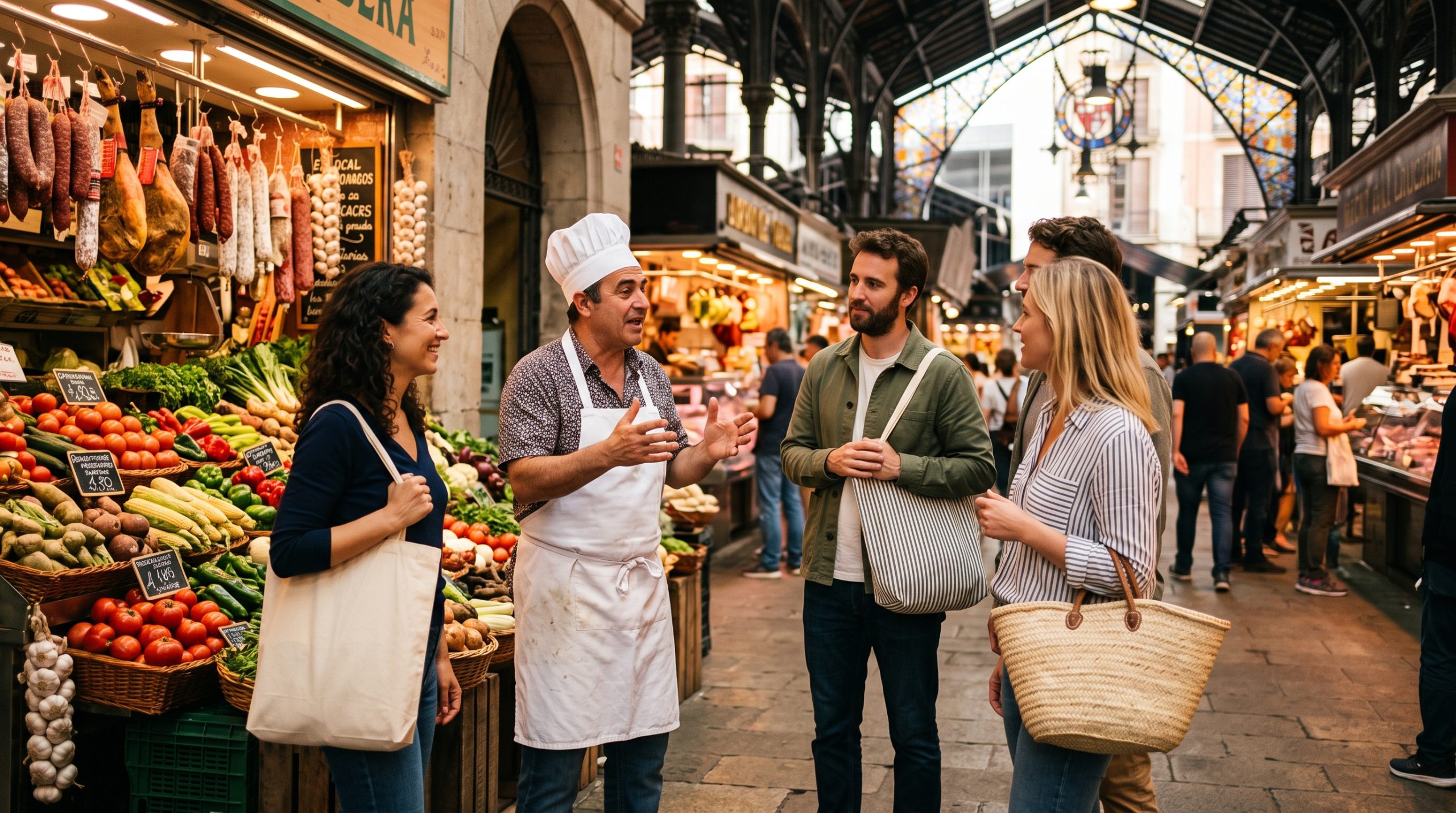
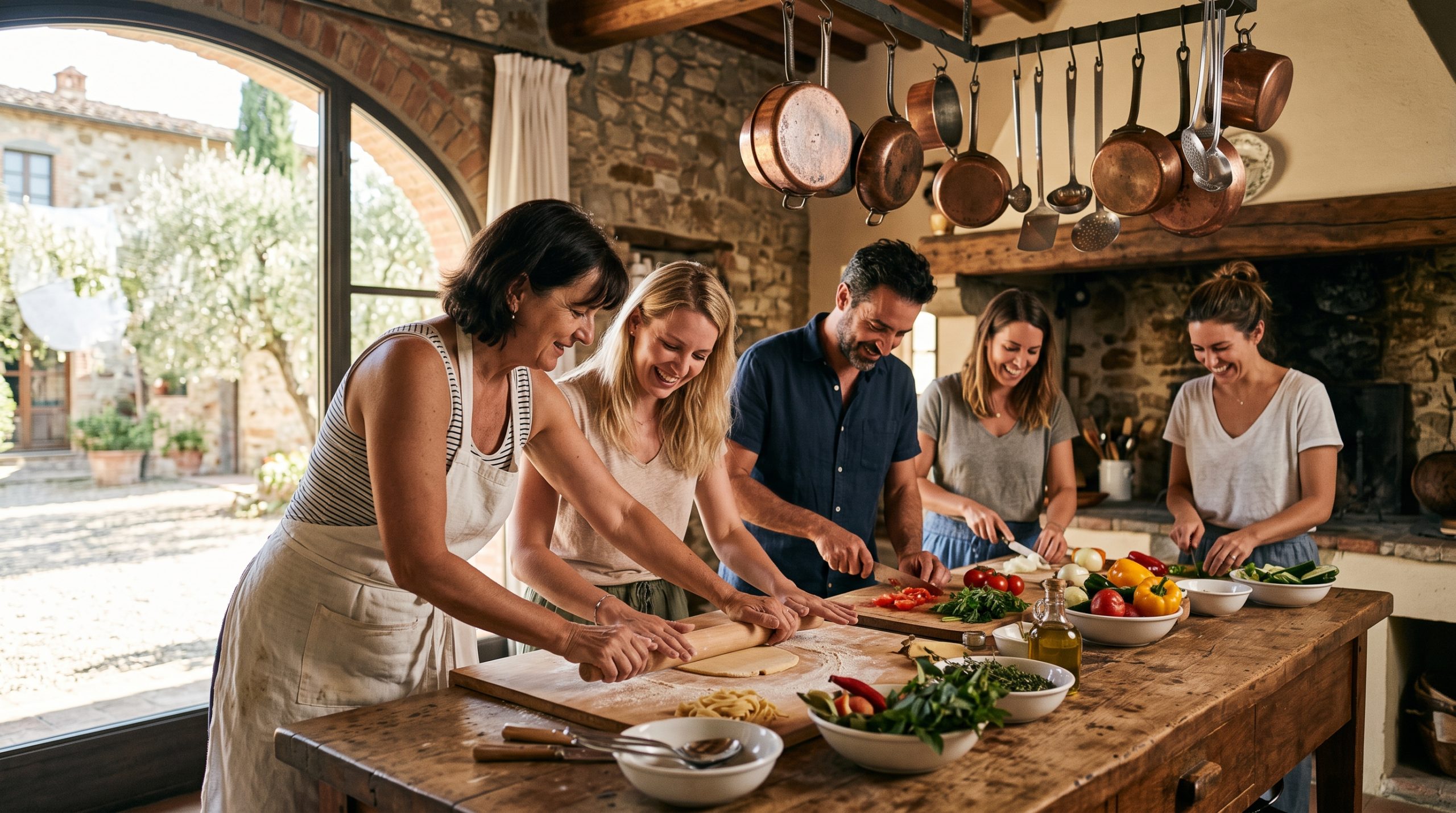
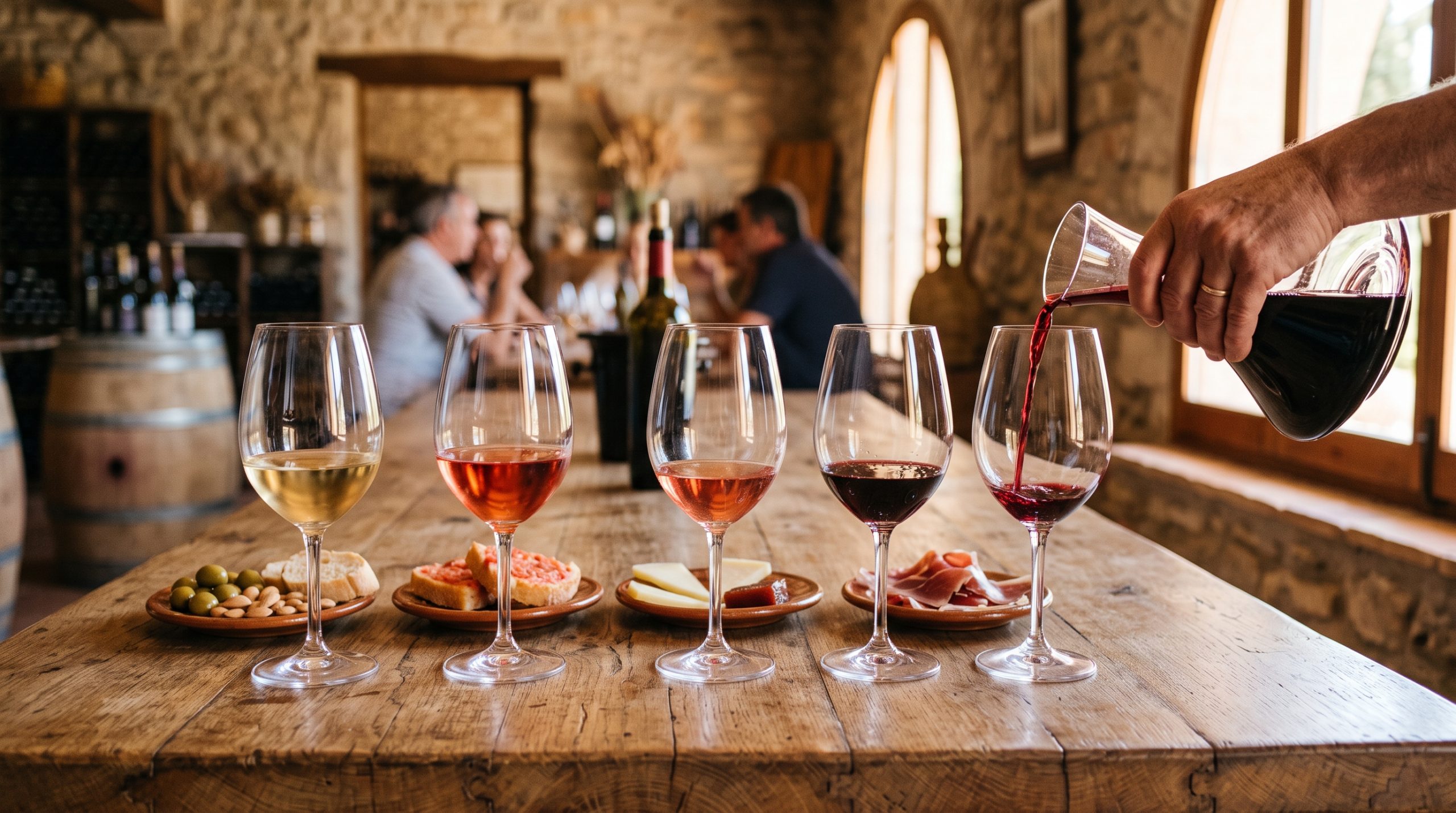
Our chef-led tour walks the Olivar with you, buys what is good that morning, then takes it back to our Old Town kitchen to cook. Four hours, eight guests, recipes to take home.
From €129 · 4 hours · Max 8 guests · Gift vouchers available
7. Sumaq
Carrer de Cotoner 44. Peruvian cooking from chef-owner Irene Gutiérrez, listed in the MICHELIN Guide. It opened on Sant Magí in June 2013 and moved to Cotoner in May 2014, so if an older article sends you to the first address, this is where it went. It did not leave the neighbourhood.
The dishes to look for are the duck confit causa with huancaina sauce, the gratinated salt cod, and a mixed ceviche. Bookings are handled through its own system or by phone. Peruvian food has a real foothold in Palma and this is the kitchen that established it, which says something about how far the city has moved from the traditional island larder.
8. OMBU Santa Catalina
Avinguda de l’Argentina 31, right on the eastern edge of the quarter. Part of the Forn Projects group, which also runs a sister site on the Passeig del Born, so check which one you are booking.
Steak tartare with truffle, foie gras and sherry mayonnaise is €22, as is the grilled octopus with toasted corn cream and Sichuan olive oil, and the Peking duck gyozas with black garlic hoisin are €21. It books up: when we checked availability for late July the entire week was gone. Reserve well ahead in summer.
9. Duke, Brutal and Naan Street Food
Three more worth knowing, grouped because their menus are not published in a form we could verify and we would rather say so than print dish names we cannot stand behind. Duke, on Carrer de Soler 36, has been running since 2009 and works from a rotating international menu; it uses a QR menu in the room. Brutal, at Carrer de la Fàbrica 10, occupies a restored Santa Catalina townhouse with its period features intact and describes itself as a paella, meat and fresh fish kitchen, with most people spending €20 to €30.
Naan Street Food on Carrer de Caro 16 is the most casual of the three, built around the idea of returning food to the street and the markets, and serving half portions so you can order widely. The fish tacos are what it is known for. Expect €20 to €30 and book at weekends.
Bars, Vermouth and Nightlife in Santa Catalina
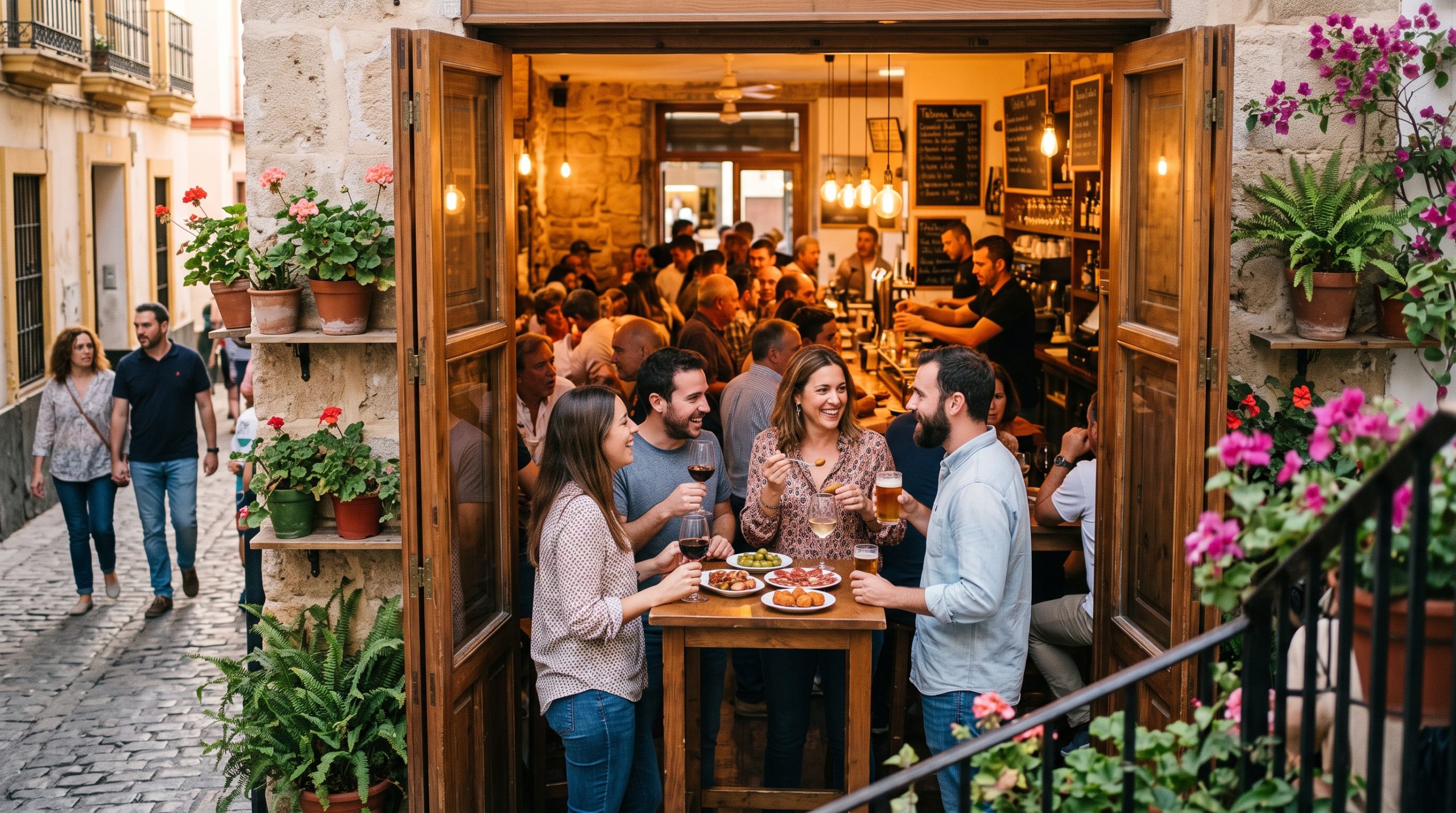
Two streets carry the evening. Carrer de Sant Magí has the cocktail bars and the live music, and pedestrianised Carrer de la Fàbrica has the terraces. Carrer Cotoner and the market square take the overflow. The scale of the change is easy to measure: between 2008 and 2022 the number of bars and restaurants on Fàbrica went from 18 to 29, and on Sant Magí from 22 to 33.
For something less obvious, Es Molí Club on Carrer de la Indústria occupies an 1860 flour mill, holds around 150 people, and has been described by Resident Advisor as one of the most underground clubs in Spain. It is an unusual thing to find inside a heritage-listed building.
Worth knowing before you plan a late night here: this is contested ground. In May 2026 the residents’ association for Santa Catalina and Es Jonquet, alongside other Palma neighbourhoods, formally demanded a moratorium on new bar and restaurant licences in noise-saturated zones, along with terrace limits and shorter hours. Venues in residential streets are currently permitted to run until four in the morning. People live above these terraces, and they are not happy about it.
Coffee and Bakeries
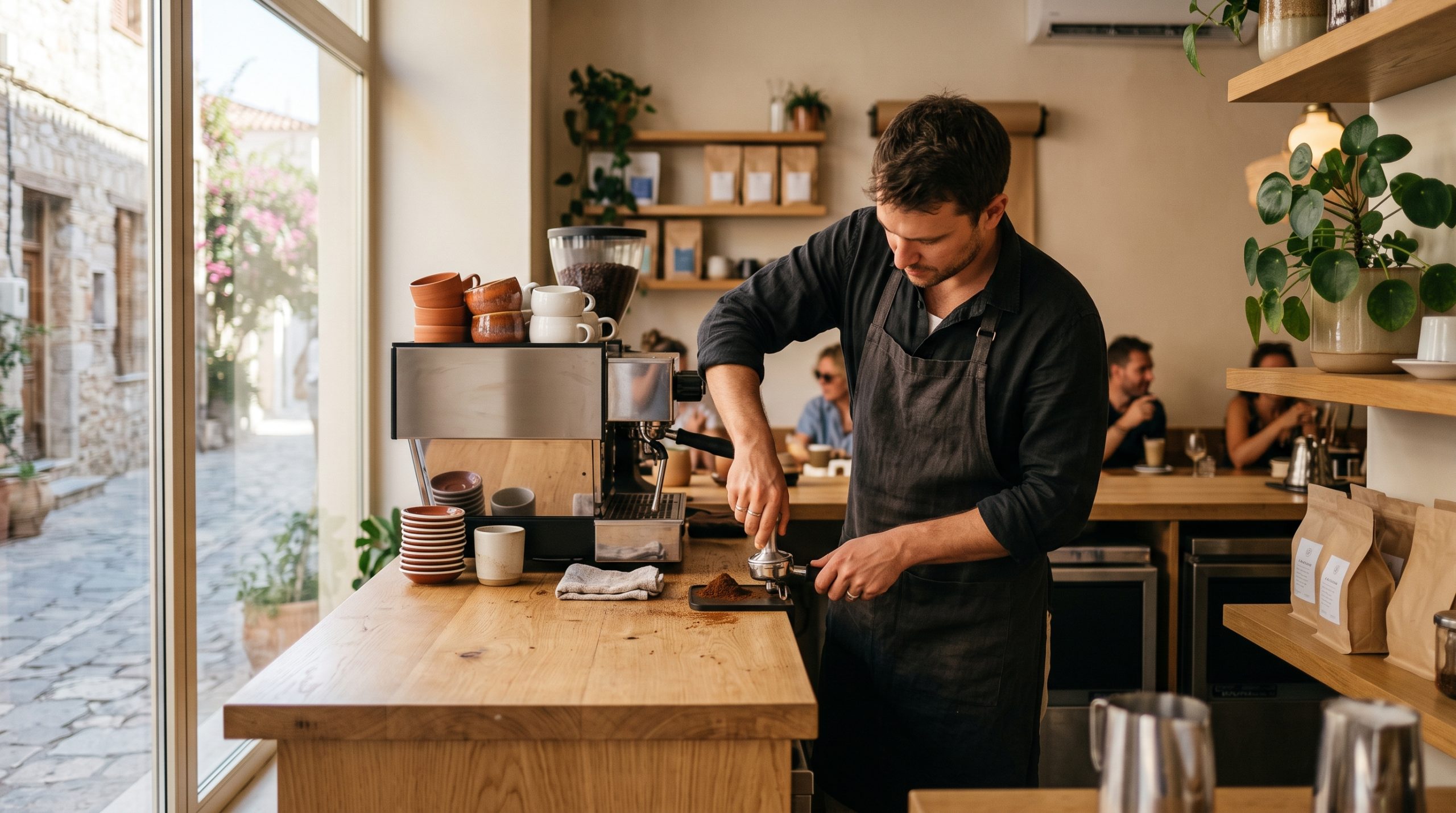
The bakery to find is Forn i Pastisseria Àngels at stall 14 in the market, a branch of Ca Sa Camena, which has been going for more than a hundred years across four generations of the Amengual family. Everything is made in their own workshop: llonguets, cocarrois, coca de trampó, coca de patata, palmeras, cremadillos, almond cake, and ensaimadas both individual and large, plain or filled. If you want the full picture on that last one, we have written a separate guide to the best ensaimada in Palma.
For coffee, Mama Carmen’s Coffee and Kitchen on Carrer de Cervantes 21 does speciality coffee with a vegetarian and vegan kitchen, open every day from half past eight until three, and it does not take bookings. Its sister site on Carrer de Rossiñol is entirely vegan. Sāntal Café on Carrer de la Indústria is the one for single-origin pour-overs, run by Rodrigo Moreno inside another restored mill.
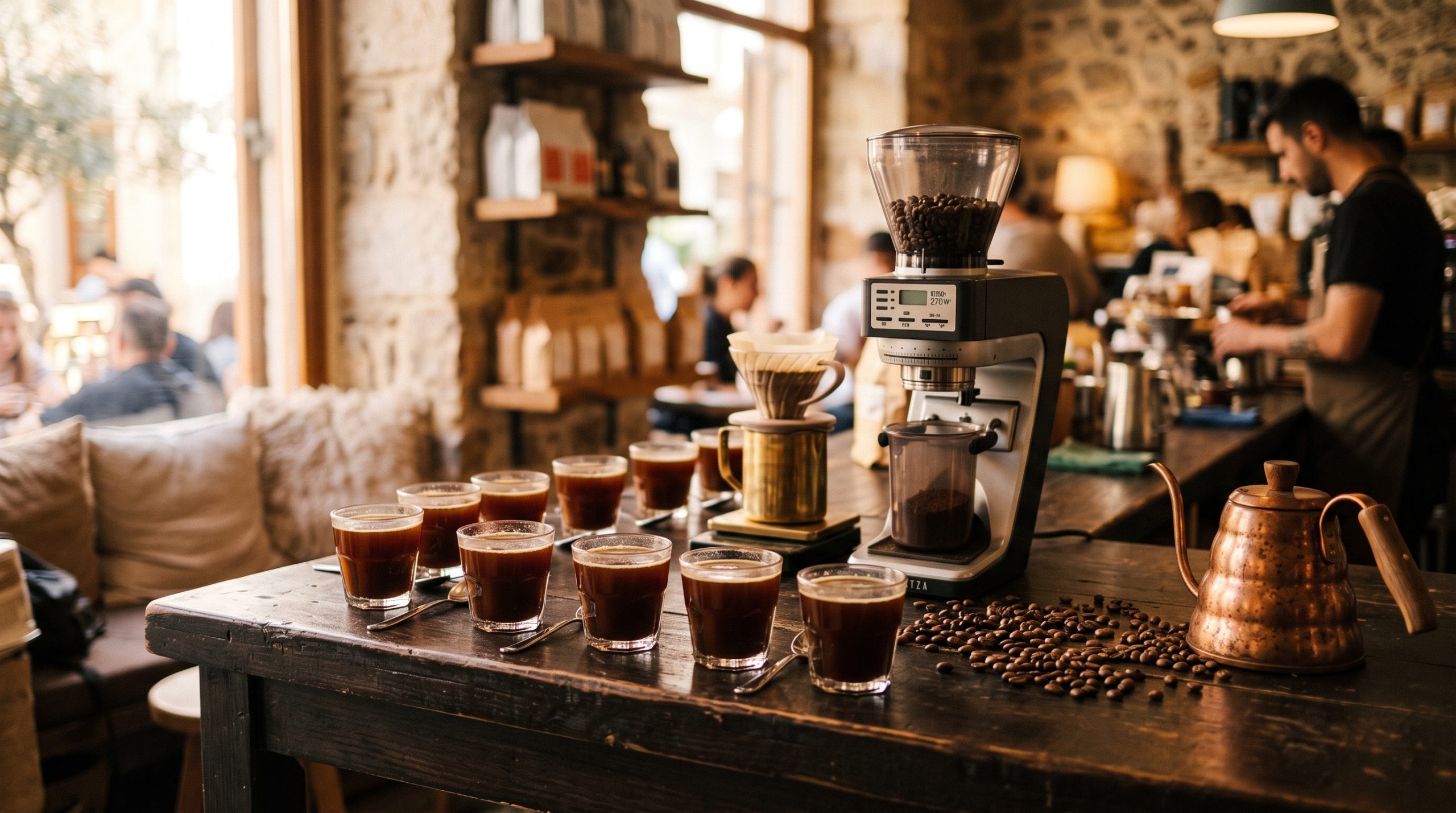
Mallorca has a longer coffee tradition than most visitors expect, with roasteries in Palma going back three quarters of a century, which is the subject of our Speciality Coffee Tasting. Coffee and an ensaimada is the standard island breakfast, and Santa Catalina is a good place to eat it.
From Fishermen’s Quarter to Palma’s Food District
The quarter began in 1343, when the merchant Ramón Salelles founded the Hospital de Santa Catalina dels Pobres in thanks for surviving a shipwreck. It was the first neighbourhood built outside Palma’s walls. The seed settlement was Es Jonquet, named for the rushes that grew by the water, and it was populated by fishermen, ropemakers and millers.
Here is the fact that surprises most people, including a good number of Mallorcans: until 1811, Santa Catalina was not administratively part of Palma at all. It belonged to Andratx, twenty-five kilometres down the coast. Through the second half of the nineteenth century it industrialised, producing ice, textiles, zips, glass, carpets and shoes, and the Modernista houses that survive were built at the end of that century by merchants coming home from Cuba.
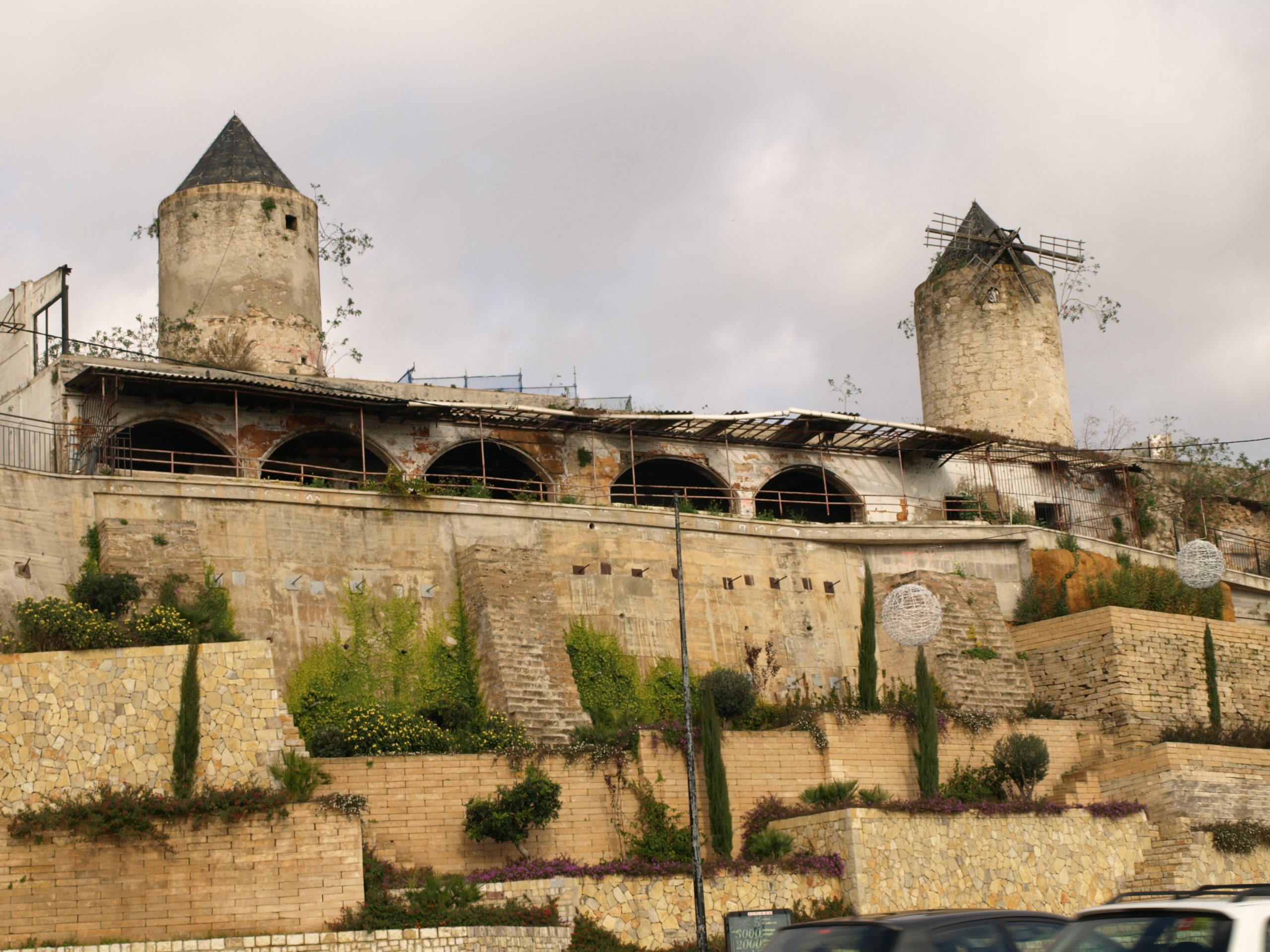
The windmills above the harbour are older than any of it. The first is documented in 1339, and the group of seven flour mills took shape in the eighteenth century. Five still stand. Molí d’en Garleta has been a museum since 2005, Molí del Nom de Déu is now a community centre and Molí d’en Carreres is in use as a leisure venue, and those last two are the only ones that still carry their sails. Molí de sa Garriguera and Molí d’en Celos are abandoned. Of the two that are gone, one was wrecked by the 1851 earthquake and the other demolished in 1975.
The whole group has been protected as a Conjunt Històric since December 2009, though protection has not translated into upkeep. Local press documented alarming deterioration in 2025, with graffiti and broken doors. They are worth the ten-minute walk down for the view over the harbour, but go expecting a working neighbourhood’s neglected monuments rather than a restored heritage site.
As for how it became a restaurant district, residents and local press point at one decision: the pedestrianisation of Carrer de la Fàbrica in 2010. Foreign residents had been arriving since the 1990s, drawn by the light and the quiet, but the terraces followed the pedestrianisation and the neighbourhood tipped. An eighty square metre flat that cost around €200,000 in the 2000s now goes for €500,000 to €600,000, and the quarter is now the second most expensive in Palma by price per square metre.
The numbers behind the change are stark. Foreign residents went from 21 per cent of the neighbourhood in 2008 to around 24.5 per cent by 2018 and roughly 30 per cent by the end of 2023, with Swedes prominent enough that locals call the area Lilla Sverige, little Sweden. By 2020 the quarter had 529 ground-floor businesses, of which 160 were food service and twenty were estate agencies. One premises went from €1,000 a month to €3,000. A resident quoted in the local press put it bluntly: Carrer de la Fàbrica looks like a theme park.
None of which means you should not come and eat here. It does mean it is worth knowing that the neighbourhood you are eating in is one people are actively fighting over, and that the market and the older bars are the parts most worth supporting. The food is the reason to visit, and it is also the reason the people who live here are arguing about what the place has become.
Frequently Asked Questions
Where Is Santa Catalina in Palma?
Just west of Palma’s old town, immediately outside the historic walls at Es Baluard. Its eastern edge is the Avinguda d’Argentina and it runs down to Es Jonquet and the harbour. It is roughly a ten-minute flat walk from the edge of the old town and fifteen to twenty minutes from the cathedral.
What Are the Best Restaurants in Santa Catalina?
Stagier Bar and Vandal are the two most ambitious kitchens, both listed in guides and both needing a booking. Patrón Lunares is the one with the strongest local story, Sumaq is the established Peruvian, and OMBU is the reliable all-rounder. For something cheap and traditional, eat a variat at Ca’n Frau inside the market.
When Is the Santa Catalina Market Open?
Monday to Saturday from 7am, closed on Sundays. Stalls start winding down from around 3pm while the bars carry on later. The fishmongers close on Mondays, so if fish is the reason you are going, come Tuesday to Saturday. Individual stalls set their own hours.
Is Santa Catalina Palma’s Oldest Market?
It is the oldest surviving purpose-built covered market building in Palma, dating to around 1920. The Mercat de l’Olivar is an older institution but traded in Plaça Major before its current hall opened in 1951, and Pere Garau opened in 1943. Both claims get repeated loosely, so the building is the precise distinction.
What Is a Variat?
A single plate combining several small hot portions, typically croquetas, frit mallorquí, meatballs, cuttlefish, tripe or squid, depending on what the kitchen has cooked. You do not choose the components and you cannot customise it. It began as the midday meal of day labourers and survives mainly in market and village bars.
Is Santa Catalina Good for Nightlife?
Yes, and it is the busiest part of Palma for it outside the Paseo Marítimo. Carrer de Sant Magí has the cocktail bars and live music, and pedestrianised Carrer de la Fàbrica has the terraces. Note that residents formally requested a moratorium on new licences in May 2026 over noise, so the situation may change.
Why Are There Windmills in Santa Catalina?
They are the Es Jonquet flour mills, milling grain for the city. The first is documented in 1339 and the group of seven formed in the eighteenth century. Five survive and two of those still carry their sails. They have been protected as a Conjunt Històric since 2009, though local press reported serious deterioration in 2025.
Eat With Us
Twelve tastings across the Old Town and the market
If Santa Catalina has convinced you that Palma is worth eating properly, our small-group food tour is the fastest way in. Twelve tastings, ten guests, four hours. From €85 per person.
Check availabilityPrivate and corporate groups up to 32 guests · Get in touch
Image credits: photographs of the Mercat de Santa Catalina, Carrer de Soler and the Molins des Jonquet by Chixoy, licensed CC BY-SA 3.0. Prices and opening details were verified in July 2026 and change frequently; confirm with the venue before travelling.
Leave a Reply