

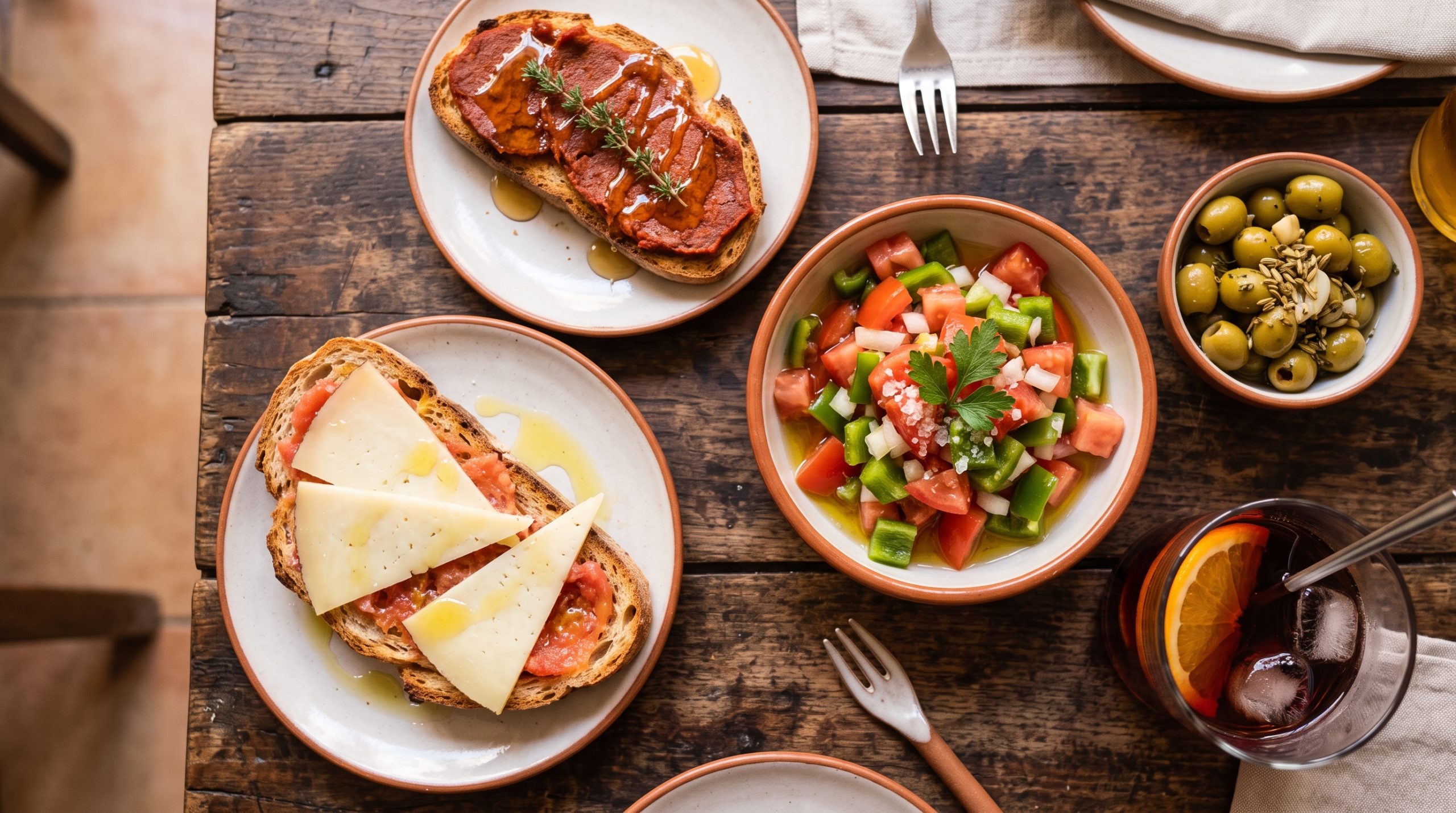
At A Glance
- Mallorcan food is not Spanish food. It is an island cuisine built on pork, bread, olive oil and vegetables, with its own dishes and its own names for them.
- Paella is not Mallorcan. The island’s rice dish is arròs brut, and it is nothing like the Valencian version.
- Sobrassada is the defining ingredient, a spreadable cured sausage that appears at breakfast, in cooking and on dessert.
- The cooking is seasonal and frugal by design. Most classic dishes were built to use what a farm had, which is why so many are vegetable-led.
- Ten dishes cover the canon. Learn those and you can read almost any traditional menu on the island.
Mallorcan cooking is one of the few regional cuisines in Spain that visitors routinely eat without recognising. It hides behind the word Spanish, and behind the menus of the resort strips, and the result is that a great many people spend a week on the island and come home having eaten paella, which belongs to Valencia, and sangria, which belongs to nobody in particular. The island’s own food is more interesting than either and considerably older.
It is a cuisine of a dry island with limited water, poor soil in places and a long history of making a great deal from very little. Pork preserved to last a year, bread used as an ingredient rather than an accompaniment, vegetables treated as the centre of a dish rather than the side, and almonds and citrus from the terraces of the Tramuntana. Anyone eating their way through the best restaurants in Palma will meet most of these dishes within a few days.
What Is Traditional Mallorcan Food?
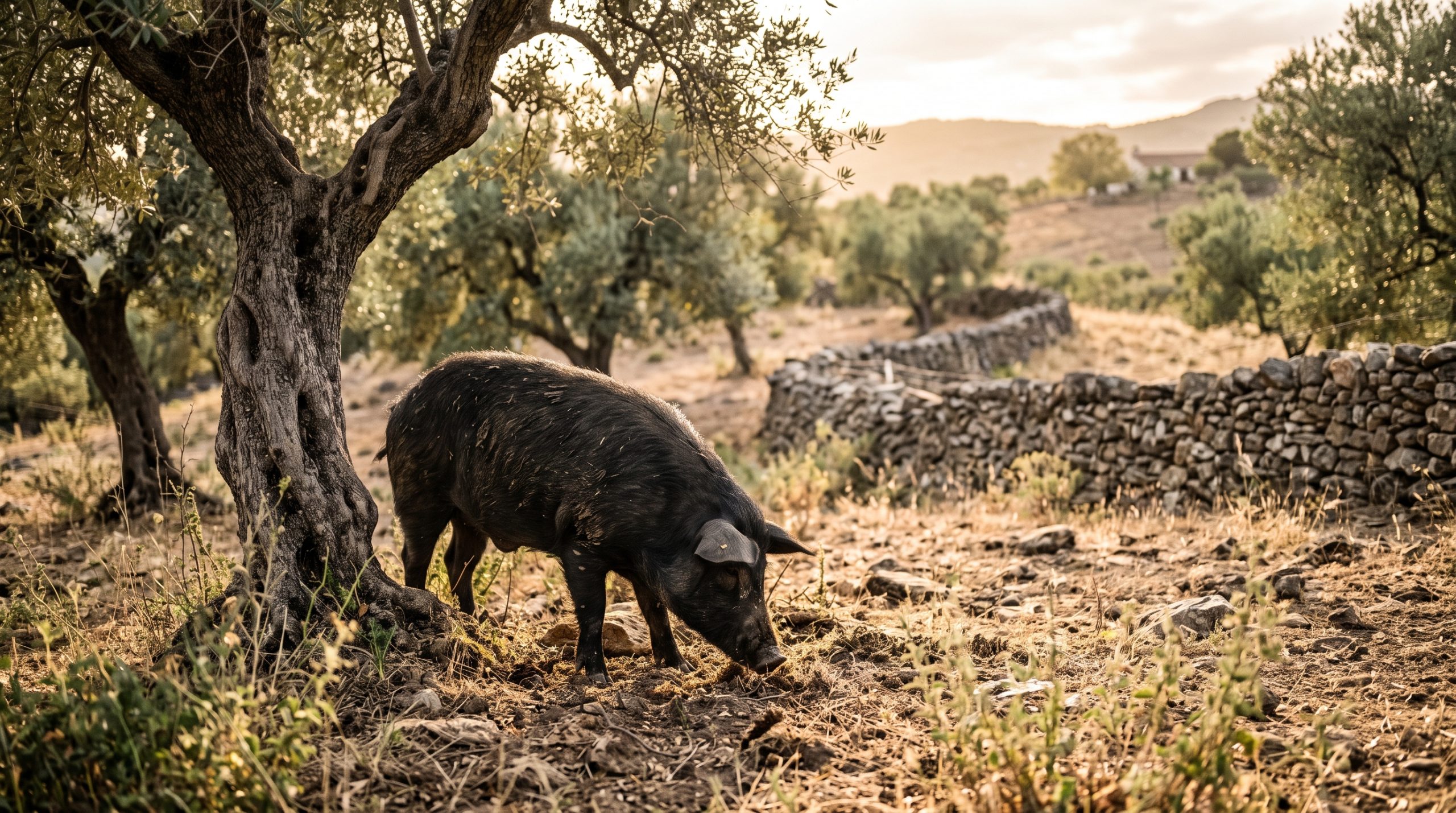
Traditional Mallorcan food rests on four foundations. The first is the pig, and specifically the porc negre, the native black breed that forages under the olive and carob trees. Every part of it was preserved, because a farm slaughtered once a year and had to eat from that animal for the next twelve months. The second is bread, which appears in soups, on plates and as a vessel, and which was baked without salt in the old country loaves.
The third is olive oil, pressed from groves that in places are a thousand years old and terraced into mountainsides by hand. The fourth is the vegetable garden, the hort, which supplied aubergines, peppers, tomatoes and potatoes in quantity and turned them into dishes substantial enough to be a meal. Almonds, from the trees that flower across the island in February, carry most of the baking. What the cuisine has very little of, historically, is beef, cream and elaborate technique.
What Makes Mallorcan Cuisine Distinct
- Preserved pork above fresh meat. Sobrassada, botifarró and camaiot were storage, not luxury.
- Bread as an ingredient. In sopes mallorquines the bread absorbs the dish rather than accompanying it.
- Vegetables as the main event. Tumbet and trampo are dishes in their own right, not garnishes.
- Almonds throughout the baking. Gató d’ametla uses ground almond in place of flour entirely.
- Sweet meeting savoury. Sobrassada with honey, and the sweet-and-savoury fillings of panades and cocarrois.
The Essential Traditional Mallorcan Dishes
| Dish | What it is | When to eat it |
|---|---|---|
| Pa amb oli | Bread with tomato, oil and salt, topped with cured meat or cheese | Any time, all year |
| Sobrassada | Spreadable cured pork sausage with paprika | All year, best with honey |
| Tumbet | Layered aubergine, potato and pepper in tomato | Summer |
| Arròs brut | Brothy rice with rabbit, game and offal | Autumn and winter |
| Frit mallorquí | Potatoes, peppers and offal fried hard together | All year |
| Sopes mallorquines | Vegetable and bread dish, thick rather than liquid | Winter |
| Coca de trampo | Flatbread with chopped summer vegetables, no cheese | Summer |
| Ensaïmada | Coiled laminated pastry made with pork lard | Breakfast, all year |
| Gató d’ametla | Almond cake, usually with almond ice cream | All year |
| Panades and rubiols | Filled pastries, savoury and sweet | Easter |
Traditional Mallorcan Food: The Savoury Dishes
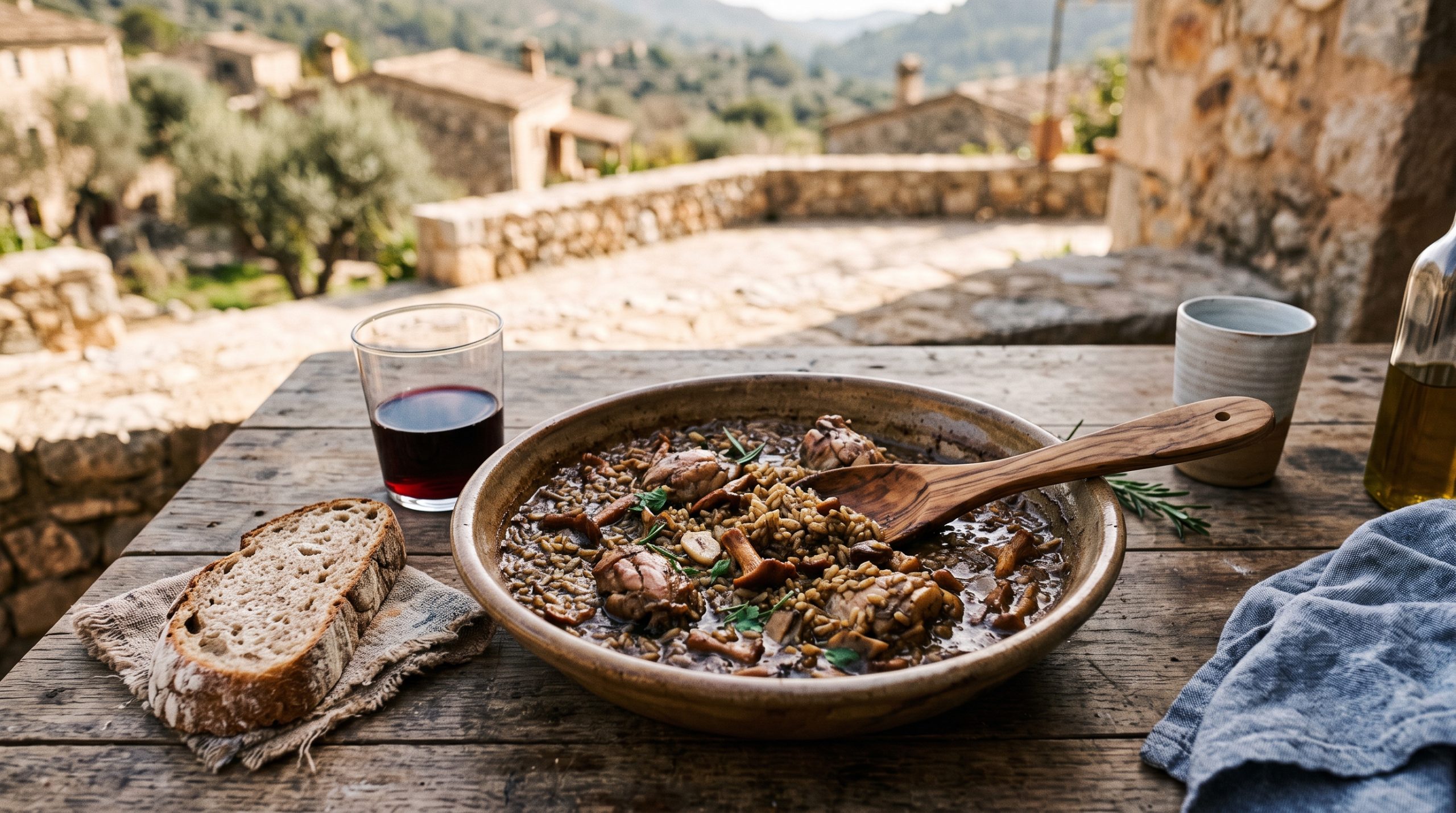
1. Pa Amb Oli
Pa amb oli is the island in one plate: country bread, a ramellet tomato rubbed across it until the flesh is gone, olive oil, salt. That is the base, and it is then topped with cured ham, sobrassada, cheese or nothing at all. It is eaten as a light meal rather than a starter, and there are restaurants that serve almost nothing else.
The detail that matters is the tomato. Ramellet are the small ribbed variety sold in strings, grown to be stored through winter, and their low water content is what makes them right for rubbing. The Catalan pa amb tomàquet is a close cousin but not the same dish, and the differences are set out in our guide to pa amb oli.
2. Sobrassada
Sobrassada is the single most Mallorcan thing on any menu. Minced pork, paprika, salt and pepper, cured in a natural casing until it becomes spreadable rather than sliceable. The paprika is what gives it the colour and what preserves it, and the humidity of the island is what stops it drying into a salami.
It is eaten on bread, melted into rice and vegetables, and most characteristically on toast with honey, which sounds wrong and is not. The protected version carries a PGI mark, and the porc negre variety is darker and richer. What it is and how it differs from ’nduja is covered in our guide to what sobrassada is.
3. Tumbet
Tumbet is the island’s summer vegetable dish and its best argument that vegetables can carry a meal. Potato, aubergine and red pepper are each fried separately in olive oil, layered in an earthenware dish, and covered with a simple tomato sauce. It is served hot or at room temperature, frequently with a fried egg on top.
Frying each vegetable separately is the labour that makes it work, and it is also the step that restaurants under pressure skip. Comparisons with ratatouille are inevitable and slightly misleading: tumbet is layered rather than stewed, and the textures stay distinct. The method and the courgette argument are set out in our tumbet guide.
4. Arròs Brut
Arròs brut translates as dirty rice, which describes the colour rather than anything else. It is a brothy, soupy rice cooked with rabbit, chicken, game, offal and whatever mushrooms the season provides, seasoned with the island’s baking spices, including cinnamon and a little clove. The result is dark, aromatic and unlike any rice dish on the Spanish mainland.
It belongs to autumn and winter and to the interior villages rather than the coast. This is the dish to order instead of paella, and the one that most surprises visitors who assume Spanish rice means a dry yellow pan of it. Traditional cellers in Palma serve it at lunch throughout the colder months.
5. Frit Mallorquí
Frit mallorquí is potatoes, peppers, onion and offal fried hard in olive oil with fennel. It is a dish of the slaughter, made to use the parts that could not be preserved, and it remains the most genuinely traditional thing on most celler menus.
There is a seafood version, frit de marisc, which replaces the offal and is the gentler introduction. The vegetable version, frit de verdura, exists too. All three share the same technique and the same fennel note, and all three are better than they sound to anyone reading the word offal for the first time.
6. Sopes Mallorquines
Despite the name, sopes mallorquines is not a soup. Thin slices of dry unsalted country bread are laid in a dish and cooked with cabbage, greens, garlic and whatever vegetables are in season, until the bread has absorbed all the liquid and the result can be eaten with a fork.
It is winter food, it is close to free to make, and it is the clearest surviving example of the frugality that shaped this cuisine. A version with pork is common, but the vegetable original is the one worth seeking out, and it is naturally vegan when made properly.
Taste These Properly
Reading about a cuisine is not the same as eating it. Our chef-led market tour buys these ingredients at the stalls and cooks them the same morning.
Book The Market Tour And Tapas ClassFrom €129 · 4 hours · Max 8 guests
Traditional Mallorcan Food: Breads, Cocas And Baking
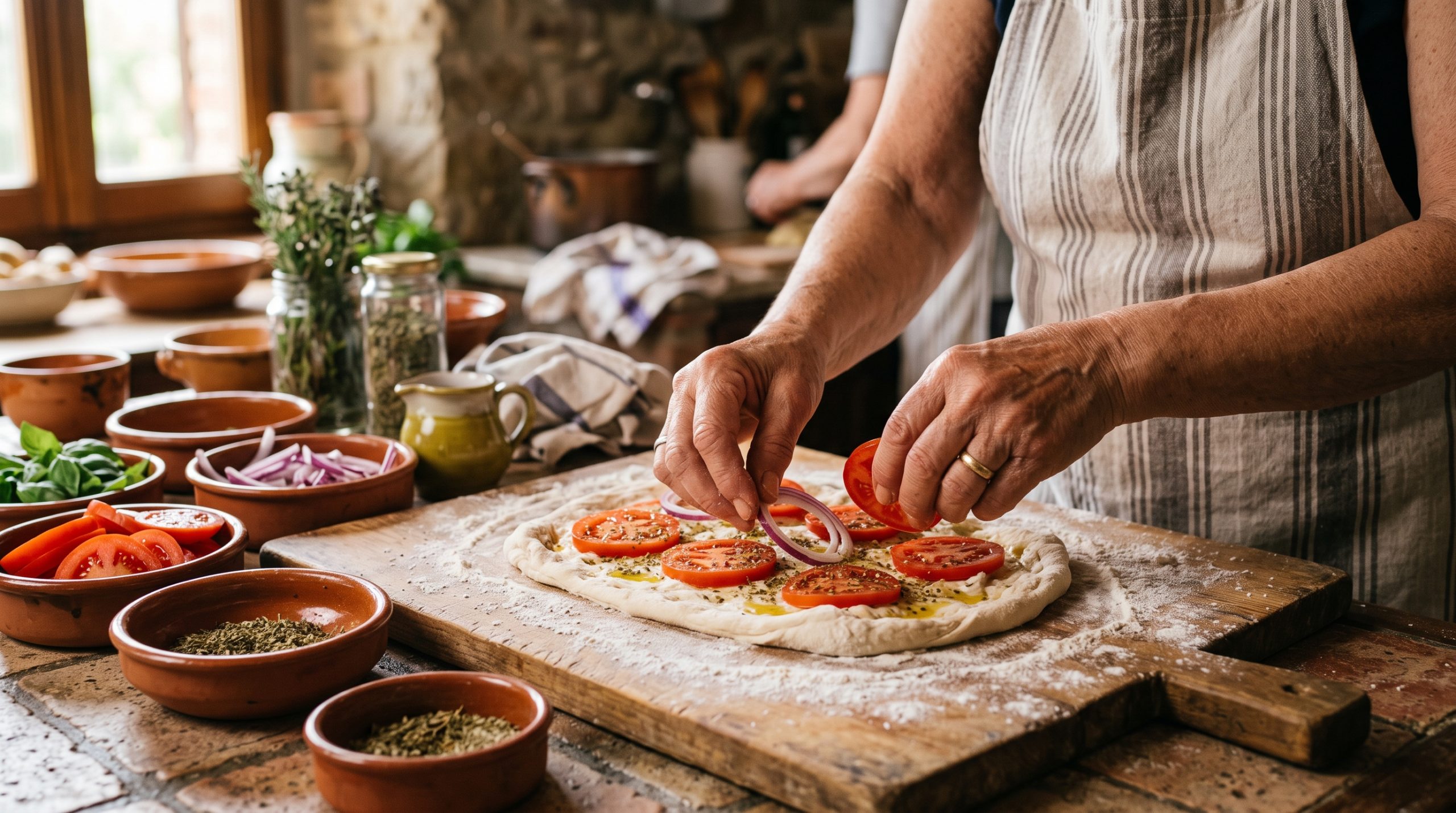
7. Coca De Trampo
Coca is the island’s flatbread and it comes in many forms, but coca de trampo is the one to know. A thin base is covered with trampo, the chopped salad of tomato, green pepper and onion, dressed with olive oil, and baked. There is no cheese, and adding any would make it something else.
It is sold by the slice in bakeries across Palma from mid-morning, eaten at room temperature, and is the standard thing to carry to a beach or eat standing at a counter. Coca de verdures, with cooked greens, is the winter equivalent.
8. Panades, Rubiols And Cocarrois
These three filled pastries belong to Easter and to the weeks around it, although bakeries now make them year-round. Panades are small raised pies filled with lamb, pork or peas. Rubiols are sweet half-moons filled with jam, cream or chocolate. Cocarrois are the vegetable version, usually with chard, raisins and pine nuts.
All three use a pastry enriched with lard and olive oil, which gives a texture closer to shortcrust than to puff. They are the clearest survival of the island’s festival calendar on the modern bakery counter, and buying them out of season is now entirely normal.
Traditional Mallorcan Desserts And Sweet Dishes
9. Ensaïmada
The ensaïmada is the island’s most exported food product and its most misunderstood. A coiled spiral of laminated dough, proved slowly and enriched with saïm, pork lard, which is what the name refers to and what gives the crumb its particular pull. Dusted with icing sugar and eaten at breakfast with coffee or thick drinking chocolate.
The plain version is the traditional one. Filled versions, most commonly with cabell d’àngel, a pumpkin preserve, are the festive form. The protected designation sets out what may and may not go into one, and the bakeries in Palma still making them properly are listed in our guide to the best ensaïmada in Palma.
10. Gató D’ametla
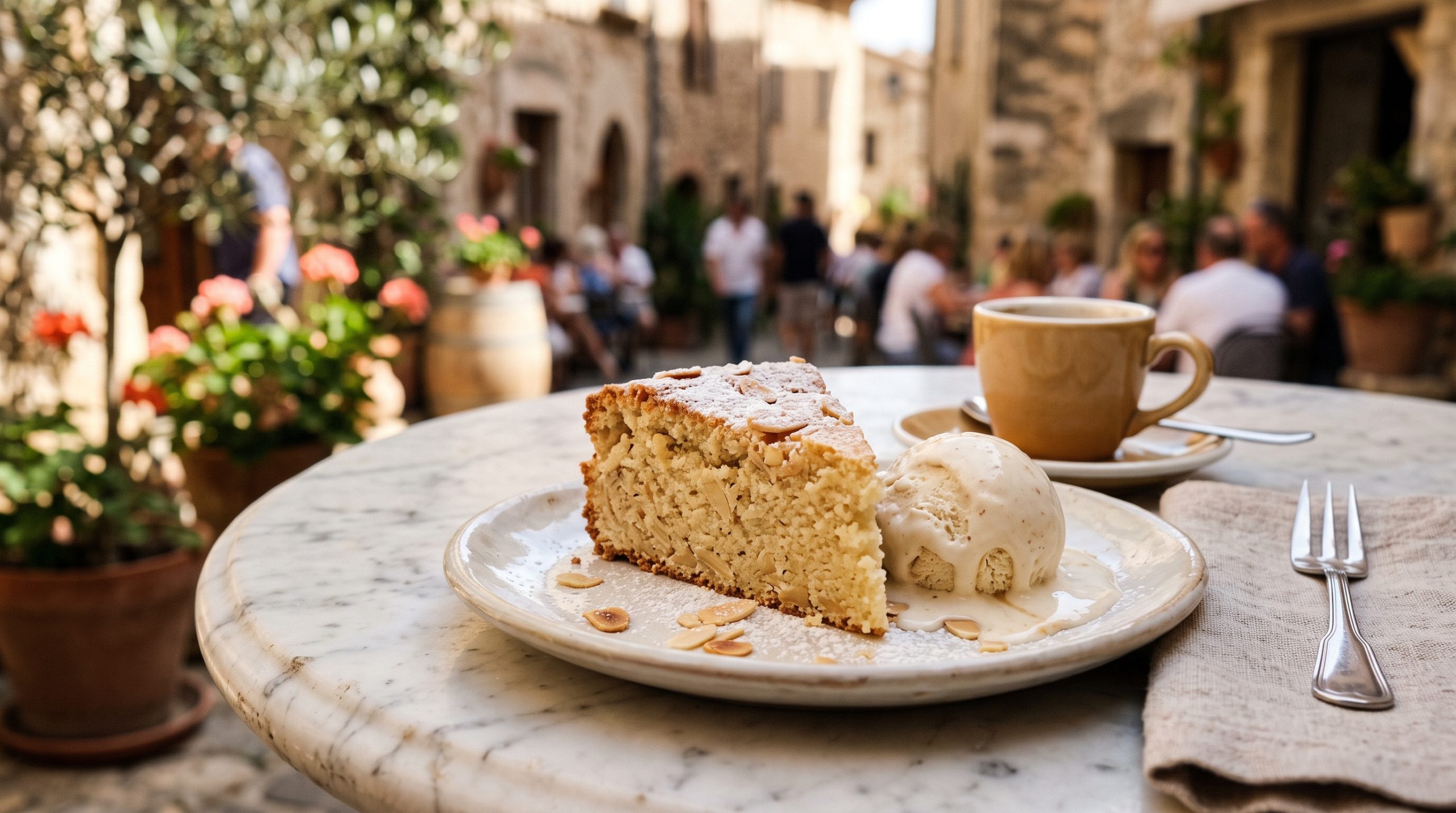
Gató d’ametla is an almond cake made with ground almonds and no flour at all, which gives it a dense, slightly damp crumb and a very short ingredient list: almonds, eggs, sugar, lemon zest. It is the dessert that appears on more Mallorcan menus than any other.
It is served with almond ice cream, which is not an embellishment but the standard pairing across the island. The almonds come from the same trees that turn the interior white in February, and the cake is the most direct way to taste why that crop mattered so much.
The Ingredients Behind Mallorcan Cuisine

Several ingredients are specific enough to the island that a dish made without them is a different dish. The tomatiga de ramellet is the clearest case: a small, ribbed, low-moisture tomato traditionally hung in strings through the winter, and the only correct tomato for pa amb oli. A modern salad tomato produces a wet, pink mess on the bread.
Others include the porc negre for charcuterie, the island’s almonds for baking, sheep’s cheeses from the interior, and olive oil from the Tramuntana terraces, which carries its own protected designation. Mahón cheese travels over from Menorca and appears on every cheese plate. Capers, grown around Campos, are used more heavily here than anywhere else in Spain.
When To Eat Traditional Mallorcan Food: A Seasonal Calendar
| Season | What is at its best | Why |
|---|---|---|
| Spring | Panades, rubiols, cocarrois, lamb | Easter baking and the spring slaughter calendar |
| Summer | Tumbet, coca de trampo, trampo, fresh figs | The vegetable garden at full production |
| Autumn | Arròs brut, wild mushrooms, new olive oil | Game season and the olive harvest |
| Winter | Sopes mallorquines, frit, sobrassada, citrus from Sóller | The pig slaughter and the Sóller orange harvest |
The calendar still shapes what appears on a traditional menu, even in Palma. Tumbet in January is being made from stored or imported vegetables, and arròs brut in August is out of its natural season. Restaurants that change their menu with the year are the ones worth returning to, and asking what is in season is a more useful question than asking what is popular.
What We Tell Guests About Traditional Mallorcan Food
From The Tasting Palma Table
Almost every guest who sits down with us has eaten paella that week, and almost none has eaten arròs brut. That single substitution is the difference between eating in Mallorca and eating Mallorcan food, and it costs nothing to make.
The second thing we say is that this is a frugal cuisine and that the frugality is the point. The great dishes here were built to stretch a small amount of meat across a week, or to use bread that had gone hard, or to preserve a pig through a summer without refrigeration. Tasted with that in mind, sopes mallorquines stops being a plain plate of vegetables and becomes something considerably more interesting.
The third is about sobrassada and honey. Guests hesitate every time, and every time it converts. Cured pork, paprika and honey on warm bread is the clearest single mouthful of what this island tastes like, and it is on almost every menu.
Where To Eat Traditional Mallorcan Food In Palma
The cellers of the Old Town are the most reliable place to eat this food in Palma. They are cavernous rooms lined with wine vats, they serve the full traditional canon at lunch, and they have not adjusted their menus for visitors. The markets are the other route, both for buying the ingredients and for eating a variat at a counter.
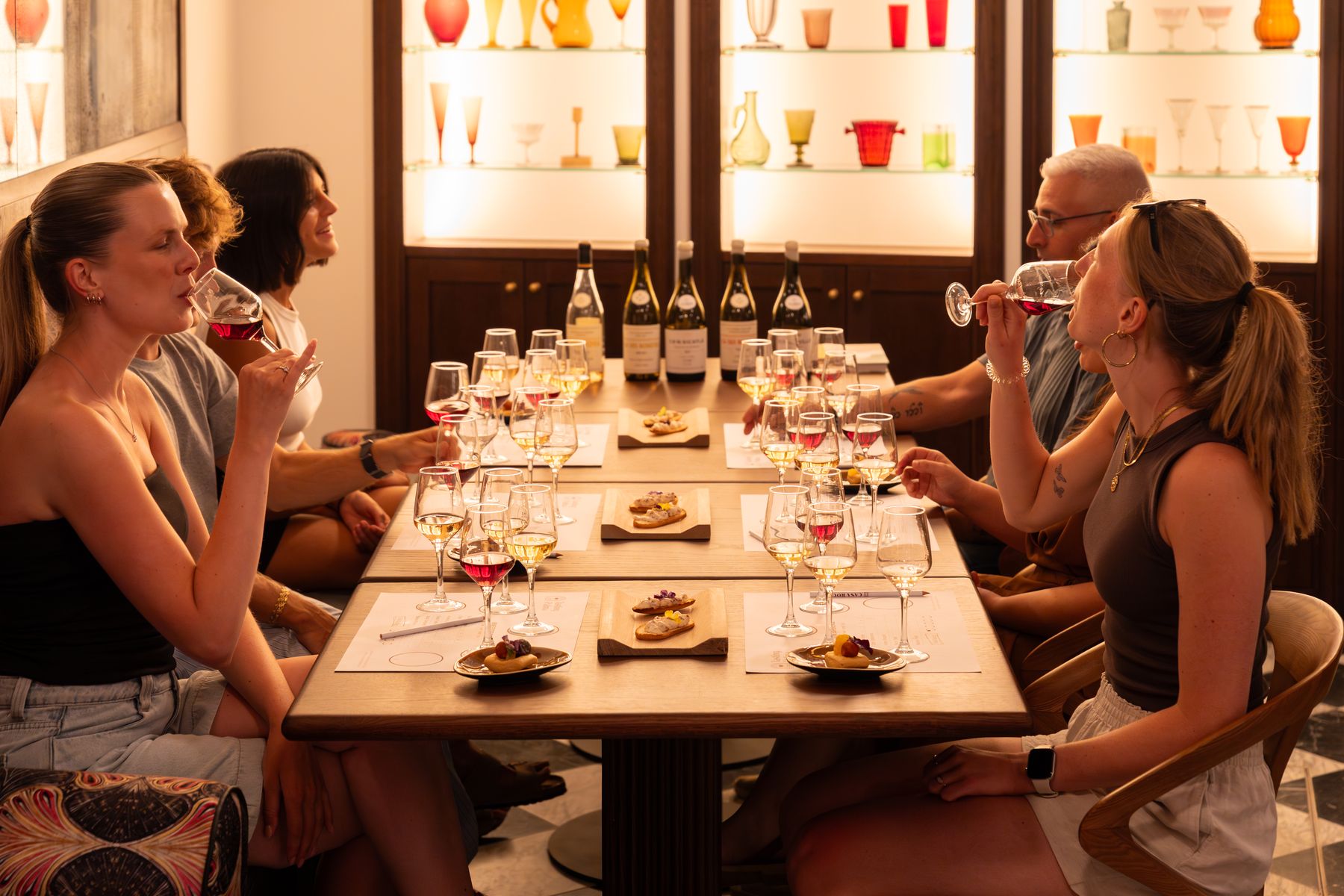
For anyone who would rather understand the food than simply order it, that is what we do at Casa Roca on Calle Hostals. Our tastings and chef-led market tours run in small groups, in English and Spanish, led by people who buy from these producers every week.
Inside A Tasting Palma Experience
Taste The Island, Not The Tourist Menu
Mallorcan wines poured alongside the cured meats, cheeses and market produce they were made to sit with, in a private tasting room in the Old Town.
From €49 · 90 minutes · See all experiences
Frequently Asked Questions
What Is Traditional Mallorcan Food?
An island cuisine built on preserved pork, bread, olive oil, vegetables and almonds. The defining dishes are pa amb oli, sobrassada, tumbet, arros brut, frit mallorqui, sopes mallorquines, coca de trampo, ensaimada and gato d’ametla. It is distinct from mainland Spanish cooking in both its dishes and its names for them.
Is Paella A Mallorcan Dish?
No. Paella belongs to Valencia on the Spanish mainland. The Mallorcan rice dish is arros brut, a brothy rice cooked with rabbit, game and offal and seasoned with cinnamon and clove. It is dark and soupy rather than dry, and it is an autumn and winter dish.
What Should You Eat In Mallorca?
Start with pa amb oli and sobrassada, which are on nearly every menu. Then take tumbet in summer and arros brut in winter, frit mallorqui if you are willing, and finish with gato d’ametla and almond ice cream. An ensaimada with coffee is the standard breakfast.
Is Mallorcan Food Vegetarian Friendly?
More than its reputation suggests. Tumbet, trampo, coca de trampo, cocarrois and the vegetable version of sopes mallorquines are all traditional and meat-free, and several are naturally vegan. The cuisine treats vegetables as main dishes rather than sides, which is unusual in Spain.
What Is The National Dish Of Mallorca?
Pa amb oli is the dish most often given that title, because it is eaten daily, across every social class, and contains the island’s defining ingredients in their simplest form. Sobrassada is the strongest rival, and the ensaimada is the most recognised export.
What Is The Difference Between Mallorcan And Spanish Food?
Mallorcan cooking developed on an island with limited water and a strong preserving tradition, so it leans on cured pork, bread and vegetables rather than on fresh meat and rice. Many dishes have no mainland equivalent, and the names are Catalan rather than Castilian. Paella, gazpacho and jamon iberico are all mainland rather than Mallorcan.
Leave a Reply