

At A Glance
Pa amb oli means bread with oil, and in Mallorca it is not a snack or a side. It is a full meal, and it is the island’s national dish.
- Three non-negotiable parts: pa moreno bread, tomàtiga de ramellet, and island olive oil.
- The ramellet tomato is rubbed on, not sliced on. That is the whole technique.
- It is not Catalan pa amb tomàquet. Different tomato, different bread, different role on the table.
- Toppings are the variable: Mahon cheese, cured ham, sobrassada, anchovies.
- Order it at a celler and it arrives as a board you assemble yourself.
Pa amb oli is the dish that explains Mallorca. It is bread, tomato, olive oil and salt, it costs almost nothing to make, and it has been feeding this island for centuries. Every Mallorcan grew up on it, every celler serves it, and a visitor who orders it once and understands what they are eating has learned more about the place than a week of restaurant menus would teach them.
It is also routinely misunderstood by visitors, who order it expecting a bruschetta and receive a wooden board with raw components on it and no instructions. That is not a mistake. Assembling it yourself is the point, and there is a right way to do it.
This guide covers what pa amb oli actually is, the three ingredients that matter, how it differs from the Catalan dish it gets confused with, how to assemble it properly, and where to eat it in Palma. If you want the wider context, our Palma food guide covers the island’s other essential dishes.
What Is Pa amb Oli?
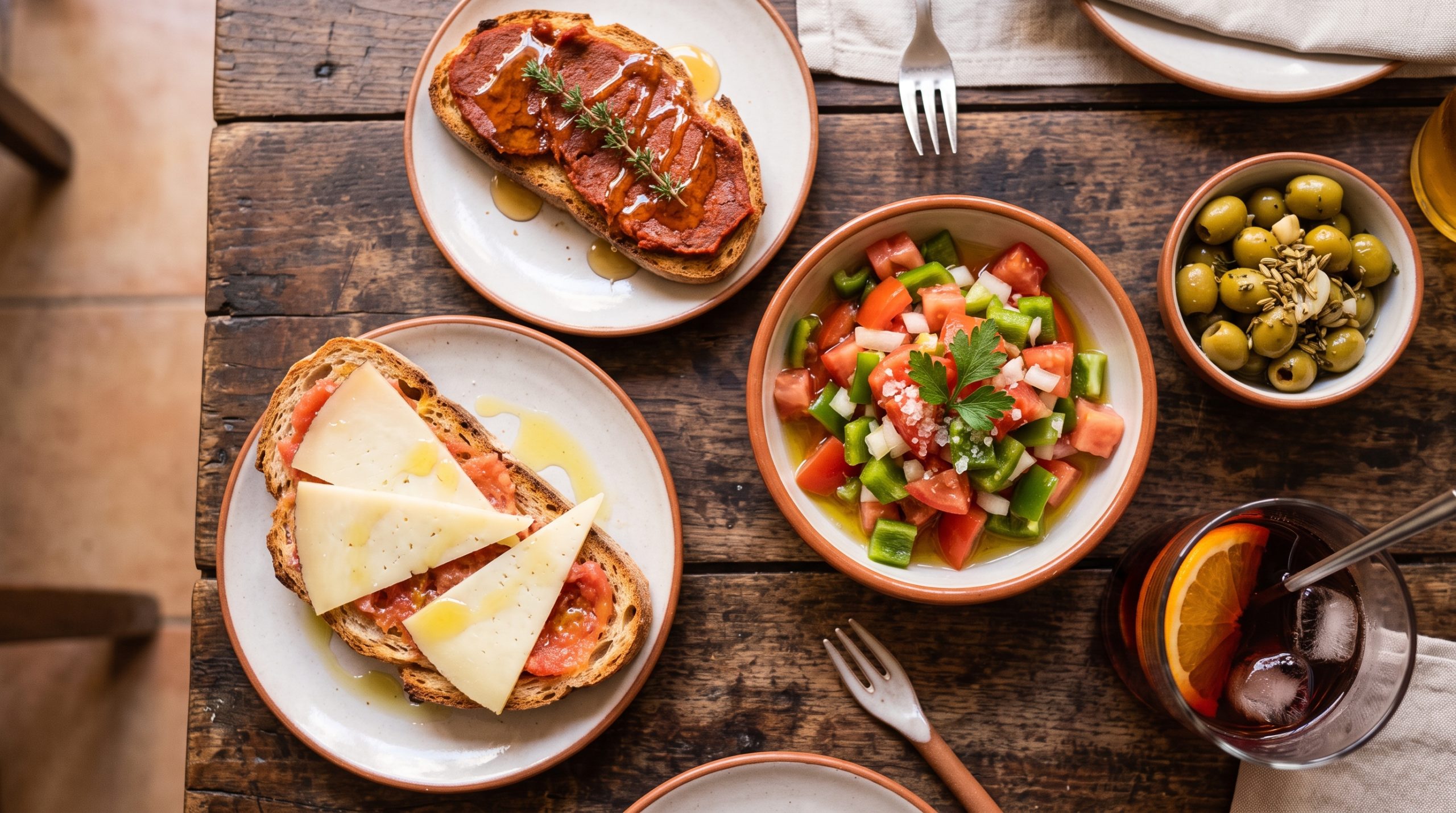
The name is Mallorquín and translates literally as bread with oil. At its most basic that is exactly what it is: a slice of rustic brown bread, rubbed with a halved tomato, drizzled with extra virgin olive oil and finished with salt. Sometimes garlic is rubbed on first.
What turns it from a snack into a meal is what goes on top. A proper pa amb oli in a Mallorcan celler arrives with cured ham, Mahon cheese, anchovies, olives, sometimes sobrassada, and you build each slice as you go. Two people can eat well from one board, and it will cost considerably less than any other route to a full dinner.
The dish predates the tomato entirely. Bread and olive oil is an ancient Mediterranean combination and Mallorcans were eating it long before tomatoes reached Europe from the Americas. The tomato is a relatively recent addition to a very old idea, which is worth remembering when someone insists there is only one correct version.
The Three Ingredients That Make Real Pa amb Oli

Get these three right and the dish works. Get any of them wrong and you have made something else.
| Ingredient | What it must be | Why it matters |
|---|---|---|
| Pa moreno | Mallorcan brown country bread, ideally baked that day | Dense enough to take oil without collapsing; traditionally made without salt |
| Tomàtiga de ramellet | Small vine tomato, hung in strings | Thick bitter skin, intense flesh, keeps for months; rubbed not sliced |
| Olive oil | Extra virgin, ideally Oli de Mallorca | It is a main ingredient here, not a dressing. Be generous |
Pa moreno is the Mallorcan brown loaf, dense and open-crumbed, and traditionally made without salt. That last detail matters: unsalted bread is why the dish needs salt added at the table, and why a salted supermarket loaf throws the balance off. It should be a day old rather than fresh from the oven, because slightly stale bread takes oil better.
Tomàtiga de ramellet is the ingredient nobody outside Mallorca has. It is a small vine tomato with a hard, faintly bitter skin and unusually concentrated flesh, grown specifically because it stores. Hung in strings in a cool room it keeps for months, in some accounts up to nine, which is precisely why an island with hot dry summers built a national dish around it. You will see the strings hanging in market stalls and in kitchens.
Olive oil here is not a finishing drizzle. Mallorca has its own protected designation, Oli de Mallorca, and the oil is a structural part of the dish rather than a garnish. Islanders use considerably more than a visitor expects. If you think you have added too much, you are probably close to right.
Pa amb Oli vs Pa amb Tomàquet: The Difference
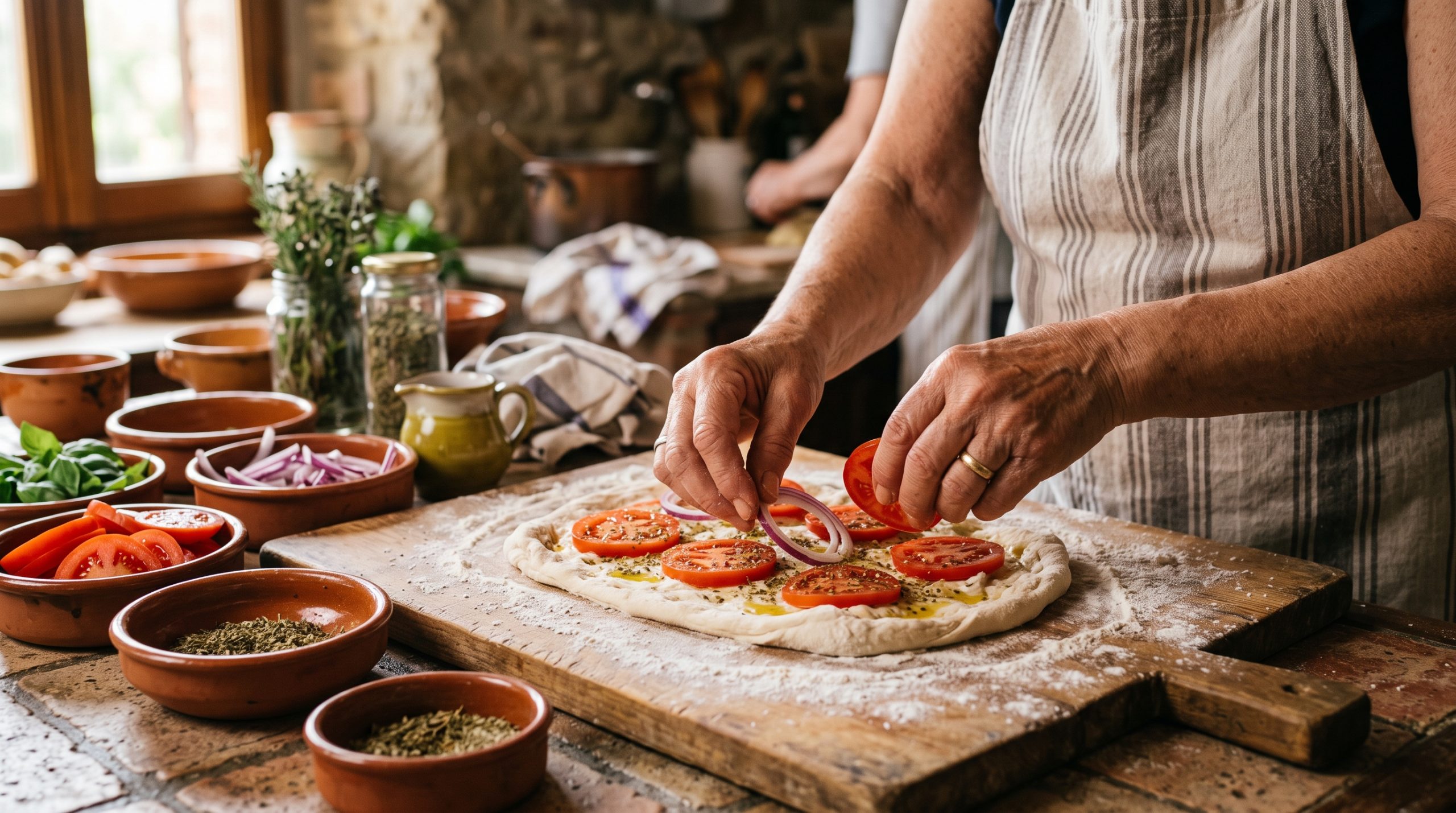
Visitors who have been to Barcelona often assume these are the same dish with different names. They are related, they are not identical, and telling a Mallorcan they are the same is a reliable way to start a long conversation.
The Catalan pa amb tomàquet uses ordinary ripe tomatoes and is usually a side dish or a starter, served alongside something else. The Mallorcan pa amb oli uses the ramellet tomato specifically, uses the darker pa moreno rather than white bread, and functions as a meal in its own right rather than an accompaniment.
There is also a chronological argument that Mallorcans enjoy making: bread with oil came first, and bread with oil and tomato is its descendant. Whether or not you find that decisive, the practical difference is real. Order pa amb tomàquet in Barcelona and you get a plate of prepared bread. Order pa amb oli in a Mallorcan celler and you get a board of raw parts and a job to do.
How to Assemble Pa amb Oli Properly
The board arrives with bread, a halved tomato or a small bowl of them, a bottle of oil, salt, and whatever toppings you ordered. There is an order of operations and getting it wrong is the most visible thing a visitor does in a Mallorcan restaurant.
How To Build A Pa amb Oli
- 1. Garlic, if you want it. Rub the cut clove across the bread first, lightly.
- 2. Rub the tomato. Cut side down, pressed and dragged across the slice until the bread is stained. Do not slice it on top.
- 3. Oil, generously. More than feels correct. It should soak in, not sit on the surface.
- 4. Salt. The bread is unsalted, so this is not optional.
- 5. Topping last. Ham, cheese, anchovy or sobrassada goes on at the end.
- 6. Eat it immediately. Built bread does not wait. Assemble one slice at a time.
The tomato step is the one that separates people. You are not putting tomato on the bread, you are putting tomato into it. The ramellet’s tough skin is what makes this work: it holds together while the flesh and juice go into the crumb, and you discard what is left. A soft salad tomato disintegrates and gives you wet bread.
Assemble as you eat rather than building the whole board at once. Bread that has been sitting under oil and tomato for ten minutes has gone soggy, and half the pleasure of the dish is the contrast between the crisp edge of the crust and the soaked centre.
What to Put on Pa amb Oli
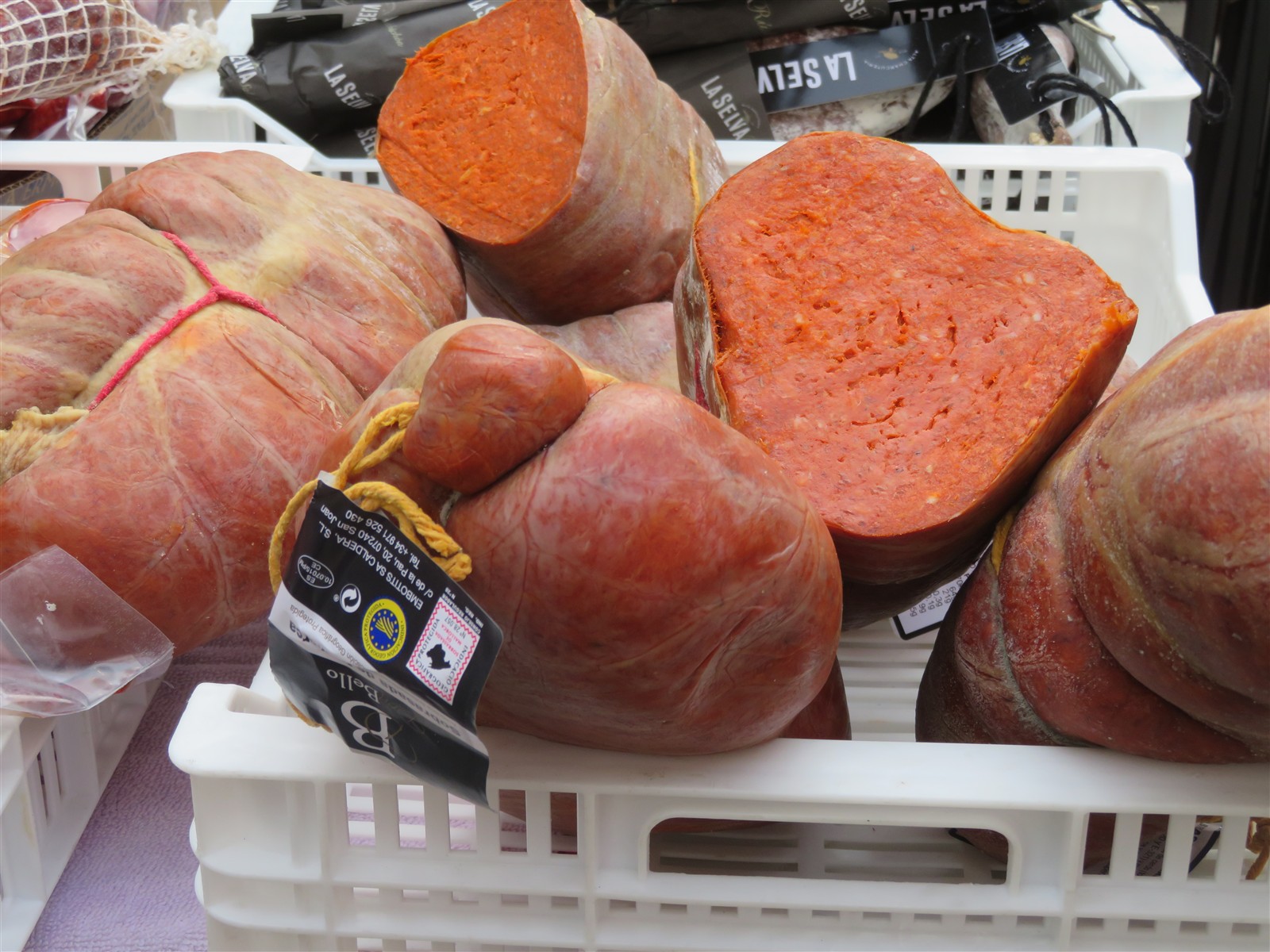
The base is fixed; the toppings are where you make choices. The classics are cured ham, Mahon cheese from Menorca, anchovies and olives, and most cellers will offer a mixed board that gives you several at once.
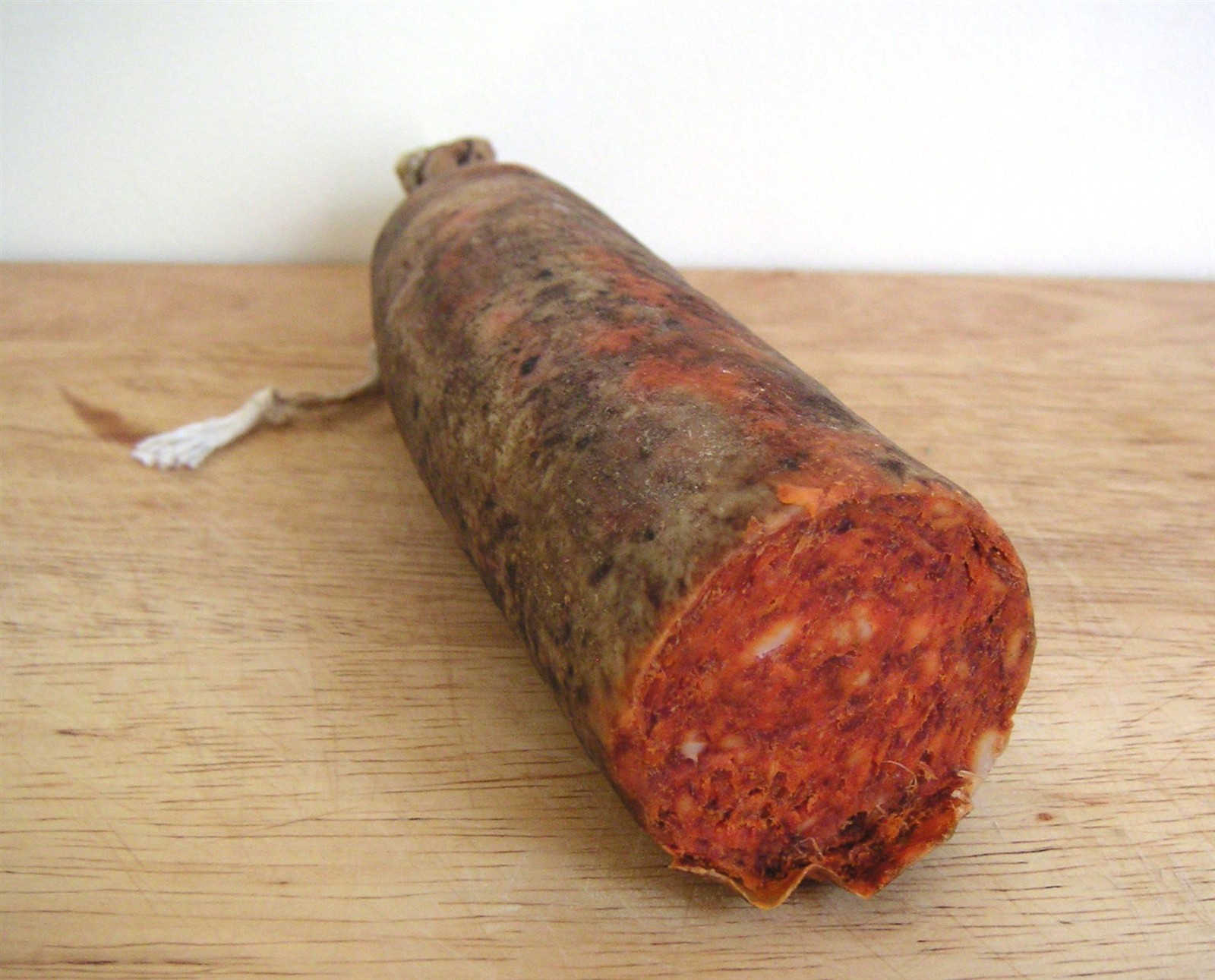
Sobrassada is the most Mallorcan option and the one worth ordering at least once. It is a soft, spreadable, paprika-heavy cured sausage that goes onto the bread rather than sitting on it, and on the island it is often served with honey drizzled over the top. Our guide to what sobrassada is and how to buy it explains what to look for.
Cheese deserves a word. Mahon is the default and it is genuinely good, particularly the semi-cured, but Mallorca also produces sheep and goat cheeses that rarely leave the island. If a celler offers a local cheese you do not recognise, take it. That is the whole argument for eating this dish here rather than reading about it.
Where to Eat Pa amb Oli in Palma
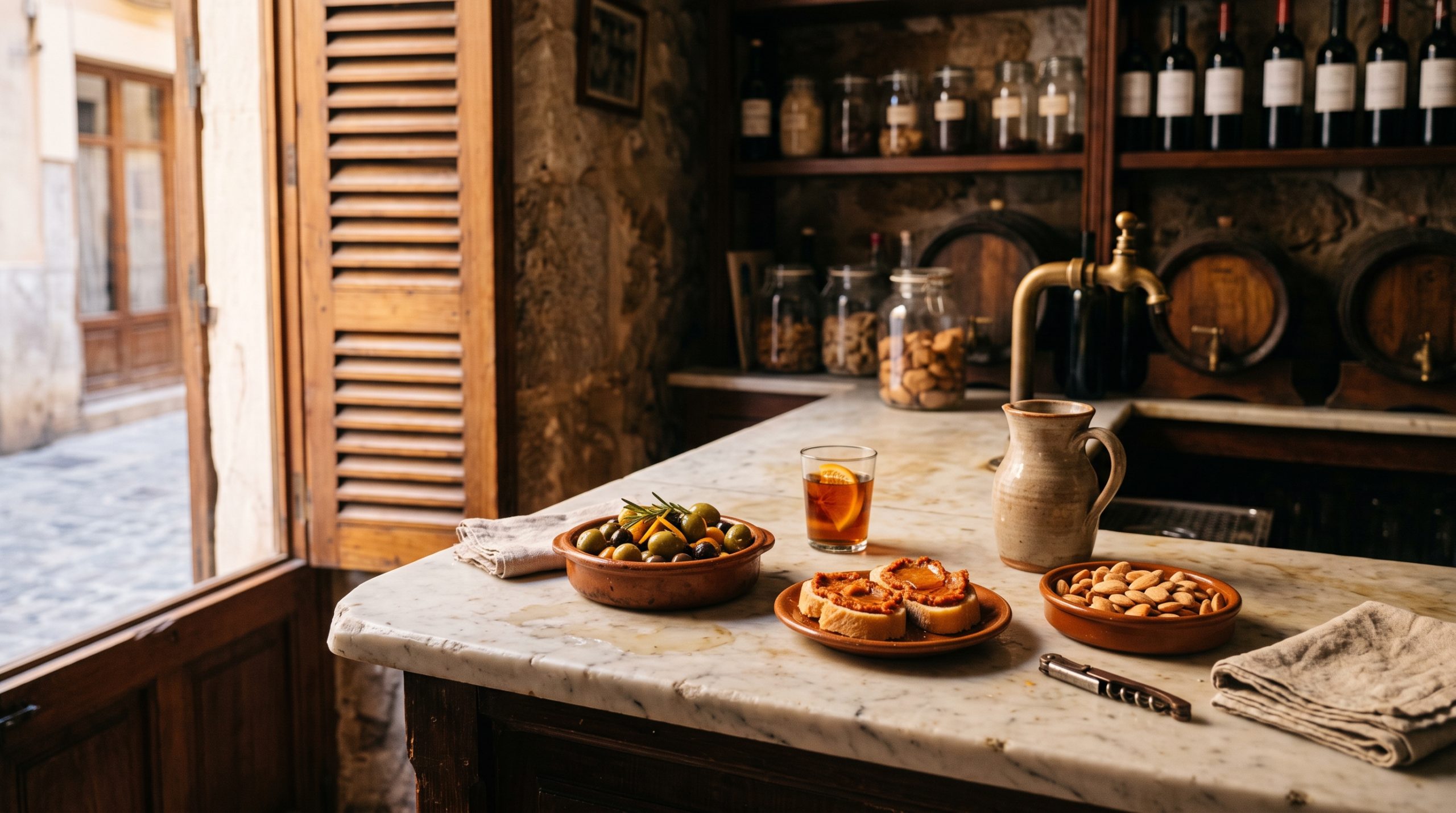
The traditional home of the dish is the celler, an old wine cellar turned restaurant, and Mallorca still has plenty of them. They are unglamorous, often windowless, lined with enormous barrels, and they serve the island’s heavy inland cooking alongside the pa amb oli board. In Palma they cluster in the older lanes rather than on the main squares.
Barrel bodegas in the Old Town also serve it, usually as a smaller plate to go with a glass of wine rather than as a full board. That is the cheapest way to try it and the most casual. Our guide to the best tapas bars in Palma covers the bars most likely to do it well.
One warning. Pa amb oli appears on almost every tourist menu in Palma, and a great deal of what is served near the cathedral is made with white bread and a sliced supermarket tomato. It is not that it will be inedible. It is that it will not be the dish, and you will conclude the island’s national food is unremarkable when the problem was the address.
Make It Yourself, With the Right Tomato
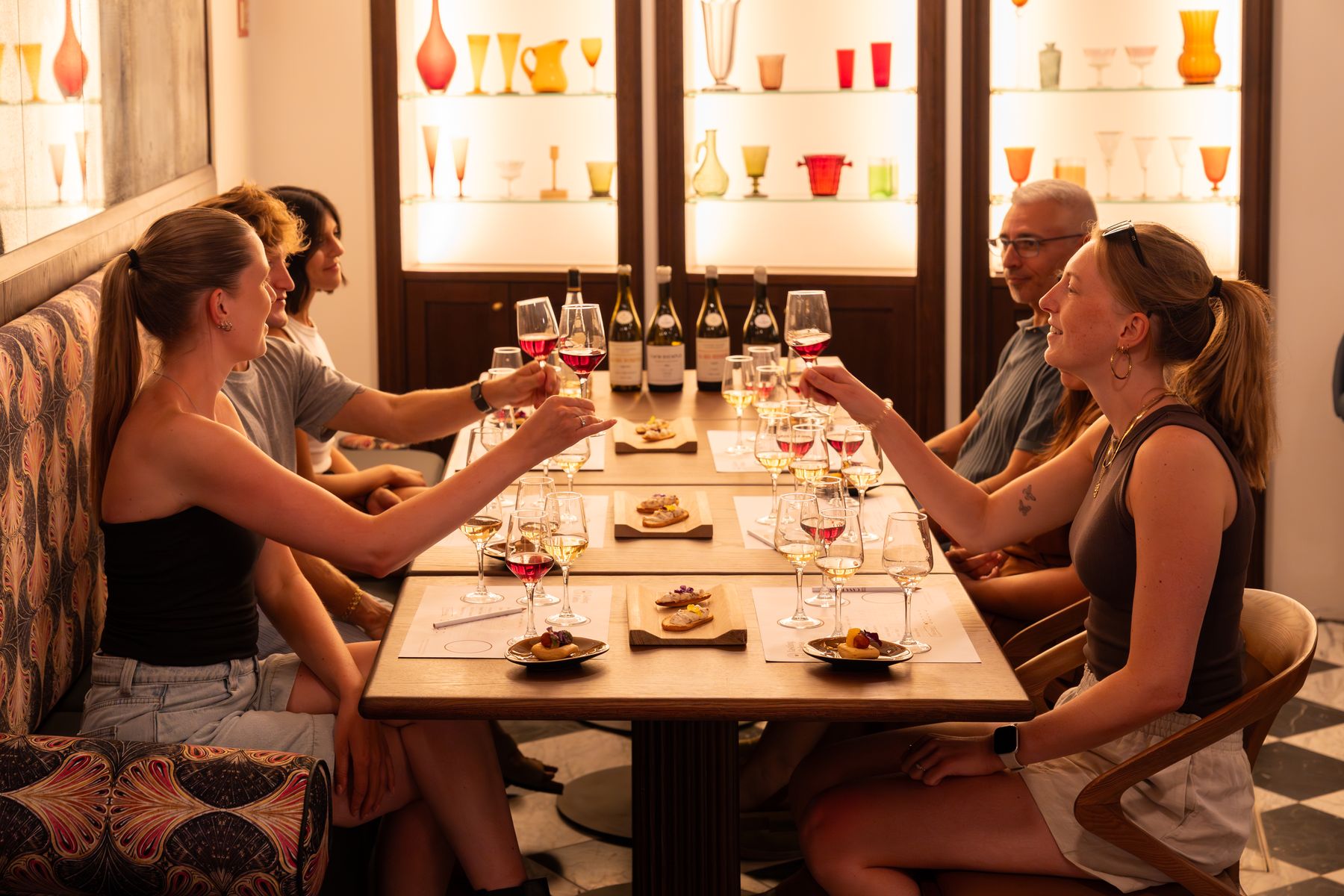
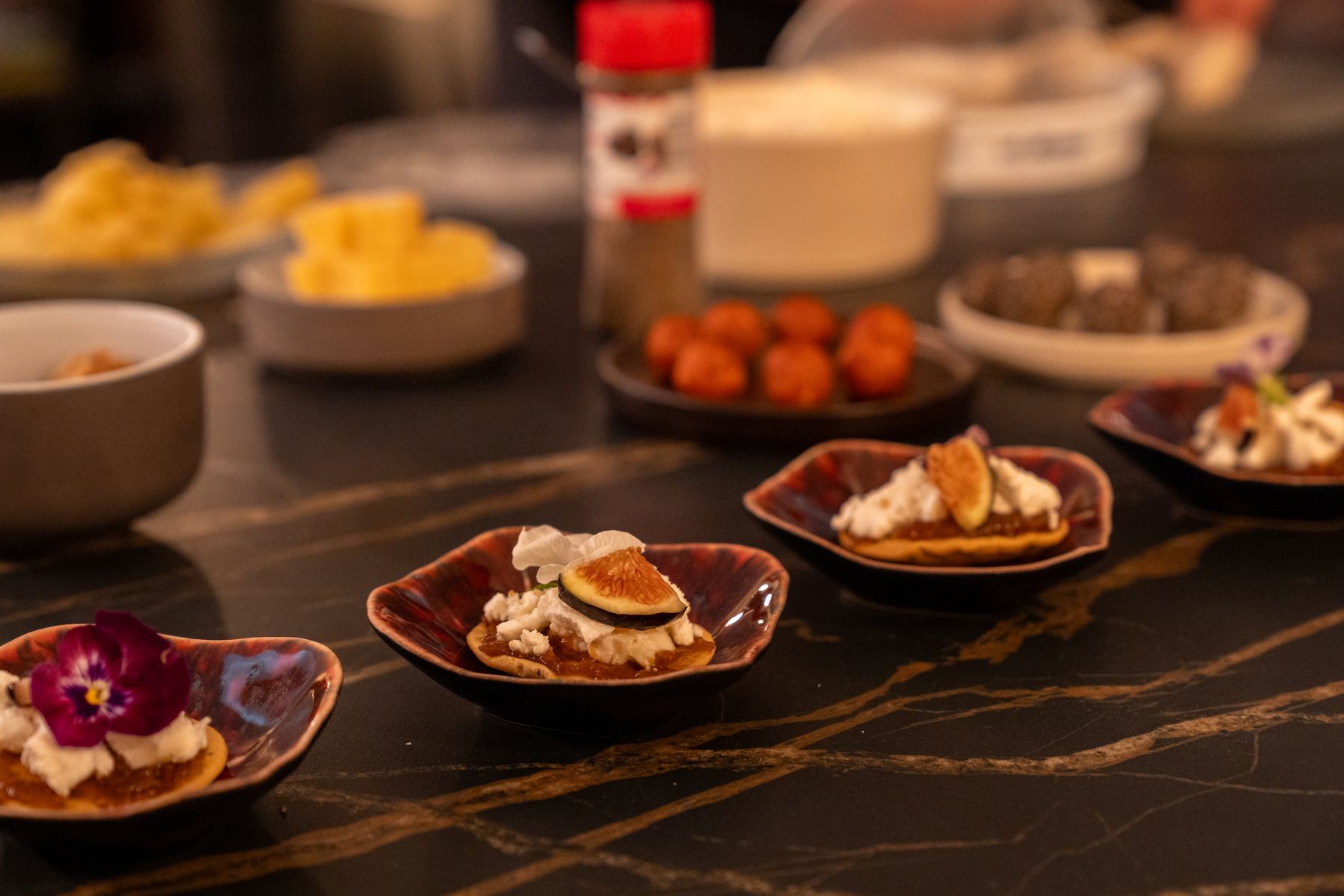
Our market tour buys the bread, the ramellet tomatoes and the sobrassada at Mercat de l’Olivar, then turns them into lunch in a hands-on tapas class. Six guests maximum.



When Mallorcans Eat Pa amb Oli
It is not fixed to one meal, which is part of why it is so embedded here. It turns up as a light dinner, as an afternoon merienda, as something put on the table when people arrive unexpectedly, and as the thing a family eats on a Sunday evening when nobody wants to cook properly.
It is not really a breakfast, and it is rarely a formal lunch. If you order it at nine in the morning nobody will refuse you, but you will be doing something slightly unusual. The natural windows are late afternoon from about five, and evening from eight onwards.
It also carries a social function that is easy to miss. A pa amb oli board is designed to be shared and assembled at the table over an hour, with wine, while people talk. Ordering one for yourself and eating it quickly is perfectly possible and misses most of the point. This is food built around company.
Seasonally it never goes away, which is the whole reason the ramellet tomato exists. An island that could not refrigerate needed a tomato that lasted through winter, and pa amb oli is what a Mallorcan kitchen could produce in February from things hanging in the pantry. That practicality is the dish’s real history, not the tourist-menu version.
Making Pa amb Oli at Home
You can make a respectable version anywhere, provided you accept that you will not have the ramellet tomato and adjust accordingly. Use the ripest, most intense small tomato you can find, and if it is watery, halve it and let it drain for a few minutes before rubbing.
For bread, look for a dense country sourdough rather than a baguette or a soft white loaf. It needs an open crumb that will absorb oil and a crust with some resistance. Slice it thick, about a centimetre and a half, and consider toasting it lightly if it is very fresh.
Use better oil than you think you need. This is the one component you can genuinely replicate outside Mallorca, and since the oil is a main ingredient rather than a seasoning, it is where the quality of your version is decided. If you brought a bottle of Oli de Mallorca home, this is what to open it for.
Pa amb Oli: Frequently Asked Questions
What Is Pa amb Oli?
Pa amb oli means bread with oil in Mallorquín. It is a slice of Mallorcan brown bread rubbed with a ramellet tomato, drizzled generously with extra virgin olive oil and salted, then topped with cured ham, Mahon cheese, anchovies or sobrassada. In Mallorca it is a full meal rather than a side dish.
What Is the Difference Between Pa amb Oli and Pa amb Tomàquet?
The Catalan pa amb tomàquet uses ordinary ripe tomatoes on white bread and is served as a side or starter. Mallorcan pa amb oli uses the tomàtiga de ramellet specifically, uses darker pa moreno bread, and is a meal in its own right served as a board you assemble yourself.
What Is a Tomàtiga de Ramellet?
A small Mallorcan vine tomato with a thick, faintly bitter skin and concentrated flesh, grown specifically for storage. Hung in strings in a cool room it keeps for months. The tough skin is what lets you rub it into bread without the whole thing collapsing, which is why it is the correct tomato for pa amb oli.
How Do You Eat Pa amb Oli?
Rub the cut garlic on first if you want it, then press and drag the cut tomato across the bread until it is stained, add olive oil generously, salt it, and put the topping on last. Assemble one slice at a time and eat it straight away, because built bread goes soggy quickly.
What Bread Is Used for Pa amb Oli?
Pa moreno, the Mallorcan brown country loaf, traditionally baked without salt. That is why salt is added at the table. It should be dense with an open crumb, and ideally a day old rather than fresh, because slightly stale bread absorbs oil better than a warm loaf does.
What Do You Put on Top of Pa amb Oli?
Cured ham, Mahon cheese, anchovies and olives are the classics, and most cellers offer a mixed board. Sobrassada is the most Mallorcan choice, spread onto the bread and often served with honey. Local sheep and goat cheeses are worth taking if a restaurant offers one you do not recognise.
Where Do You Eat Pa amb Oli in Palma?
In a celler, the old wine cellar turned restaurant, which is the traditional home of the dish, or in a barrel bodega in the Old Town as a smaller plate with a glass of wine. Avoid the versions on tourist menus near the cathedral, which are often made with white bread and a sliced salad tomato.
Can You Make Pa amb Oli Outside Mallorca?
Yes, with adjustments. You will not find ramellet tomatoes, so use the ripest small intense tomato available and let it drain if watery. Use a dense country sourdough rather than white bread, slice it thick, and use the best olive oil you have. The oil is a main ingredient here, not a seasoning.
Learn the Dish Where It Belongs
Shop Mercat de l’Olivar with a guide, then make Mallorcan tapas with a chef in Palma Old Town. Small groups of six, from €129 per person.
Book the Market Tour Ask Us a QuestionPhotographs of ramellet tomatoes by Rotget (CC BY-SA 4.0) and of sobrassada by Juan Emilio Prades Bel (CC BY 4.0), and of whole sobrassada by Slastic (public domain), via Wikimedia Commons.
Leave a Reply