


At A Glance
The best tapas in Palma Old Town are found in the old barrel bodegas around Santa Eulàlia and Sa Gerreria, not on the Passeig del Born.
- Nine bars worth your time, from a 1955 barrel shop to a bar run by the co-founder of London’s Barrafina.
- A tapa at a traditional bodega runs roughly €2.50 to €7. A creative seafood plate can pass €25.
- Mallorcan bar food is its own thing: sobrasada, pa amb oli, trampó and variats, not the Andalusian standards.
- Locals eat late. Bars fill from about 21:00, and counter pinchos often sell out before then.
- Every bar here is within a 15-minute walk of our tasting room on Carrer dels Hostals.
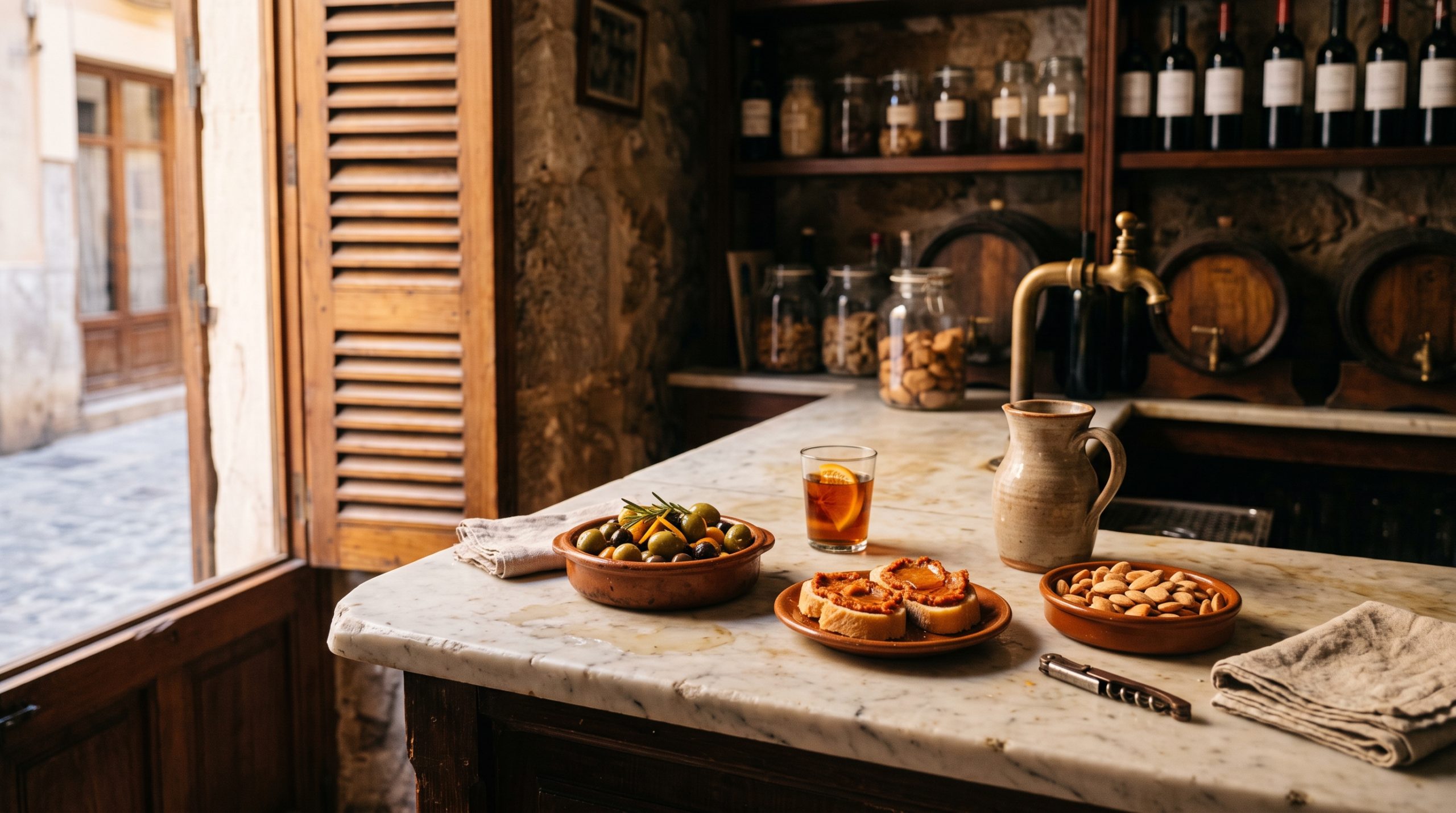
Palma has a tapas problem, and it is one of geography. The bars clustered along the Passeig del Born and the cathedral approach are the ones most visitors find, and they are largely the ones locals avoid. Walk five minutes east into the lanes behind the town hall and the picture changes completely: barrel bodegas that have been pouring since the 1950s, counters stacked with pinchos that sell out by ten, and kitchens turning sobrasada into things you will not find on the mainland. Those are the places our guides eat at on their own nights off, and the ones we build our Gourmet Palma Food Tour around.
This is our working shortlist, kept to nine bars we are happy to send guests to. Some are cheap and scruffy, one is genuinely expensive, and two of them will make you queue. What they share is that Mallorcans still drink in them. Where a dish is worth ordering by name we have said so, and where a bar is better for a glass of vermut than a full meal we have said that too. If you want the wider picture first, our Palma food guide covers the island dishes and the other neighbourhoods worth eating in.
Eating your way through the Old Town with someone who knows the counters? Our small-group food tour makes twelve stops.
See the food tourWhat Makes Tapas in Palma Different
If your reference point for tapas is Seville or Madrid, Palma will read slightly differently. The island spent centuries as a place that had to feed itself, and the bar food reflects that. Pork is preserved rather than grilled fresh. Bread is dense and unsalted. Vegetables arrive raw and chopped, dressed with oil, in the summer months. The result is a repertoire that overlaps with the mainland but is not the same repertoire.
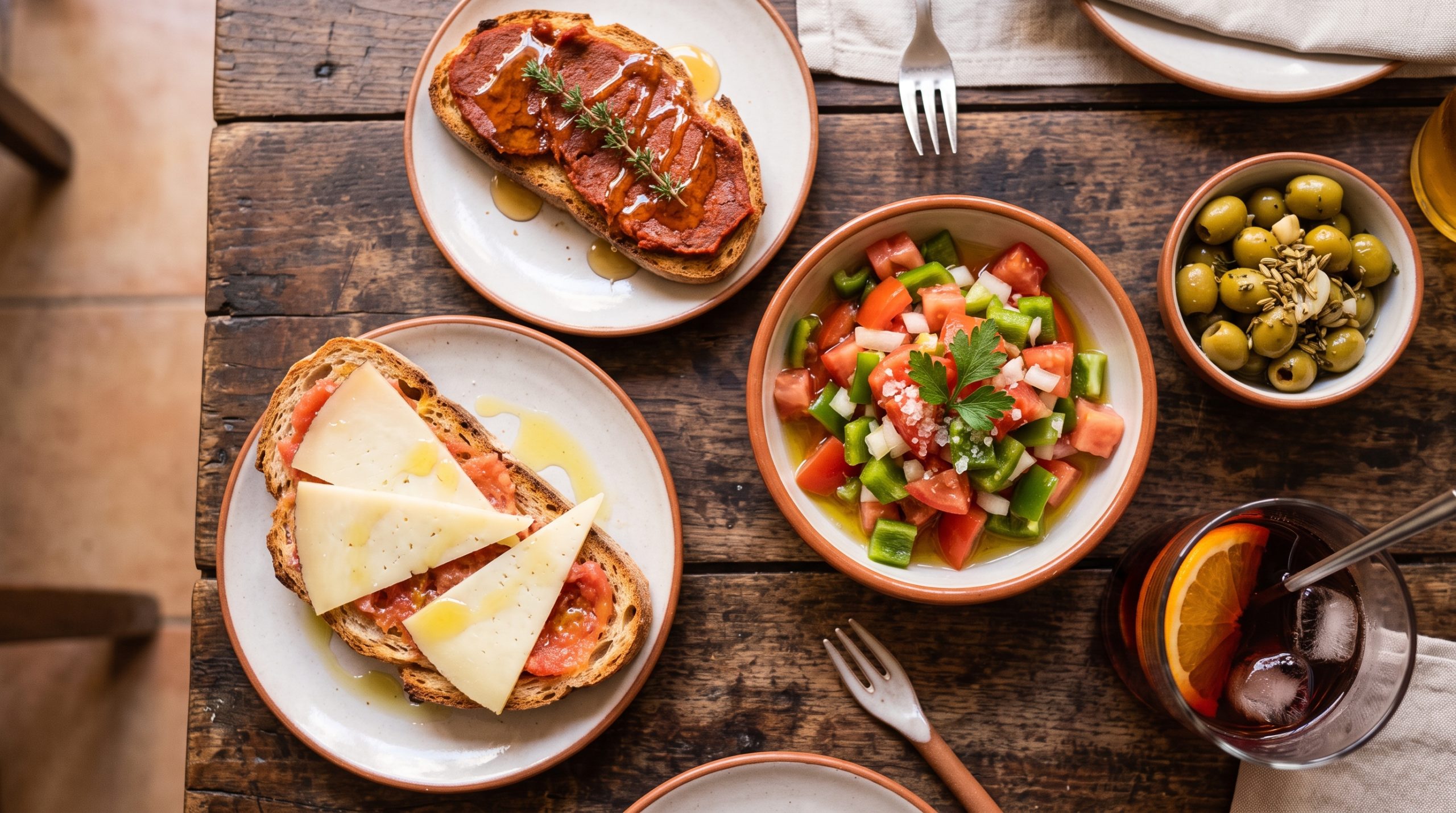
The single most Mallorcan thing on any bar counter is sobrasada, a soft cured sausage of pork, paprika and salt that is spreadable rather than sliceable. It goes onto toast, usually with honey, and the good version tastes of pimenton and fat in roughly equal measure. Alongside it you will find pa amb oli, which is bread rubbed with the pulp of a ramíret tomato and covered in oil, then topped with whatever the bar does well: cured mahon cheese, jamón, anchovy, or nothing at all. It is the island’s default snack and a fair test of a kitchen, because there is nowhere to hide when a dish has four ingredients. The sweet counterpart to all this is the ensaimada, which several of these bars will serve you at breakfast the next morning.
Two other words are worth learning before you order. Trampó is a cold salad of tomato, green pepper and onion, diced small and dressed simply, which appears both as a tapa and as a topping on the flatbreads called cocas. Variats is the more useful one: a plate assembled from several of whatever the bar has cooked that day, usually including croquettes, meatballs, a piece of fried fish and some form of potato. Ordering variats is how a local eats lunch at a bodega, and it is a considerably better strategy than reading a menu you cannot fully parse.
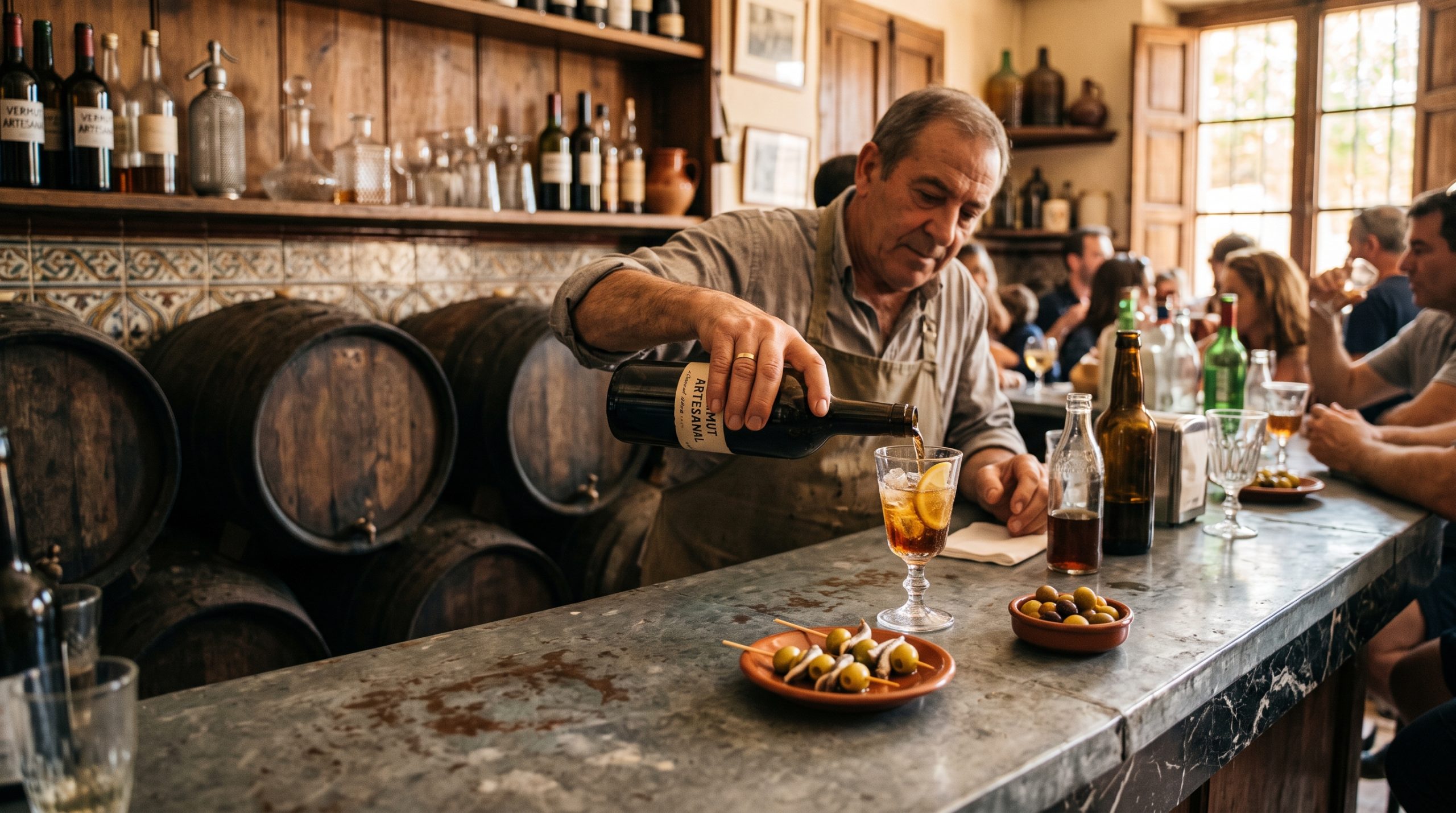
Drink alongside it is generally beer in a small glass, a caña, or vermut on ice with an orange slice and a green olive. Vermouth in Palma is not a fashion revival in the way it is in London. It is what people have drunk before Sunday lunch for a long time, and the better bodegas pour it from the barrel or from house-labelled bottles rather than the commercial brands. Later in the evening the island’s own spirits take over.
The Nine Best Tapas Bars in Palma Old Town
Listed roughly from the most traditional to the most modern. Opening hours in Palma move around with the season and with staff holidays, so check before you set out on any particular evening.
1. Bar Bodega Morey
Carrer d’en Morei 4, behind the town hall near Plaça Santa Eulàlia. Morey opened in 1955 as a shop selling wine from the barrel, which was an ordinary way to buy wine in Palma at the time and is now almost extinct. It became a bar later, and it is still tiny: six tables, two stools at the counter, and a room that fills and empties several times over an evening.
Order the ensaladilla rusa, the escalivada with salt cod, or the hake pastel, and drink the house vermut. This is the cheapest bar on the list by a distance: a 2022 review in the Majorca Daily Bulletin put the ensaladilla at €4.50 and a caña at €2, and while those figures have almost certainly drifted upwards since, the bar has not repositioned itself. There is no reservation system. Arrive early, stand if you have to, and do not plan a long sit-down meal here. If you would rather learn to cook this kind of food than queue for it, that is what the Olivar Market Tour and Tapas Class exists for.
2. Bodega La Rambla
Via Roma 6, on the edge of the Old Town where it meets La Rambla. Trading since 1940 and bought in 1969 by Roberto Pérez, who turned what had been a wine shop into one of the bars that established the tapas format in Palma. The room is functional rather than pretty, with the food laid out where you can see it and a crowd that skews local and middle-aged.
The thing to order is the variats mallorquins, the house version of that assembled plate, which is what most of the room is eating. Be aware that the bar states plainly on its own website that it does not take table reservations, in those words, so treat any advice telling you to book as wrong. Go at an off hour if you want a table, or accept that you will be standing at the bar with a caña for a while first.
3. Celler Sa Premsa
Plaça Bisbe Berenguer de Palou 8, at the northern edge of the Old Town near Plaça d’Espanya. Strictly this is a celler rather than a tapas bar, which is a distinction worth understanding: a celler is a Mallorcan wine-cellar restaurant, historically a place that stored wine in enormous barrels and fed people alongside it. Sa Premsa was opened in 1958 by Antonio Mayol, a banker who converted an old warehouse, and it is now run by the third generation of the same family.
The room is the reason to come: a cavernous hall lined with barrels the height of a person, with bullfighting posters and marble-topped tables. Eat the sopes mallorquines, a dish of bread and vegetables that is closer to a moist stew than a soup, or the arròs brut, the island’s dark rice with rabbit and snails. Finish with gáto, the almond cake, with almond ice cream. It takes bookings online, and for a group of more than four you should use them.
4. La Bóveda
Carrer de la Boteria 3, in La Llotja, the old merchants’ quarter down towards the seafront. A family-run tapas house with a tiled interior, a stone floor, and wine barrels standing in as high tables for people who did not get a seat. It is busier and louder than the bodegas above, and it is one of the few places in this part of town that has held its ground while the surrounding streets turned towards tourism.
The dishes to order are the setas al Roquefort, mushrooms in a blue cheese sauce, and the dates wrapped in bacon, both of which sound like they belong to a different decade and both of which are very good. The scrambled eggs with Serrano ham and the croquettes are the other reliable choices. Expect somewhere in the region of €20 to €30 a head with drinks. It takes bookings through its own site, and in high season you will want one.
5. Bar Espanya
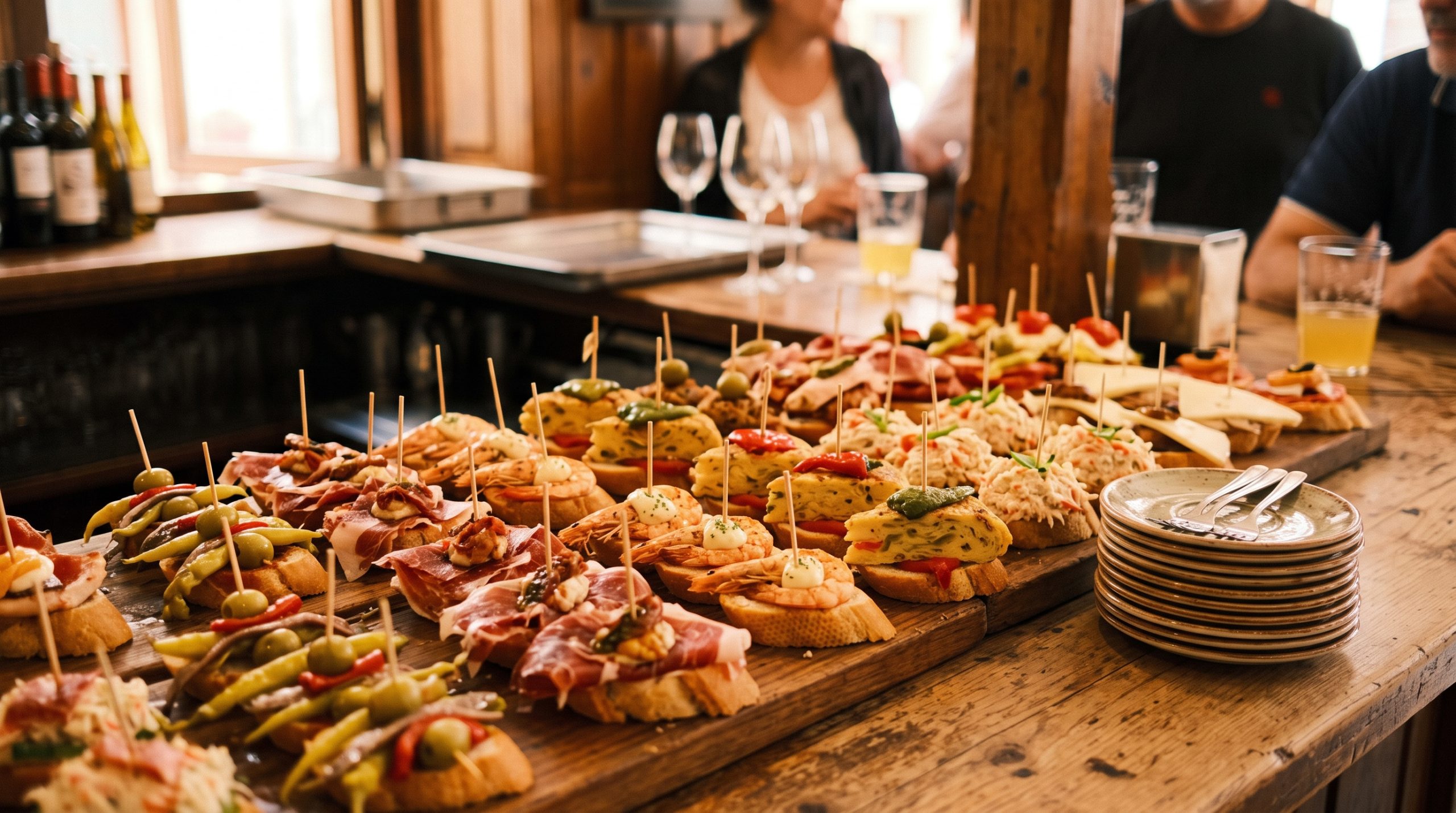
Carrer Can Escursac 12, a few steps off Plaça Major. There are two branches and this is the one to use. Bar Espanya is one of the last places in central Palma that still lays fresh pinchos along the bar in the Basque manner, which means small constructions on bread, held together with a stick, that you take from the counter rather than order from a menu.
It is also the best-value stop on this list, and unusually for Palma the prices are published: a skewer from the bar is €2.45, the cojonudo with sobrasada is €4, the sirloin with foie and caramelised onion is €5.75, and larger plates run from €8.25 for the bravas with sobrasada up to €17.50 for a board of Iberian ham. The counter is the whole point and it empties as the evening goes on, so this is a bar to hit at the start of a crawl rather than the end.
6. Moltabarra
Carrer del Pes de la Farina 12, in Sa Gerreria. This was the old craftsmen’s quarter, and it spent a long stretch as the part of the Old Town nobody walked through after dark. It has changed, though not completely, and Moltabarra is one of the genuine neighbourhood bars that survived the transition rather than arriving after it.
The premises were a nineteenth-century drugstore and the original bar and fittings are still in place. Food is pinchos along the counter plus small fried, seafood and meat plates to share, and the bar brews its own beer under the name Moltabirra, which is the sort of pun that tells you what the room is like. It opens evenings only and closes on Sundays, it takes bookings online, and it is one of the few bars here where bringing a dog is uncontroversial. Its own beer aside, it pours a decent range of the island spirits covered in our Mallorca gin guide.
7. La Rosa Vermuteria & Colmado
Carrer de la Rosa 5, beside Plaça Weyler. La Rosa opened in June 2015 in premises that had stood empty for years, and it is generally credited as the first bar in the Balearics built specifically around vermouth. It passed its tenth anniversary in 2025, which in Palma’s current restaurant climate counts for something.
The house vermut is the order, with ham carved by hand and a plate of good tinned conservas alongside it, which is a more serious proposition in Spain than the words suggest. The kitchen also does grilled octopus, tuna tartare, croquettes and prawns in garlic. It sits slightly above the average for the area on price and it is open through the day rather than in split shifts, which makes it useful when everything else is shut between four and eight. Book ahead. There is a sister bar of the same name out in Santa Catalina, so check which address you are heading to.
8. La Bodeguilla
Carrer de Sant Jaume 3. Run by two brothers across two floors with a wine shop attached, and listed in the MICHELIN Guide. It is worth being precise about that, because a number of listing sites describe La Bodeguilla as Michelin-starred and it is not. A Guide listing means the inspectors rated it worth including, which is a real distinction and a different one.
The wine list runs past 350 references and is the main argument for coming, though the food holds up: salt cod taco with grilled calçots, Mallorcan suckling pig, Black Angus lomo alto, and a long tapas section that includes grilled oysters and the standard bravas and Padrón peppers. Michelin puts it in the three-euro-sign bracket, so it is a sit-down dinner rather than a stop on a crawl. It handles its own bookings directly.
9. El Camino
Carrer de Can Brondo 4, between La Llotja and the Born. El Camino opened in 2019 and its provenance is unusual for Palma: it was set up by Eddie Hart, co-founder of Fino and Barrafina in London, and both the head chef and the manager came over from Barrafina. What that means in practice is a 34-seat bar with no dining room, where you sit facing an open kitchen and watch your food being cooked in front of you.
The cooking is very good and the bill reflects it. Anchovies run to €27 for five, scallops €23 for four, and carabineros €33 for two, so this is the one bar on this list where you should look at prices before you order rather than after. The salt cod pil-pil, the grilled octopus and the courgette flowers are the dishes to build a meal around. Seatings are timed at roughly ninety minutes and booking is effectively required. Published hours differ between its own site and the listing sites, so ring rather than turn up on spec.
What to Order If You Only Have One Night
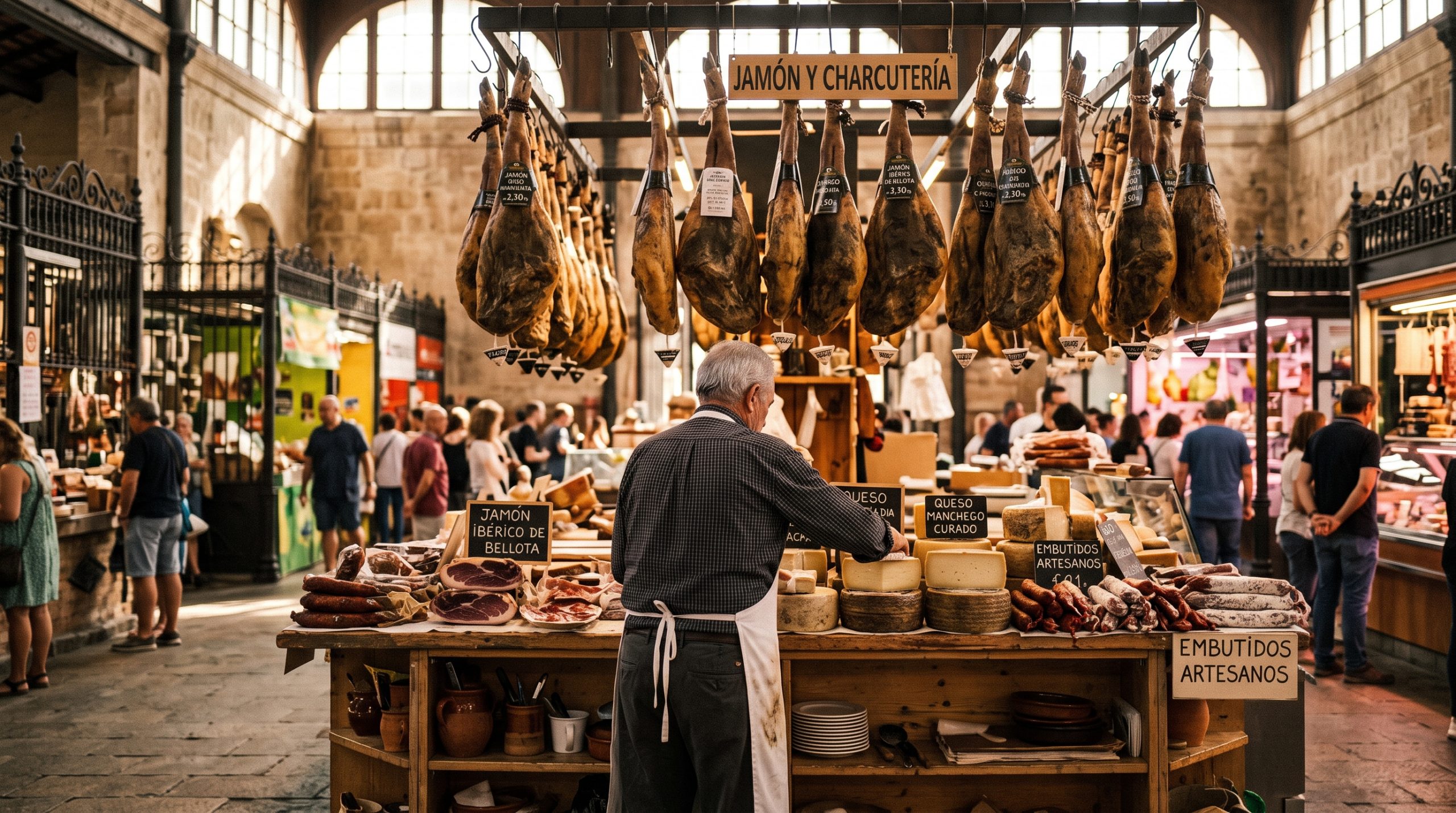
Visitors often order the same four things across four different bars without meaning to, because patatas bravas and croquettes are on every menu and are the easiest words to recognise. The list below is what to ask for instead if you want the version of the meal a Mallorcan would eat, and it is roughly the running order we use on our tastings.
Order These Instead
- Pa amb oli amb formatge — the bread, tomato and oil base with cured sheep cheese. The house benchmark.
- Sobrasada amb mel — the soft cured sausage on toast with honey. Order it warmed if the bar offers it.
- Variats — the mixed plate of the day. Cheapest way to eat well and the most local order you can place.
- Trampó — the chopped raw salad. Best from June to September when the tomatoes justify it.
- Croquetas de sobrasada — the island’s answer to the standard ham croquette, and better than it.
- A glass of Mantonegro or Prensal Blanc — native Mallorcan grapes. Ask, because the house pour is often peninsular.
That last point is the one most people miss. Mallorca grows grape varieties that exist essentially nowhere else, several of which were recovered from near-extinction within living memory, and most bars will pour you something from Rioja unless you ask. Mantonegro is the light aromatic red of Binissalem and Prensal Blanc is the saline white that goes with everything on this list. If the idea of tasting through the island’s recovered varieties properly appeals, that is exactly what our Mallorcan Wine Tasting with Tapas sets out to do, with each wine paired against a small plate.
Inside A Tasting Palma Experience
Let someone else find the counters
Twelve tastings across the Old Town and the Olivar Market, capped at ten guests, with the people who actually cook and pour in these streets.
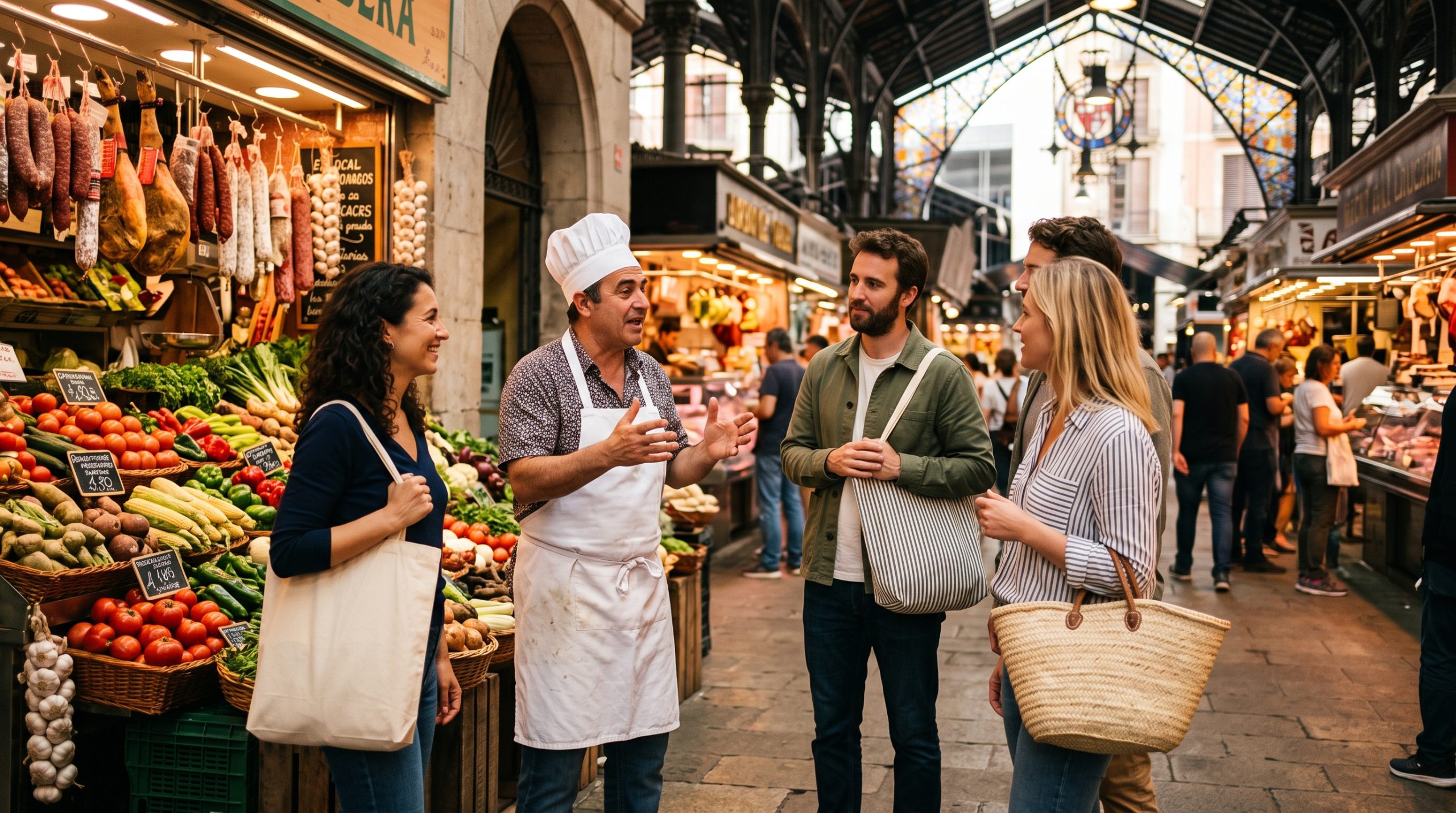
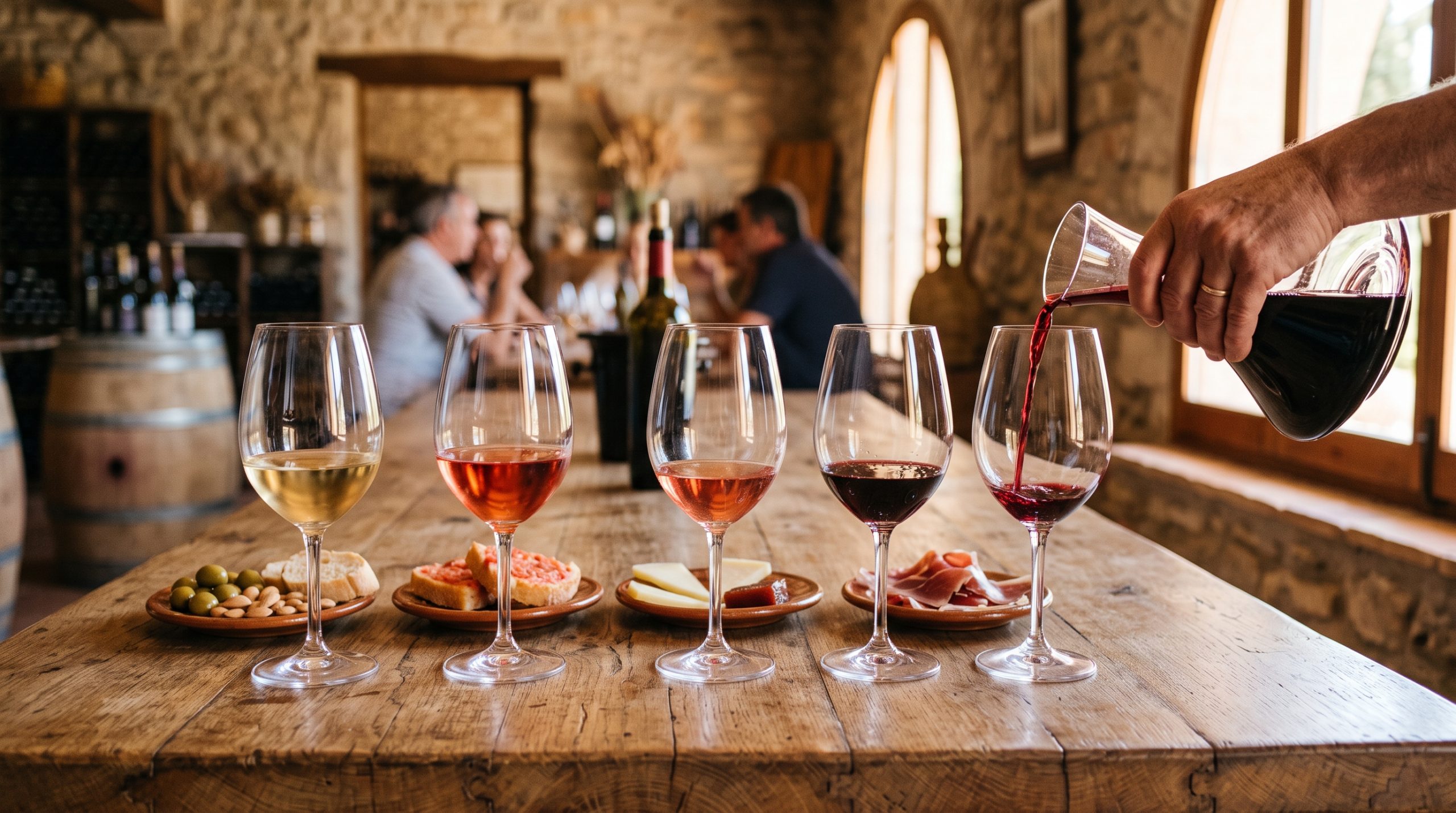
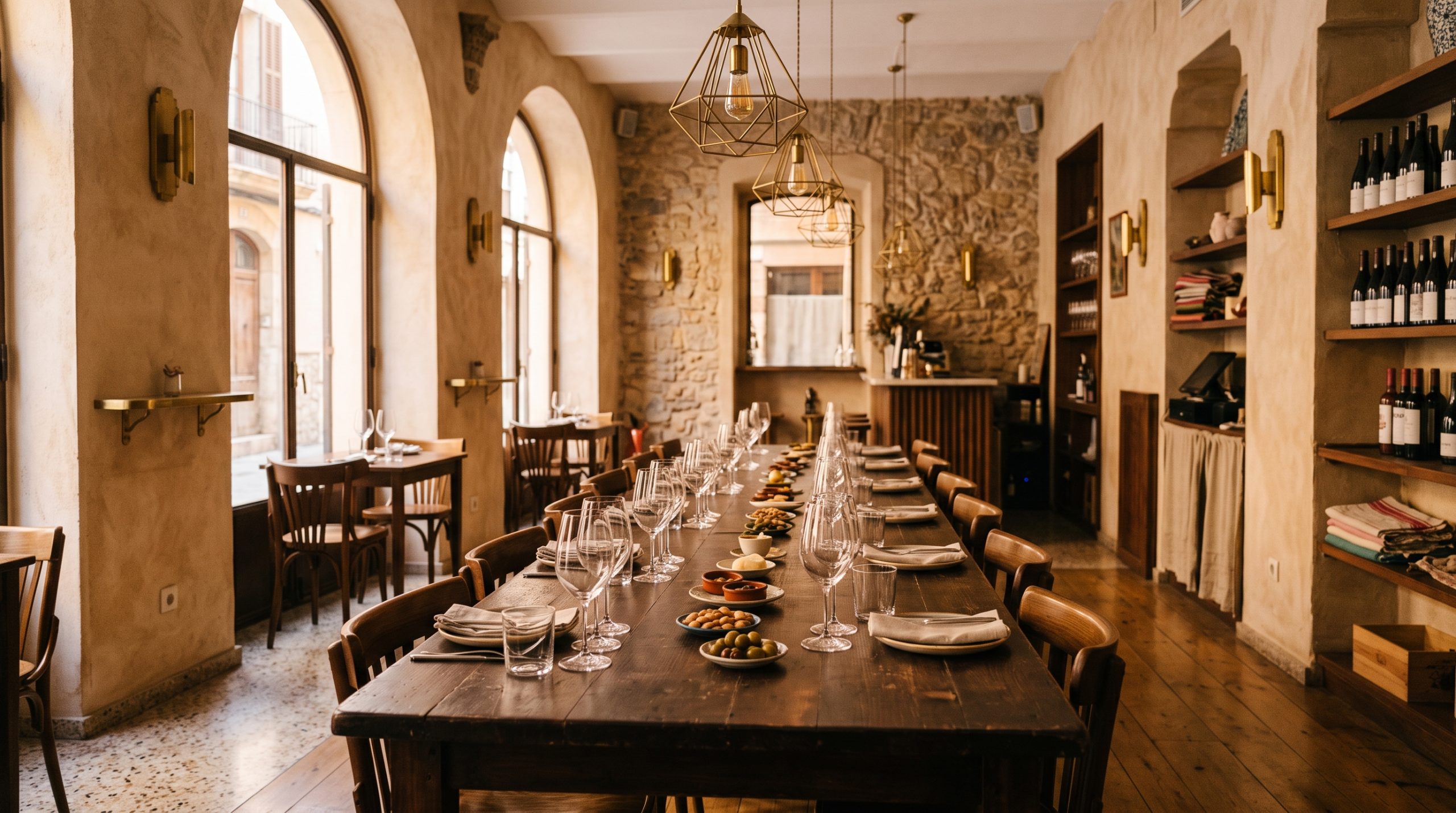
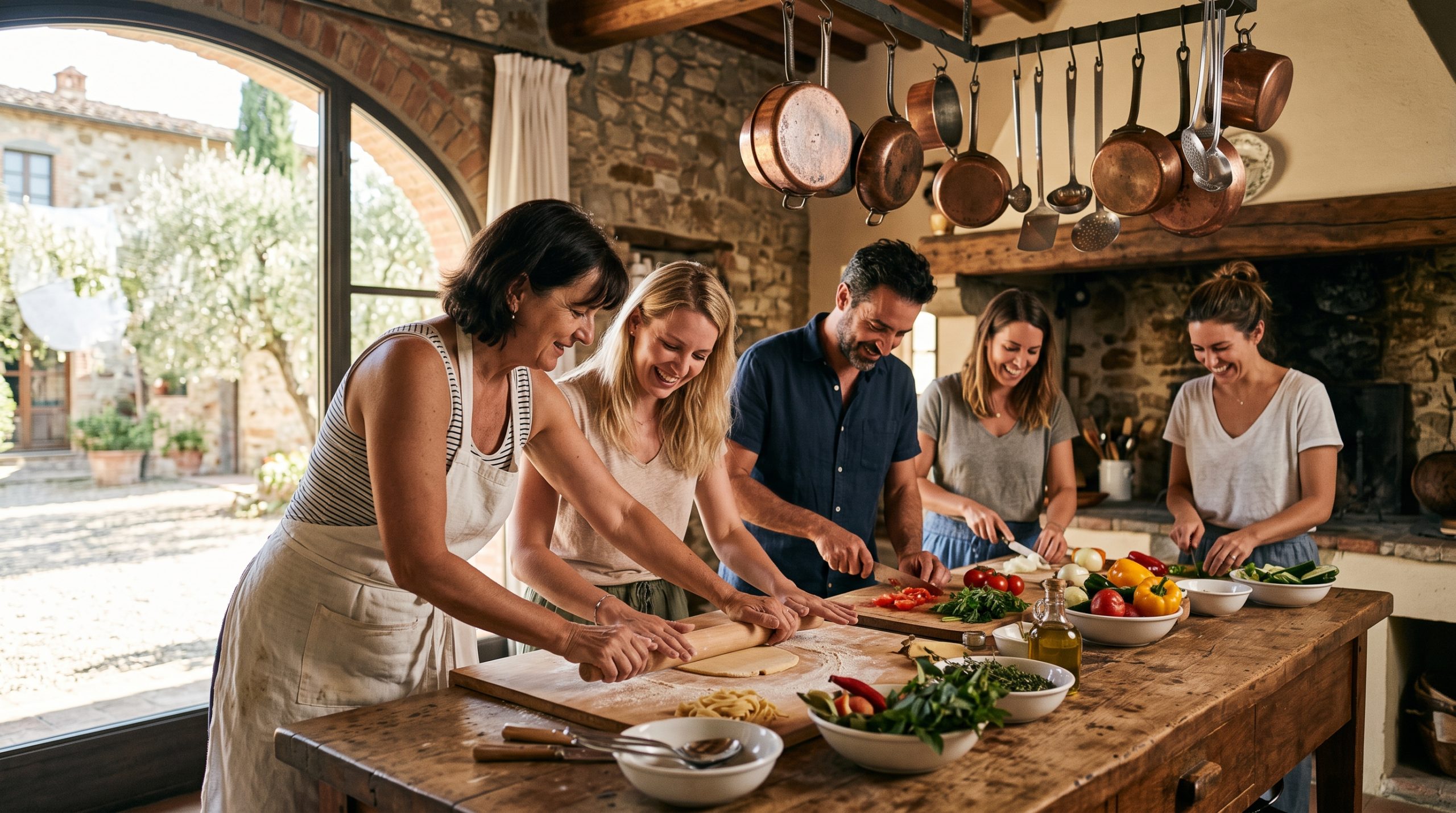
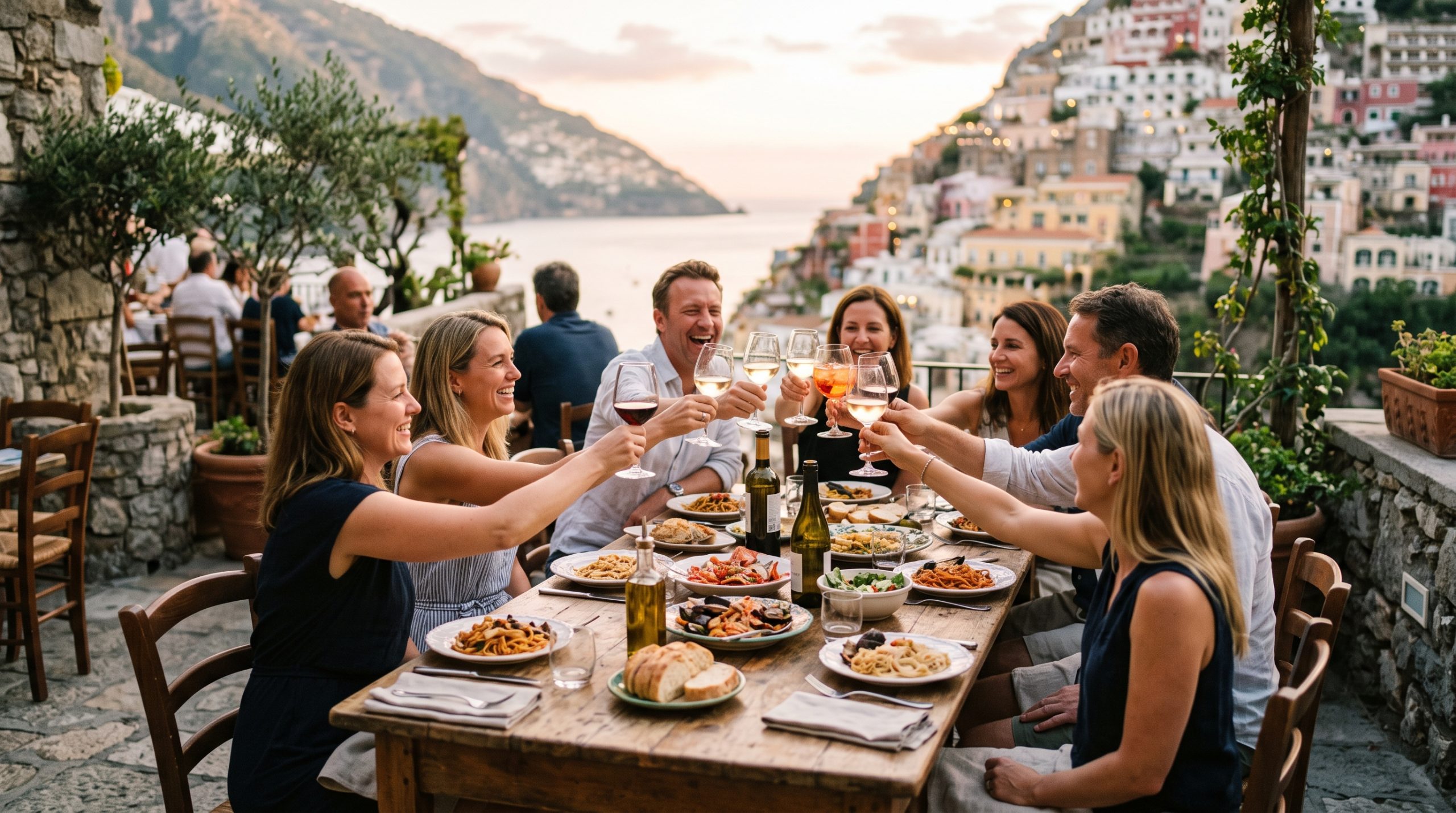
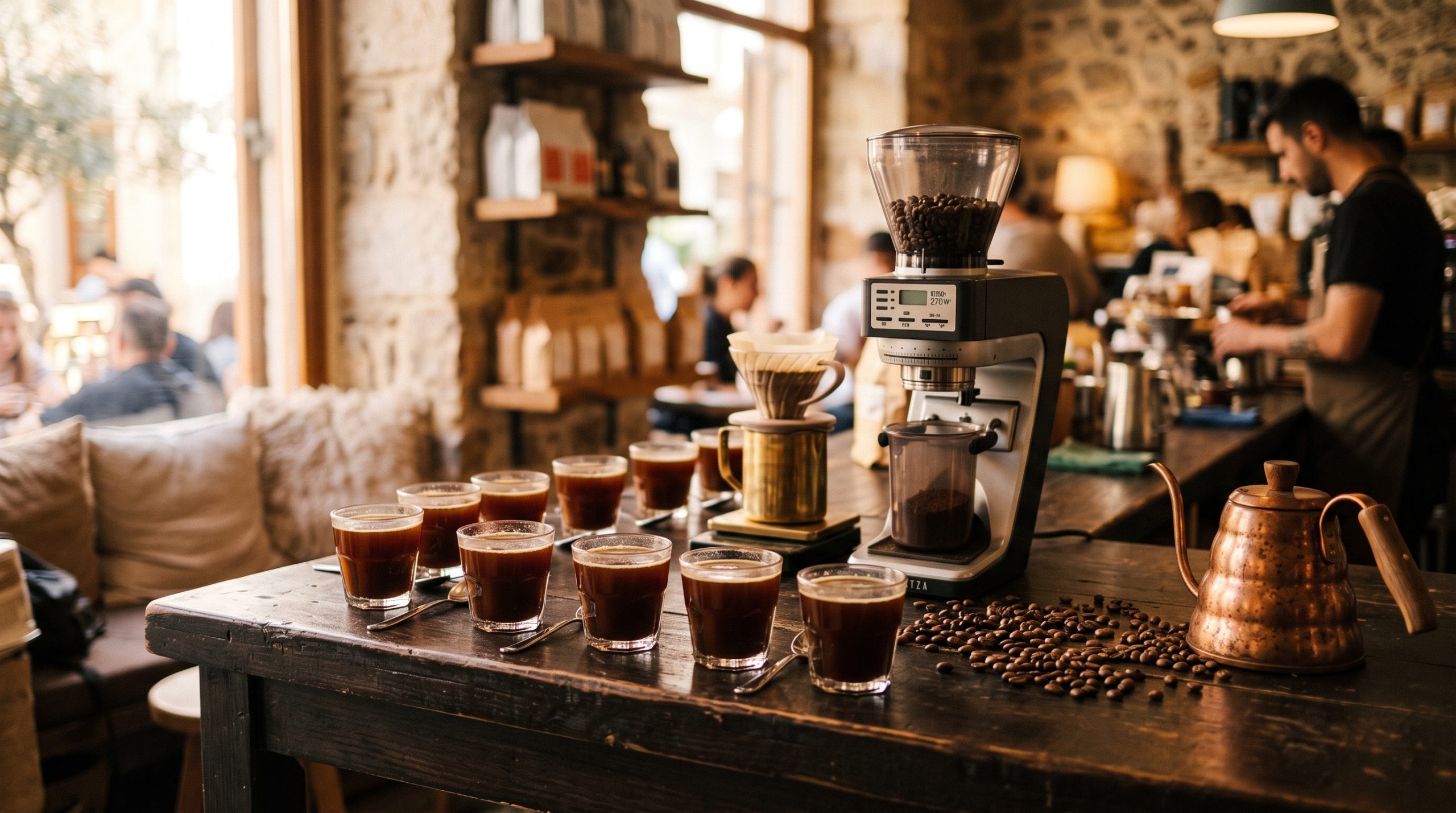
From €85 · 4 hours · Max 10 guests · Gift vouchers available
How to Walk a Tapas Crawl Through the Old Town

The Old Town is small. From Plaça Major to La Llotja is about twelve minutes at a normal pace, and every bar above sits inside that rectangle. The constraint is not distance, it is timing, because Palma runs on a schedule that catches out anyone arriving from northern Europe.
Most kitchens close between roughly 16:00 and 20:00. Bars reopen for the evening at eight, fill from nine, and are at their best from about half past nine onwards. If you eat at seven you will be alone in a room with the lights up. A workable sequence is to start at Bar Espanya around eight while the pinchos are still stacked, walk ten minutes to Morey or Moltabarra for a second round, and finish somewhere with chairs. Do not attempt more than four bars. The portions are larger than they look and the fourth stop is usually where a good evening becomes an average one.
Two practical notes. Sunday is unreliable across the board and Monday closures are common, so if your trip is short, plan the crawl for a Thursday, Friday or Saturday. And the counter is not the same as the table: in several of these bars the price differs depending on where you eat, and in all of them the counter is where the conversation is. Standing up is not a downgrade. If you would rather not manage the timings and the queue at all, our full range of tastings and tours is built around exactly these streets, at the hours they actually work.
What Tapas Cost in Palma

Prices below are the most recent published or reported figures at the time of writing, and Palma has been moving quickly, so read them as a guide to the relative bracket of each bar rather than as a quote.
| Bar | District | Bracket | Reference price |
|---|---|---|---|
| Bar Espanya | Plaça Major | Cheap | Bar skewer €2.45; pincho €4.00 |
| Bar Bodega Morey | Santa Eulàlia | Cheap | Ensaladilla €4.50; caña €2.00 (2022) |
| Bodega La Rambla | La Rambla | Cheap to mid | Not published |
| Moltabarra | Sa Gerreria | Cheap to mid | Not published |
| Celler Sa Premsa | Plaça d’Espanya | Mid | Not published |
| La Bóveda | La Llotja | Mid | Around €20–30 per person |
| La Rosa Vermuteria | Sant Jaume | Mid | Slightly above area average |
| La Bodeguilla | Sant Jaume | Higher | MICHELIN €€€ |
| El Camino | Can Brondo | High | Scallops €23 (4); carabineros €33 (2) |
As a rule of thumb, two people eating properly at a traditional bodega with a drink each will spend somewhere around €30 to €45 in total. The same two people at El Camino will spend three times that, and will have eaten differently rather than more.
Frequently Asked Questions
Where Do Locals Eat Tapas in Palma?
Mostly in the lanes east and north of the town hall, around Plaça Santa Eulàlia and into Sa Gerreria, plus the older bodegas near La Rambla. The rule of thumb is that the further you get from the Passeig del Born and the cathedral approach, the higher the proportion of Mallorcans in the room. Bar Bodega Morey, Bodega La Rambla and Moltabarra are all firmly local crowds.
Which Part of Palma Old Town Has the Best Tapas?
Sa Gerreria and the streets behind Plaça Santa Eulàlia have the highest concentration of genuine bars in the smallest area. La Llotja, down towards the old merchants’ exchange, has the better sit-down tapas restaurants. Both are inside a fifteen-minute walk of each other, so you do not have to choose.
What Time Do People Eat Tapas in Palma?
Later than most visitors expect. Kitchens generally close in the afternoon from about 16:00 and reopen around 20:00. Bars start filling at 21:00 and are busiest between 21:30 and 23:00. Arriving at 19:00 means an empty room, and at several bars it means the counter pinchos have not been laid out yet.
How Much Do Tapas Cost in Palma?
At a traditional bodega, roughly €2.50 to €7 per plate, with a small beer at around €2 to €3. Two people can eat and drink well for €30 to €45. Creative and seafood-led kitchens sit far above that, with individual plates of scallops or carabineros passing €20 to €30.
What Is the Difference Between a Tapas Bar, a Bodega and a Celler?
A bodega began as a shop selling wine from the barrel and added food later, which is why the good ones still have barrels behind the counter. A celler is a Mallorcan wine-cellar restaurant, larger, with full plated dishes rather than small plates. A tapas bar is the general modern term and covers both plus everything newer.
Can You Do a Guided Tapas Tour in Palma Old Town?
Yes. Walking food tours of the Old Town are the common format, typically visiting several bars and markets across three to four hours. Our own small-group Gourmet Palma Food Tour caps at ten guests and includes twelve separate tastings, and in July and August it runs as an evening walk to avoid the afternoon heat.
Do You Need to Book Tapas Bars in Palma?
It depends on the bar, and getting this wrong is the most common mistake. El Camino, La Bodeguilla and La Bóveda should be booked. Celler Sa Premsa, La Rosa and Moltabarra take bookings and it is worth using them for groups. Bodega La Rambla states explicitly that it does not accept table reservations, and Bar Bodega Morey has no system at all.
Eat With Us
Twelve tastings, ten guests, one evening in the Old Town
Our Gourmet Palma Food Tour walks the streets on this list with the people who cook on them, stopping at the Olivar Market, the old bodegas and the bakeries. From €85 per person.
Check availabilityPrivate and corporate groups up to 32 guests · Get in touch
Leave a Reply