

At A Glance
- Opening hours: Monday to Saturday, stalls from 7am to 3pm, bars and food service until 5pm. Closed Sundays.
- Fishmongers are closed on Mondays even though the rest of the market trades, so plan a seafood visit for Tuesday to Saturday.
- The building dates from around 1920, which makes it the oldest of Palma’s municipal markets, older than both l’Olivar and Pere Garau.
- Around fifty stalls covering fish, meat, fruit, vegetables, cheese and charcuterie, with bars built into the market floor.
- Several bars will cook what you buy. Choose fish or meat at a stall, carry it to a grill counter, and pay a small charge to have it cooked.
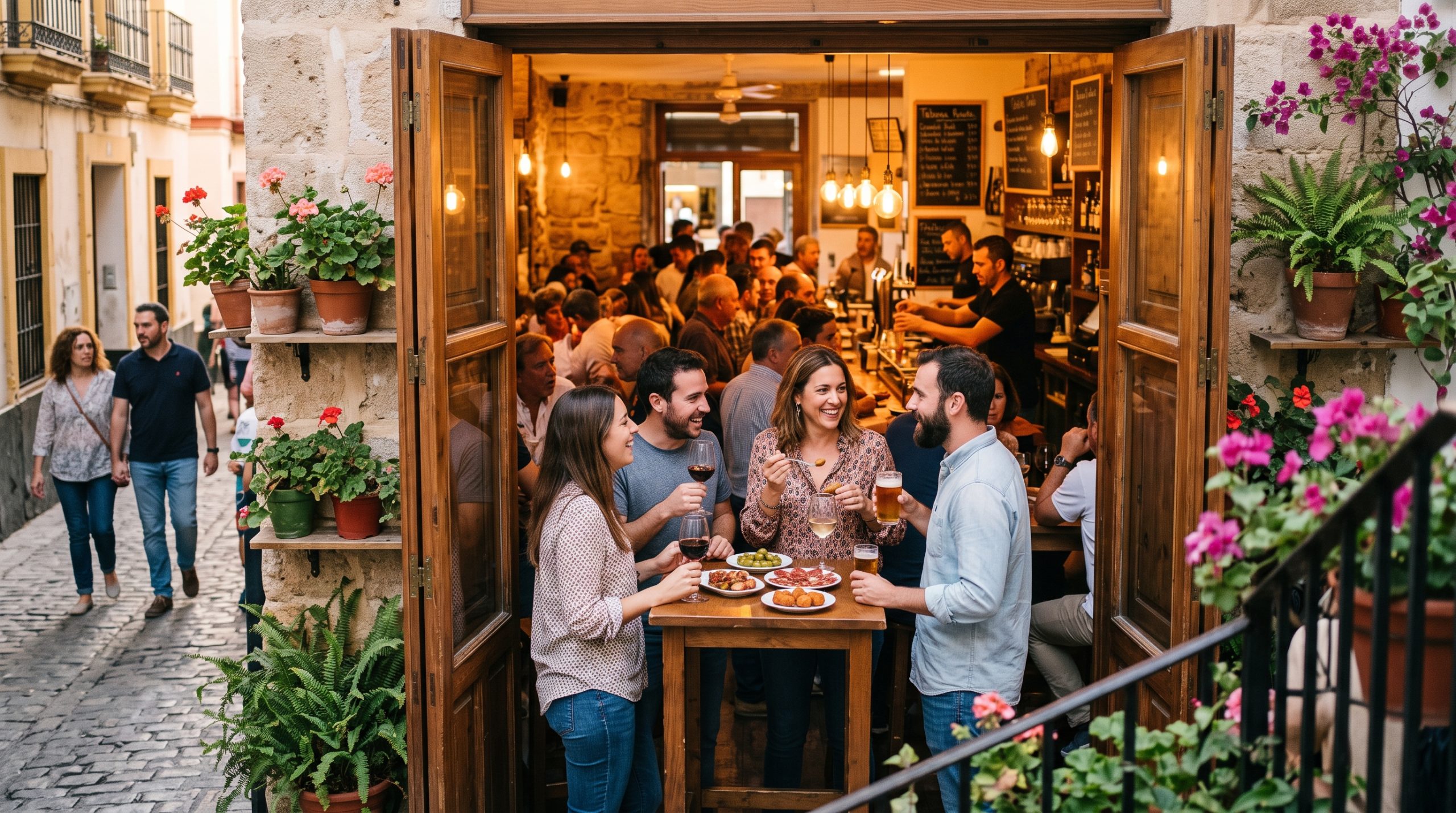
The Mercat de Santa Catalina is the working heart of the neighbourhood that grew up outside Palma’s city walls, and it is the oldest surviving municipal market in the city. It is smaller than l’Olivar, busier per square metre, and considerably more local in character. Around fifty stalls trade six mornings a week, and the bars wedged between them have turned a food market into somewhere people spend the morning rather than ten minutes.
It is also the reason the surrounding streets eat as well as they do. Chefs from across the quarter shop here early and cook it the same day, which is what separates Santa Catalina from other parts of Palma. The restaurants and bars that result are covered in the full Santa Catalina food guide, and the wider city in our guide to the best restaurants in Palma.
Santa Catalina Market Palma: Opening Hours And How To Get There

The market sits on Plaça de la Navegació, at the centre of Santa Catalina, about twenty minutes on foot west of Palma Cathedral. The walk crosses the Passeig Mallorca and climbs gently into the quarter, and there is no faster way to arrive: the streets around the market are narrow, parking is residents-only in large part, and a taxi will set you down a street away regardless.
Timing matters more than the route. The stalls are at their fullest between about half past eight and midday, and by two o’clock the fishmongers are packing away. The bars keep going after the produce stalls close, which is why late morning is the sensible compromise: the market is still trading properly and the counters have started serving.
| Day | Stalls | Bars and food service | Notes |
|---|---|---|---|
| Monday | 7am–3pm | 7am–5pm | Fishmongers closed |
| Tuesday to Friday | 7am–3pm | 7am–5pm | Best days for fish |
| Saturday | 7am–3pm | 7am–5pm | Busiest day, arrive early |
| Sunday | Closed | Closed | Neighbourhood bars stay open |
What To Buy At Mercat Santa Catalina
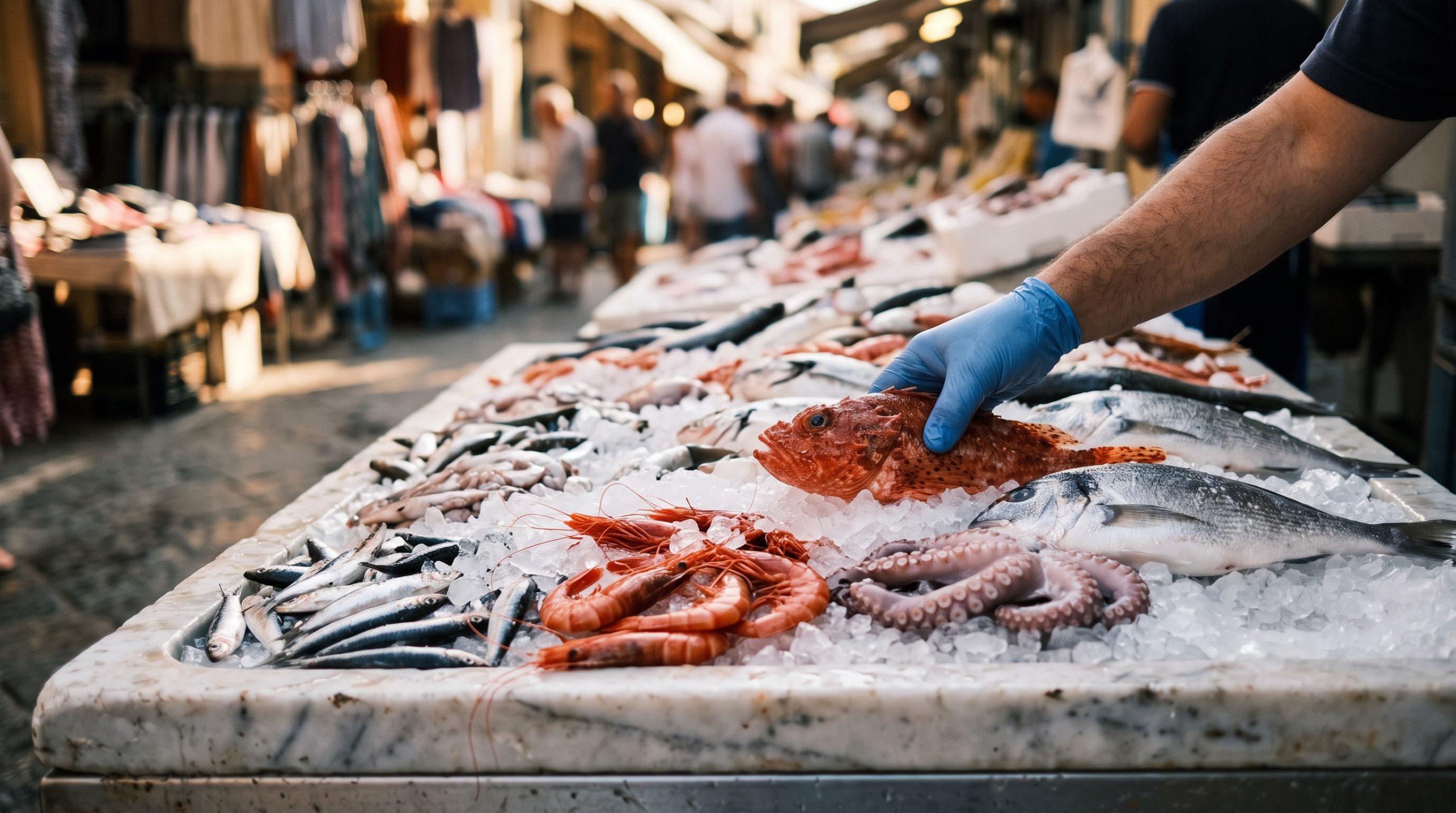
The fish counters are the strongest part of the market and the reason most residents come. Expect the local Mediterranean catch rather than an international selection: gilt-head bream, red mullet, scorpion fish for soup, squid, prawns and whatever the boats brought in. The counters are staffed by people who will tell you how to cook what you are buying if you ask, and they will gut and fillet without being asked twice.
The charcuterie and cheese stalls are the other thing worth carrying home. This is the most convenient place in Palma to buy sobrassada from a counter that can explain what you are getting, alongside Mahón cheese from neighbouring Menorca and the local sheep’s cheeses. The produce stalls carry the island’s own varieties in season, including the ramellet tomatoes that pa amb oli depends on.
What To Look For On Each Counter
- Fish. Ask what came in that morning rather than choosing from the display. Tuesday to Saturday only.
- Sobrassada. Look for the PGI mark and ask whether it is from porc negre, the native black pig, which is the better version.
- Cheese. Mahón from Menorca in three ages, plus Mallorcan sheep’s cheeses that rarely leave the island.
- Tomatoes. Ramellet are the small ribbed ones sold in strings. They are the ones for rubbing on bread, not for salad.
- Olives and capers. Sold loose by weight from brine, and far better than anything jarred.
Eating At The Santa Catalina Market Bars
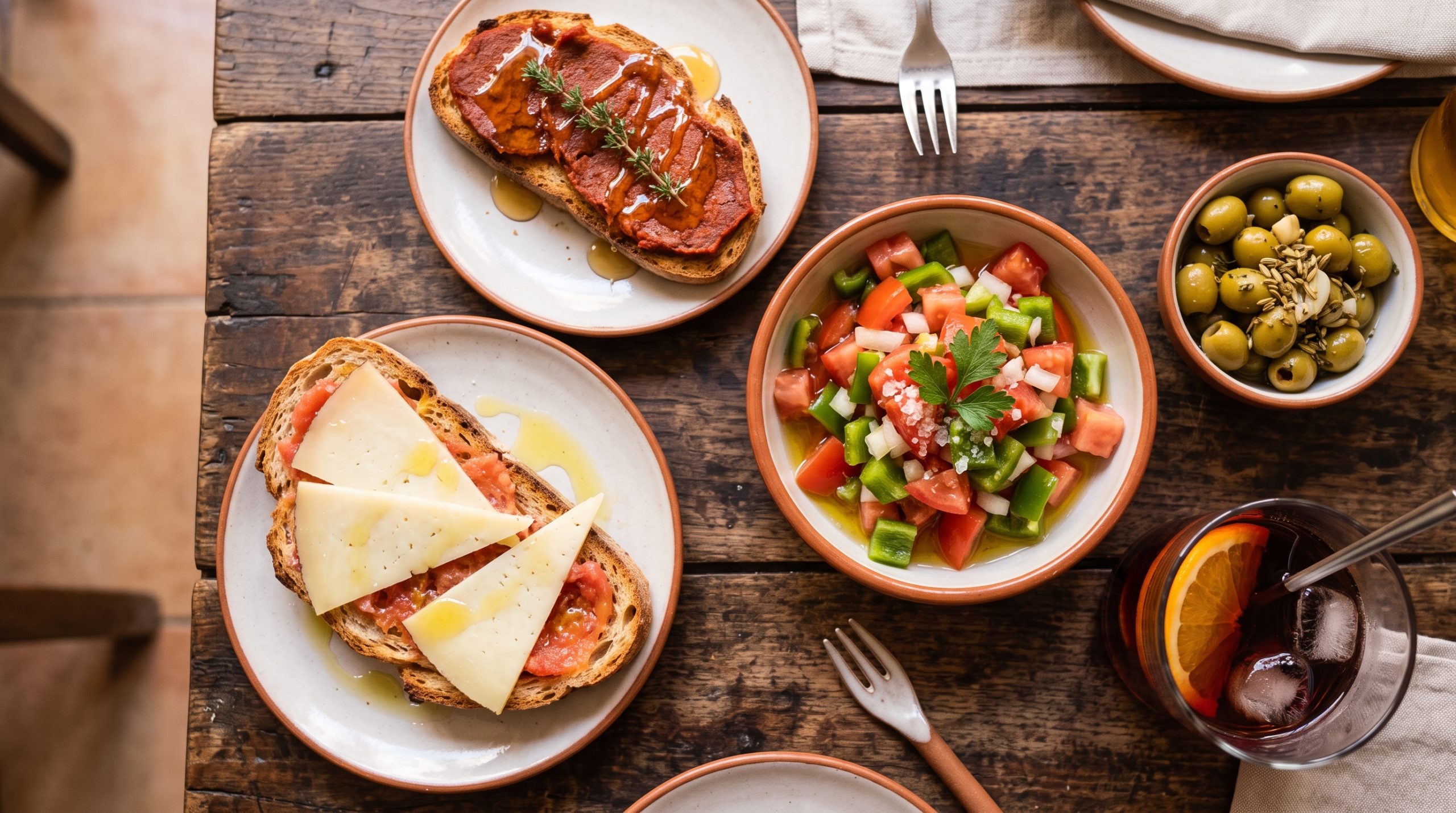
The bars built into the market floor are what turned it into a destination. They open with the stalls, which means a vermouth at eleven in the morning is entirely normal here, and they serve until the late afternoon. The format is counter service, small plates and shared tables, and the crowd shifts from shoppers to office workers to people who have come specifically to eat.
The thing to order is a variat, a plate assembled from whatever the bar has cooked that morning. It is the market’s own institution and the reason a meal here costs a fraction of a restaurant. Several of the bars will also cook produce you have just bought: choose a fish or a cut of meat at a stall, carry it to a grill counter, and pay a small charge to have it cooked and served with bread and salad.
Things To Do In Santa Catalina Around The Market
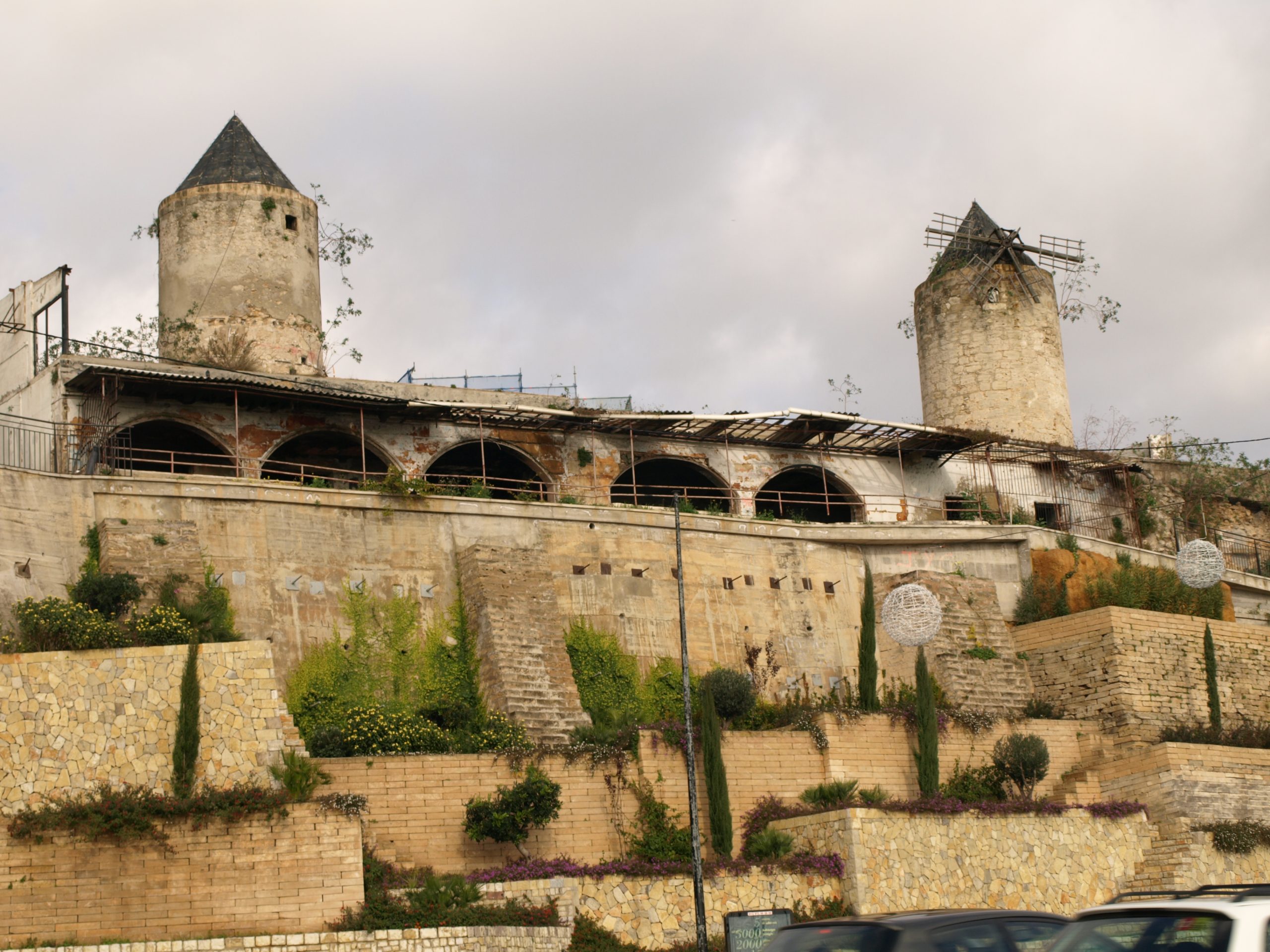
The market is the anchor, but the quarter around it justifies a half day. Es Jonquet, the ridge between Santa Catalina and the sea, still carries the stone windmills that ground the city’s grain, and the short walk down to them gives the best view back over the harbour. Below that, the Es Baluard bastion holds the city’s contemporary art museum inside the Renaissance walls.
The streets themselves are the other attraction. Carrer de Sant Magí and Carrer de la Fàbrica hold the concentration of bars and restaurants, and the residential lanes between them have kept the low, shuttered houses of the original fishing quarter. The whole neighbourhood is walkable in an hour and rewards going slowly.
Shop A Market With A Chef
Our chef-led market tour works the stalls at Mercat de l’Olivar, then cooks what we buy as a tapas class back at Casa Roca.
Book The Market Tour And Tapas ClassFrom €129 · 4 hours · Max 8 guests
The History Of Mercat De Santa Catalina Palma
Santa Catalina began as an extramural quarter, built on the wrong side of Palma’s Renaissance walls beside the Es Baluard bastion. It housed the people the walled city needed but did not want inside it: fishermen, dockworkers, millers working the windmills on the Es Jonquet ridge, and the families who supplied the city with food. A quarter of that kind needs a market, and by the early twentieth century the informal trading in the streets had outgrown itself.
The present building went up around 1920, which makes it the senior member of Palma’s municipal market system. Mercat de l’Olivar and Mercat de Pere Garau both came later, and both were built at a larger scale for a city that had by then absorbed its suburbs. Santa Catalina stayed the size it was, which is the single most important fact about it: it was designed to feed a neighbourhood, and it is still roughly the right size to do exactly that.
What has changed is the neighbourhood around it. Through the second half of the twentieth century Santa Catalina declined with the fishing trade, and by the 1980s it was one of the cheaper places to live in central Palma. The reversal came quickly. International residents arrived, the rents rose, and the bars and restaurants followed. The market sat at the centre of all of it and absorbed the change better than the streets did, partly because the stallholders were already there and stayed.
Mercat De Santa Catalina In Brief
- Built around 1920 to serve the fishing and working quarter outside the city walls.
- The oldest of Palma’s municipal markets, predating both l’Olivar and Pere Garau.
- Around fifty stalls, a scale that has not changed significantly since it opened.
- Located on Placa de la Navegacio, at the centre of the quarter rather than on its edge.
- Still a working neighbourhood market first, with the bars and food service built around that rather than replacing it.
What Things Cost At Santa Catalina Market Palma
A market is the cheapest way to eat well in Palma, and the gap between the counters here and a restaurant two streets away is substantial. The figures below are the usual brackets rather than fixed prices. Fish in particular moves with the catch and the season, and a whole fish is sold by weight, so the price you are quoted depends on the individual fish you point at.
| What you are buying | Typical bracket | Notes |
|---|---|---|
| Variat at a market bar | €8–€14 | The assembled plate, and the best value meal in the quarter |
| Vermut at the counter | €3–€5 | Usually served with olives |
| Coffee and a pastry | €4–€7 | Served from opening |
| Whole fish, per kilo | €15–€40 | Varies widely by species and catch |
| Sobrassada, per kilo | €15–€30 | Higher for porc negre with the PGI mark |
| Mahon cheese, per kilo | €15–€35 | Price rises with age |
| Grill charge on your own produce | A few euros per item | Buy at a stall, carry it to a grill counter |
Two people can eat properly at a market bar, with a drink each, for roughly twenty to thirty euros. The same two people buying fish at a counter and having it grilled will spend more on the fish and less on everything else, and will eat considerably better than the equivalent spend in a restaurant on the seafront. Cards are accepted at most stalls now, though a few of the older counters still prefer cash.
Mercat De Santa Catalina Compared With Mercat De l’Olivar
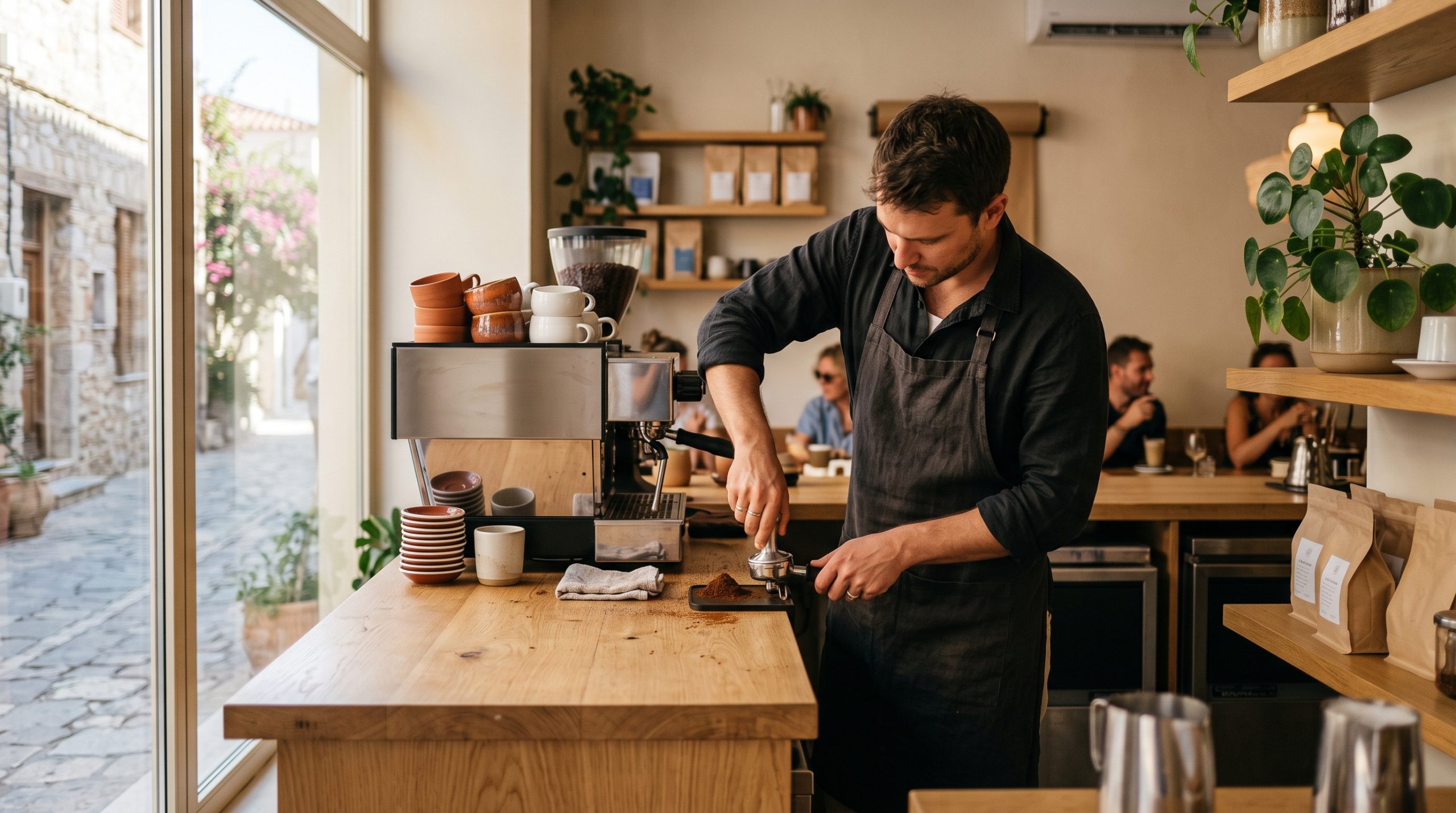
Palma has two markets worth a visit and they do different jobs. L’Olivar is the large one in the centre, with more stalls, a first floor given over to food service and enough scale to absorb tourism without changing character. Santa Catalina is smaller, older and more residential, and you are more likely to be the only visitor at a counter.
For serious shopping, l’Olivar has the wider choice and the longer hours. For atmosphere and for a sense of how a Palma neighbourhood actually feeds itself, Santa Catalina is the better morning. Anyone with time should do both, and the Mercat de l’Olivar guide covers the larger market stall by stall.
| Mercat de Santa Catalina | Mercat de l’Olivar | |
|---|---|---|
| Opened | Around 1920 | Later, mid-20th century |
| Size | Around 50 stalls | Considerably larger |
| Location | Santa Catalina, 20 min from the cathedral | City centre, 10 min from the cathedral |
| Best for | Neighbourhood atmosphere, fish, market bars | Range, charcuterie, upstairs food hall |
| Visitor density | Lower | Higher |
What We Tell Guests About Santa Catalina Market
From The Tasting Palma Table
The most common mistake is arriving too late. Guests come at two in the afternoon expecting a market and find the fish counters under covers and half the stalls shuttered. A market is a morning institution here, and by one o’clock the good produce has gone to the people who came at eight.
The second mistake is treating it as a photograph rather than a shop. The counters are staffed by people who have sold the same produce for decades and who will happily explain what something is and how to cook it. Ask. It is the difference between walking through a market and understanding one, and it costs nothing.
If you only have one morning and want to eat rather than shop, take a stool at one of the market bars, order a variat and a vermut, and watch the room. That single hour explains more about how Mallorca eats than any restaurant meal in the centre.
Eat And Drink With A Local In Palma Old Town

A market shows you the ingredients. What it cannot show is how they are used, or which Mallorcan wines were made to sit alongside them. That is the subject at Casa Roca on Calle Hostals, a few minutes from Plaça Major, where our tastings and market tours run in small groups led by the people who buy from these producers every week. The counter culture of the Old Town is covered in our guide to the best tapas bars in Palma.
Inside A Tasting Palma Experience
Cook What The Market Sells
A chef-led tour of the Olivar Market followed by a hands-on tapas class, capped at eight guests, finishing at a shared table.
From €129 · 4 hours · Max 8 guests · See all experiences
Frequently Asked Questions
What Are The Santa Catalina Market Opening Hours?
The market trades Monday to Saturday. Produce stalls run from 7am to 3pm and the bars and food service continue until about 5pm. It is closed on Sundays. Note that the fishmongers do not open on Mondays even though the rest of the market does.
Is Mercat De Santa Catalina The Oldest Market In Palma?
Yes. The present building dates from around 1920, which makes it older than both Mercat de l’Olivar and Mercat de Pere Garau. It was built to serve the fishing and working quarter that grew up outside the city walls beside the Es Baluard bastion.
Can You Eat At Santa Catalina Market?
Yes. Bars are built into the market floor and serve from early morning until the late afternoon. Order a variat, the assembled plate of whatever has been cooked that morning. Several counters will also grill produce you have just bought at a stall for a small charge.
What Time Is Best To Visit Santa Catalina Market Palma?
Between half past eight and midday. The stalls are fully stocked, the bars have started serving, and the fish counters have not yet begun packing away. By two in the afternoon much of the produce has gone and the market is closing down.
How Do You Get To Santa Catalina Market From Palma Cathedral?
Walk west for about twenty minutes, crossing the Passeig Mallorca into the quarter. The market sits on Plaça de la Navegació at the centre of Santa Catalina. Parking nearby is largely restricted to residents, so walking is the practical option.
What Else Is There To Do In Santa Catalina?
The Es Jonquet windmills sit on the ridge between the quarter and the sea, and the Es Baluard contemporary art museum occupies the Renaissance bastion below. Carrer de Sant Magí and Carrer de la Fàbrica hold most of the bars and restaurants. The whole neighbourhood can be walked in about an hour.
Leave a Reply