Tasting Palma logo

RÉSERVER

Catégorie : Non classé

  • Tumbet : le gratin de légumes majorquin et comment le préparer

    Tumbet : le gratin de légumes majorquin et comment le préparer

    At A Glance

    Tumbet is a Mallorcan dish of potato, aubergine and red pepper, each fried separately in olive oil, then layered under tomato sauce.

    • The layer order is fixed: potato at the bottom, then aubergine, then pepper, with the sauce on top.
    • Frying each vegetable separately is the defining technique. Cook them together and you have made a pisto, not a tumbet.
    • Mallorcans serve it at room temperature, not hot. It is a summer dish.
    • Whether courgette belongs in it is a genuine argument on the island, not a matter of preference.
    • Everything in it is in season on Mallorca from July to October, peaking July to September.

    Tumbet is the dish that proves Mallorcan cooking is not simply Spanish cooking with a sea view. It looks like ratatouille, it is often described as ratatouille, and it is not ratatouille. The difference is entirely in the method, and the method is the reason a plate of three cheap vegetables ends up tasting like three distinct things rather than one. It is on the menu of nearly every traditional kitchen on the island, and it is one of the dishes people cook on our Olivar Market Tour and Tapas Class.

    Below is what it is, where it came from, how to make it properly, and the two arguments Mallorcans actually have about it: courgette, and whether you are allowed to skip the frying. There is also a straight answer on how it relates to pisto and ratatouille, which most recipes dodge. For the rest of the island repertoire, see our Palma food guide.

    Learn to cook tumbet and the rest of the Mallorcan repertoire with a chef, after shopping the market for it.

    See the cooking class

    What Is Tumbet?

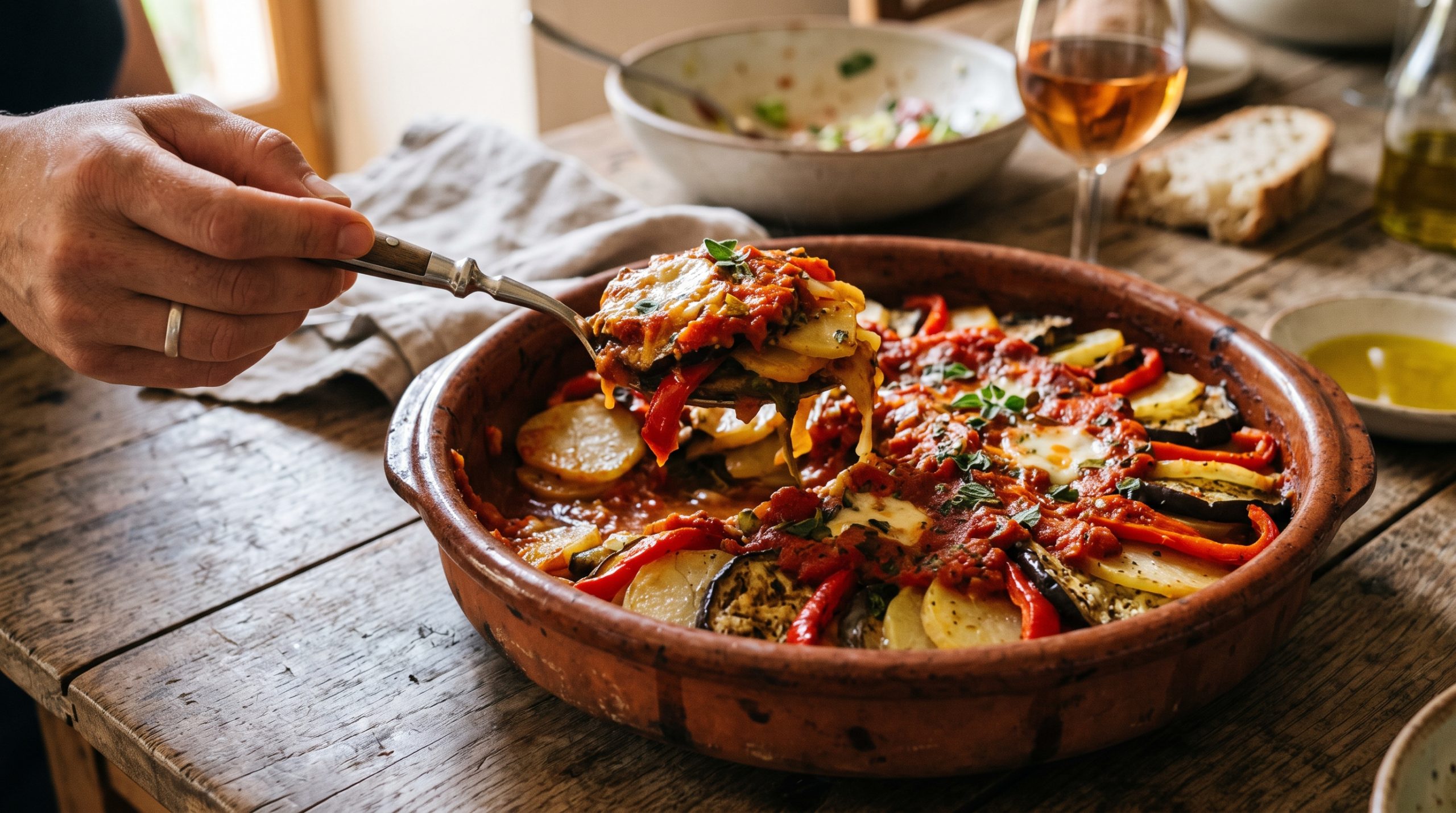
    Tumbet, the Mallorcan layered vegetable dish, in an earthenware dish
    Layered, not stirred. The potato goes in first and the sauce goes on last.

    Tumbet, or tombet in Catalan, is a layered vegetable dish from Mallorca. Potatoes, aubergines and red peppers are sliced, fried individually in olive oil, drained, then layered into an earthenware dish called a greixonera and covered with a simple tomato sauce. It is usually given a short bake and then left to settle.

    The order of the layers is not decorative. Potato goes at the bottom, where it absorbs the sauce and the oil that renders down through the dish. Aubergine sits in the middle. Pepper goes above that, and the tomato sauce covers the lot. Vegetables are sliced with their skins on.

    Its history is older and stranger than most recipe sites admit. It evolved from medieval Mallorcan greixoneres, aubergine dishes that predate the arrival of New World crops entirely, which means the dish existed in some form before it had either tomatoes or peppers to put in it. More striking still, the standard Catalan dictionary’s first definition of tombet describes a fried dish of meat, potatoes, peppers and tomato, with no aubergine at all. The vegetarian version everyone now knows is very likely the later one.

    You will see confident claims that tumbet dates to the sixteenth century, or that it was first recorded in 1886. Neither is supported by a document we could verify, so treat them as received tradition rather than fact. The same goes for the word itself: the standard Catalan dictionary records tombet without any etymology, and the current dictionary of the Institute of Catalan Studies does not list it at all. The usual explanations, from tombar meaning to turn over, or from the vegetables being laid in tombs, are plausible and unproven. At least one Spanish gastronomy publication says so outright. It is a reminder that much of what gets stated confidently about Mallorcan food history is tradition rather than record.

    Tumbet Ingredients
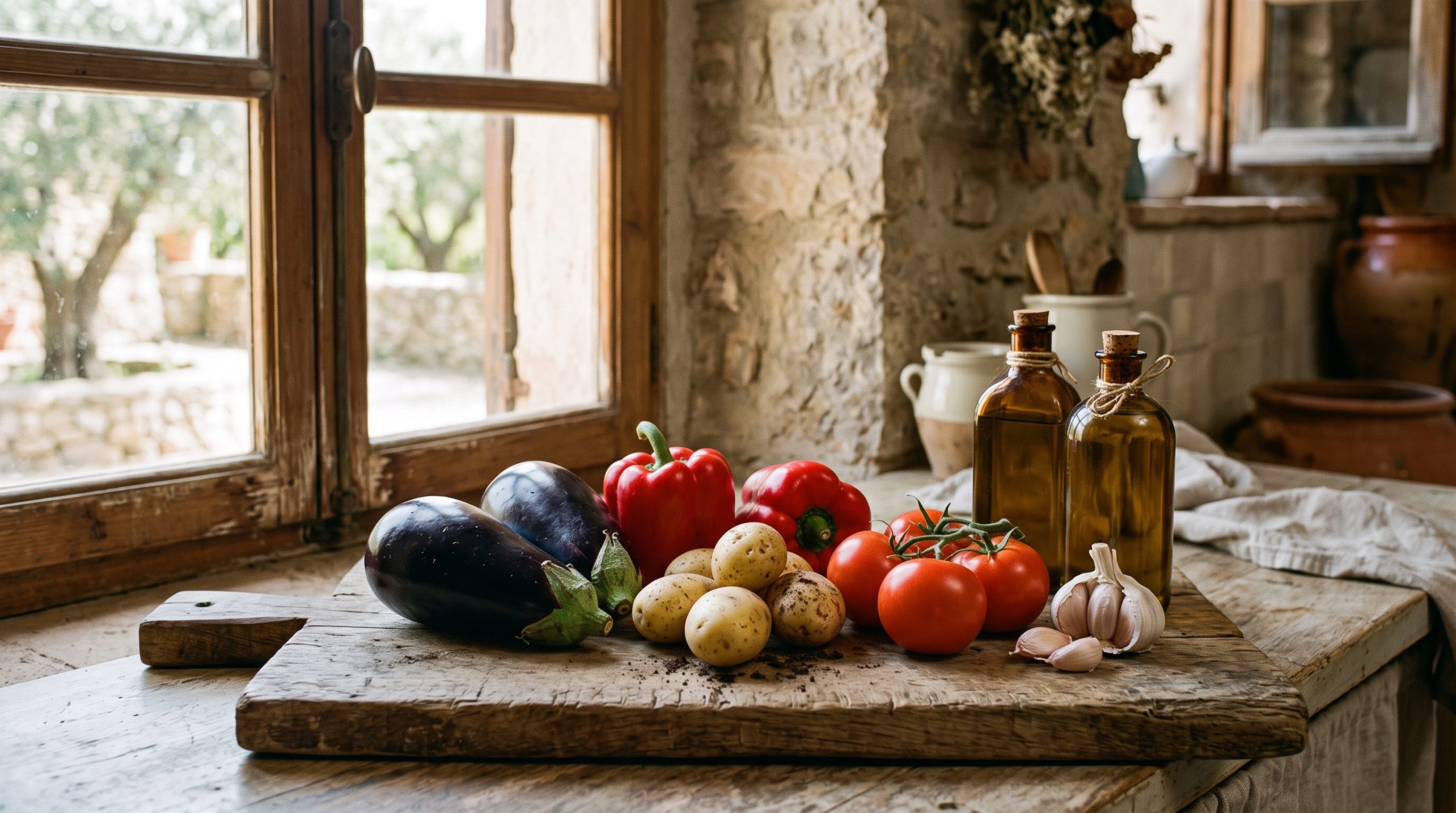
    Aubergines, red peppers, potatoes, tomatoes and olive oil, the ingredients for tumbet
    Four vegetables, garlic, oil and salt. The argument is over whether a fifth belongs.

    Quantities below serve four, following the version published by the Spanish gastronomy title Gastronosfera, which matches the stricter four-vegetable definition. There is no canonical recipe issued by any Mallorcan institution, so this is a well-sourced starting point rather than a decree.

    IngredientFor 4Notes
    Potatoes4 largeWaxy. Monalisa or Kennebec are the varieties named
    Aubergines2 mediumSliced with the skin on
    Red peppers2 largeSome cooks roast rather than fry these
    Ripe tomatoes1 kgFor the sauce, not for layering raw
    Garlic4 clovesInto the sauce
    Extra virgin olive oilGenerousEnough for shallow frying, and it is reused between vegetables
    Salt, sugar, bay leafTo tasteA pinch of sugar balances the tomato

    A word on quantities, because published recipes vary sharply. For the same four servings we found versions calling for eight potatoes, four, and two. That spread tells you something useful: tumbet is a household dish rather than a codified one, and the ratio is a matter of how potato-heavy your family likes it. Start with the middle figure. Buy the vegetables from a market rather than a supermarket if you can, which is the whole argument of our guide to eating in Palma.

    Does Courgette Belong in Tumbet?

    This is the argument, and most English-language recipes do not tell you it exists. They simply include courgette and move on.

    The position against: Catalan reference sources and Mallorcan recipe sites give the dish as potato, aubergine and pepper only, and the Majorca Daily Bulletin has reported plainly that purists consider courgette to make it less authentic. The position for: plenty of Mallorcan households and several island publications include it as standard, and at least one Mallorcan source argues that aubergine and courgette were both later additions to what was originally a simpler dish.

    Where The Arguments Actually Are

    • Courgette. Purists exclude it. Many households include it. Sources even disagree on whether it sits above or below the aubergine.
    • Roasting the peppers instead of frying them is common and uncontroversial.
    • The bake. Some cooks skip the oven, rest the dish a couple of hours and reheat it gently instead.
    • Serving temperature. Room temperature is the Mallorcan norm, though it is served warm in restaurants.
    • What is not argued about: frying the vegetables separately. That part is the dish.

    Our own position, for what it is worth: cook it without courgette the first time so you can taste what the three-vegetable version does, then add it if you want a lighter, wetter dish. What you should not do is add courgette and then describe the result as the traditional recipe, because a good number of Mallorcans will disagree with you.

    How to Make Tumbet

    Slices of aubergine and potato frying in olive oil in a heavy pan
    Each vegetable goes in on its own, and comes out to drain before the next one starts.

    1. Salt and drain the aubergine

    Slice the aubergines about a centimetre thick, skin on, salt them and leave them to sit while you prepare everything else. They will release water. Pat them dry before they go anywhere near hot oil, because wet aubergine in oil spits and steams rather than frying.

    This step is also where a lot of home cooks lose the dish. Aubergine that has not drained will carry water into the layers and make the finished tumbet soupy underneath the sauce.

    2. Make the tomato sauce

    Grate or blend the tomatoes, then cook them down slowly with the garlic, a bay leaf, salt and a pinch of sugar until the sauce is thick enough to sit on a spoon. It should be a plain sauce. No herbs beyond the bay, no onion, nothing clever.

    Make it first and let it sit. A thin, watery sauce will run through the layers and undo the structure you are about to build, which is the single most common failure in a homemade tumbet.

    3. Fry each vegetable separately

    Shallow fry the potato slices in olive oil until they are soft and just gold, and lift them out to drain on paper. Then the aubergine, in the same oil. Then the peppers, unless you are roasting them. Salt each batch as it comes out of the pan, not in it.

    The reason given on the island for keeping them separate is straightforward: it stops the flavours mixing in the oil, and it lets each vegetable be taken off the heat at its own right moment. Potato and aubergine do not want the same amount of time, and cooking them together means one of them is wrong. This is the step people skip, and skipping it is what turns tumbet into something else. It is also the step that is far easier to learn by watching than by reading, which is why it is on the syllabus of our food tour and cooking experiences.

    4. Layer and bake
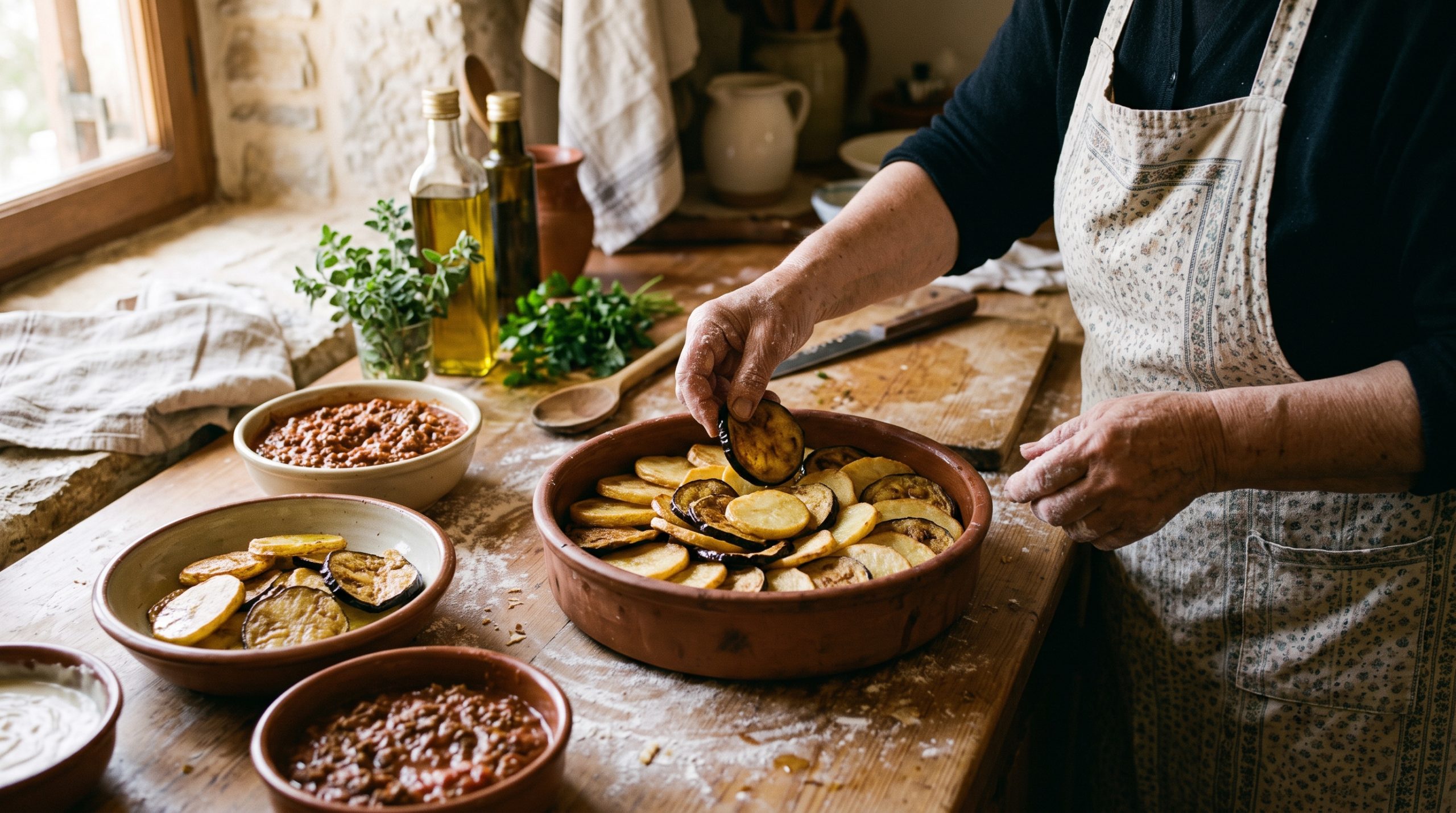
    Hands layering fried potato and aubergine into an earthenware dish
    Overlapping rounds, potato first. An earthenware greixonera holds the heat evenly.

    Lay the potato across the base of an earthenware dish in overlapping rounds, then the aubergine, then the peppers, seasoning lightly between layers. Pour the tomato sauce over the top so it covers the surface rather than being stirred through. Bake at around 180 °C for fifteen to twenty minutes.

    Then, and this matters more than the baking, leave it alone. Tumbet improves as it settles and the layers take on the sauce. Many Mallorcan cooks make it several hours ahead, or the day before, and simply warm it through gently.

    Inside A Tasting Palma Experience

    Shop the market, then cook it with a chef

    Four hours, eight guests. We buy what is in season at the Olivar, take it back to our Old Town kitchen, and you cook the Mallorcan classics with recipes to take home.
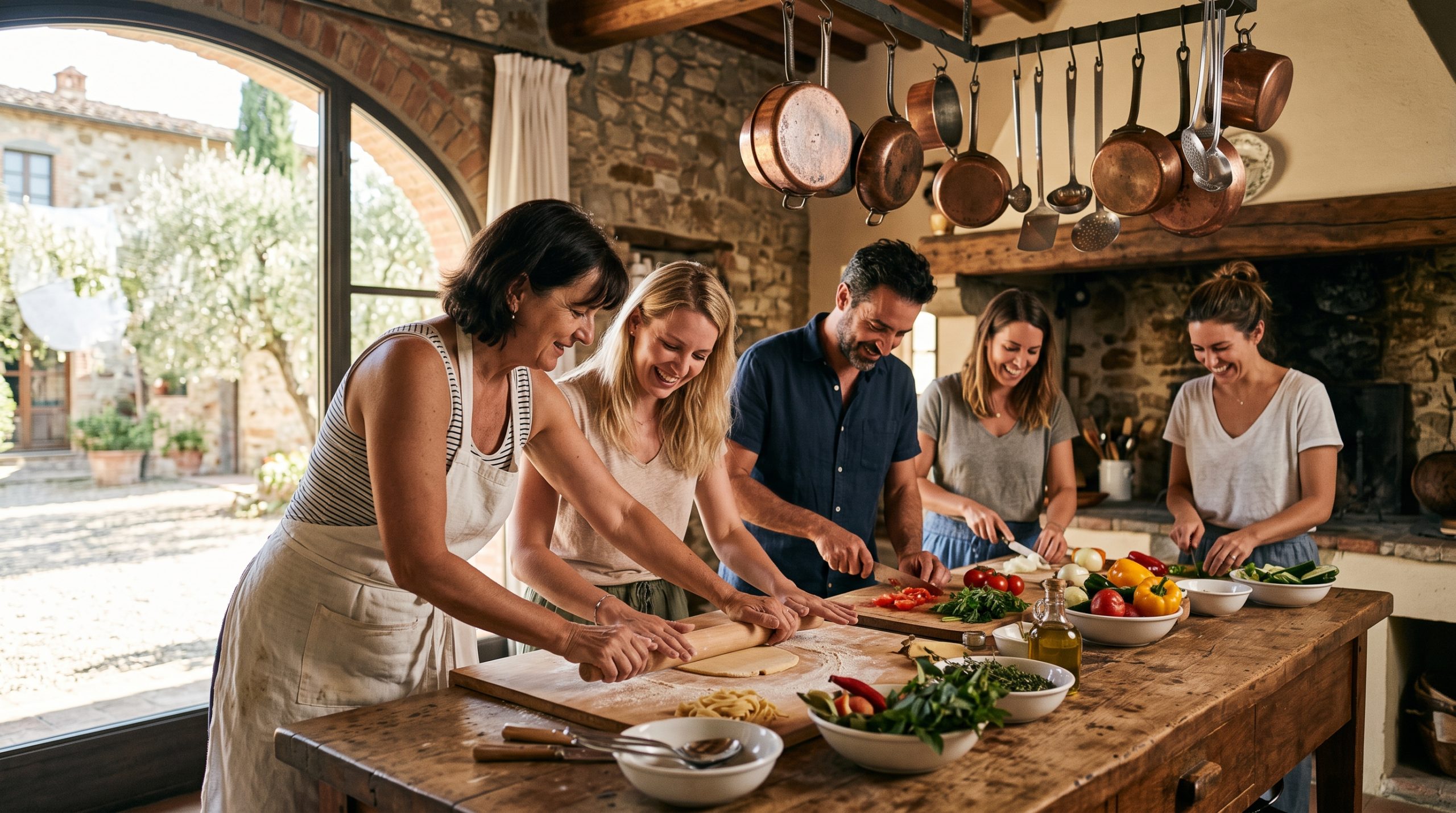
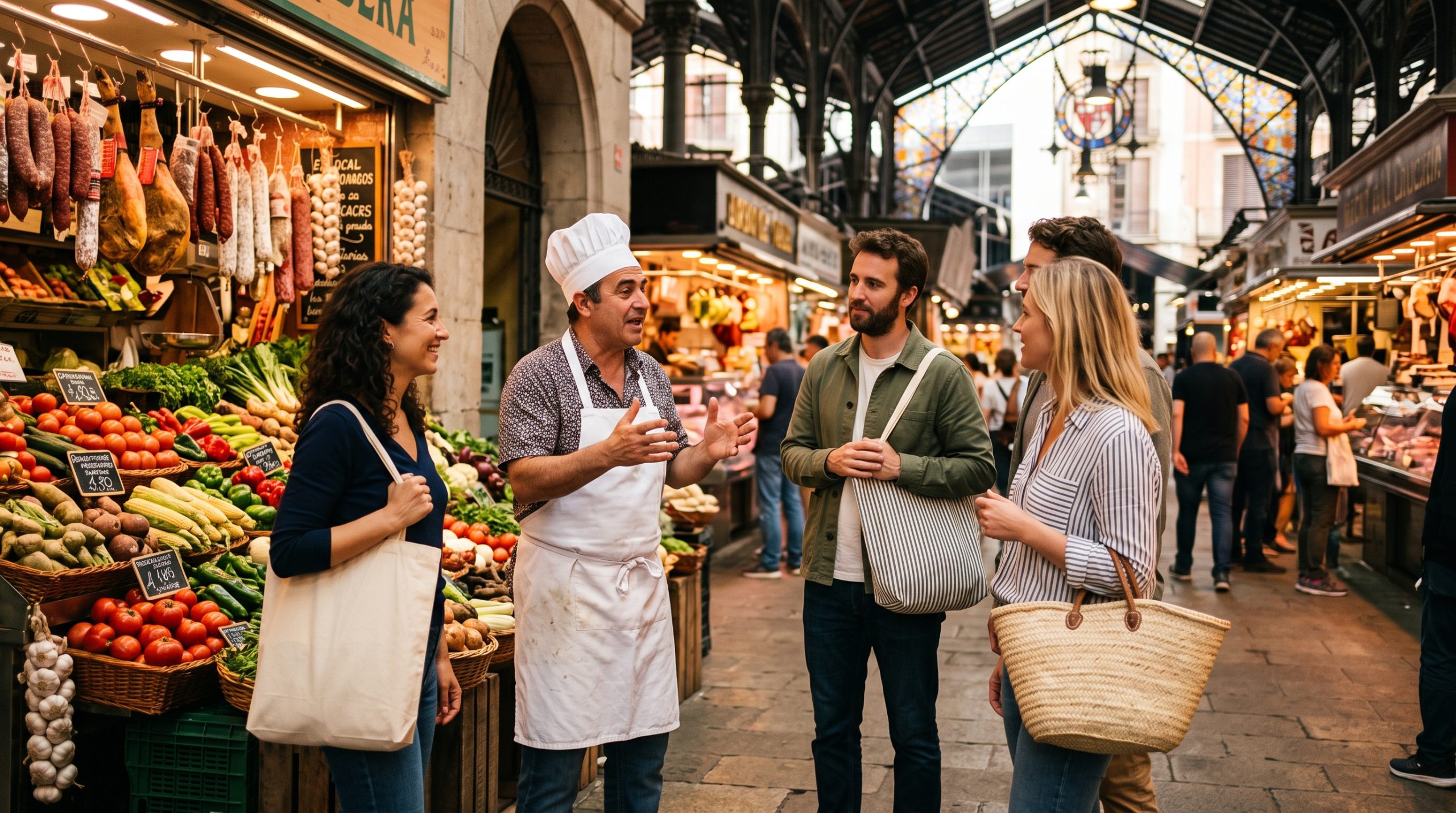
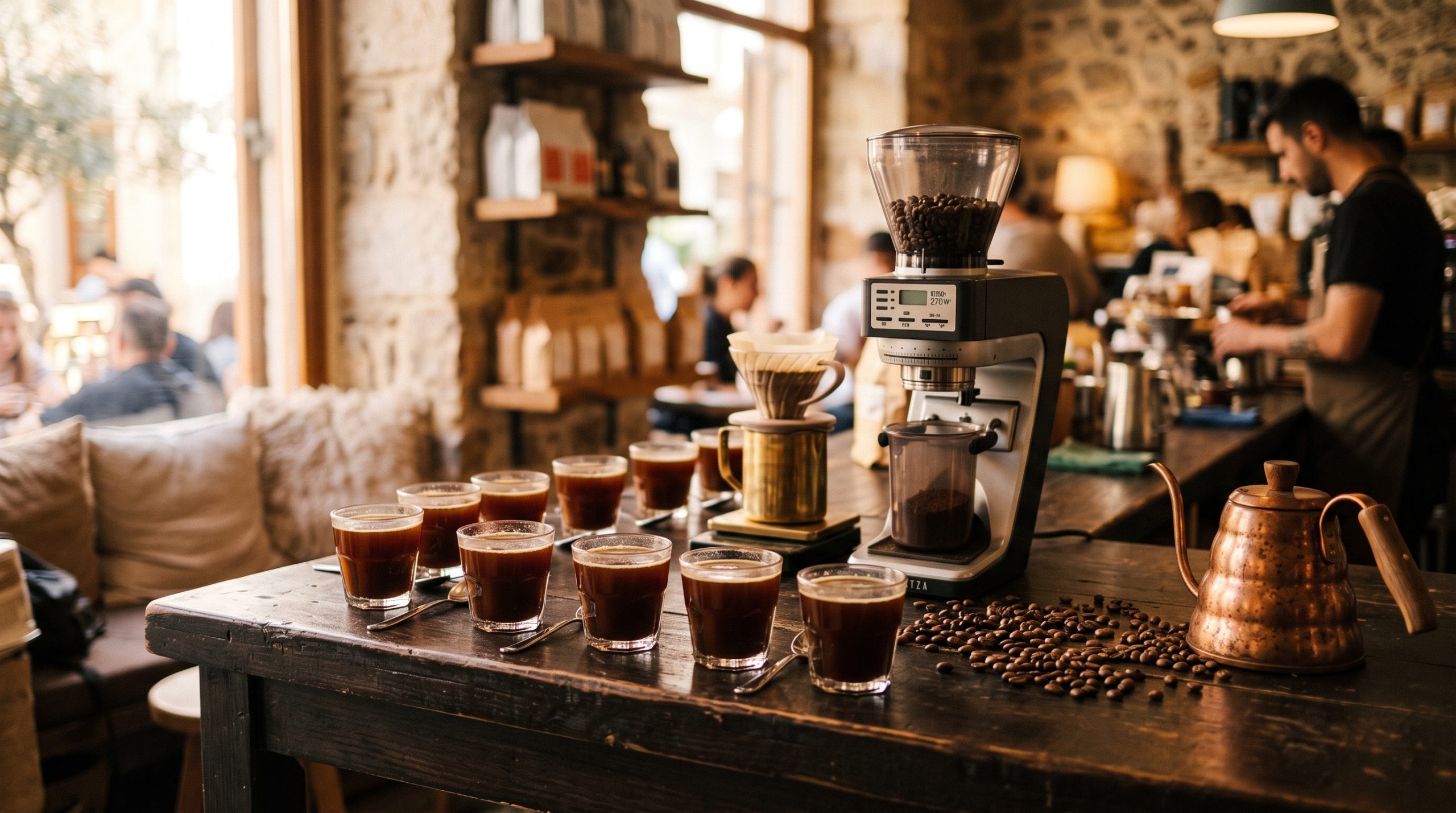
    Guests preparing Mallorcan tapas with a chef in a cooking class A guide showing a small group around a stall at the Olivar Market The Tasting Palma tasting room set with wine glasses and small plates A flight of five Mallorcan wines paired with small tapas plates A small group raising glasses in a toast around a long shared table A speciality coffee cupping set up with grinder, scales and tasting cups
    Book the Market Tour & Tapas Class

    From €129 · 4 hours · Max 8 guests · Gift vouchers available

    Can You Make Tumbet Without Frying?

    You can, and it is worth being clear about what you are trading away. The traditional method is fry, then layer, then give it a short bake. So the oven is not the modern shortcut some articles imply. It is already part of the classic dish.

    The genuinely modern version is the one that replaces the frying with roasting: the vegetables go into the oven in oil rather than into a pan. It is lighter, it uses far less oil, and it is a reasonable weeknight adaptation. What it is not is the same dish, because the frying is what gives the potato and aubergine their texture and what carries the flavour into the oil.

    Interestingly, no Mallorcan authority we could find rules the oven-roasted version out. The only purist objection anyone actually records is about courgette. Roasting your peppers instead of frying them is entirely normal, and one Mallorcan source notes that some households skip the bake altogether and just let it rest. As the same source puts it, each house is a world.

    Tumbet vs Ratatouille and Pisto

    Recipes usually wave at this and move on, often saying it is unclear which came first. Here is a more useful answer.

    Tumbet, ratatouille, pisto, Catalan samfaina and Sicilian caponata are parallel Mediterranean siblings rather than one being descended from another. They arose in different places from the same summer glut of the same New World vegetables. Asking which came first is close to asking which region invented the tomato salad.

    TumbetPistoRatatouille
    WhereMallorcaMainland SpainProvence
    MethodFried separately, then layeredCooked together in one panCooked together, or separately in the refined version
    StructureDistinct layers you can seeStirred, homogeneousStirred, or arranged
    PotatoYes, and it is the baseNoNo
    ServedRoom temperatureHot or warmHot or warm

    The separator is technique, and the potato. Cook the same vegetables together in one pan and you have made a pisto; layer them after frying them apart and you have made a tumbet. Within the Balearics there are close cousins too, including Ibiza’s frita and Menorca’s fritel·la.

    How to Serve Tumbet
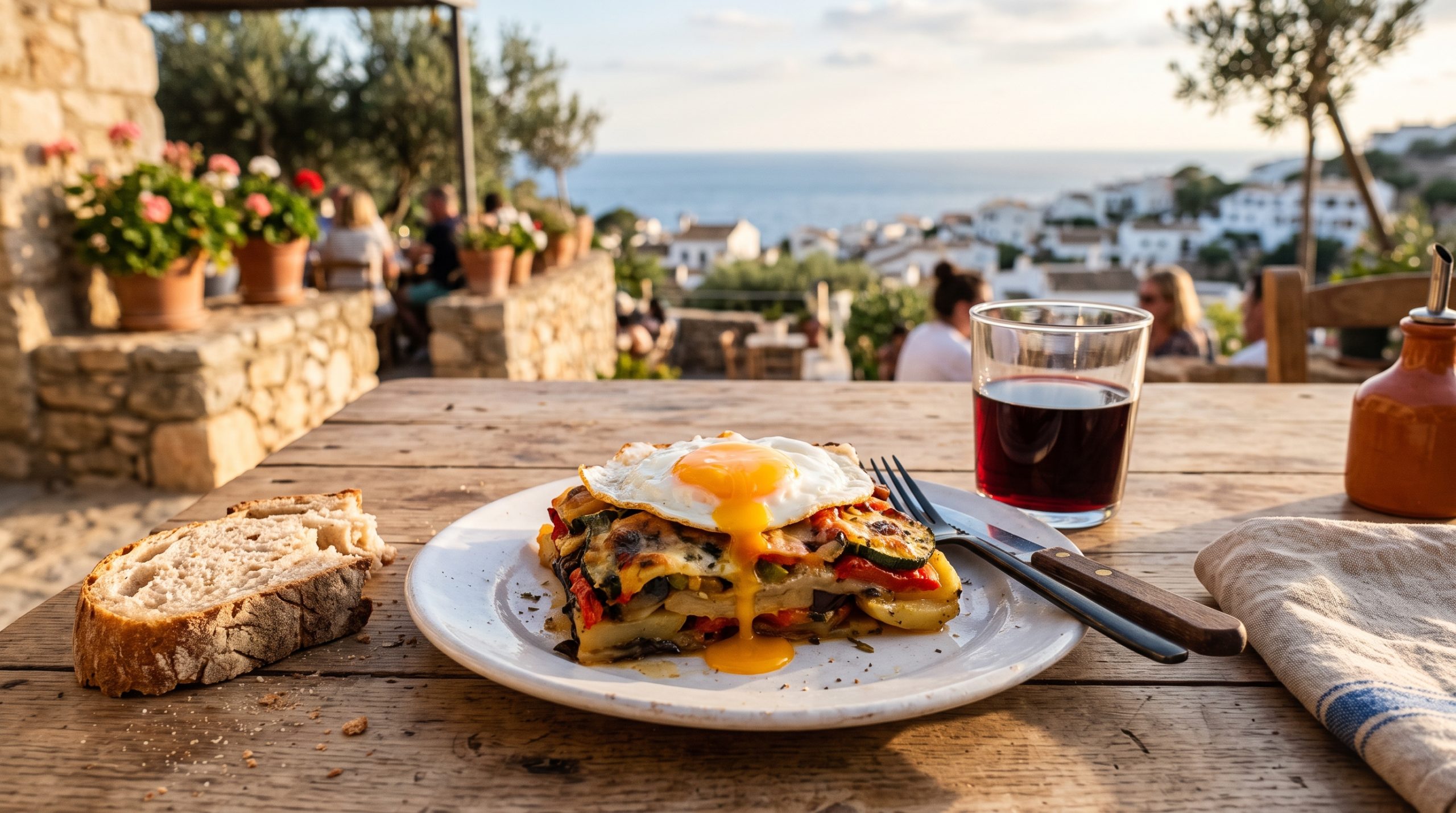
    A portion of tumbet served with a fried egg on top and bread alongside
    A fried egg on top turns a side dish into lunch, and is entirely traditional.

    The detail almost every English recipe misses: Mallorcans serve tumbet at room temperature. It is a summer dish, made in heat, and it is not meant to arrive steaming. Restaurants will often serve it warm, but in a Mallorcan home it will have been sitting on the side for a couple of hours by the time you eat it, and it is better for it.

    It works as a starter, as a side for meat or fish, or as a main course in high summer. A fried egg on top is well established and turns it into a full meal. With fish, salt cod is the classic pairing, and grouper and llampuga both appear. With meat, pork is what the Mallorcan sources actually name, usually loin or chops.

    Serve it with plain country bread, and if you want to drink something local with it, a chilled Prensal Blanc handles the oil and the tomato better than a red would. That is the grape we pour on our Mallorcan Wine Tasting, and it is a genuinely good match for most of the island’s vegetable cooking.

    When to Eat Tumbet in Mallorca
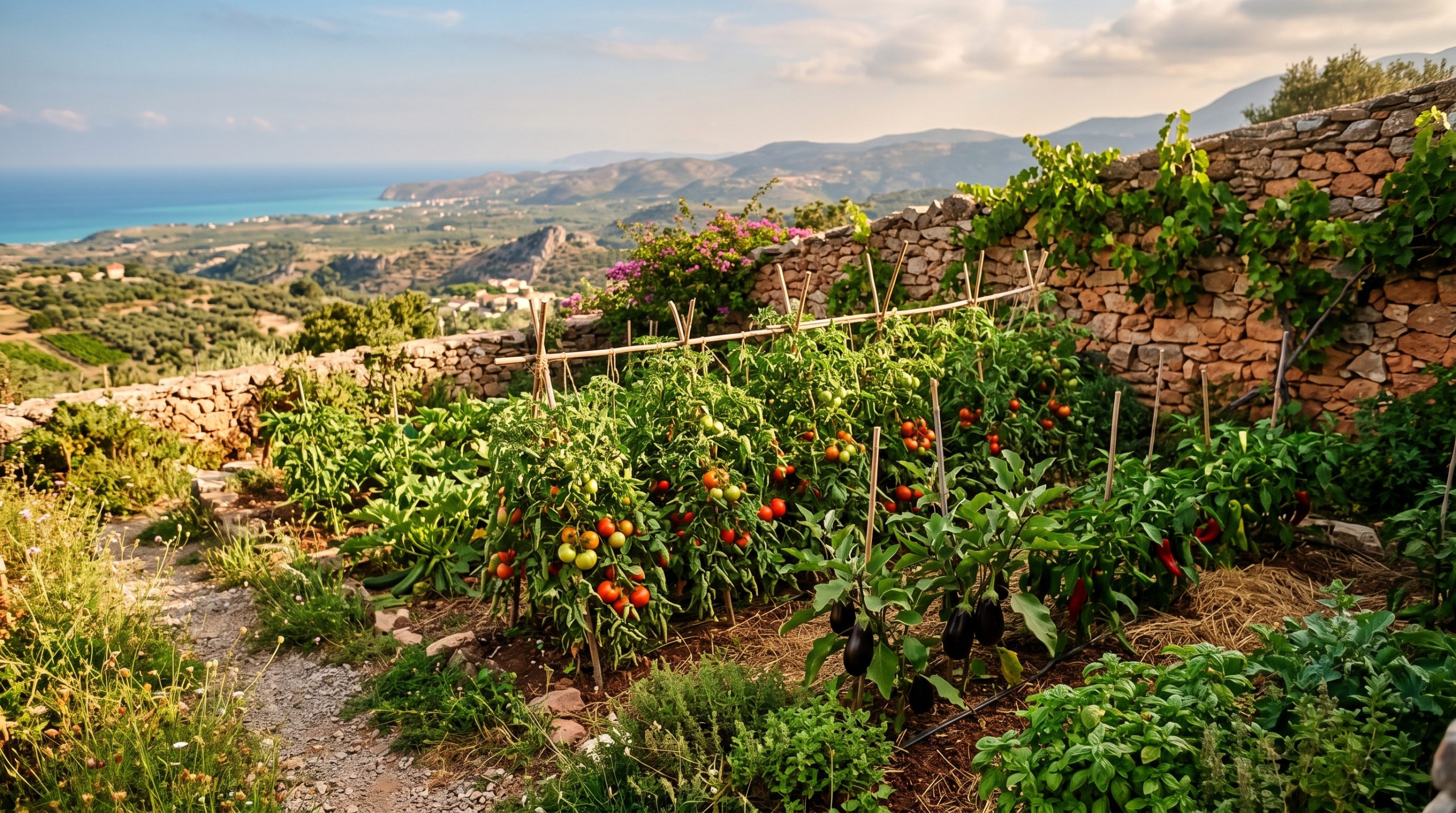
    A Mediterranean vegetable garden in summer with tomato, aubergine and pepper plants
    Everything in tumbet is in season together for a short window each summer.

    Tumbet is genuinely seasonal, which is easy to forget when every ingredient is available year round in a supermarket. On Mallorca, aubergines run from July to November, peppers July to October, tomatoes July to November, and potatoes March to October. The overlap, when all of it is at its best at once, is July to October and really July to September.

    That is why island sources describe it as a summer dish prepared when the ingredients are at their peak, and why a tumbet eaten in Palma in August tastes noticeably better than one made in February anywhere. If you are visiting outside that window it will still be on menus, and it will still be good, but the tomatoes will be doing less of the work.

    You will find it in the old cellers, in market bars, and on the menu at most traditional kitchens. The market counters in Santa Catalina serve it as a matter of course. The Old Town tapas bars serve it as a tapa, and it is one of the few dishes on a Mallorcan menu that a vegetarian can order without negotiation, since unlike almost everything else on the island it involves no pork whatsoever, and certainly no sobrasada.

    Frequently Asked Questions

    What Is Tumbet?

    A Mallorcan dish of potato, aubergine and red pepper, each fried separately in olive oil and then layered in an earthenware dish under a plain tomato sauce. It is usually given a short bake and served at room temperature. Potato goes at the bottom, then aubergine, then pepper, then the sauce.

    How Do You Pronounce Tumbet?

    Roughly “toom-BET”, with the stress on the second syllable and a short u as in book. In Catalan it is written tombet and sounds much the same. Nobody on Mallorca will mind either way.

    Why Are the Vegetables Fried Separately?

    So the flavours do not mix in the oil, and so each vegetable can be taken off the heat at its own right moment. Potato and aubergine do not need the same time in the pan. Frying them together produces something closer to a pisto, which is a different dish.

    Is Tumbet the Same as Ratatouille?

    No. They are parallel Mediterranean dishes rather than one deriving from the other. Tumbet contains potato and is built in visible layers from vegetables fried separately; ratatouille has no potato and is generally cooked together. Tumbet is also served at room temperature rather than hot.

    Does Tumbet Contain Courgette?

    It depends who you ask, and this is a real disagreement on the island. Catalan reference sources and purists give it as potato, aubergine and pepper only, and consider courgette less authentic. Many Mallorcan households and publications include it as standard. Cook it without the first time, then decide.

    Is Tumbet Served Hot or Cold?

    Room temperature, which surprises most visitors. It is a summer dish and Mallorcan cooks typically make it hours ahead and let it settle. Restaurants often serve it warm. Straight from a hot oven is the one way it is not traditionally eaten.

    Is Tumbet Vegetarian?

    Yes, and it is vegan as written, since it is only vegetables, olive oil and salt. That makes it one of very few traditional Mallorcan dishes a vegetarian can order without adaptation. Note that it is often served with a fried egg, salt cod or pork, so specify if you want it plain.

    Cook With Us

    Learn the dishes, not just the recipe

    Our chef-led Olivar Market Tour and Tapas Class shops for what is actually in season, then cooks it with you in our Old Town kitchen. Eight guests maximum, recipes to take home. From €129 per person.

    Check availability

    Private and corporate groups up to 32 guests · Get in touch

    Quantities are adapted from the recipe published by Gastronosfera. No Mallorcan institution publishes a canonical tumbet recipe, and household versions vary; where sources disagree we have said so rather than picking one silently.

  • Santa Catalina, Palma : où manger, boire et faire le marché

    Santa Catalina, Palma : où manger, boire et faire le marché

    At A Glance

    Santa Catalina is Palma’s old fishermen’s quarter, ten minutes west of the old town, built around a market that has been feeding the city since about 1920.

    • The Mercat de Santa Catalina holds just over forty traders and opens Monday to Saturday from 7am.
    • The thing to order at a market bar is the variat, a plate of small hot portions you do not get to choose.
    • Carrer de la Fàbrica and Carrer de Sant Magí carry most of the restaurants. Between them they went from 40 bars to 62 in fourteen years.
    • Five of the seven Es Jonquet windmills survive. Only two still have their sails.
    • Until 1811 the quarter was not part of Palma at all. It belonged to Andratx.

    Ten minutes west of the cathedral, on the far side of the old city walls, Palma stops being a historic centre and becomes a neighbourhood. Santa Catalina has a market, a grid of low painted houses, five surviving windmills on a ridge above the harbour, and more restaurants per street than anywhere else in the city. It is where a lot of Palma goes to eat, and where our guides end up on the nights they are not working. If you want the wider context first, our Palma food guide covers the island dishes you will meet here.

    What follows is the market, the restaurants worth booking, the bars, and the history that explains why a former fishermen’s quarter ended up with a Michelin-listed Peruvian kitchen on one corner and a hundred-year-old bakery on the other. We have kept to places we could verify are trading as of July 2026, because Santa Catalina turns over faster than most of Palma. For the old bodegas on the other side of the walls, see our guide to the Old Town tapas bars.

    We start our market tour at the Olivar, then cook what we buy. Four hours, eight guests, one kitchen.

    See the market tour

    Where Is Santa Catalina and How Do You Get There

    Carrer de Soler in the Santa Catalina neighbourhood of Palma
    Carrer de Soler. The low painted houses are the giveaway that you have left the old town. Photo: Chixoy, CC BY-SA 3.0

    Santa Catalina sits immediately outside the old walls, west of Es Baluard. Its eastern boundary is the Avinguda d’Argentina, it runs down to Es Jonquet and the harbour on one side, and it backs onto Son Espanyolet and Son Armadans. The whole quarter is roughly a grid, which makes it unusually easy to navigate after the tangle of the centre.

    Walking times quoted online vary wildly, so here is the honest version: about ten minutes on foot from the edge of the old town, and fifteen to twenty from the cathedral itself. All of it is flat, which is not true of much else in Palma. You do not need a bus and you certainly do not need a taxi. If you are staying in the centre, the walk out along the seafront past Es Baluard is the pleasant way to arrive.

    Parking is the one genuine difficulty. The streets are residential, narrow and permit-heavy, and the neighbourhood has spent years arguing about traffic. Come on foot.

    The Mercat de Santa Catalina

    The exterior of the Mercat Municipal de Santa Catalina in Palma
    The market on Plaça de la Navegació. Photo: Chixoy, CC BY-SA 3.0

    The market stands on Plaça de la Navegació and is the reason the neighbourhood works. The current building dates to around 1920, which makes it the oldest surviving purpose-built covered market building in Palma. That is a more careful claim than the one you will often see. The Mercat de l’Olivar is an older institution, but it traded in Plaça Major before moving into its present hall in 1951, and Pere Garau opened in 1943. Santa Catalina’s building came first.

    It holds just over forty traders, and it is a working market rather than a food court, though the balance has shifted over the years. Fishmongers, butchers, poultry, charcuterie and cheese, fruit and vegetables, a bakery, spices, pulses and nuts, salt cod, wine, and a row of bars around the edge. The charcuterie counters are the place to buy sobrasada with the regulatory council’s numbered label on it. Stall divisions were put in during 1978, the roof was renewed in 1999 and a cold room went in at the end of 2010.

    Visiting The Market

    • Monday to Saturday, from 7am. Closed Sundays. Stalls wind down from around 3pm; the bars run later.
    • Fishmongers are closed on Mondays. If fish is the point of your visit, come Tuesday to Saturday.
    • Go before noon for produce. Go at midday for the bars, which is when the neighbourhood eats.
    • Just over forty traders, on numbered pitches running up to 142. Some numbers are long since merged.
    • Bring cash. Card acceptance at the smaller stalls is inconsistent.

    What to Order at a Market Bar: The Variat

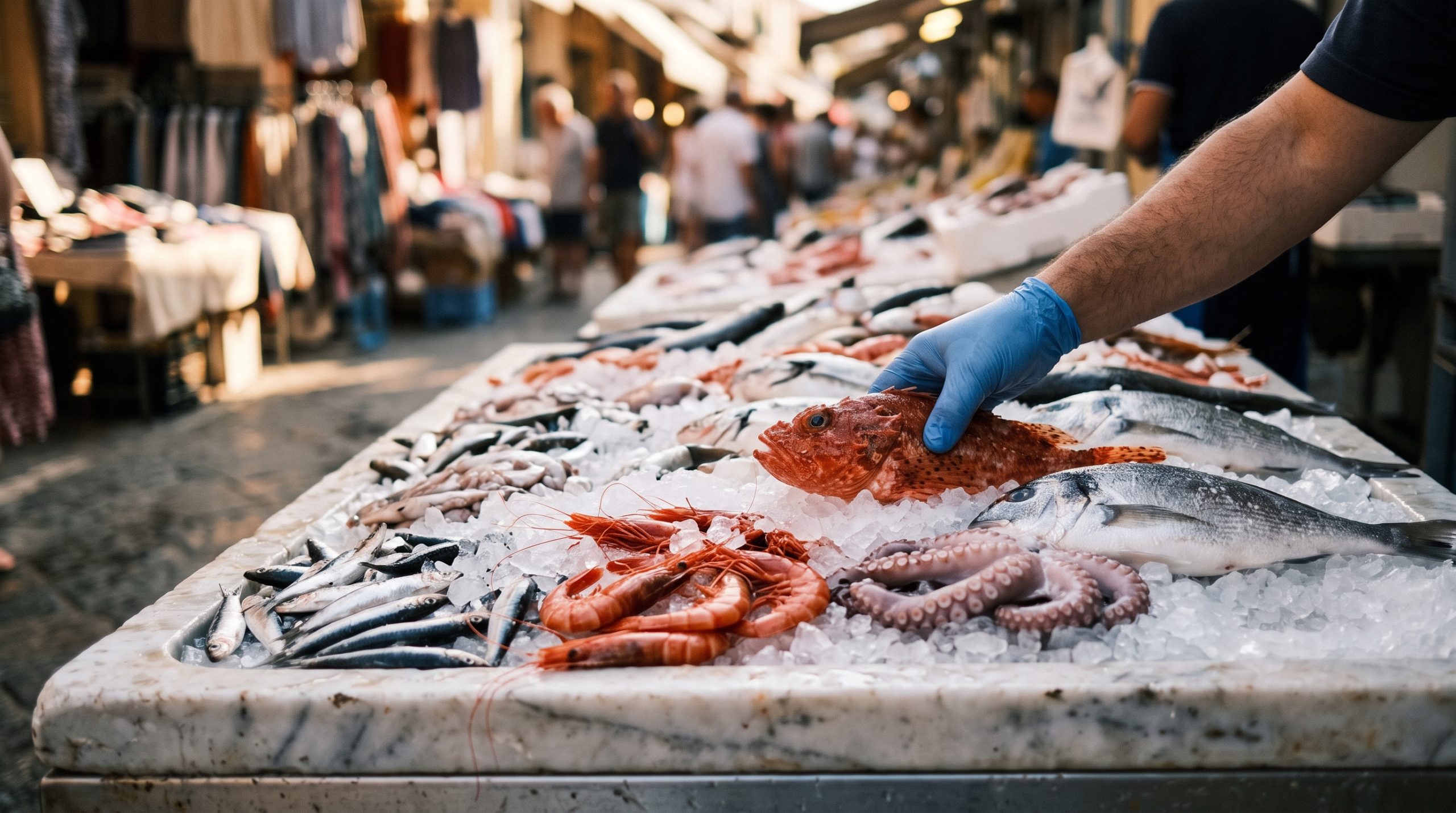
    Fresh Mediterranean fish and seafood on ice at a market stall in Palma
    The fish counters are the reason to arrive early, and the reason not to come on a Monday.

    If you order one thing in Santa Catalina, order a variat. It is a single plate assembling several small hot portions: croquetas, frit mallorquí, meatballs, cuttlefish, tripe, tongue, squid, whatever the kitchen has cooked that morning. It was the midday meal of day labourers, eaten fast and often standing, and it has survived in market and village bars while almost everything around it changed.

    The part that catches visitors out is that you do not choose. You do not build it, you do not substitute, and you do not ask what is on it first. It arrives as it arrives. Spanish food writers describe this as a pact of trust between the customer and the kitchen, which sounds grand until you have eaten a good one and realise it is simply how the thing works. If you have dietary requirements, this is not the dish for you, and no bar will be offended if you order something else. It is one of the plates we build our Gourmet Palma Food Tour around, precisely because it is the order a visitor would never place unprompted.

    1. Bar Joan Frau, known as Ca’n Frau

    Stalls 8 to 9 and 59 to 60 inside the market. Founded on 1 August 1966 by Juan Frau and María Bauzá and now run by the second generation, this is the market bar the others are measured against. It took Millor Variat at the Premis Gastronòmics Mallorca in 2024, and Pere Frau’s description of the dish, the definitive Mallorcan plate of market and village bars, is the fairest summary anyone has given it.

    The signature variat is built on cuttlefish chopped with finely cubed potato and seasoned with paprika. Beyond that the counter runs to vegetable coca, panades, frit made with cuttlefish or lamb, stuffed aubergines, callos, sopes mallorquines and paella, plus an apricot coca if you have room. It opens at six in the morning and closes at four, and it shuts on Sundays and Mondays. No reservations. Stand at the counter.

    2. Vermoutique

    Stall 19. A vermouth counter inside the market, open Monday to Saturday from nine until four, which makes it the natural mid-morning stop rather than an evening one. Vermut before lunch is an ordinary Mallorcan habit rather than a revival, and the market is the right place to understand that.

    Alongside the vermouth, expect tortilla, zamburiñas and torreznos. They pour small-production vermouths you will not find in a supermarket, alongside the island spirits we cover in the Mallorca gin guide. It is a counter, not a restaurant, and it works best as one stop in a circuit of three.

    3. Bar La Tapita

    Stall 21. A straightforward tapas counter doing tortilla, pica pica, tumbet, fried octopus, paella, empanada and salt cod. Nothing here is trying to be clever, which is the point.

    It is a good place to try tumbet if you have not had it, since the layered aubergine, potato and pepper dish is one of the few things on a Mallorcan menu a vegetarian can order without negotiation. Prices are not published and the bar does not take bookings.

    The Best Restaurants in Santa Catalina

    An outdoor restaurant terrace with string lights at dusk in Santa Catalina Palma
    Carrer de la Fàbrica was pedestrianised in 2010, and the terraces followed within a year.

    Most of these need booking, particularly between June and September. Opening hours in this neighbourhood shift with the season and several kitchens publish different times on their own site than the listing sites carry, so confirm when you book rather than turning up.

    4. Stagier Bar

    Carrer d’Espartero 11. Opened in 2018 by the Chilean chef Joel Baeza with his partner Andrea Sertzan, Stagier has seven tables and a menu on which five dishes are deliberate homages to the kitchens Baeza staged in. It is listed in both the MICHELIN Guide and the Guía Repsol 2026. Worth being precise: it is a Guide listing, not a star.

    The menu runs to amberjack tiradito with yellow chilli and kumquat at €20, red prawn carpaccio with mango and habanero aguachile at €23, lomo saltado gyozas at €20 for six, a duck and foie gras croquette at €3.50, and a smoked wagyu hanger steak with gratin potatoes at €45. Note the summer schedule: between June and August it opens evenings only, Monday to Saturday, and closes on Sundays.

    5. Patrón Lunares

    Carrer de la Fàbrica 30, in a building that was once a fishermen’s community hall. It is named after the owner Javier Bonet’s grandfather, Miguel Bonet Oliver, who captained a Mallorcan trawler, and the room leans hard into that history without tipping into theme-restaurant territory.

    The dish everyone orders is the aguacate al mortero at €12, guacamole made at the table in a mortar. Beyond that, the calamar cohete is €16, the arroz negro €18.50, and there is an ensaimada of their own at €9. Starters run roughly €8 to €19 and mains €14 to €42. It takes bookings by phone and through the usual platforms, and in summer you will need one.

    6. Vandal

    Plaça del Progrés 15. Opened in 2017 by the Argentine chef Bernabé Caravotta, who came through Mirazur and Noma, with the sommelier Sebastián Pérez. The cooking is the most technically ambitious in the neighbourhood and the wine list is treated as seriously as the food.

    Current dishes include a ceviche cornet with coconut foam, Patagonian toothfish with almond and garlic purée and a sea urchin cream, and a slow beef cannelloni with parmesan and pistachio pesto. Budget around €50 a head. One caution: its own site and the listing sites disagree about which days it closes, so ring rather than assume.

    Inside A Tasting Palma Experience

    Learn the market before you eat the neighbourhood

    Our chef-led tour walks the Olivar with you, buys what is good that morning, then takes it back to our Old Town kitchen to cook. Four hours, eight guests, recipes to take home.

    A guide showing a small group around a stall at the Olivar Market Guests preparing Mallorcan tapas with a chef in a cooking class The Tasting Palma tasting room set with wine glasses and small plates A flight of five Mallorcan wines paired with small tapas plates A small group raising glasses in a toast around a long shared table A speciality coffee cupping set up with grinder, scales and tasting cups
    Book the Market Tour & Tapas Class

    From €129 · 4 hours · Max 8 guests · Gift vouchers available

    7. Sumaq

    Carrer de Cotoner 44. Peruvian cooking from chef-owner Irene Gutiérrez, listed in the MICHELIN Guide. It opened on Sant Magí in June 2013 and moved to Cotoner in May 2014, so if an older article sends you to the first address, this is where it went. It did not leave the neighbourhood.

    The dishes to look for are the duck confit causa with huancaina sauce, the gratinated salt cod, and a mixed ceviche. Bookings are handled through its own system or by phone. Peruvian food has a real foothold in Palma and this is the kitchen that established it, which says something about how far the city has moved from the traditional island larder.

    8. OMBU Santa Catalina

    Avinguda de l’Argentina 31, right on the eastern edge of the quarter. Part of the Forn Projects group, which also runs a sister site on the Passeig del Born, so check which one you are booking.

    Steak tartare with truffle, foie gras and sherry mayonnaise is €22, as is the grilled octopus with toasted corn cream and Sichuan olive oil, and the Peking duck gyozas with black garlic hoisin are €21. It books up: when we checked availability for late July the entire week was gone. Reserve well ahead in summer.

    9. Duke, Brutal and Naan Street Food

    Three more worth knowing, grouped because their menus are not published in a form we could verify and we would rather say so than print dish names we cannot stand behind. Duke, on Carrer de Soler 36, has been running since 2009 and works from a rotating international menu; it uses a QR menu in the room. Brutal, at Carrer de la Fàbrica 10, occupies a restored Santa Catalina townhouse with its period features intact and describes itself as a paella, meat and fresh fish kitchen, with most people spending €20 to €30.

    Naan Street Food on Carrer de Caro 16 is the most casual of the three, built around the idea of returning food to the street and the markets, and serving half portions so you can order widely. The fish tacos are what it is known for. Expect €20 to €30 and book at weekends.

    Bars, Vermouth and Nightlife in Santa Catalina

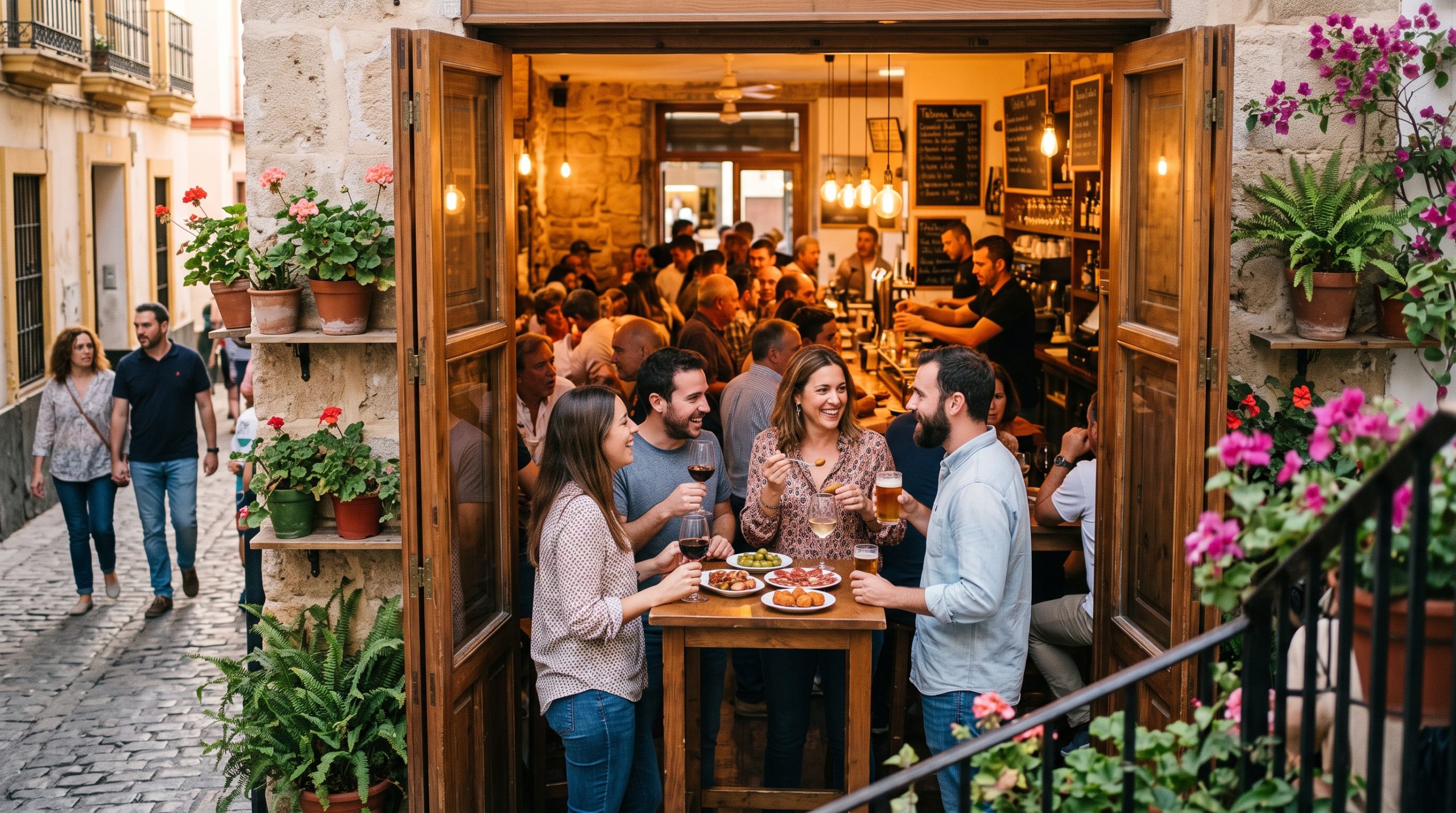
    A busy neighbourhood tapas bar in Santa Catalina Palma in the evening
    From about nine the neighbourhood fills. Sant Magí and Fàbrica carry most of it.

    Two streets carry the evening. Carrer de Sant Magí has the cocktail bars and the live music, and pedestrianised Carrer de la Fàbrica has the terraces. Carrer Cotoner and the market square take the overflow. The scale of the change is easy to measure: between 2008 and 2022 the number of bars and restaurants on Fàbrica went from 18 to 29, and on Sant Magí from 22 to 33.

    For something less obvious, Es Molí Club on Carrer de la Indústria occupies an 1860 flour mill, holds around 150 people, and has been described by Resident Advisor as one of the most underground clubs in Spain. It is an unusual thing to find inside a heritage-listed building.

    Worth knowing before you plan a late night here: this is contested ground. In May 2026 the residents’ association for Santa Catalina and Es Jonquet, alongside other Palma neighbourhoods, formally demanded a moratorium on new bar and restaurant licences in noise-saturated zones, along with terrace limits and shorter hours. Venues in residential streets are currently permitted to run until four in the morning. People live above these terraces, and they are not happy about it.

    Coffee and Bakeries

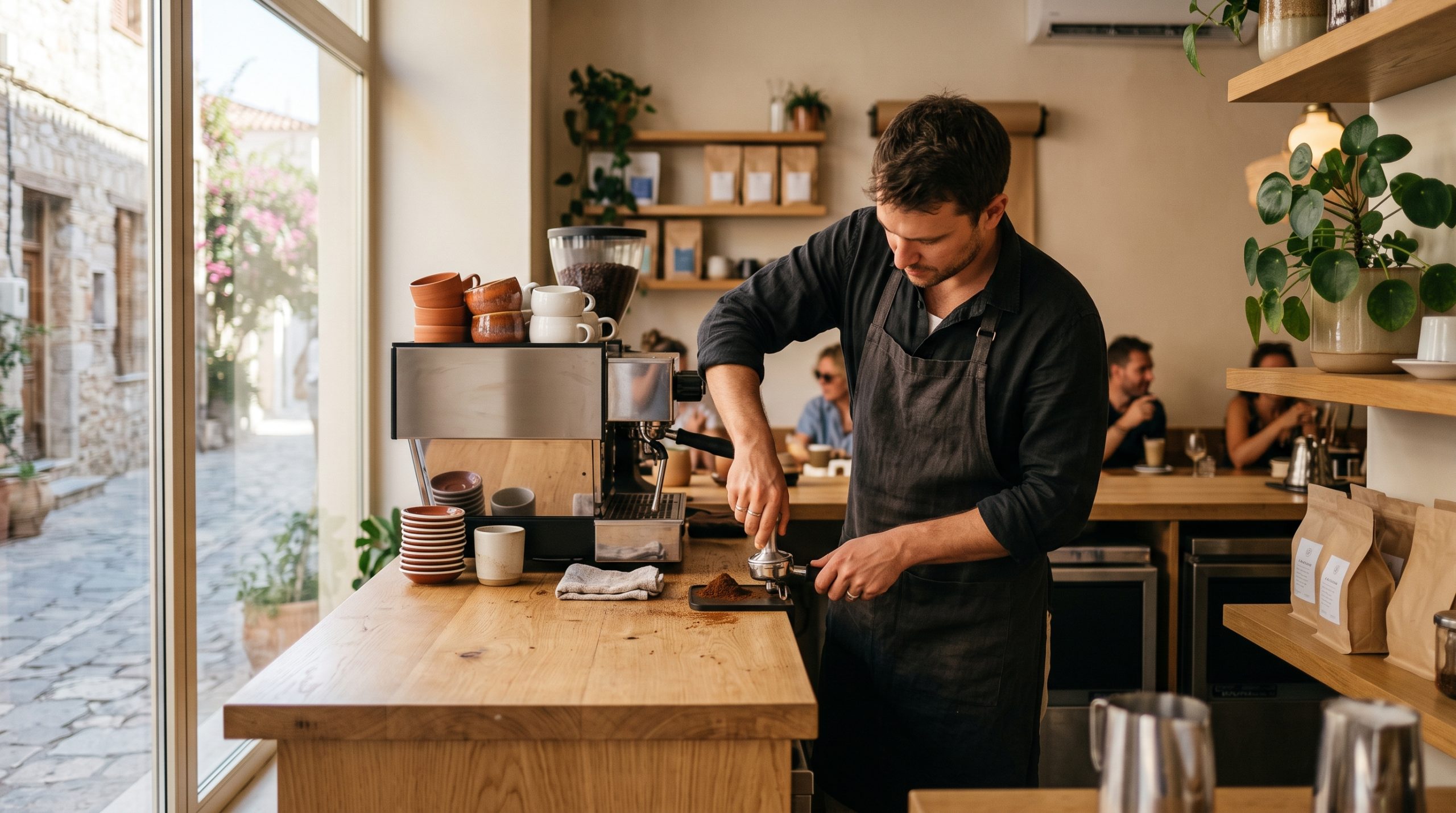
    A speciality coffee bar with barista tamping coffee in Santa Catalina Palma
    Speciality coffee arrived in Santa Catalina well before it reached the old town.

    The bakery to find is Forn i Pastisseria Àngels at stall 14 in the market, a branch of Ca Sa Camena, which has been going for more than a hundred years across four generations of the Amengual family. Everything is made in their own workshop: llonguets, cocarrois, coca de trampó, coca de patata, palmeras, cremadillos, almond cake, and ensaimadas both individual and large, plain or filled. If you want the full picture on that last one, we have written a separate guide to the best ensaimada in Palma.

    For coffee, Mama Carmen’s Coffee and Kitchen on Carrer de Cervantes 21 does speciality coffee with a vegetarian and vegan kitchen, open every day from half past eight until three, and it does not take bookings. Its sister site on Carrer de Rossiñol is entirely vegan. Sāntal Café on Carrer de la Indústria is the one for single-origin pour-overs, run by Rodrigo Moreno inside another restored mill.

    Mallorca has a longer coffee tradition than most visitors expect, with roasteries in Palma going back three quarters of a century, which is the subject of our Speciality Coffee Tasting. Coffee and an ensaimada is the standard island breakfast, and Santa Catalina is a good place to eat it.

    From Fishermen’s Quarter to Palma’s Food District

    The surviving stone windmills of Es Jonquet above Santa Catalina in Palma
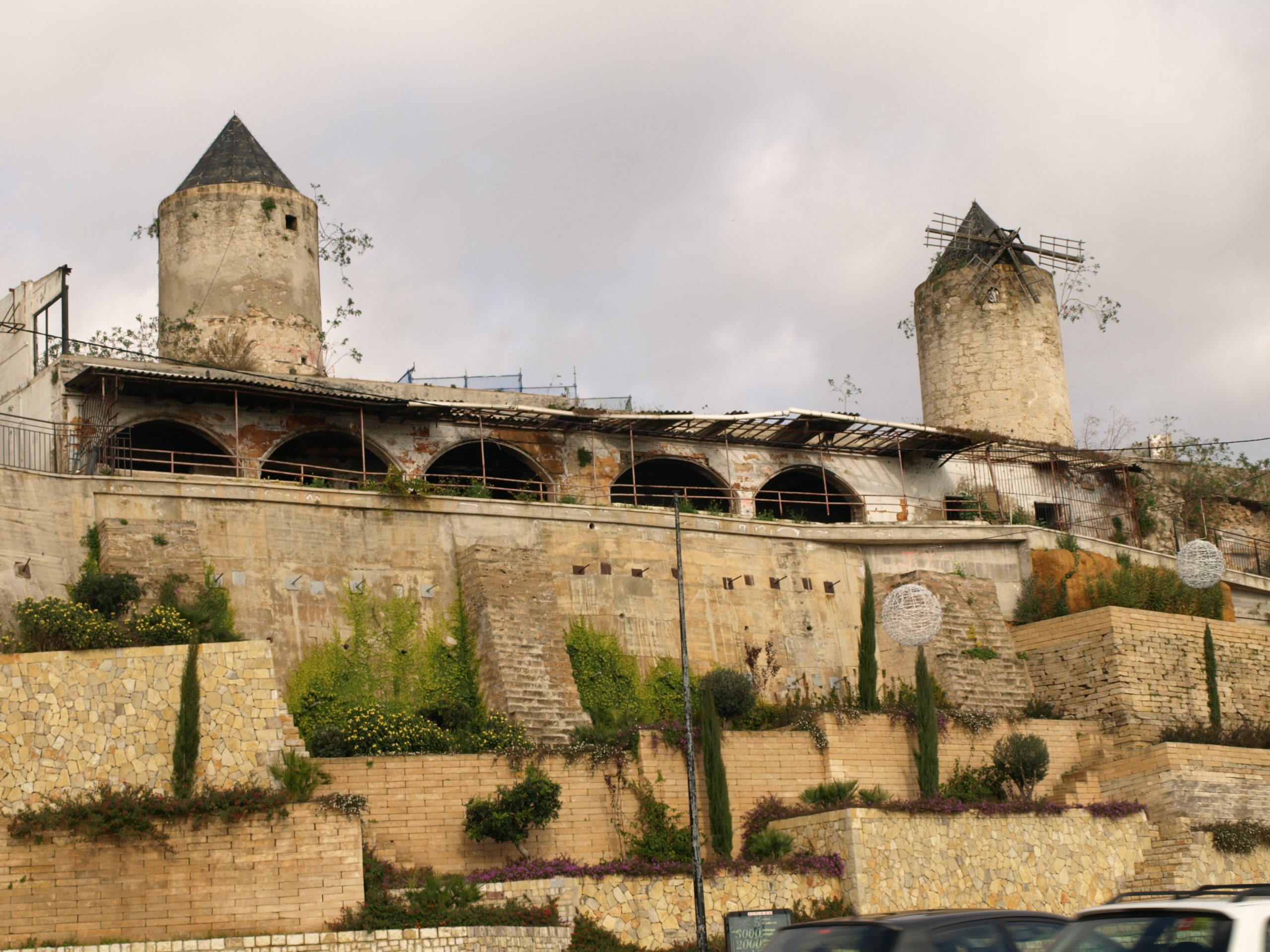
    The Es Jonquet mills. Five of the original seven survive, and only two keep their sails. Photo: Chixoy, CC BY-SA 3.0

    The quarter began in 1343, when the merchant Ramón Salelles founded the Hospital de Santa Catalina dels Pobres in thanks for surviving a shipwreck. It was the first neighbourhood built outside Palma’s walls. The seed settlement was Es Jonquet, named for the rushes that grew by the water, and it was populated by fishermen, ropemakers and millers.

    Here is the fact that surprises most people, including a good number of Mallorcans: until 1811, Santa Catalina was not administratively part of Palma at all. It belonged to Andratx, twenty-five kilometres down the coast. Through the second half of the nineteenth century it industrialised, producing ice, textiles, zips, glass, carpets and shoes, and the Modernista houses that survive were built at the end of that century by merchants coming home from Cuba.

    The windmills above the harbour are older than any of it. The first is documented in 1339, and the group of seven flour mills took shape in the eighteenth century. Five still stand. Molí d’en Garleta has been a museum since 2005, Molí del Nom de Déu is now a community centre and Molí d’en Carreres is in use as a leisure venue, and those last two are the only ones that still carry their sails. Molí de sa Garriguera and Molí d’en Celos are abandoned. Of the two that are gone, one was wrecked by the 1851 earthquake and the other demolished in 1975.

    The whole group has been protected as a Conjunt Històric since December 2009, though protection has not translated into upkeep. Local press documented alarming deterioration in 2025, with graffiti and broken doors. They are worth the ten-minute walk down for the view over the harbour, but go expecting a working neighbourhood’s neglected monuments rather than a restored heritage site.

    As for how it became a restaurant district, residents and local press point at one decision: the pedestrianisation of Carrer de la Fàbrica in 2010. Foreign residents had been arriving since the 1990s, drawn by the light and the quiet, but the terraces followed the pedestrianisation and the neighbourhood tipped. An eighty square metre flat that cost around €200,000 in the 2000s now goes for €500,000 to €600,000, and the quarter is now the second most expensive in Palma by price per square metre.

    The numbers behind the change are stark. Foreign residents went from 21 per cent of the neighbourhood in 2008 to around 24.5 per cent by 2018 and roughly 30 per cent by the end of 2023, with Swedes prominent enough that locals call the area Lilla Sverige, little Sweden. By 2020 the quarter had 529 ground-floor businesses, of which 160 were food service and twenty were estate agencies. One premises went from €1,000 a month to €3,000. A resident quoted in the local press put it bluntly: Carrer de la Fàbrica looks like a theme park.

    None of which means you should not come and eat here. It does mean it is worth knowing that the neighbourhood you are eating in is one people are actively fighting over, and that the market and the older bars are the parts most worth supporting. The food is the reason to visit, and it is also the reason the people who live here are arguing about what the place has become.

    Frequently Asked Questions

    Where Is Santa Catalina in Palma?

    Just west of Palma’s old town, immediately outside the historic walls at Es Baluard. Its eastern edge is the Avinguda d’Argentina and it runs down to Es Jonquet and the harbour. It is roughly a ten-minute flat walk from the edge of the old town and fifteen to twenty minutes from the cathedral.

    What Are the Best Restaurants in Santa Catalina?

    Stagier Bar and Vandal are the two most ambitious kitchens, both listed in guides and both needing a booking. Patrón Lunares is the one with the strongest local story, Sumaq is the established Peruvian, and OMBU is the reliable all-rounder. For something cheap and traditional, eat a variat at Ca’n Frau inside the market.

    When Is the Santa Catalina Market Open?

    Monday to Saturday from 7am, closed on Sundays. Stalls start winding down from around 3pm while the bars carry on later. The fishmongers close on Mondays, so if fish is the reason you are going, come Tuesday to Saturday. Individual stalls set their own hours.

    Is Santa Catalina Palma’s Oldest Market?

    It is the oldest surviving purpose-built covered market building in Palma, dating to around 1920. The Mercat de l’Olivar is an older institution but traded in Plaça Major before its current hall opened in 1951, and Pere Garau opened in 1943. Both claims get repeated loosely, so the building is the precise distinction.

    What Is a Variat?

    A single plate combining several small hot portions, typically croquetas, frit mallorquí, meatballs, cuttlefish, tripe or squid, depending on what the kitchen has cooked. You do not choose the components and you cannot customise it. It began as the midday meal of day labourers and survives mainly in market and village bars.

    Is Santa Catalina Good for Nightlife?

    Yes, and it is the busiest part of Palma for it outside the Paseo Marítimo. Carrer de Sant Magí has the cocktail bars and live music, and pedestrianised Carrer de la Fàbrica has the terraces. Note that residents formally requested a moratorium on new licences in May 2026 over noise, so the situation may change.

    Why Are There Windmills in Santa Catalina?

    They are the Es Jonquet flour mills, milling grain for the city. The first is documented in 1339 and the group of seven formed in the eighteenth century. Five survive and two of those still carry their sails. They have been protected as a Conjunt Històric since 2009, though local press reported serious deterioration in 2025.

    Eat With Us

    Twelve tastings across the Old Town and the market

    If Santa Catalina has convinced you that Palma is worth eating properly, our small-group food tour is the fastest way in. Twelve tastings, ten guests, four hours. From €85 per person.

    Check availability

    Private and corporate groups up to 32 guests · Get in touch

    Image credits: photographs of the Mercat de Santa Catalina, Carrer de Soler and the Molins des Jonquet by Chixoy, licensed CC BY-SA 3.0. Prices and opening details were verified in July 2026 and change frequently; confirm with the venue before travelling.

  • Guide du Gin de Majorque : 5 distilleries de l’île et où le déguster

    Guide du Gin de Majorque : 5 distilleries de l’île et où le déguster

    En bref

    Le gin majorquin est une industrie artisanale récente bâtie sur une vieille tradition de distillation, avec cinq producteurs à connaître et trois que l’on peut visiter.

    • La scène du gin sur l’île a démarré vers 2011 et 2012. Gin Eva et Cabraboc ont été les premiers.
    • La distillation à Majorque est, elle, réellement ancienne. On comptait 177 alambics sur l’île à la fin du XVIIIe siècle, mais ils produisaient de l’aguardiente, pas du gin.
    • Aucun gin majorquin ne bénéficie d’une indication géographique protégée. Le gin baléare protégé est le Gin de Mahón, qui vient de Minorque.
    • Plantes emblématiques de l’île : oranges et citrons de Sóller, l’orange canoneta locale, thym de la Tramuntana, fenouil sauvage et criste marine.
    • Le Palo de Mallorca et les Herbes de Mallorca bénéficient chacun d’une protection propre.

    Le gin à Majorque est une histoire récente racontée sur une toile de fond très ancienne. L’île distille depuis le Moyen Âge et possède deux spiritueux protégés, mais les gins que l’on trouve aujourd’hui derrière les comptoirs de Palma datent presque tous des quinze dernières années. Cet écart entre la tradition et le produit mérite d’être compris avant d’acheter des bouteilles, et c’est la première chose que nous expliquons lors de notre Dégustation de Gin Majorquin.

    Voici l’état actuel du gin majorquin : qui en produit réellement, lesquels se visitent, ce que contiennent les bouteilles et comment les deux spiritueux protégés de l’île s’y ajoutent. Nous avons aussi corrigé les deux erreurs les plus fréquentes, car l’un des gins les plus célèbres associés à ces îles n’est pas produit à Majorque. Si les spiritueux ne sont qu’une partie de ce qui vous amène ici, notre guide gastronomique de Palma présente les plats de l’île et les quartiers où il fait bon manger.

    Trois gins, deux liqueurs traditionnelles de l’île et le gin tonic parfait, en 60 minutes avec une distillerie familiale de Sóller.

    Voir la dégustation de gin

    Existe-t-il vraiment une tradition du gin à Majorque ?

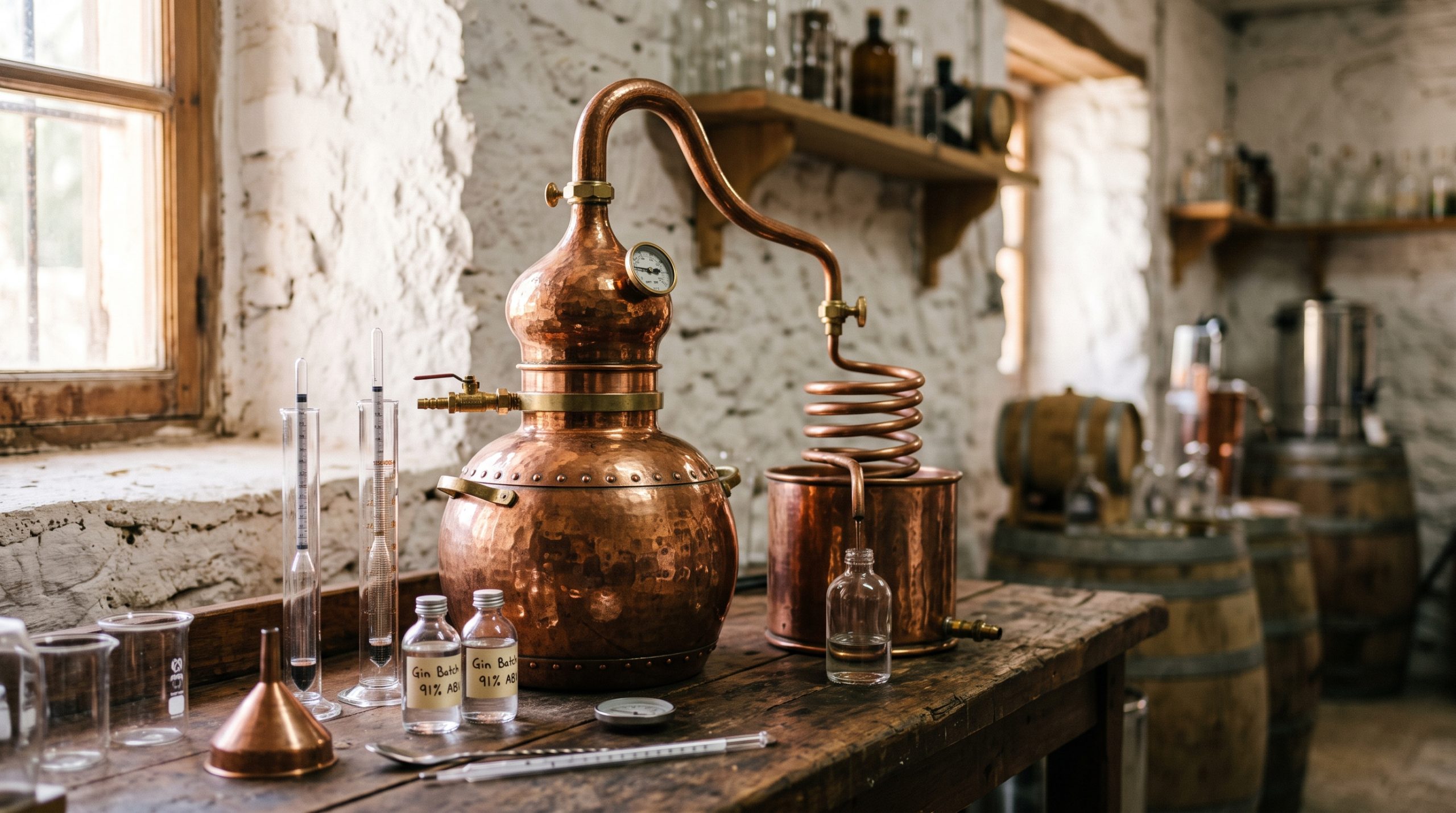
    A small copper pot still in an artisan Mallorcan distillery with sample bottles alongside
    La plupart des producteurs de l’île distillent chaque plante séparément puis assemblent, au lieu de tout macérer ensemble.

    Oui et non, et la nuance compte si vous ne voulez pas réciter à un distillateur son propre argumentaire. La distillation à Majorque a des siècles d’ancienneté et une véritable importance. Ramon Llull, le philosophe majorquin de la fin du XIIIe siècle, a apporté de réelles contributions à la technique de distillation et on lui attribue la diffusion de l’alambic sur l’île. À la fin du XVIIIe siècle, 177 alambics fonctionnaient à Majorque, et au XIXe siècle une grande partie de leur production était exportée.

    Rien de tout cela n’était du gin. Ces alambics produisaient de l’aguardiente, des liqueurs de plantes et du Palo, et les familles qui les tenaient sont toujours là : Suau a déplacé ses alambics sur l’île en 1851, Licors Moyà à Artà fait remonter son activité à 1854, et Dos Perellons date de 1882. Majorque possède donc une profonde tradition de distillation dans laquelle le gin est arrivé, et non un héritage propre au gin. Il en va de même pour le vin de l’île, dont l’histoire intéressante est celle d’une renaissance plutôt que d’une continuité, comme l’expose notre Dégustation de Vins Majorquins .

    La partie gin commence vers 2011 et 2012, quand Gin Eva et Cabraboc se sont lancés à moins d’un an d’intervalle. Tout le reste sur l’île a suivi. Cela fait du gin majorquin une industrie artisanale d’une quinzaine d’années, ce qui n’est pas une critique. Cela signifie que les producteurs sont petits, que ceux qui les ont fondés distillent encore le plus souvent eux-mêmes, et que les plantes sont choisies pour ce qui pousse réellement ici plutôt que pour coller à un style de maison déjà établi.

    Une correction au passage. Si vous avez lu que le Gin Xoriguer est le gin classique des Baléares, c’est exact, mais il n’est pas majorquin. Le Xoriguer est produit à Maó, à Minorque, sous l’appellation protégée Gin de Mahón, seul gin protégé des Baléares. Aucun gin majorquin ne détient d’indication géographique. Certains portent des labels insulaires volontaires, et la Destilería Pareis détient un certificat artisanal du Consell de Mallorca, mais ce sont des signes de qualité et non d’origine protégée.

    Cinq distilleries de gin majorquin à connaître

    Terraced orange grove in a Mallorcan mountain valley with the Tramuntana rising behind
    La vallée de Sóller fournit les agrumes de plusieurs gins de l’île, dont l’orange canoneta locale.

    1. Cabraboc, Sóller

    Carrer Nostra Senyora de Bonany 6, Sóller. Fondée en 2012 par Janine Bucher, Miquel Capó et Jürgen Bucher, une famille germano-majorquine venue du design local, et aujourd’hui distillée par Max Capó. Elle se trouve dans la vallée derrière la Tramuntana qui lui fournit ses agrumes, ce qui résume tout l’argument de la gamme.

    Le gin maison repose sur un distillat de vin avec fenouil, herbes méditerranéennes, zeste d’orange, feuille de citronnier et verveine citronnelle, et les oranges et citrons proviennent exclusivement de la vallée de Sóller. Chaque plante est distillée séparément à son propre stade de maturité, puis assemblée. La gamme compte douze produits, dont Gin Taronja et Gin Blau en éditions limitées, un Mandarina, le Dry Gin Mestral, ainsi que leur Palo de Mallorca et leurs Herbes. Le gin maison est proposé en 70 cl à 40 % pour environ 35,50 €. La boutique de Sóller ouvre en semaine et le samedi matin, les dégustations peuvent couvrir jusqu’à trente distillats différents, et vous pouvez y assembler votre propre gin. C’est avec cette distillerie que nous travaillons pour notre Dégustation de Gin Majorquin à Palma.

    2. Gin Eva, Llucmajor

    Casa Eva, Carrer Marroig 6A, Llucmajor. Stefan Winterling et Eva Maier Gómez se sont rencontrés en étudiant l’œnologie en Allemagne, se sont installés à Majorque en 2008 et ont commencé à distiller dans un garage vers 2011. Ils ont rejoint le site actuel en 2022. Avec Cabraboc, ils sont les producteurs pionniers de l’île, et ceux qui collectionnent les récompenses internationales.

    Six gins, tous à 45 %. La Mallorquina est celui qui a fait leur nom : un gin à l’olive utilisant une seule variété du domaine Son Moragues, à Valldemossa, distillé une fois par an à environ trois mille bouteilles, et qui a remporté le World’s Best Signature Botanical Gin aux World Gin Awards de Londres en 2019. Les autres sont La Vermella, La Bergamota, un Old Tom vieilli en fût de chêne, La Canoneta à base de l’orange canoneta de la vallée de Sóller, et S’Horabaixa, dominé par le thym. La dégustation à la Casa Eva dure environ une heure pour douze personnes maximum, avec cinq gins et un cocktail, dans une salle donnant sur l’alambic, réservable en ligne à partir d’environ 40 €.

    3. Destilería Pareis, Llubí

    Installée à Llubí, dans l’intérieur de l’île, fondée en août 2017 par David Fajardo et Susana Cáceres et nommée d’après le Torrent de Pareis, les gorges qui débouchent à Sa Calobra. Elle détient un certificat artisanal du Consell de Mallorca et a décroché l’or aux World Gin Awards.

    Deux gins, Mercant et Mascori. Mercant est l’épicé, porté par la cannelle et l’orange aux côtés du genièvre, de la réglisse, de la coriandre et des citrons majorquins. La distillerie ouvre les lundi, mardi, jeudi et vendredi matin ; on peut y acheter des bouteilles et voir le processus, mais mieux vaut vérifier avant de faire la route s’ils proposent une visite guidée formelle. Ils tiennent aussi un stand au marché de Sineu tous les mercredis matin, la façon la plus simple de les goûter si vous ne partiez pas déjà vers l’intérieur.

    4. Mallorca Distillery, Palma

    L’option de Palma, qui produit sous le nom Palma Gin et se présente comme la première distillerie biologique de la ville. Fondée en juin 2018 par Byron et Amber Holland.

    La gamme comprend Palma Gin à 46,6 %, ainsi que les déclinaisons Citrus, Rosé et Spiced, un Monastrell en édition limitée et une vodka. Ils travaillent à partir de quinze plantes biologiques cueillies localement, dont des fleurs sauvages et des agrumes de vergers ruraux de l’île, sans publier la liste complète. Les bouteilles coûtent 45 € pour les versions standard de 70 cl et 55 € pour le Monastrell. Des sites tiers annoncent des visites et un atelier pour créer son propre gin, mais la distillerie ne publie pas elle-même d’informations de visite : téléphonez plutôt que de vous présenter. Ne confondez pas cette maison avec la Mallorca Gin Distillery de Santa Catalina, dont le site est désormais hors ligne.

    5. Bodegas Suau, Es Pont d’Inca

    Carrer Cabana 12, Es Pont d’Inca à Marratxí, à une dizaine de minutes de Palma, dans un ancien moulin à farine. L’entreprise a été fondée à Cuba en 1851, et Juan Suau Bennáser a transféré les alambics à Majorque la même année pour produire rhum, anis, aguardientes et le brandy qui a fait la réputation du nom. Elle appartient aujourd’hui aux familles Barceló et Mora.

    Suau est la maison qui relie la scène moderne du gin à l’ancienne : elle a produit un gin entièrement artisanal en 1919 et l’a fait renaître un siècle plus tard. L’embouteillage actuel est le Maior Gin, construit sur la figue locale, le romarin et les oranges de Sóller. L’ancienne recette du Suau Gin utilisait quatre distillations en cuivre avec oranges, citrons et amandes de l’île, aux côtés du genièvre, de la coriandre, de l’angélique, de l’iris et de la réglisse. Le site dispose d’espaces de visite et d’événements, mais les détails des visites ne sont pas publiés : contactez-les directement.

    A guided gin tasting with three glasses in front of a seated guest and a host explaining
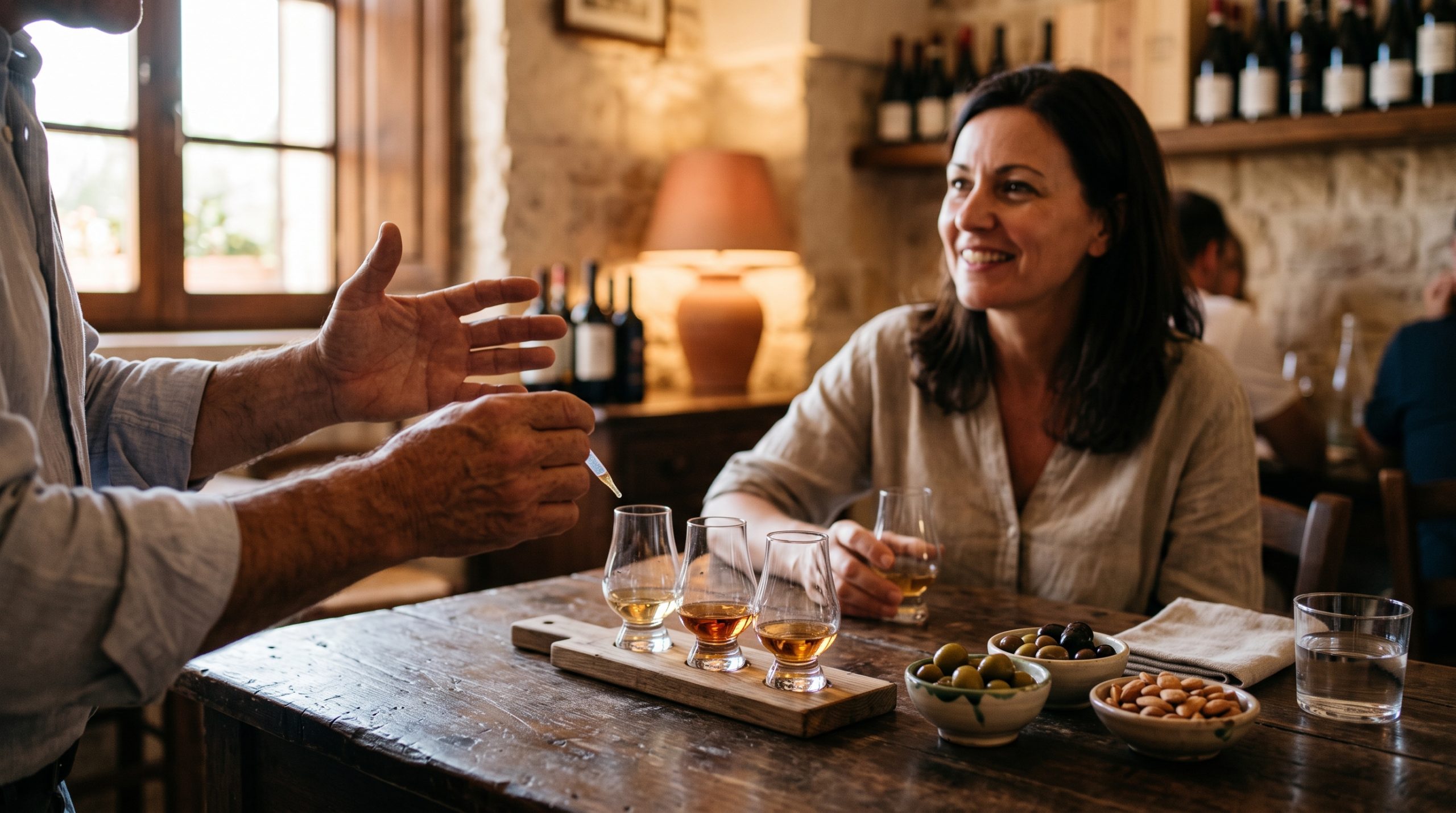
    Goûter pur avant de goûter allongé est le seul moyen fiable de distinguer les plantes.

    Deux autres méritent d’être cherchées en rayon plutôt que visitées. Licors Moyà, à Artà, en activité depuis le XIXe siècle, a lancé en février 2025 le Baleàric Moyà Nº5, présenté comme le premier gin élaboré avec du fonoll marí, la criste marine qui pousse sur les rochers du littoral de l’île et lui donne une finale saline et minérale. Dos Perellons, maison familiale remontant à 1882 et aujourd’hui à Son Castelló, produit plusieurs gins dont un assemblage conçu avec le chef Koldo Royo. La plupart se trouvent derrière le comptoir des bars à tapas de la vieille ville si vous voulez goûter avant d’acheter une bouteille.

    Ce que contient un gin majorquin

    Juniper berries, dried orange peel, rosemary, thyme, fennel and almonds laid out as gin botanicals
    Les agrumes et les herbes de montagne font l’essentiel du travail dans les gins de l’île. Le genièvre est souvent la note la plus discrète.

    Ce qui distingue les gins de l’île tient moins au genièvre qu’à tout ce qui l’entoure. Majorque cultive des agrumes dans une vallée de montagne au microclimat propre, des herbes sur des pentes calcaires sèches et des plantes comestibles sur les rochers du littoral, et les producteurs se sont fortement appuyés sur ces trois ressources. La méthode que la plupart partagent mérite aussi d’être connue : plutôt que de macérer ensemble un panier de plantes, ils distillent chacune séparément à son pic saisonnier puis assemblent les distillats, comme un vigneron compose un coupage.

    Plantes de l’île à repérer

    • Oranges et citrons de Sóller — la vallée derrière la Tramuntana, et la signature insulaire la plus répandue.
    • Orange canoneta — une variété locale propre à cette vallée, utilisée par Gin Eva dans un gin qui porte son nom.
    • Olive Mallorquina — une variété unique d’olive de Valldemossa, distillée une fois par an.
    • Fonoll marí — la criste marine du littoral, qui apporte de la salinité plutôt que de la douceur.
    • Thym et romarin de la Tramuntana — les herbes des pentes sèches, qui donnent le tranchant résineux.
    • Fenouil sauvage, myrte et verveine citronnelle — les aromatiques plus douces qui remplissent le milieu de bouche.

    Au cœur d’une expérience Tasting Palma

    Goûtez l’île sans louer de voiture

    Trois gins Cabraboc de Sóller dégustés purs et allongés, puis un Palo et un Hierbes pour finir, dans notre salle de dégustation de la vieille ville plutôt qu’à une heure de côte.

    The Tasting Palma tasting room set with wine glasses and small plates A small group raising glasses in a toast around a long shared table A flight of five Mallorcan wines paired with small tapas plates A guide showing a small group around a stall at the Olivar Market Guests preparing Mallorcan tapas with a chef in a cooking class A speciality coffee cupping set up with grinder, scales and tasting cups
    Réserver la Dégustation de Gin

    À partir de 39 € · 60 minutes · 10 personnes maximum · Cartes cadeaux disponibles

    Palo et Herbes : les spiritueux protégés de l’île

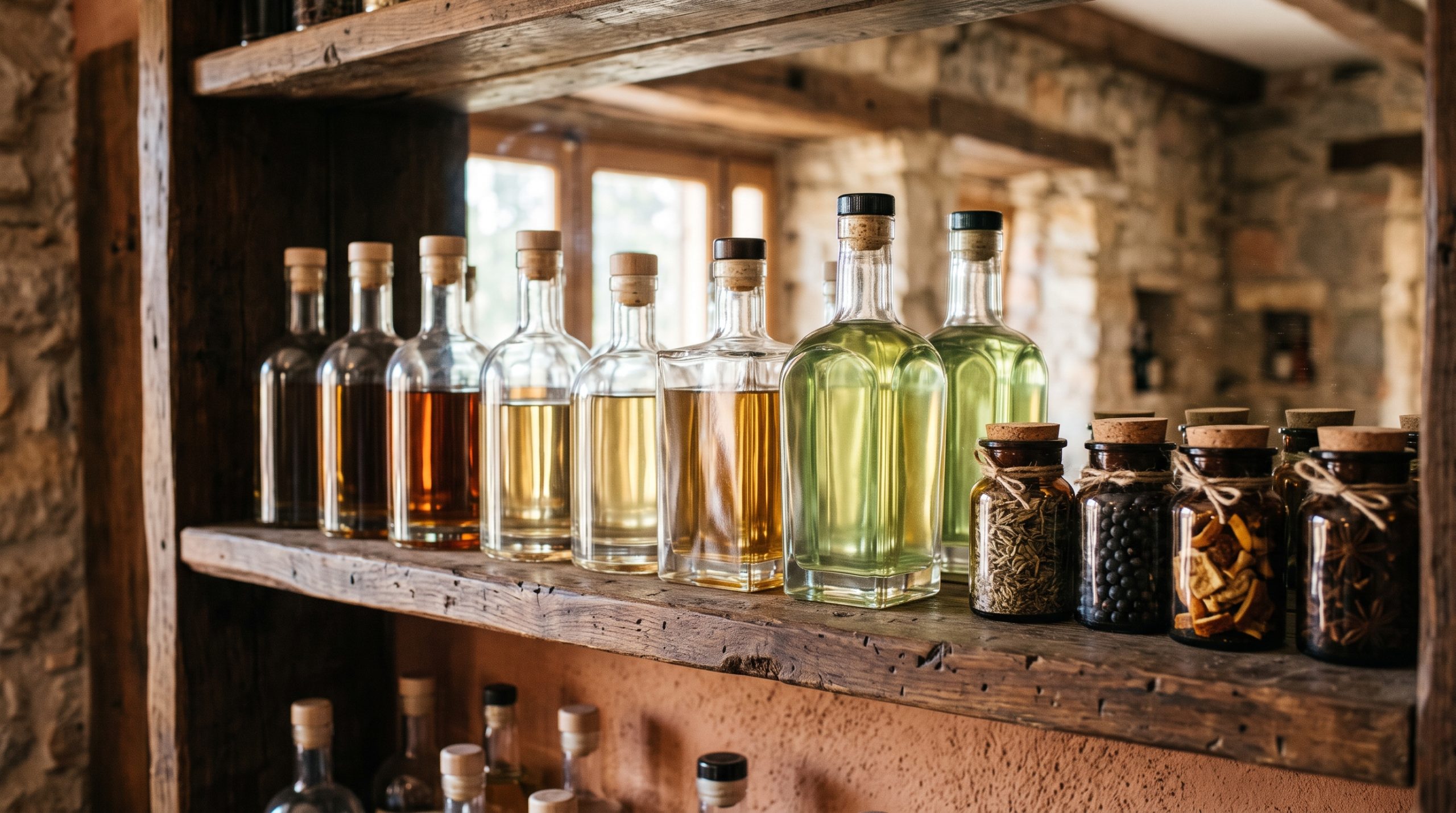
    Shelf of clear glass spirit bottles and jars of botanicals in a small distillery shop
    Les distilleries de l’île vendent souvent directement depuis la salle des alambics, seul endroit où trouver les embouteillages limités.

    Le gin a beau être récent ici, deux spiritueux majorquins bénéficient d’indications géographiques protégées, et toute dégustation sérieuse sur l’île les inclura. Ce sont aussi ce que l’on boit réellement, ce que le gin n’est encore que partiellement.

    Palo de MallorcaHerbes de Mallorca
    StatutIndication Géographique ProtégéeIndication Géographique Protégée
    Élaboré à partir deMacération ou infusion d’écorce de quinquina calisaya et de racine de gentiane, avec sucre, saccharose caramélisé et alcoolUn spiritueux à base d’anis assemblé avec une solution aromatisée aux plantes
    GoûtSombre, amer, légèrement médicinal. Plus proche d’un amaro que d’une liqueurDu sucré au sec selon le style, porté par l’anis et les herbes de montagne
    StylesUnTrois : dulçes, mescladas, seques
    DegréEnviron 30 %Dulçes à partir de 20 %, mescladas de 25 %, seques de 35 %
    Comment on le boitAvec du soda et une tranche de citron, en apéritifPur et bien froid, généralement après le repas

    Le nom Palo vient de palo de quina, l’écorce de quinquina dont il est issu, et c’est un goût qui s’acquiert. La production a atteint environ 34 000 litres en 2025, en hausse d’environ un quart sur un an : ce goût s’acquiert donc de plus en plus. Les Herbes se distinguent par leur teneur en sucre : le style sucré doit contenir au moins 300 grammes de sucre par litre, le style sec pas plus de 100, et le style mixte se situe entre les deux. Parmi les plantes habituelles : verveine citronnelle, camomille, romarin, fenouil et mélisse, ainsi que des feuilles d’oranger et de citronnier. Un petit verre du style sec après une ensaimada et un café est une façon très majorquine de terminer la matinée.

    Où déguster du gin majorquin à Palma

    A gin and tonic in a balloon glass garnished with orange peel and rosemary on a marble bar
    Garnissez selon la plante, pas selon le verre. Un gin insulaire axé sur les agrumes réclame du zeste, pas du concombre.

    Les distilleries elles-mêmes sont dispersées sur toute l’île, et c’est là le problème pratique. Sóller est à une heure de Palma par la route, ou par un trajet panoramique dans le vieux train en bois ; Llucmajor et Llubí exigent une voiture ; et le producteur basé à Palma ne publie pas d’horaires de visite. Si vous êtes ici quelques jours sans véhicule, cela élimine l’essentiel.

    L’alternative est de déguster en ville. Les meilleurs bars de Palma proposent naturellement des gins de l’île, et un gin tonic espagnol bien réalisé est une discipline à part entière : un verre ballon, beaucoup de glaçons transparents, un tonic choisi pour passer sous les plantes plutôt que par-dessus, et une garniture qui corresponde à ce que contient réellement la bouteille. Zeste d’orange pour un gin agrume de Sóller, romarin ou thym pour un gin herbacé, et rien du tout pour le gin à l’olive, qui n’a besoin d’aucune aide.

    Notre propre dégustation existe exactement pour cette raison. Elle dure soixante minutes pour dix personnes maximum dans notre salle de la vieille ville, parcourt trois gins Cabraboc dégustés purs et allongés, puis un Palo au soda et un Hierbes de Mallorca pour finir, chacun accompagné d’une tapita. Elle couvre le processus de distillation, la sélection des plantes et la façon de monter correctement un gin tonic, sans avoir besoin de voiture. L’ensemble de nos dégustations et expériences gastronomiques part de cette même salle.

    Questions Fréquentes

    Quel gin est produit à Majorque ?

    Les principaux producteurs de l’île sont Cabraboc à Sóller, Gin Eva à Llucmajor, Destilería Pareis à Llubí, Mallorca Distillery à Palma sous le nom Palma Gin, et Bodegas Suau à Es Pont d’Inca avec le Maior Gin. Licors Moyà à Artà et Dos Perellons produisent également du gin.

    Le Gin Xoriguer vient-il de Majorque ?

    Non. Le Gin Xoriguer est produit à Maó, à Minorque, sous l’appellation protégée Gin de Mahón. C’est le gin le plus célèbre des Baléares et celui que l’on croit le plus souvent majorquin, mais il vient d’une autre île. Aucun gin majorquin ne détient d’indication géographique protégée.

    Peut-on visiter une distillerie de gin à Majorque ?

    Oui. Cabraboc dispose d’une boutique et d’une salle de dégustation à Sóller, ouvertes en semaine et le samedi matin, où l’on peut déguster largement et assembler son propre gin. Gin Eva propose une dégustation d’une heure sur réservation à la Casa Eva, à Llucmajor, pour douze personnes maximum. La Destilería Pareis ouvre aux visiteurs les matins de semaine et tient un stand au marché de Sineu le mercredi.

    Où faire une dégustation de gin à Palma ?

    La plupart des distilleries se trouvent hors de la ville et nécessitent une voiture. À Palma même, notre Dégustation de Gin Majorquin dure 60 minutes pour dix personnes maximum dans notre salle de la vieille ville, et couvre trois gins Cabraboc purs et allongés ainsi que le Palo et les Hierbes de Mallorca, chacun avec une petite bouchée.

    Quelles plantes entrent dans le gin majorquin ?

    Outre le genièvre, les plantes insulaires récurrentes sont les oranges et citrons de la vallée de Sóller, l’orange canoneta locale, l’olive Mallorquina de Valldemossa, la criste marine, le thym et le romarin de la Tramuntana, le fenouil sauvage, la myrte, la verveine citronnelle et l’amande. La plupart des producteurs distillent chaque plante séparément puis assemblent.

    Qu’est-ce que le Palo de Mallorca ?

    Un apéritif amer et sombre bénéficiant d’une Indication Géographique Protégée, obtenu par macération d’écorce de quinquina calisaya et de racine de gentiane avec du sucre, du saccharose caramélisé et de l’alcool. Il titre environ 30 % et se boit avec du soda et du citron. Le nom vient du palo de quina, l’écorce de quinquina elle-même.

    Que sont les Hierbes de Mallorca ?

    Une liqueur de plantes protégée bâtie sur un spiritueux anisé aromatisé aux plantes de l’île comme la verveine citronnelle, la camomille, le romarin, le fenouil et la mélisse. Elle existe en trois styles : sucré à partir de 20 % avec au moins 300 g de sucre par litre, mixte à partir de 25 %, et sec à partir de 35 % avec 100 g maximum. Elle se boit froide après le repas.

    Dégustez avec nous

    L’Esprit de la Tramuntana, sans quitter la vieille ville

    Soixante minutes, dix personnes maximum. Trois gins Cabraboc dégustés purs et avec mixers, un Palo de Mallorca et un Hierbes pour finir, chacun avec une tapita choisie en accord. À partir de 39 € par personne.

    Vérifier les disponibilités

    Groupes privés et d’entreprise jusqu’à 32 personnes · Nous contacter